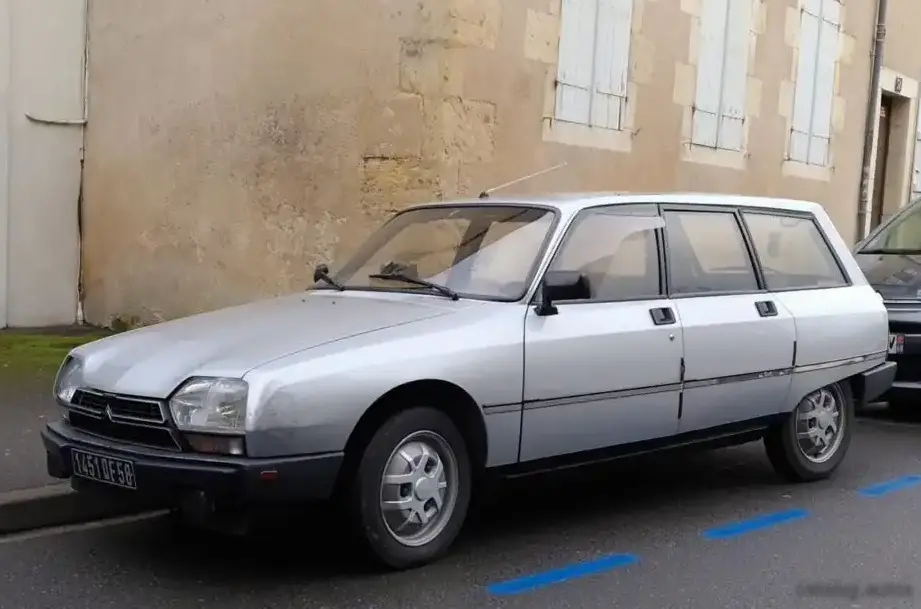
The Citroen GSA 1.3, produced between 1979 and 1986, represented a refinement of the earlier GS model, offering a more comfortable and technologically advanced experience. Positioned as an entry-level variant within the GSA range, the 1.3-liter engine paired with a manual transmission aimed for buyers prioritizing fuel efficiency and affordability. It was part of the larger Citroen GS/GSA family, which utilized the innovative hydropneumatic suspension system that defined Citroen vehicles of the era. The GSA, in general, was Citroen’s attempt to modernize the GS, addressing some criticisms of the original while retaining its core appeal.
Technical Specifications
| Brand | Citroen |
| Model | GS |
| Generation | GSA |
| Type (Engine) | A 1.3 (65 Hp) |
| Start of production | 1979 |
| End of production | 1986 |
| Powertrain Architecture | Internal Combustion engine |
| Body type | Hatchback |
| Seats | 5 |
| Doors | 5 |
| Fuel Type | Petrol (Gasoline) |
| Maximum speed | 160 km/h (99.42 mph) |
| Weight-to-power ratio | 14.2 kg/Hp, 70.7 Hp/tonne |
| Weight-to-torque ratio | 9.8 kg/Nm, 102.2 Nm/tonne |
| Power | 65 Hp @ 5500 rpm |
| Power per litre | 50 Hp/l |
| Torque | 94 Nm @ 3500 rpm (69.33 lb.-ft. @ 3500 rpm) |
| Maximum engine speed | 6500 rpm |
| Engine Model/Code | G13/646 |
| Engine displacement | 1299 cm3 (79.27 cu. in.) |
| Number of cylinders | 4 |
| Engine configuration | Boxer |
| Cylinder Bore | 79.4 mm (3.13 in.) |
| Piston Stroke | 65.6 mm (2.58 in.) |
| Compression ratio | 8.7:1 |
| Fuel injection system | Carburettor |
| Engine aspiration | Naturally aspirated engine |
| Engine oil capacity | 4 l (4.23 US qt | 3.52 UK qt) |
| Kerb Weight | 920 kg (2028.25 lbs.) |
| Max. weight | 1365 kg (3009.31 lbs.) |
| Max load | 445 kg (981.06 lbs.) |
| Trunk (boot) space – minimum | 435 l (15.36 cu. ft.) |
| Trunk (boot) space – maximum | 1400 l (49.44 cu. ft.) |
| Fuel tank capacity | 43 l (11.36 US gal | 9.46 UK gal) |
| Length | 4181 mm (164.61 in.) |
| Width | 1626 mm (64.02 in.) |
| Height | 1349 mm (53.11 in.) |
| Wheelbase | 2550 mm (100.39 in.) |
| Front track | 1378 mm (54.25 in.) |
| Rear (Back) track | 1328 mm (52.28 in.) |
| Front overhang | 845 mm (33.27 in.) |
| Rear overhang | 786 mm (30.94 in.) |
| Ride height (ground clearance) | 154 mm (6.06 in.) |
| Minimum turning circle (turning diameter) | 10.4 m (34.12 ft.) |
| Drivetrain Architecture | The Internal combustion engine (ICE) drives the front wheels of the vehicle. |
| Drive wheel | Front wheel drive |
| Number of gears and type of gearbox | 5 gears, manual transmission |
| Front suspension | Hydro-pneumatic element, Double wishbone |
| Rear suspension | Hydro-pneumatic element, Trailing arm |
| Front brakes | Disc |
| Rear brakes | Disc |
| Steering type | Steering rack and pinion |
| Wheel rims size | 4.5J x 15 |
Powertrain & Engine Architecture
The Citroen GSA 1.3 was powered by the G13/646 engine, a 1.3-liter, naturally aspirated, four-cylinder boxer engine. This engine was known for its relatively smooth operation and compact size, contributing to the GS/GSA’s favorable weight distribution. The boxer configuration, with horizontally opposed cylinders, helped to lower the car’s center of gravity, enhancing handling. Fuel delivery was managed by a single carburetor, a common setup for vehicles of this era. The engine produced 65 horsepower at 5500 rpm and 94 Nm (69.33 lb-ft) of torque at 3500 rpm. The five-speed manual transmission was standard, offering a reasonable balance between acceleration and fuel economy. The engine’s design prioritized reliability and ease of maintenance over outright performance.
Driving Characteristics
The GSA 1.3, with its 65 horsepower, wasn’t a particularly fast car. Acceleration was modest, and overtaking required careful planning. However, the hydropneumatic suspension provided a remarkably comfortable ride, absorbing bumps and imperfections in the road with ease. This suspension system, a Citroen hallmark, allowed the car to maintain a level ride height regardless of load, further enhancing comfort. The five-speed manual transmission allowed drivers to keep the engine in its optimal power band, but the engine lacked the punch of the larger displacement versions. Compared to the GSA 1.6 or the later injection models, the 1.3 felt noticeably slower, but it offered a more economical driving experience.
Equipment & Trim Levels
The GSA 1.3 was typically equipped with basic, but functional, features. Standard equipment included cloth upholstery, a basic instrument panel, and manually operated windows and door locks. Optional extras included a sunroof, upgraded upholstery, and a more sophisticated radio. The interior was designed with practicality in mind, offering a comfortable space for five passengers. The dashboard layout was typical of Citroen designs of the period, with a focus on ergonomics and ease of use. The 1.3 trim level generally represented the entry point into the GSA range, offering a more affordable option for buyers.
Chassis & Braking
The GSA featured independent suspension all around, utilizing Citroen’s renowned hydropneumatic system. This system employed self-leveling spheres and hydraulic fluid to provide a smooth and controlled ride. The front suspension utilized a double wishbone configuration, while the rear suspension employed a trailing arm design. Braking was accomplished via disc brakes on all four wheels, providing adequate stopping power for the car’s weight and performance. The steering was rack and pinion, offering precise and responsive handling. The car’s relatively light weight contributed to its nimble handling characteristics.
Market Reception & Comparison
The Citroen GSA 1.3 was generally well-received as an affordable and comfortable family car. Critics praised the hydropneumatic suspension for its exceptional ride quality, but noted the engine’s lack of power. Compared to other cars in its class, such as the Renault 18 or the Ford Taunus, the GSA offered a unique driving experience thanks to its suspension. Fuel economy was a strong point for the 1.3-liter engine, making it an attractive option for budget-conscious buyers. However, the car’s somewhat unconventional design and reliance on a complex hydropneumatic system sometimes deterred potential customers.
Legacy
The Citroen GSA, and particularly the 1.3 variant, has developed a cult following among Citroen enthusiasts. The hydropneumatic suspension system, while requiring specialized maintenance, is highly regarded for its comfort and unique driving experience. The G13/646 engine is generally considered reliable, although parts availability can be a challenge. Today, well-maintained GSA 1.3 models are sought after by collectors and enthusiasts who appreciate their unique character and engineering. The car represents a significant chapter in Citroen’s history, showcasing the company’s innovative spirit and commitment to comfort and ride quality. Finding one in good condition is becoming increasingly rare, making them a valuable piece of automotive history.