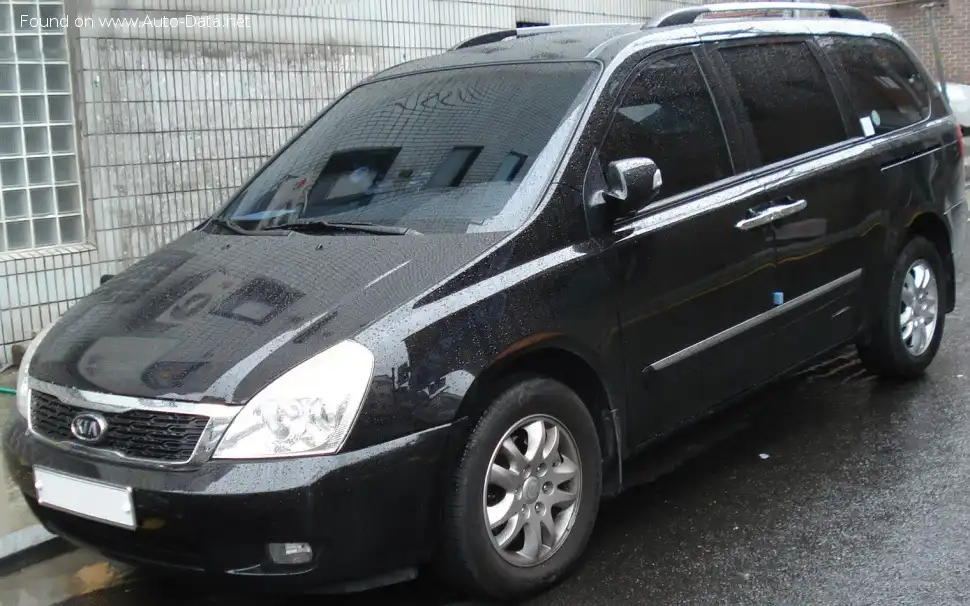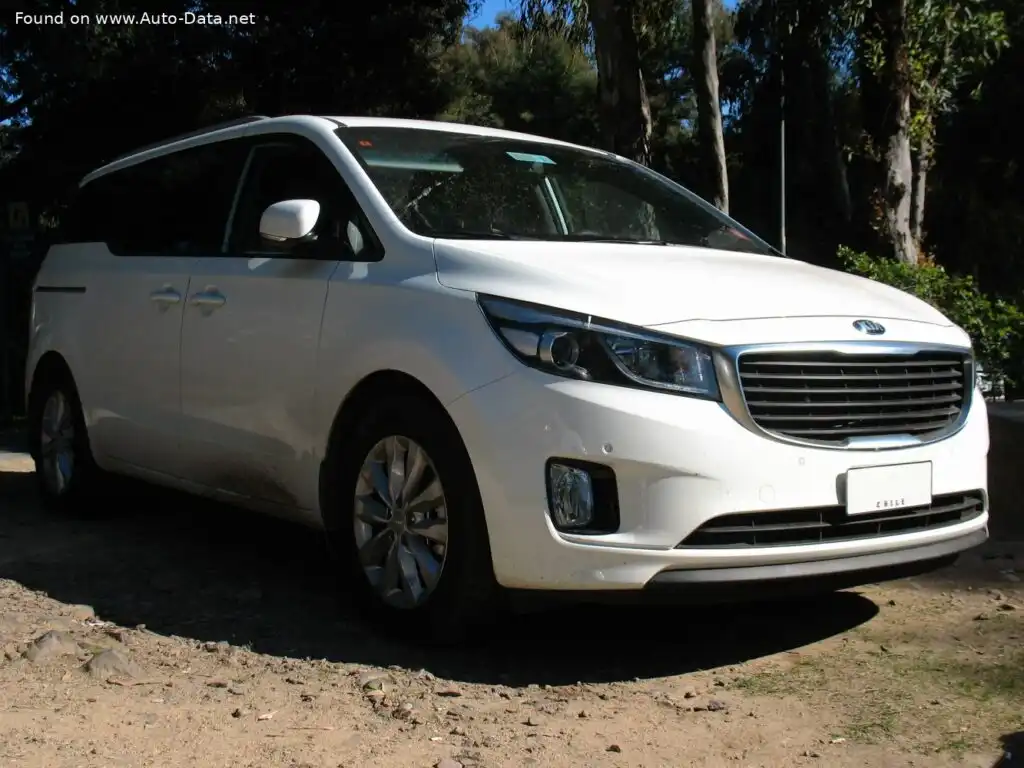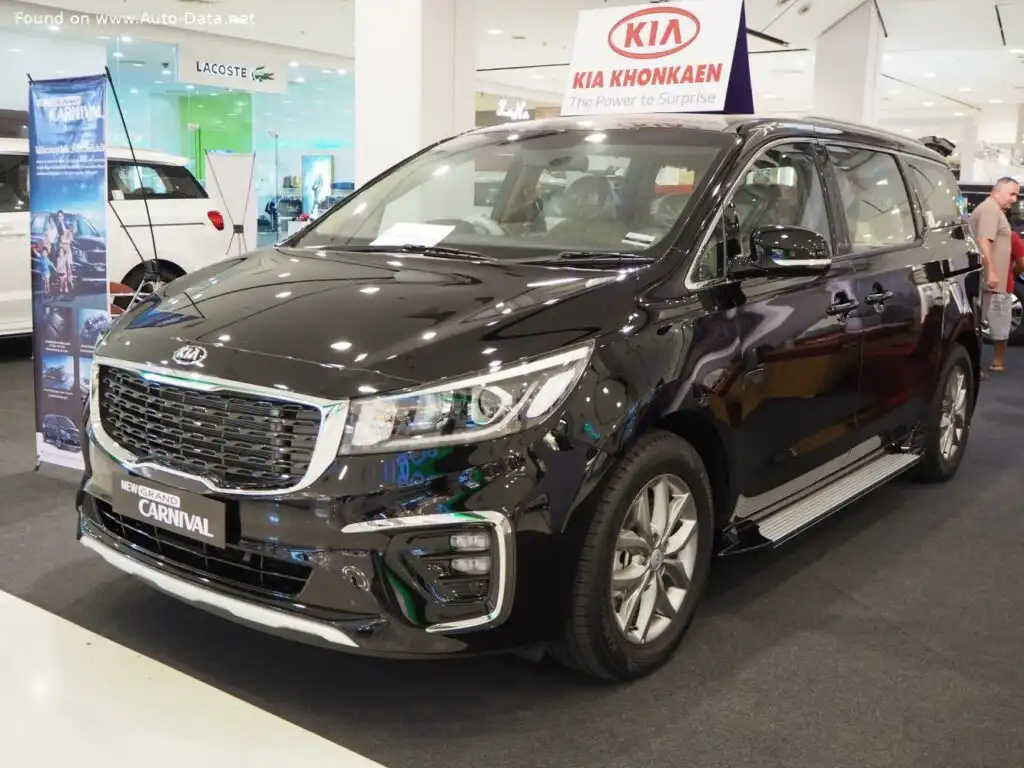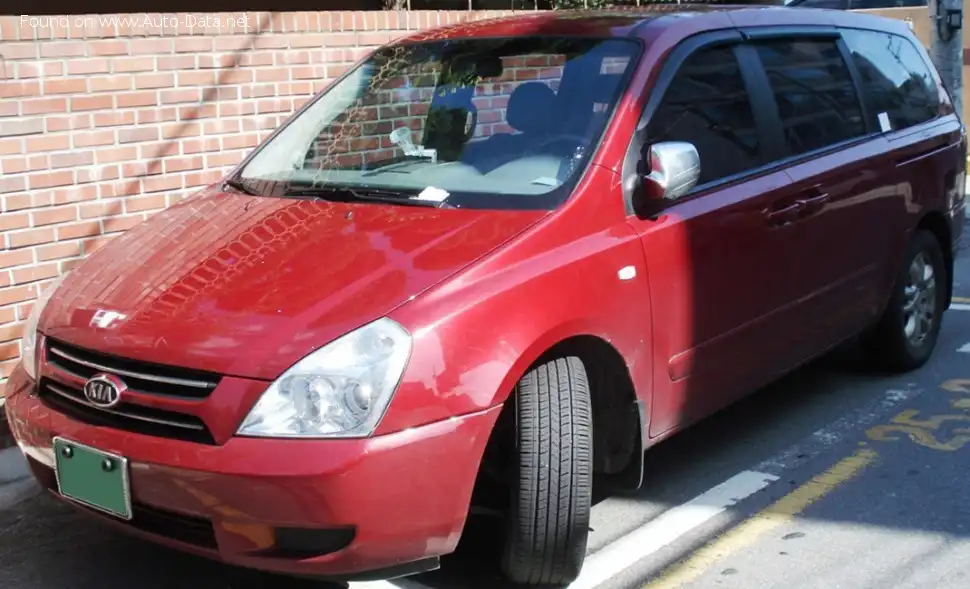
The Kia Grand Carnival II, specifically the 3.8 V6 variant paired with an automatic transmission, marked a significant advancement for Kia in the minivan sector. Produced from 2006 to 2010, this iteration of the Carnival – known as the Sedona in North American markets – was engineered to present a competitive alternative to established models such as the Honda Odyssey and Toyota Sienna. This particular trim, delivering 248 horsepower, was positioned as the premium offering within the Grand Carnival II range, prioritizing both performance and comfort for family transportation. Its primary sales focus was in markets outside of North America, where demand for larger, more spacious minivans remained robust.
Technical Specifications
| Brand | Kia |
| Model | Carnival |
| Generation | Grand Carnival II |
| Type (Engine) | 3.8 V6 (248 Hp) Automatic |
| Start of production | 2006 |
| End of production | 2010 |
| Powertrain Architecture | Internal Combustion engine |
| Body type | Minivan |
| Seats | 7 |
| Doors | 5 |
| Fuel Type | Petrol (Gasoline) |
| Weight-to-power ratio | 8.3 kg/Hp, 120.3 Hp/tonne |
| Weight-to-torque ratio | 6 kg/Nm, 166.3 Nm/tonne |
| Power | 248 Hp @ 6000 rpm |
| Power per litre | 65.6 Hp/l |
| Torque | 343 Nm @ 3500 rpm, 252.98 lb.-ft. @ 3500 rpm |
| Engine layout | Front, Transverse |
| Engine Model/Code | Lambda / G6DA |
| Engine displacement | 3778 cm3, 230.55 cu. in. |
| Number of cylinders | 6 |
| Engine configuration | V-engine |
| Cylinder Bore | 96 mm, 3.78 in. |
| Piston Stroke | 87 mm, 3.43 in. |
| Compression ratio | 10.4:1 |
| Number of valves per cylinder | 4 |
| Fuel injection system | Multi-port manifold injection |
| Engine aspiration | Naturally aspirated engine |
| Engine oil capacity | 5.2 l, 5.49 US qt | 4.58 UK qt |
| Coolant | 8.6 l, 9.09 US qt | 7.57 UK qt |
| Kerb Weight | 2062 kg, 4545.93 lbs |
| Max. weight | 2780 kg, 6128.85 lbs |
| Max load | 718 kg, 1582.92 lbs |
| Trunk (boot) space – minimum | 912 l, 32.21 cu. ft |
| Trunk (boot) space – maximum | 4007 l, 141.51 cu. ft |
| Fuel tank capacity | 80 l, 21.13 US gal | 17.6 UK gal |
| Length | 5130 mm, 201.97 in |
| Width | 1985 mm, 78.15 in |
| Height | 1760 mm, 69.29 in |
| Wheelbase | 3020 mm, 118.9 in |
| Front track | 1685 mm, 66.34 in |
| Rear (Back) track | 1685 mm, 66.34 in |
| Drag coefficient (Cd) | 0.34 |
| Minimum turning circle (turning diameter) | 12.1 m, 39.7 ft |
| Drivetrain Architecture | The Internal combustion engine (ICE) drives the front wheels of the vehicle. |
| Drive wheel | Front wheel drive |
| Number of gears and type of gearbox | 5 gears, automatic transmission |
| Front suspension | Independent type McPherson |
| Rear suspension | Dependent spring suspension with transverse stabilizer |
| Front brakes | Ventilated discs |
| Rear brakes | Drum |
| Assisting systems | ABS (Anti-lock braking system) |
| Steering type | Steering rack and pinion |
| Tires size | 225/70 R16 |
| Wheel rims size | 16 |
Powertrain & Engine Architecture
The core of the Grand Carnival II 3.8 V6 was the Kia-engineered Lambda engine, specifically the G6DA variant. This 3.8-liter, naturally aspirated V6 engine employed a 60-degree V-angle configuration to enhance balance and smoothness. It featured a cast iron block coupled with an aluminum cylinder head, incorporating four valves per cylinder and a dual overhead camshaft (DOHC) design. Fuel delivery was managed by a multi-port fuel injection system, ensuring precise fuel metering for optimal combustion. The engine generated 248 horsepower at 6000 rpm and 343 Nm (253 lb-ft) of torque at 3500 rpm. This power was then transmitted through a five-speed automatic transmission, designed for smooth and comfortable gear changes. The transmission’s calibration prioritized fuel efficiency and ease of driving over outright performance.
Driving Characteristics
The 3.8 V6 automatic Grand Carnival delivered a comfortable and capable driving experience, particularly well-suited for extended trips and family transportation. While not focused on performance, the engine provided sufficient power for highway merging and overtaking. The automatic transmission, while smooth, wasn’t particularly quick to downshift, resulting in a slightly less responsive feel compared to the manual transmission options available on other Grand Carnival trims. The gear ratios were optimized for cruising efficiency, making it a relaxed highway vehicle. However, when fully loaded with passengers and luggage, the engine could feel somewhat strained when ascending steep inclines. The front-wheel-drive configuration contributed to predictable handling, but lacked the dynamic capabilities of all-wheel-drive systems found in some competing vehicles.
Equipment & Trim Levels
The 3.8 V6 automatic trim generally represented the highest equipment level available on the Grand Carnival II. Standard features typically included air conditioning (climate control in certain markets), power windows and locks, a CD/radio system, and fundamental safety equipment such as dual front airbags and ABS brakes. Higher-specification models could be equipped with leather upholstery, a sunroof, woodgrain interior trim, and upgraded audio systems. Optional extras commonly included rear parking sensors, a navigation system, and alloy wheels. The interior was designed with practicality in mind, offering versatile seating arrangements and ample storage compartments.
Chassis & Braking
The Grand Carnival II utilized a McPherson strut independent suspension system at the front, providing a comfortable ride and reasonable handling. The rear suspension employed a dependent spring suspension with a transverse stabilizer bar, which helped to minimize body roll during cornering. Braking was provided by ventilated discs at the front and drum brakes at the rear. While adequate for everyday driving, the rear drum brakes were a cost-saving measure and didn’t offer the same stopping power as disc brakes on all four wheels. The steering system was a rack and pinion setup, delivering reasonably precise steering feel.
Market Reception & Comparison
The Kia Grand Carnival II 3.8 V6 automatic was generally well-received by automotive reviewers as a spacious and comfortable family vehicle. However, it often drew criticism for its relatively unremarkable styling and lack of a truly sporty driving experience. Compared to the 2.7-liter four-cylinder versions, the 3.8 V6 offered a substantial performance improvement, but at the expense of increased fuel consumption. Against competitors like the Honda Odyssey and Toyota Sienna, the Grand Carnival offered a more affordable price point, but often lacked the same level of refinement and brand recognition. Fuel economy was respectable for its class, though not class-leading.
Legacy
The Kia Grand Carnival II 3.8 V6 automatic, while not a revolutionary vehicle, played a vital role in establishing Kia as a credible contender in the minivan segment. The Lambda engine proved to be a reliable and durable powerplant, and numerous examples continue to operate today. In the used car market, these Grand Carnivals are frequently sought after for their spacious interiors, comfortable ride, and relatively affordable price. While maintenance costs can be moderate, the engine’s inherent reliability and the availability of spare parts contribute to its enduring appeal. The Grand Carnival II laid the groundwork for Kia’s continued success in the minivan market, paving the way for subsequent generations that have further refined the formula.