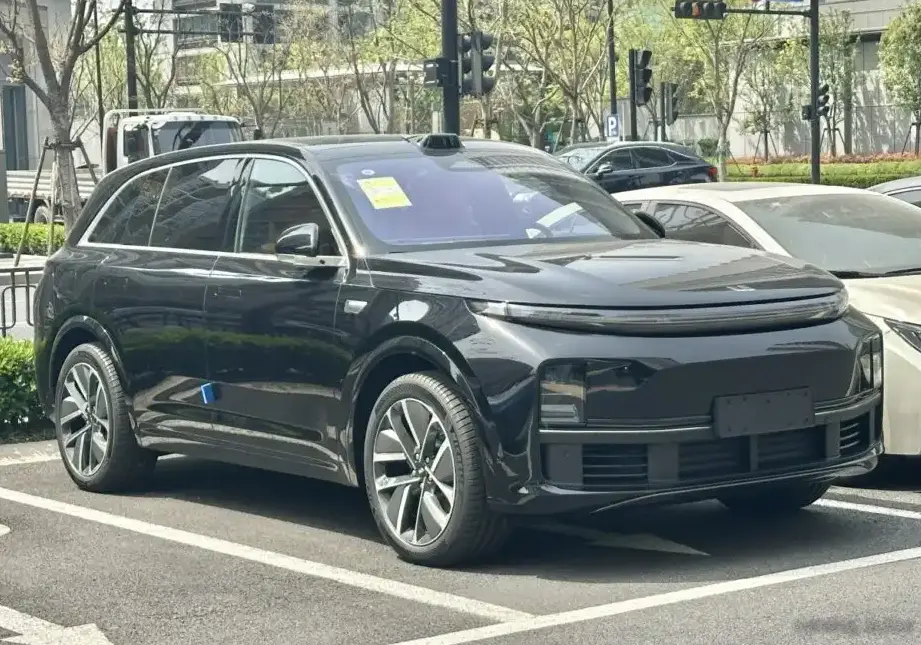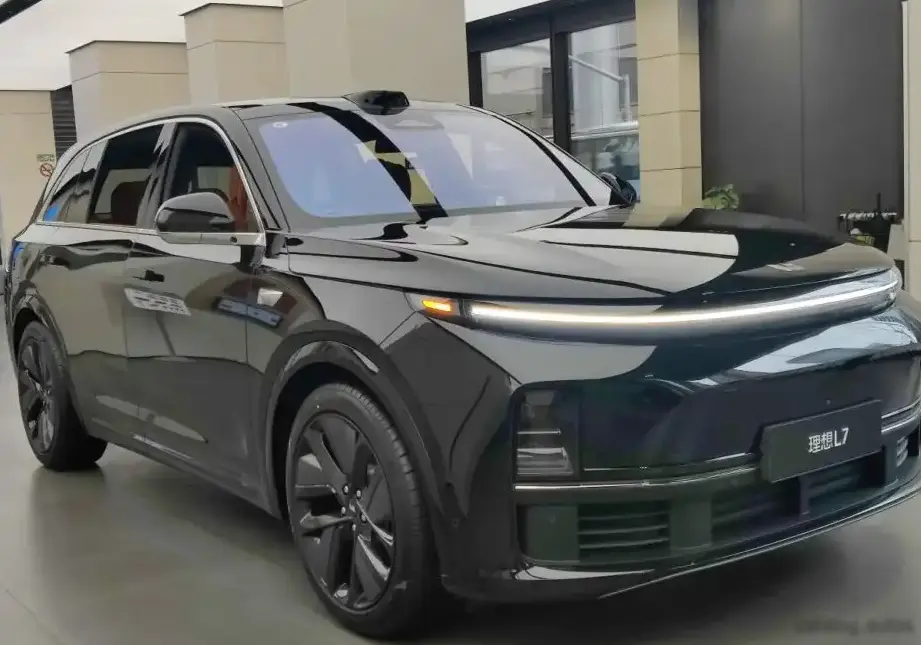
The Li L7 1.5T 40.9 kWh (449 Hp) Extended Range 4WD is a plug-in hybrid electric vehicle (PHEV) SUV produced by the Chinese automaker Li Auto (formerly known as CHJ Automotive) from September 2022 through 2024. Positioned as a premium offering within the Li Auto lineup, the L7 aimed to bridge the gap between pure electric vehicles and traditional internal combustion engine (ICE) vehicles, offering extended range and reduced range anxiety. It represents Li Auto’s commitment to innovative powertrain technology and spacious interior design, catering to the growing demand for family-oriented electric vehicles in the Chinese market. The L7 is built on a dedicated EV platform and features a unique range-extending architecture.
Technical Specifications
| Brand | Li |
| Model | L7 |
| Generation | L7 |
| Type (Engine) | 1.5T 40.9 kWh (449 Hp) Extended Range 4WD |
| Start of production | September, 2022 |
| End of production | 2024 |
| Powertrain Architecture | PHEV (Plug-in Hybrid Electric Vehicle) |
| Body type | SUV |
| Seats | 5 |
| Doors | 5 |
| Fuel consumption (economy) – combined | 7.6 l/100 km (30.9 US mpg, 37.2 UK mpg, 13.2 km/l) |
| Fuel Type | Petrol / electricity |
| Acceleration 0 – 100 km/h | 5.3 sec |
| Acceleration 0 – 62 mph | 5.3 sec |
| Acceleration 0 – 60 mph | 5 sec |
| Maximum speed | 180 km/h (111.85 mph) |
| Emission standard | China VI |
| Weight-to-power ratio | 5.5 kg/Hp, 183.3 Hp/tonne |
| Weight-to-torque ratio | 4 kg/Nm, 253.1 Nm/tonne |
| Gross battery capacity | 40.9 kWh |
| Battery technology | Lithium nickel manganese cobalt oxides (Li-NMC) |
| Battery location | Below the floor |
| All-electric range (WLTC) | 170 km (105.63 mi) |
| Average Energy consumption (WLTC) | 21.9 kWh/100 km (35.24 kWh/100 mi, 96 MPGe, 4.6 km/kWh, 2.8 mi/kWh) |
| Electric motor power (Rear) | 272 Hp |
| Electric motor Torque (Rear) | 400 Nm (295.02 lb.-ft.) |
| Electric motor model/code (Rear) | TZ220XS066 |
| Electric motor location (Rear) | Rear axle, Transverse |
| Electric motor type (Rear) | Synchronous |
| Electric motor power (Front) | 177 Hp |
| Electric motor Torque (Front) | 220 Nm (162.26 lb.-ft.) |
| Electric motor model/code (Front) | TZ180XS008 |
| Electric motor location (Front) | Front axle, Transverse |
| Electric motor type (Front) | Synchronous |
| System power | 449 Hp |
| System torque | 620 Nm (457.29 lb.-ft.) |
| Power (ICE) | 154 Hp |
| Power per litre | 102.9 Hp/l |
| Engine layout | Front, Transverse |
| Engine Model/Code | L2E15M |
| Engine displacement | 1496 cm3 (91.29 cu. in.) |
| Number of cylinders | 4 |
| Engine configuration | Inline |
| Number of valves per cylinder | 4 |
| Fuel injection system | Direct injection |
| Engine aspiration | Turbocharger, Intercooler |
| Valvetrain | DOHC |
| Kerb Weight | 2450-2460 kg (5401.33 – 5423.37 lbs.) |
| Max. weight | 3080 kg (6790.24 lbs.) |
| Max load | 620-630 kg (1366.87 – 1388.91 lbs.) |
| Trunk (boot) space – minimum | 801 l (28.29 cu. ft.) |
| Fuel tank capacity | 65 l (17.17 US gal | 14.3 UK gal) |
| Length | 5050 mm (198.82 in.) |
| Width | 1995 mm (78.54 in.) |
| Height | 1750 mm (68.9 in.) |
| Wheelbase | 3005 mm (118.31 in.) |
| Front track | 1725 mm (67.91 in.) |
| Rear (Back) track | 1741 mm (68.54 in.) |
| Gears/Gearbox | 1, automatic transmission |
INTRODUCTION
The Li L7 represents a significant step in Li Auto’s strategy to offer extended-range electric vehicles. Introduced in September 2022, it quickly became a popular choice in the competitive Chinese SUV market. The L7 distinguishes itself through its unique powertrain configuration, prioritizing electric driving while utilizing a gasoline engine solely for generating electricity, effectively acting as a range extender. This approach allows for a substantial all-electric range, reducing reliance on gasoline and minimizing emissions. The L7 is built on Li Auto’s proprietary platform, designed specifically for extended-range EVs, and features a spacious, technology-rich interior aimed at families.
Powertrain & Engine Architecture
The Li L7’s powertrain is centered around a 1.5-liter turbocharged four-cylinder gasoline engine (code L2E15M) paired with dual electric motors – one driving the front axle and the other powering the rear. The engine’s sole purpose is to generate electricity, which is then used to power the electric motors and recharge the 40.9 kWh battery pack. This configuration eliminates the mechanical link between the engine and the wheels, resulting in a smooth and quiet driving experience. The engine utilizes direct injection and a turbocharger to produce 154 horsepower. The front electric motor (TZ180XS008) delivers 177 hp and 220 Nm of torque, while the rear motor (TZ220XS066) produces 272 hp and 400 Nm of torque. Combined, the system delivers a total output of 449 hp and 620 Nm of torque. The L7 employs a single-speed automatic transmission for each electric motor, providing seamless acceleration. The battery pack, located under the floor, utilizes Lithium Nickel Manganese Cobalt Oxide (Li-NMC) chemistry.
Driving Characteristics
The Li L7 1.5T offers a refined and responsive driving experience. The instant torque from the electric motors provides brisk acceleration, with a 0-60 mph time of around 5 seconds. The dual-motor all-wheel-drive system ensures excellent traction and stability in various driving conditions. In typical driving scenarios, the vehicle operates primarily in electric mode, offering a quiet and emission-free experience. When the battery charge depletes, the gasoline engine seamlessly kicks in to generate electricity, extending the range. The transition between electric and gasoline power is virtually imperceptible. While not as sporty as some performance-oriented SUVs, the L7 prioritizes comfort and efficiency. The suspension, tuned for a smooth ride, effectively absorbs bumps and imperfections in the road. The steering is light and precise, making it easy to maneuver in urban environments.
Equipment & Trim Levels
The Li L7 1.5T Extended Range 4WD came well-equipped as standard. Key features included a large touchscreen infotainment system, a digital instrument cluster, leather upholstery, heated and ventilated front seats, a panoramic sunroof, and a comprehensive suite of advanced driver-assistance systems (ADAS). These systems typically included adaptive cruise control, lane-keeping assist, automatic emergency braking, and blind-spot monitoring. Optional extras included a premium sound system, upgraded interior trim materials, and a rear-seat entertainment system. The interior design emphasized spaciousness and comfort, with ample legroom and headroom for all passengers. The L7’s cabin was designed with a minimalist aesthetic, focusing on functionality and ease of use.
Chassis & Braking
The Li L7 features a robust chassis designed to accommodate the weight of the battery pack and powertrain components. The front suspension utilizes a double wishbone configuration with a transverse stabilizer bar, while the rear suspension employs an independent multi-link setup, also with a stabilizer bar. Air suspension is standard, providing adjustable ride height and enhanced comfort. The braking system consists of ventilated discs on all four wheels, providing ample stopping power. Anti-lock braking system (ABS) is standard, along with electronic brake-force distribution (EBD) and brake assist. The L7 rides on 20 or 21-inch alloy wheels, depending on the trim level, fitted with tires sized 255/50 R20 or 265/45 R21.
Market Reception & Comparison
The Li L7 was generally well-received by critics and consumers in China. It was praised for its spacious interior, comfortable ride, and extended range. The unique range-extending powertrain was seen as a practical solution for addressing range anxiety. Compared to other PHEV SUVs in the Chinese market, the L7 offered a compelling combination of performance, efficiency, and features. Its all-electric range was notably longer than many competitors. However, some critics noted that the gasoline engine could be somewhat noisy under heavy load. Compared to the fully electric Li ONE, the L7 offered extended range but sacrificed some of the pure electric driving experience.
Legacy
The Li L7 played a crucial role in establishing Li Auto as a major player in the Chinese EV market. Its success demonstrated the viability of the range-extending powertrain architecture and paved the way for future Li Auto models. While production ended in 2024, the L7 remains a popular choice in the used car market, offering a compelling value proposition for buyers seeking a spacious, efficient, and technologically advanced SUV. The powertrain, while complex, has proven to be relatively reliable, with few widespread issues reported. The L7’s legacy lies in its innovative approach to electric vehicle technology and its contribution to the growth of the EV market in China.