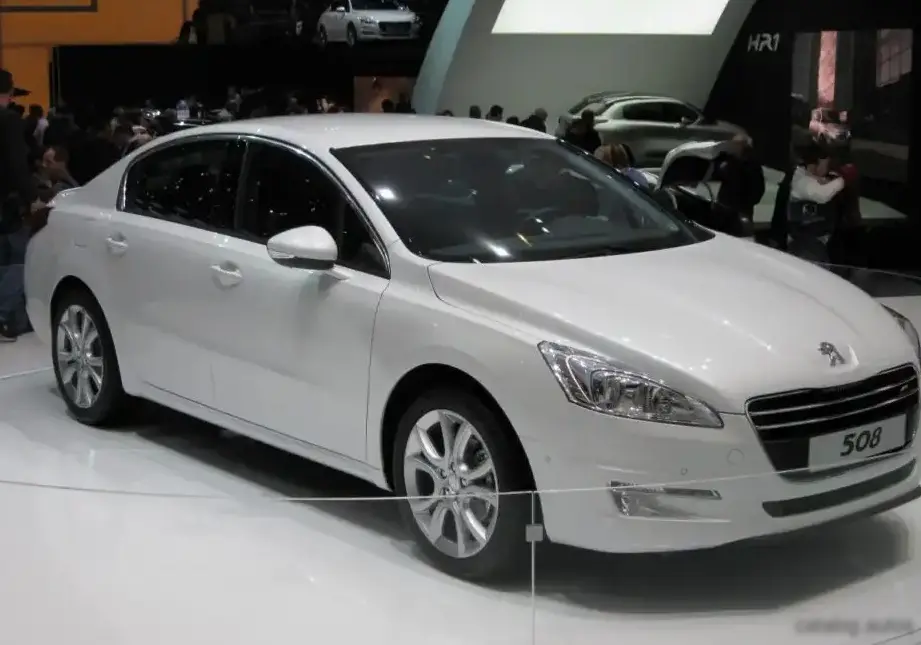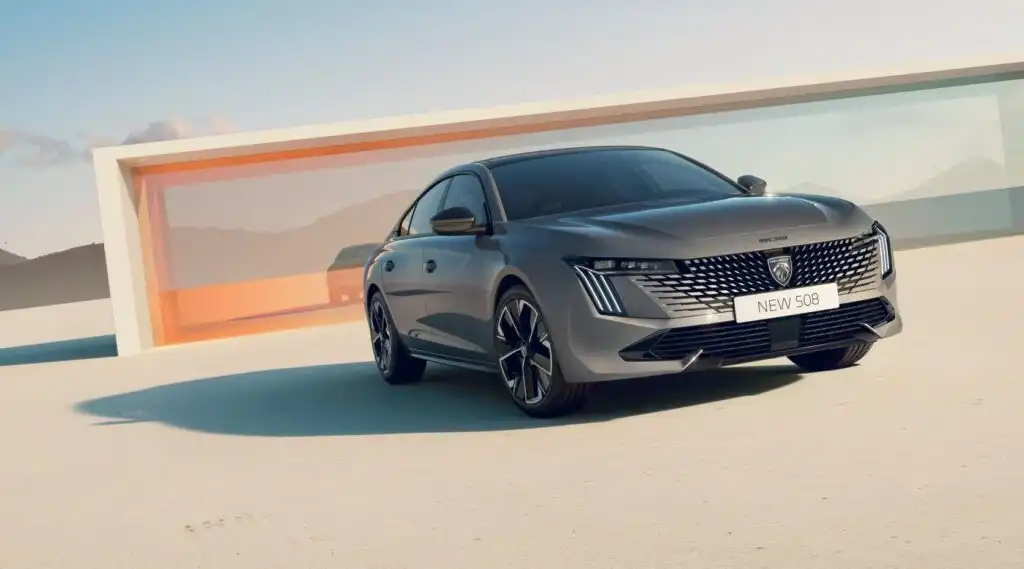
The Peugeot 508 II Phase II 1.5 BlueHDi (130 hp) EAT8, introduced in April 2023 and produced through March 2024, represents a key variant within the redesigned 508 lineup. Positioned as a fuel-efficient and accessible entry point to the 508 range, this model aimed to balance practicality with Peugeot’s signature stylish design. It falls within the second generation of the 508 (introduced in 2018), benefitting from the Phase II updates which included revised styling and enhanced technology. The 508, as a whole, is Peugeot’s flagship offering in the D-segment, competing with vehicles like the Ford Mondeo (in markets where it’s still sold), Volkswagen Passat, and Skoda Superb. This particular diesel variant was primarily targeted towards European markets where diesel fuel remains popular, offering a blend of economy and reasonable performance for everyday driving.
Technical Specifications
| Brand | Peugeot |
| Model | 508 |
| Generation | 508 II (Phase II, 2023) |
| Type (Engine) | 1.5 BlueHDi (130 Hp) EAT8 |
| Start of production | April, 2023 |
| End of production | March, 2024 |
| Powertrain Architecture | Internal Combustion engine |
| Body type | Fastback |
| Seats | 5 |
| Doors | 5 |
| Combined fuel consumption (WLTP) | 5-5.4 l/100 km (47 – 43.6 US mpg, 56.5 – 52.3 UK mpg, 20 – 18.5 km/l) |
| CO2 emissions (WLTP) | 132-142 g/km |
| Fuel Type | Diesel |
| Acceleration 0 – 100 km/h | 11.1 sec |
| Acceleration 0 – 62 mph | 11.1 sec |
| Acceleration 0 – 60 mph | 10.5 sec |
| Maximum speed | 208 km/h (129.25 mph) |
| Emission standard | Euro 6 |
| Weight-to-power ratio | 11.4 kg/Hp, 87.7 Hp/tonne |
| Weight-to-torque ratio | 4.9 kg/Nm, 202.4 Nm/tonne |
| Power | 130 Hp @ 3750 rpm |
| Power per litre | 86.7 Hp/l |
| Torque | 300 Nm @ 1750 rpm (221.27 lb.-ft. @ 1750 rpm) |
| Engine layout | Front, Transverse |
| Engine displacement | 1499 cm3 (91.47 cu. in.) |
| Number of cylinders | 4 |
| Engine configuration | Inline |
| Cylinder Bore | 75 mm (2.95 in.) |
| Piston Stroke | 84.8 mm (3.34 in.) |
| Compression ratio | 16.4:1 |
| Number of valves per cylinder | 4 |
| Fuel injection system | Diesel Commonrail |
| Engine aspiration | Turbocharger, Intercooler |
| Valvetrain | DOHC |
| Kerb Weight | 1482 kg (3267.25 lbs.) |
| Max. weight | 2030 kg (4475.38 lbs.) |
| Max load | 548 kg (1208.13 lbs.) |
| Trunk (boot) space – minimum | 487 l (17.2 cu. ft.) |
| Trunk (boot) space – maximum | 1537 l (54.28 cu. ft.) |
| Permitted trailer load with brakes (12%) | 1470 kg (3240.8 lbs.) |
| Length | 4750 mm (187.01 in.) |
| Width | 1859 mm (73.19 in.) |
| Width including mirrors | 2079 mm (81.85 in.) |
| Height | 1403 mm (55.24 in.) |
| Wheelbase | 2793 mm (109.96 in.) |
| Minimum turning circle | 10.8 m (35.43 ft.) |
| Drivetrain Architecture | Front wheel drive |
| Number of gears and type of gearbox | 8 gears, automatic transmission EAT8 |
| Front suspension | Independent, type McPherson with coil spring and anti-roll bar |
| Rear suspension | Independent multi-link spring suspension with stabilizer |
| Front brakes | Ventilated discs, 304×28 mm |
| Rear brakes | Disc, 268×12 mm |
| Assisting systems | ABS (Anti-lock braking system) |
| Steering type | Steering rack and pinion |
| Power steering | Electric Steering |
| Tires size | 215/55 R17; 235/45 R18; 235/40 R19 |
| Wheel rims size | 17; 18; 19 |
Powertrain & Engine Architecture
The 1.5 BlueHDi engine, part of Peugeot’s BlueHDi diesel range, is a four-cylinder, inline engine utilizing a turbocharger and intercooler to achieve its 130 horsepower output at 3750 rpm and 300 Nm (221 lb-ft) of torque at 1750 rpm. This engine falls under the DV5C family, known for its compact design and efficiency. The engine employs a diesel common rail direct injection system, delivering fuel directly into the cylinders at high pressure for optimized combustion. A particulate filter is standard, helping to reduce emissions and meet Euro 6 standards. The EAT8 (Efficient Automatic Transmission 8-speed) is an Aisin-sourced automatic gearbox known for its smooth shifts and efficiency. It features a torque converter and eight forward gears, contributing to both fuel economy and comfortable cruising.
Driving Characteristics
The 1.5 BlueHDi EAT8 powertrain delivers a comfortable and refined driving experience. While not particularly sporty, the 11.1-second 0-62 mph acceleration is adequate for most everyday driving situations. The EAT8 transmission is well-matched to the engine, providing smooth and timely gear changes. The torque available from 1750 rpm provides good responsiveness in typical driving conditions. Compared to higher-output versions of the 508, such as those with the 180 hp engine, this variant feels less eager to accelerate, but it compensates with improved fuel economy. The automatic transmission, while convenient, can sometimes feel hesitant during quick overtaking maneuvers compared to a manual transmission.
Equipment & Trim Levels
The 1.5 BlueHDi EAT8 typically came equipped with a respectable level of standard features. These generally included air conditioning, a touchscreen infotainment system with Apple CarPlay and Android Auto compatibility, alloy wheels, and a suite of safety features such as automatic emergency braking and lane departure warning. Higher trim levels, such as Allure and GT Line, added features like leather upholstery, a larger touchscreen, a panoramic sunroof, and adaptive cruise control. Interior upholstery was typically cloth on base models, with leather options available on higher trims. The dashboard layout was consistent across the range, featuring a modern and minimalist design.
Chassis & Braking
The 508 II utilizes a McPherson strut front suspension and a multi-link rear suspension, providing a good balance between comfort and handling. The front suspension incorporates a coil spring and anti-roll bar. Braking duties are handled by ventilated discs at the front and solid discs at the rear. ABS (Anti-lock Braking System) is standard. The steering is electric power-assisted, offering a light and precise feel. The chassis was tuned to prioritize comfort, resulting in a relatively soft ride quality. Stabilizer bars were used to reduce body roll during cornering.
Market Reception & Comparison
The 1.5 BlueHDi EAT8 variant was generally well-received by critics for its fuel efficiency and comfortable ride. It was seen as a practical choice for drivers covering long distances or those prioritizing economy. Compared to the more powerful petrol engines, the diesel offered significantly better fuel economy, making it an attractive option for those with high mileage. However, some reviewers noted that the performance was not as exciting as that of the higher-output engines. Reliability reports suggest that the 1.5 BlueHDi engine is generally reliable, although diesel particulate filter issues can occur with infrequent long journeys.
Legacy
The Peugeot 508 II 1.5 BlueHDi EAT8 represents a significant step forward in Peugeot’s design and engineering. The powertrain, while not groundbreaking, proved to be a reliable and efficient option for European drivers. In the used car market, these models offer a compelling combination of style, comfort, and economy. The EAT8 transmission has proven to be durable, and the 1.5 BlueHDi engine, when properly maintained, can provide many years of reliable service. As emissions regulations tighten, the demand for diesel vehicles may decrease, but the 508 1.5 BlueHDi remains a viable option for those seeking a fuel-efficient and stylish mid-size car.