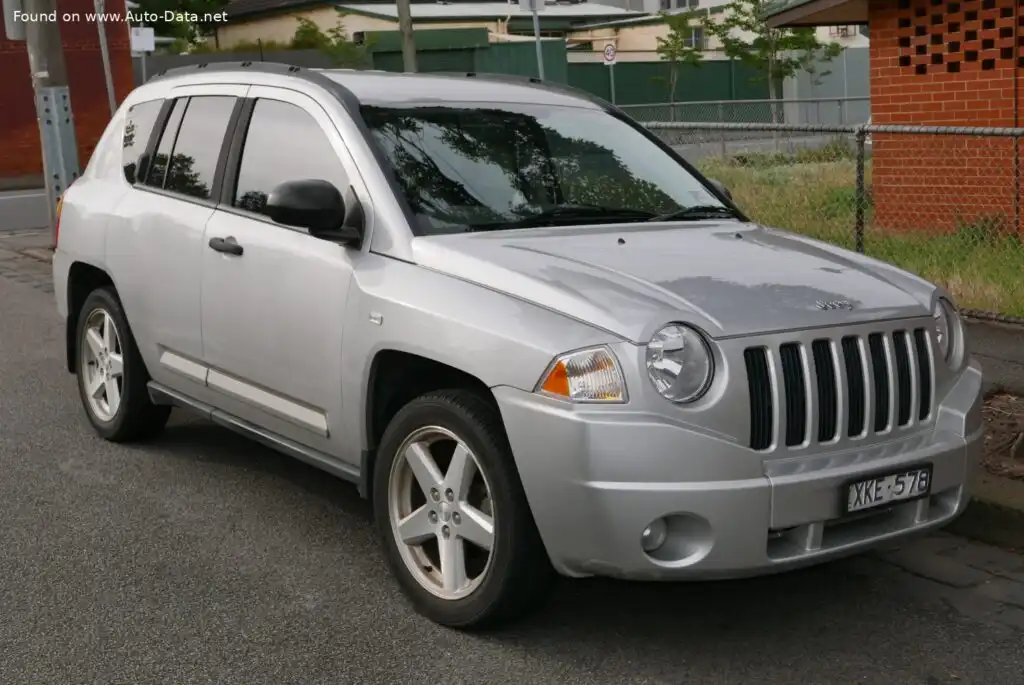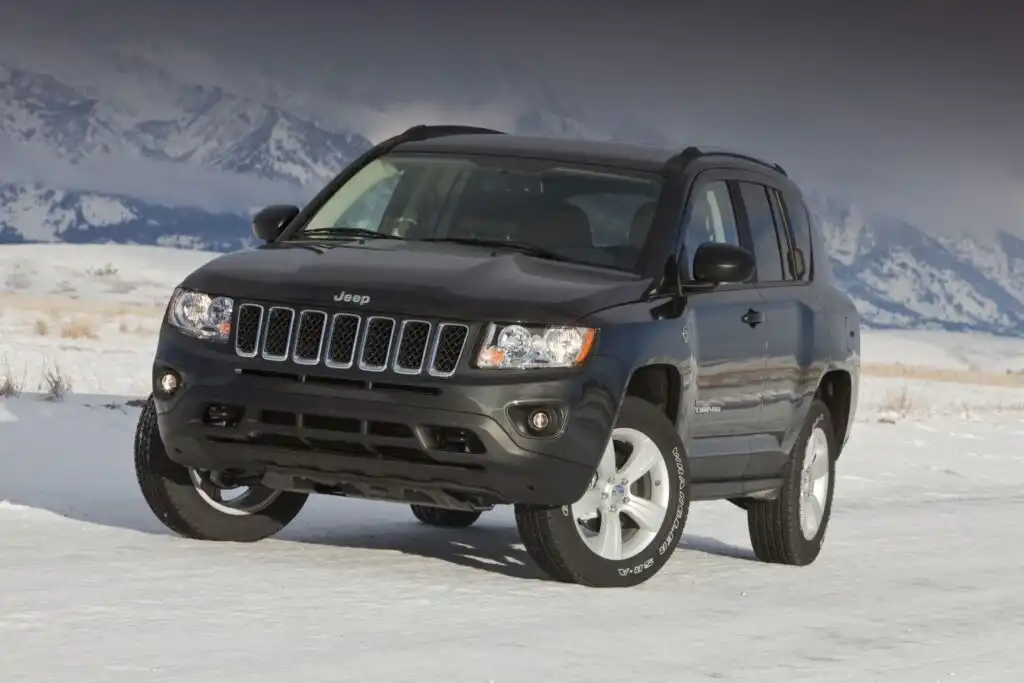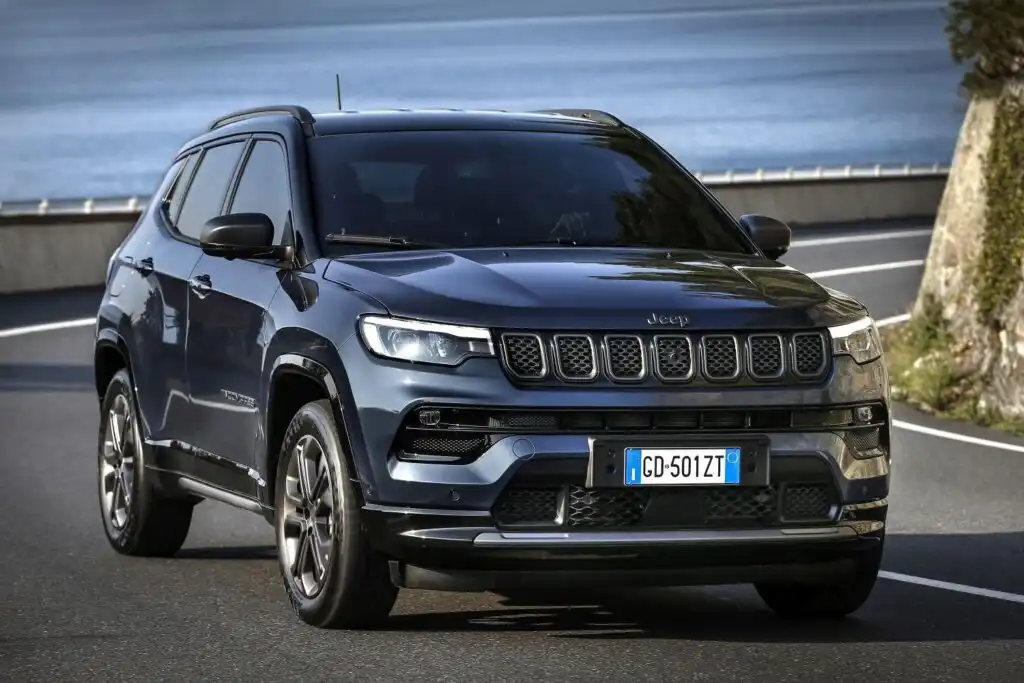
The Jeep Compass II (MP, facelift 2021) 2.0 Turbo 4×4 Automatic, launched in November 2022, represents a significant iteration of Jeep’s compact crossover SUV. Positioned as a mid-range to upper-mid-range offering within the Compass lineup, this variant aimed to provide a balance of performance, capability, and modern features for the North American market and beyond. It builds upon the foundation of the globally successful Compass II (MP) platform, offering a more refined driving experience and updated styling compared to earlier models. This version caters to buyers seeking all-weather capability and a more powerful engine option than the base models.
Technical Specifications
| Brand | Jeep |
| Model | Compass |
| Generation | Compass II (MP, facelift 2021) |
| Type (Engine) | 2.0 Turbo (200 Hp) 4×4 Automatic |
| Start of production | November, 2022 |
| Powertrain Architecture | Internal Combustion engine |
| Body type | SUV, Crossover |
| Seats | 5 |
| Doors | 5 |
| Fuel consumption (economy) – urban (EPA) | 9.8 l/100 km (24 US mpg, 28.8 UK mpg, 10.2 km/l) |
| Fuel consumption (economy) – extra urban (EPA) | 7.4 l/100 km (31.8 US mpg, 38.2 UK mpg, 13.5 km/l) |
| Fuel consumption (economy) – combined (EPA) | 8.7 l/100 km (27 US mpg, 32.5 UK mpg, 11.5 km/l) |
| CO2 emissions (EPA) | 205 g/km |
| Fuel Type | Petrol (Gasoline) |
| Weight-to-power ratio | 8.2 kg/Hp, 121.8 Hp/tonne |
| Weight-to-torque ratio | 5.5 kg/Nm, 182.7 Nm/tonne |
| Power | 200 Hp @ 5000 rpm |
| Power per litre | 100.3 Hp/l |
| Torque | 300 Nm @ 1750-4250 rpm (221.27 lb.-ft. @ 1750-4250 rpm) |
| Maximum engine speed | 5800 rpm |
| Engine layout | Front, Transverse |
| Engine Model/Code | EC1 |
| Engine displacement | 1995 cm3 (121.74 cu. in.) |
| Number of cylinders | 4 |
| Engine configuration | Inline |
| Cylinder Bore | 84 mm (3.31 in.) |
| Piston Stroke | 90 mm (3.54 in.) |
| Compression ratio | 10:1 |
| Number of valves per cylinder | 4 |
| Fuel injection system | Direct injection |
| Engine aspiration | Twin-scroll turbo, Intercooler |
| Valvetrain | DOHC, VVT |
| Engine oil capacity | 4.7 l (4.97 US qt | 4.14 UK qt) |
| Coolant | 8.6 l (9.09 US qt | 7.57 UK qt) |
| Kerb Weight | 1642 kg (3619.99 lbs.) |
| Max. weight | 2177 kg (4799.46 lbs.) |
| Max load | 535 kg (1179.47 lbs.) |
| Trunk (boot) space – minimum | 438 l (15.47 cu. ft.) |
| Trunk (boot) space – maximum | 1387 l (48.98 cu. ft.) |
| Fuel tank capacity | 51 l (13.47 US gal | 11.22 UK gal) |
| Permitted trailer load with brakes (12%) | 907 kg (1999.59 lbs.) |
| Permitted trailer load without brakes | 453 kg (998.69 lbs.) |
| Permitted towbar download | 90 kg (198.42 lbs.) |
| Length | 4404 mm (173.39 in.) |
| Width with mirrors folded | 1874 mm (73.78 in.) |
| Width including mirrors | 2033 mm (80.04 in.) |
| Height | 1647 mm (64.84 in.) |
| Wheelbase | 2636 mm (103.78 in.) |
| Front track | 1542 mm (60.71 in.) |
| Rear (Back) track | 1532 mm (60.31 in.) |
| Ride height (ground clearance) | 207 mm (8.15 in.) |
| Minimum turning circle (turning diameter) | 11.07 m (36.32 ft.) |
| Approach angle | 16.1° |
| Departure angle | 31.4° |
| Ramp-over (brakeover) angle | 22.5° |
| Drivetrain Architecture | The Internal combustion engine (ICE) drives the front wheels permanently, and the rear wheels are driven through an electrically or mechanically operated clutch if necessary. |
| Drive wheel | All wheel drive (4×4) |
| Number of gears and type of gearbox | 8 gears, automatic transmission |
| Front suspension | Independent, type McPherson with coil spring and anti-roll bar |
| Rear suspension | Independent coil spring, Transverse stabilizer |
| Front brakes | Ventilated discs, 305×28 mm |
| Rear brakes | Disc, 278×12 mm |
| Assisting systems | ABS (Anti-lock braking system) |
| Steering type | Steering rack and pinion |
| Power steering | Electric Steering |
| Tires size | 225/60 R17; 225/55 R18; 235/45 R19 |
| Wheel rims size | 7J x 17; 7J x 18; 7.5J x 19 |
Powertrain & Engine Architecture
At the heart of the Compass II 2.0 Turbo 4×4 Automatic lies the EC1 engine, a 1.995-liter inline-four cylinder gasoline engine. This engine utilizes direct fuel injection and is coupled with a twin-scroll turbocharger and intercooler to enhance power and efficiency. The engine produces 200 horsepower at 5000 rpm and 300 Nm (221.27 lb.-ft.) of torque between 1750 and 4250 rpm. The engine features a double overhead camshaft (DOHC) valvetrain with variable valve timing (VVT) on both intake and exhaust sides, optimizing performance across the rev range. The engine is paired with a sophisticated 8-speed automatic transmission, designed for smooth shifting and efficient power delivery. This transmission is crucial for managing the engine’s torque output and providing a comfortable driving experience.
Driving Characteristics
The 2.0-liter turbocharged engine and 8-speed automatic transmission combination delivers a noticeable step up in performance compared to the base engine options available on the Compass. Acceleration is brisk, making highway merging and overtaking maneuvers relatively effortless. The automatic transmission is well-tuned, providing smooth and timely gear changes. While not a sports-oriented SUV, the 2.0 Turbo offers a responsive driving experience. The 4×4 system provides enhanced traction in various weather conditions, making it a capable all-weather vehicle. Compared to manual transmission versions, the automatic prioritizes convenience and ease of use, though it may slightly diminish fuel economy and driver engagement.
Equipment & Trim Levels
The 2.0 Turbo 4×4 Automatic trim typically includes a generous array of standard features. These often include automatic climate control, a touchscreen infotainment system with Apple CarPlay and Android Auto compatibility, keyless entry, and a suite of advanced driver-assistance systems (ADAS) such as adaptive cruise control, lane departure warning, and automatic emergency braking. Interior upholstery is typically cloth or leatherette, with higher trims offering full leather options. Optional extras could include a panoramic sunroof, premium audio system, and navigation system. The specific features varied depending on the model year and package selected.
Chassis & Braking
The Compass II utilizes an independent suspension setup on all four wheels, with a McPherson strut design at the front and a multi-link setup at the rear. This configuration provides a comfortable ride quality and decent handling characteristics. The front brakes are ventilated discs measuring 305×28 mm, while the rear brakes are solid discs measuring 278×12 mm. The vehicle is equipped with an anti-lock braking system (ABS) as standard. Stabilizer bars are fitted to both the front and rear axles to reduce body roll during cornering.
Market Reception & Comparison
The Jeep Compass II 2.0 Turbo 4×4 Automatic was generally well-received by automotive critics. It was praised for its improved performance, refined interior, and capable all-wheel-drive system. However, some reviewers noted that the interior materials, while improved, still didn’t quite match the quality of some competitors. Compared to other trims in the Compass lineup, the 2.0 Turbo offered a significant performance advantage but came at a higher price point. Fuel economy was comparable to other turbocharged SUVs in its class, though not as efficient as the base engine options. Reliability reports have been generally positive, with no major recurring issues reported for this powertrain.
Legacy
The 2.0-liter turbocharged engine and 8-speed automatic transmission combination has proven to be a reliable and durable powertrain in the Compass II. In the used car market, this variant holds its value relatively well due to its desirable combination of performance, features, and all-weather capability. While not a collector’s item, it represents a well-rounded and practical choice for buyers seeking a compact SUV with a bit more power and refinement. The EC1 engine has become a staple in the Jeep lineup, demonstrating its versatility and dependability.