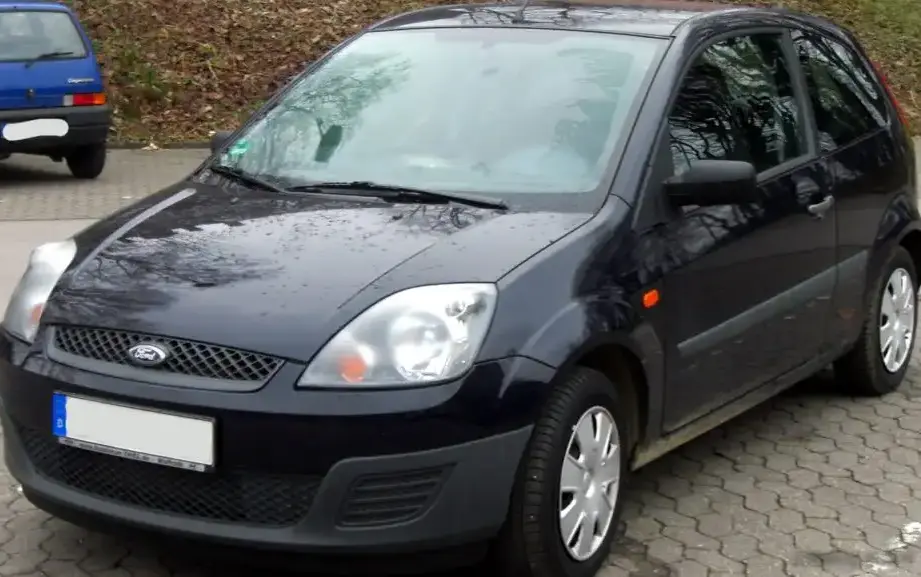
The Ford Fiesta ST 2.0 Duratec HE, produced from 2005 to 2008, represented a performance-oriented variant within the Mk6 Fiesta facelift range. This three-door hatchback aimed to deliver a more engaging driving experience than the standard Fiesta models, slotting in as the flagship performance trim. It was a key offering for Ford in the European market, appealing to enthusiasts seeking a compact, sporty vehicle. The “ST” designation, standing for “Sport Technologies,” signified a focus on enhanced handling, braking, and engine performance. This particular iteration, powered by the 2.0-liter Duratec HE engine producing 150 horsepower, was a significant step up from the base models and offered a compelling alternative to rivals like the Volkswagen Polo GTI and Renault Clio Sport.
Technical Specifications
| Brand | Ford |
| Model | Fiesta |
| Generation | Fiesta VI (Mk6, facelift 2005) 3 door |
| Type (Engine) | ST 2.0 Duratec HE (150 Hp) |
| Start of production | 2005 |
| End of production | 2008 |
| Powertrain Architecture | Internal Combustion engine |
| Body type | Hatchback |
| Seats | 5 |
| Doors | 3 |
| Fuel consumption (urban) | 10.4 l/100 km (22.6 US mpg, 27.2 UK mpg, 9.6 km/l) |
| Fuel consumption (extra urban) | 5.7 l/100 km (41.3 US mpg, 49.6 UK mpg, 17.5 km/l) |
| Fuel consumption (combined) | 7.4 l/100 km (31.8 US mpg, 38.2 UK mpg, 13.5 km/l) |
| CO2 emissions | 177 g/km |
| Fuel Type | Petrol (Gasoline) |
| Acceleration 0 – 100 km/h | 8.4 sec |
| Acceleration 0 – 62 mph | 8.4 sec |
| Acceleration 0 – 60 mph | 8 sec |
| Maximum speed | 208 km/h (129.25 mph) |
| Emission standard | EURO 4 |
| Weight-to-power ratio | 7.8 kg/Hp, 128.8 Hp/tonne |
| Weight-to-torque ratio | 6.1 kg/Nm, 163.1 Nm/tonne |
| Power | 150 Hp @ 6000 rpm |
| Power per litre | 75 Hp/l |
| Torque | 190 Nm @ 4500 rpm (140.14 lb.-ft. @ 4500 rpm) |
| Engine layout | Front, Transverse |
| Engine Model/Code | N4JB |
| Engine displacement | 1999 cm3 (121.99 cu. in.) |
| Number of cylinders | 4 |
| Engine configuration | Inline |
| Number of valves per cylinder | 4 |
| Fuel injection system | Multi-port manifold injection |
| Engine aspiration | Naturally aspirated engine |
| Valvetrain | DOHC |
| Engine oil capacity | 4.3 l (4.54 US qt | 3.78 UK qt) |
| Coolant capacity | 5 l (5.28 US qt | 4.4 UK qt) |
| Kerb Weight | 1165 kg (2568.39 lbs.) |
| Max. weight | 1590 kg (3505.35 lbs.) |
| Max load | 425 kg (936.96 lbs.) |
| Trunk (boot) space – minimum | 268 l (9.46 cu. ft.) |
| Trunk (boot) space – maximum | 945 l (33.37 cu. ft.) |
| Fuel tank capacity | 45 l (11.89 US gal | 9.9 UK gal) |
| Length | 3922 mm (154.41 in.) |
| Width | 1685 mm (66.34 in.) |
| Width including mirrors | 1912 mm (75.28 in.) |
| Height | 1429 mm (56.26 in.) |
| Wheelbase | 2486 mm (97.87 in.) |
| Front track | 1464-1477 mm (57.64 – 58.15 in.) |
| Rear (Back) track | 1434-1444 mm (56.46 – 56.85 in.) |
| Drivetrain Architecture | Front wheel drive |
| Number of gears and type of gearbox | 5 gears, manual transmission |
| Front brakes | Ventilated discs |
| Rear brakes | Disc |
| Assisting systems | ABS (Anti-lock braking system) |
| Steering type | Steering rack and pinion |
| Power steering | Hydraulic Steering |
| Tires size | 195/45 R16 |
Powertrain & Engine Architecture
The heart of the Fiesta ST was the 2.0-liter Duratec HE inline-four cylinder engine, designated as the N4JB. This engine was a naturally aspirated unit, meaning it did not employ forced induction like a turbocharger or supercharger. It featured a double overhead camshaft (DOHC) valvetrain with four valves per cylinder, optimizing airflow for improved performance. Fuel delivery was handled by a multi-port fuel injection system. The Duratec HE engine was known for its relatively smooth power delivery and willingness to rev. The 150 horsepower peak was achieved at 6000 rpm, while the 190 Nm (140 lb-ft) of torque was available at 4500 rpm. This engine was paired exclusively with a five-speed manual transmission, chosen for its direct connection and driver engagement. The transmission’s gear ratios were tuned to complement the engine’s characteristics, providing brisk acceleration and reasonable cruising ability.
Driving Characteristics
The Fiesta ST 2.0 offered a noticeably more spirited driving experience compared to the standard Fiesta models. While not brutally fast, the 150 hp engine provided ample power for confident overtaking and enjoyable cornering. The five-speed manual transmission allowed for precise gear selection, and the relatively short gear ratios helped to keep the engine within its power band. The steering was direct and well-weighted, providing good feedback to the driver. The suspension was also firmer than the standard Fiesta, reducing body roll and improving handling. However, this did come at the expense of some ride comfort. Compared to the later, turbocharged Fiesta ST models, the 2.0-liter version felt less potent in terms of outright acceleration, but many enthusiasts appreciated its more linear power delivery and predictable handling characteristics.
Equipment & Trim Levels
The Fiesta ST 2.0 came reasonably well-equipped as standard. Key features included sports seats, air conditioning, alloy wheels, and a sporty body kit consisting of a front spoiler, side skirts, and a rear spoiler. The interior typically featured a dark color scheme with aluminum trim accents. Optional extras included a sunroof, upgraded audio system, and metallic paint finishes. The ST trim level was positioned as the top-of-the-line Fiesta, offering a more premium feel than the lower-spec models.
Chassis & Braking
The Fiesta ST featured a revised suspension setup compared to the standard Fiesta, with stiffer springs and dampers. The front suspension utilized MacPherson struts, while the rear employed a twist-beam axle. The braking system consisted of ventilated discs on the front wheels and solid discs on the rear. Anti-lock Braking System (ABS) was standard. The chassis was reinforced in key areas to improve rigidity and handling. The tires were typically 195/45 R16, providing a good balance of grip and ride comfort.
Market Reception & Comparison
The Fiesta ST 2.0 was generally well-received by automotive critics. It was praised for its engaging handling, responsive engine, and sporty styling. However, some reviewers noted that the interior was somewhat basic and that the ride could be firm on rough roads. Compared to rivals like the Volkswagen Polo GTI, the Fiesta ST offered a more raw and driver-focused experience. The Polo GTI was often seen as more refined and comfortable, while the Fiesta ST prioritized handling and driver engagement. In terms of fuel economy, the Fiesta ST 2.0 achieved around 31.8 US mpg on the combined cycle, which was respectable for a performance hatchback of its era.
Legacy
The Fiesta ST 2.0 Duratec HE has developed a loyal following among enthusiasts. The engine is generally considered to be reliable, although regular maintenance is essential. Common issues include oil leaks and wear on the timing chain. The availability of spare parts is generally good, but some components may be becoming increasingly difficult to find. Today, well-maintained examples of the Fiesta ST 2.0 are sought after by collectors and enthusiasts who appreciate its classic hot hatch character. It represents a significant chapter in the Fiesta’s history, paving the way for the more powerful and technologically advanced Fiesta ST models that followed.