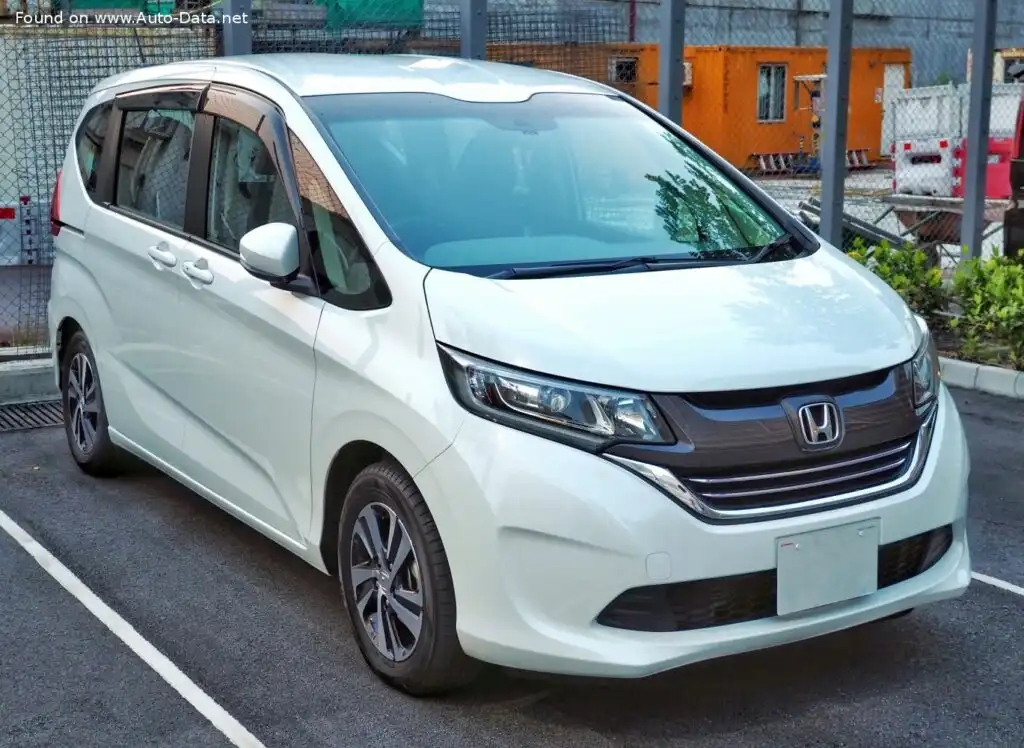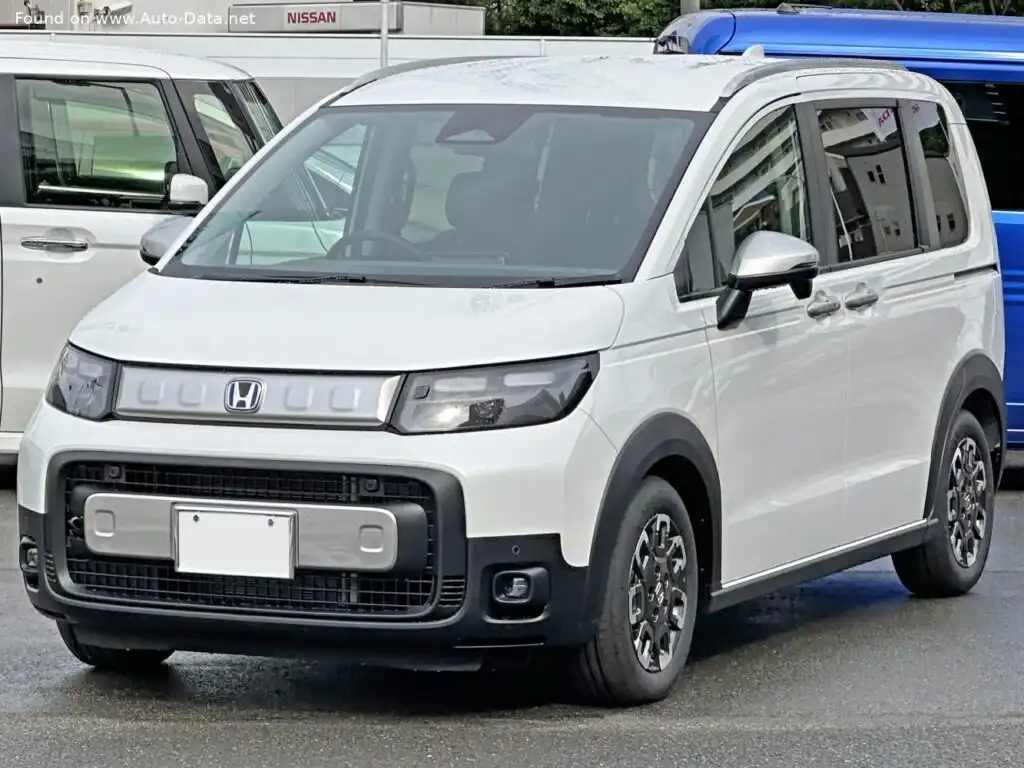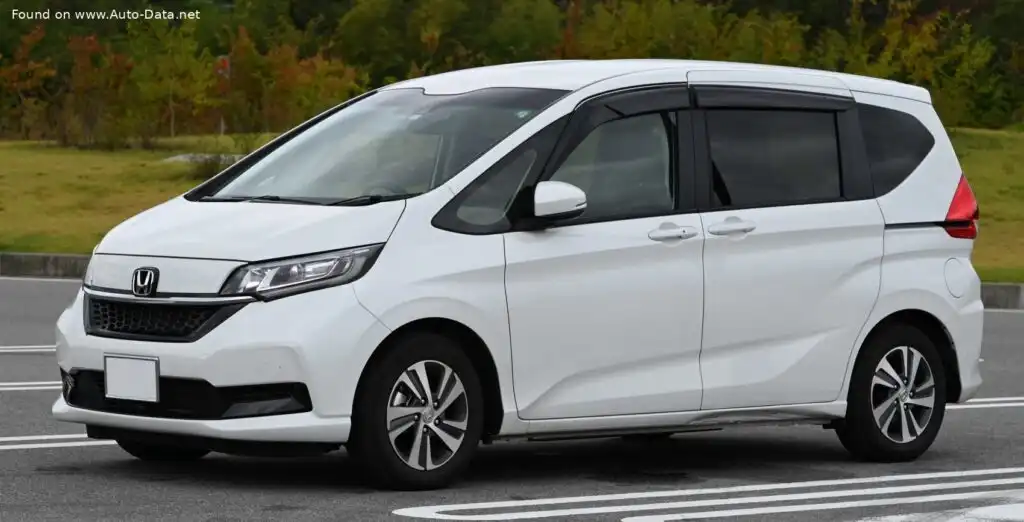
The Honda Freed II, specifically the 1.5 i-VTEC variant equipped with a Continuously Variable Transmission (CVT), was a popular multi-purpose vehicle (MPV) produced from October 2019 to May 2024. This iteration represents a facelift of the second-generation Freed (GB5/GB6), primarily aimed at the Japanese domestic market (JDM). The Freed series, renowned for its practical design and spacious interior, caters to families seeking a versatile and efficient vehicle. The 1.5 i-VTEC CVT trim occupied a central position in the Freed lineup, offering a balance between affordability, fuel economy, and usability, positioned below the more premium hybrid models.
Technical Specifications
| Brand | Honda |
| Model | Freed |
| Generation | Freed II (facelift 2019) |
| Type (Engine) | 1.5 i-VTEC (129 Hp) CVT |
| Start of production | October, 2019 |
| End of production | May, 2024 |
| Powertrain Architecture | Internal Combustion engine |
| Body type | MPV |
| Seats | 5-7 |
| Doors | 5 |
| Fuel consumption (urban) | 7.6 l/100 km (30.9 US mpg) |
| Fuel consumption (extra urban) | 5.3 l/100 km (44.4 US mpg) |
| Fuel Type | Petrol (Gasoline) |
| Weight-to-power ratio | 10.4 kg/Hp |
| Weight-to-torque ratio | 8.8 kg/Nm |
| Power | 129 Hp @ 6600 rpm |
| Power per litre | 86.2 Hp/l |
| Torque | 153 Nm @ 4600 rpm (112.85 lb.-ft. @ 4600 rpm) |
| Engine Model/Code | L15B |
| Engine displacement | 1496 cm3 (91.29 cu. in.) |
| Number of cylinders | 4 |
| Engine configuration | Inline |
| Cylinder Bore | 73 mm (2.87 in.) |
| Piston Stroke | 89.4 mm (3.52 in.) |
| Compression ratio | 11.5:1 |
| Number of valves per cylinder | 4 |
| Fuel injection system | Direct injection |
| Engine aspiration | Naturally aspirated engine |
| Valvetrain | DOHC, i-VTEC |
| Engine oil capacity | 3.3 l (3.49 US qt | 2.9 UK qt) |
| Kerb Weight | 1340-1390 kg (2954.19 – 3064.43 lbs.) |
| Fuel tank capacity | 36 l (9.51 US gal | 7.92 UK gal) |
| Length | 4265-4295 mm (167.91 – 169.09 in.) |
| Width | 1695 mm (66.73 in.) |
| Height | 1710 mm (67.32 in.) |
| Wheelbase | 2740 mm (107.87 in.) |
| Front track | 1480 mm (58.27 in.) |
| Rear track | 1485 mm (58.46 in.) |
| Ride height (ground clearance) | 135 mm (5.31 in.) |
| Drivetrain Architecture | Front wheel drive |
| Number of gears and type of gearbox | automatic transmission CVT |
| Front suspension | Independent type McPherson |
| Rear suspension | Torsion |
| Front brakes | Ventilated discs |
| Rear brakes | Disc |
| Assisting systems | ABS (Anti-lock braking system) |
| Steering type | Steering rack and pinion |
| Power steering | Electric Steering |
| Tires size | 185/65 R15 88S |
| Wheel rims size | 15 |
Powertrain & Engine Architecture
The heart of the Freed II 1.5 i-VTEC CVT is the L15B engine, a 1.5-liter inline-four cylinder gasoline engine. This engine is part of Honda’s well-regarded L-series engine family, known for its reliability and fuel efficiency. The L15B utilizes Honda’s intelligent Variable Valve Timing and Lift Electronic Control (i-VTEC) system, which optimizes valve timing and lift based on engine speed and load, improving both performance and fuel economy. Direct fuel injection further enhances combustion efficiency. The engine produces 129 horsepower at 6,600 rpm and 153 Nm (112.85 lb-ft) of torque at 4,600 rpm. The engine is paired with a Continuously Variable Transmission (CVT), which provides smooth, stepless gear changes. This CVT is tuned for efficiency and comfort rather than outright performance.
Driving Characteristics
The 1.5 i-VTEC CVT configuration of the Freed II prioritizes smooth and comfortable driving over sporty performance. Acceleration is adequate for everyday driving situations, but it won’t provide the briskness of the hybrid models or even the manual transmission options (where available in other markets). The CVT effectively utilizes the engine’s torque band, providing linear acceleration. The CVT’s programming emphasizes fuel efficiency, which can sometimes result in a slight “rubber band” feel during hard acceleration. The steering is light and easy, making it well-suited for urban environments. The suspension is tuned for comfort, absorbing bumps and imperfections in the road reasonably well.
Equipment & Trim Levels
The 1.5 i-VTEC CVT trim of the Freed II typically included standard features such as power windows, power door locks, air conditioning, and a basic audio system. Higher trim levels offered additional features like alloy wheels, a touchscreen infotainment system, and automatic climate control. Safety features included ABS, airbags, and vehicle stability control. Interior upholstery was typically cloth, with options for upgraded materials on higher trims. The Freed II’s interior is designed with practicality in mind, featuring numerous storage compartments and a flexible seating configuration.
Chassis & Braking
The Freed II utilizes a front-wheel-drive layout. The front suspension employs an independent McPherson strut design, while the rear suspension uses a torsion beam setup. This configuration provides a good balance between ride comfort and handling. The braking system consists of ventilated discs on the front wheels and solid discs on the rear. ABS (Anti-lock Braking System) is standard, enhancing braking performance and stability. The vehicle’s relatively light weight contributes to its manageable handling characteristics.
Market Reception & Comparison
The Honda Freed II 1.5 i-VTEC CVT was well-received in the Japanese market for its practicality, fuel efficiency, and spacious interior. Critics praised its ease of use and versatility, making it an ideal vehicle for families. Compared to the hybrid versions of the Freed II, the 1.5 i-VTEC CVT offered a lower purchase price but sacrificed some fuel economy and performance. Compared to other MPVs in its class, the Freed II stood out for its unique side-opening rear doors (on some models), which provided easy access to the third-row seats. Fuel economy figures were competitive within the MPV segment, averaging around 7.6 l/100km in urban driving and 5.3 l/100km on the highway.
Legacy
The Honda Freed II 1.5 i-VTEC CVT has proven to be a reliable and durable vehicle. The L15B engine is known for its longevity, and the CVT transmission, while not as robust as a traditional automatic, has generally proven to be dependable with proper maintenance. In the used car market, the Freed II 1.5 i-VTEC CVT remains a popular choice for families seeking an affordable and practical MPV. Its reputation for reliability and fuel efficiency continues to make it a desirable option, even as newer models become available. Regular maintenance, including timely oil changes and CVT fluid replacements, is crucial for ensuring the long-term health of this powertrain.