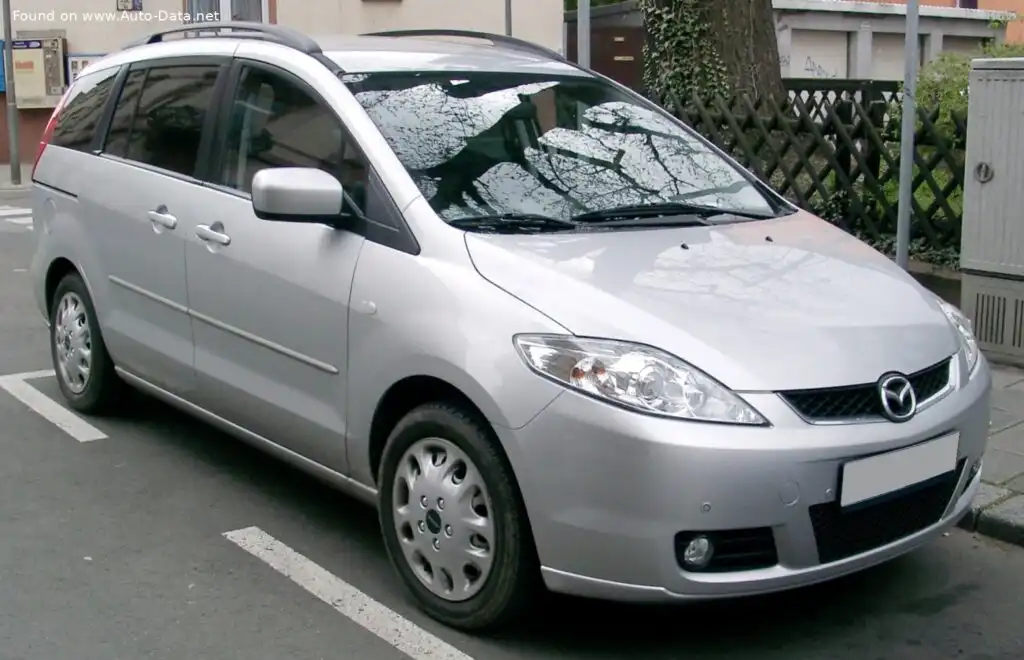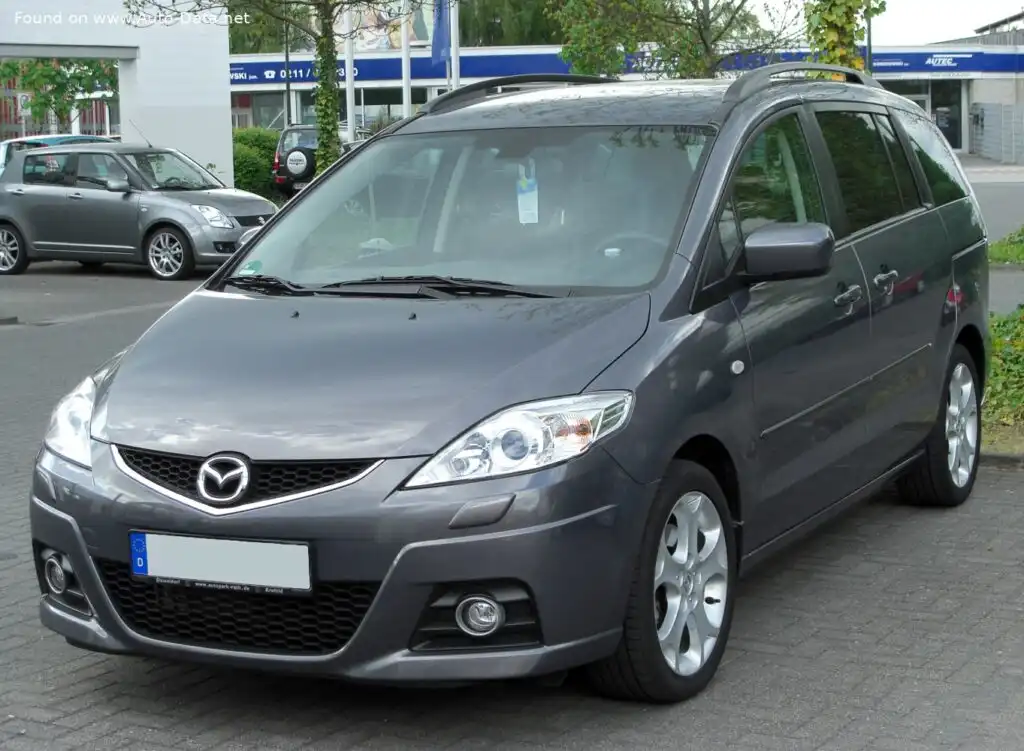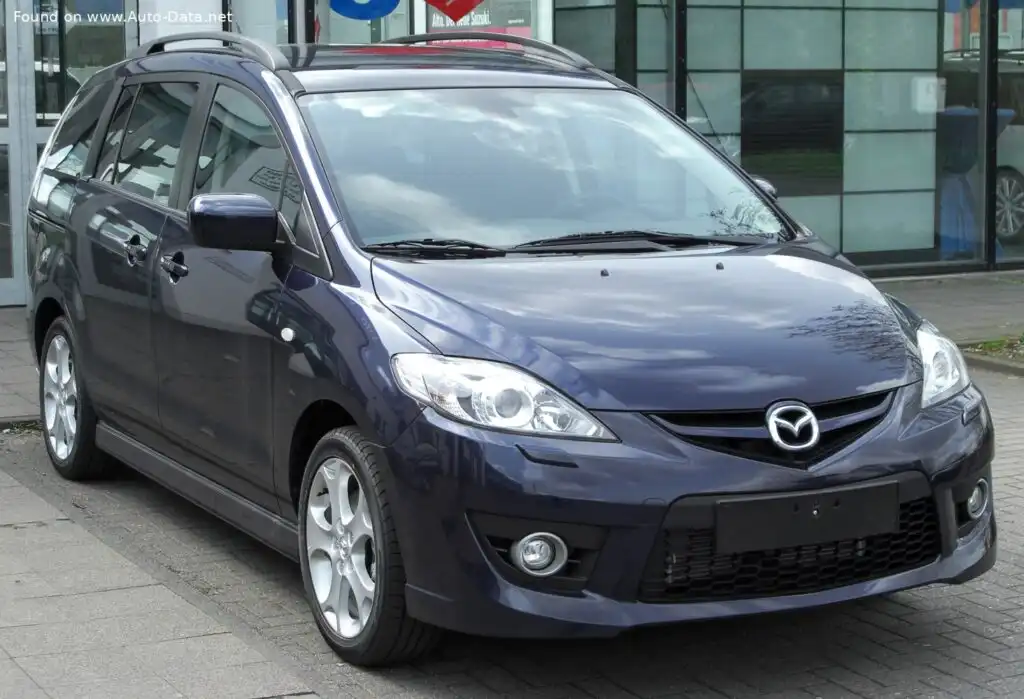
The Mazda 5, known as the Premacy in some markets, represented Mazda’s entry into the compact minivan segment. The first generation, launched in 2005, aimed to provide a more stylish and driver-focused alternative to traditional boxy minivans. The facelifted first generation, produced from 2008 to 2010, brought subtle styling updates and refinements to the original design. Among the engine options available, the 2.3-liter gasoline engine producing 153 horsepower was positioned as a mid-range offering, balancing performance with reasonable fuel economy. This variant was primarily sold in markets outside of North America, where Mazda did not offer the first-generation Mazda 5.
Technical Specifications
| Brand | Mazda |
| Model | 5 |
| Generation | 5 I (facelift 2008) |
| Type (Engine) | 2.3 (153 Hp) |
| Start of production | 2008 |
| End of production | 2010 |
| Powertrain Architecture | Internal Combustion engine |
| Body type | Minivan |
| Seats | 6 |
| Doors | 5 |
| Fuel consumption (urban) | 10.7 l/100 km (22 US mpg) |
| Fuel consumption (extra urban) | 8.4 l/100 km (28 US mpg) |
| Fuel Type | Petrol (Gasoline) |
| Weight-to-power ratio | 10.1 kg/Hp |
| Weight-to-torque ratio | 7.7 kg/Nm |
| Power | 153 Hp @ 6500 rpm |
| Power per litre | 67.7 Hp/l |
| Torque | 201 Nm @ 4500 rpm (148.25 lb.-ft. @ 4500 rpm) |
| Maximum engine speed | 6500 rpm |
| Engine layout | Front, Transverse |
| Engine Model/Code | L3X |
| Engine displacement | 2261 cm3 (137.97 cu. in.) |
| Number of cylinders | 4 |
| Engine configuration | Inline |
| Cylinder Bore | 87.5 mm (3.44 in.) |
| Piston Stroke | 94 mm (3.7 in.) |
| Compression ratio | 9.7:1 |
| Number of valves per cylinder | 4 |
| Fuel injection system | Multi-port manifold injection |
| Engine aspiration | Naturally aspirated engine |
| Valvetrain | DOHC, VVT |
| Engine oil capacity | 4.3 l (4.54 US qt | 3.78 UK qt) |
| Coolant capacity | 7.5 l (7.93 US qt | 6.6 UK qt) |
| Kerb Weight | 1550 kg (3417.17 lbs.) |
| Max. weight | 2090 kg (4607.66 lbs.) |
| Max load | 540 kg (1190.5 lbs.) |
| Trunk (boot) space – minimum | 1257 l (44.39 cu. ft.) |
| Fuel tank capacity | 60 l (15.85 US gal | 13.2 UK gal) |
| Length | 4620 mm (181.89 in.) |
| Width | 1755 mm (69.09 in.) |
| Height | 1630 mm (64.17 in.) |
| Wheelbase | 2750 mm (108.27 in.) |
| Front track | 1530 mm (60.24 in.) |
| Rear track | 1515 mm (59.65 in.) |
| Ride height (ground clearance) | 140 mm (5.51 in.) |
| Minimum turning circle | 10.6 m (34.78 ft.) |
| Drivetrain Architecture | Front wheel drive |
| Number of gears | 5 |
| Gearbox type | Manual transmission |
| Front suspension | Independent, McPherson with coil spring and anti-roll bar |
| Rear suspension | Independent multi-link with stabilizer |
| Front brakes | Ventilated discs, 300×25 mm |
| Rear brakes | Disc, 302×10 mm |
| Assisting systems | ABS (Anti-lock braking system) |
| Steering type | Steering rack and pinion |
| Power steering | Electric |
| Tires size | 205/50 R17 |
| Wheel rims size | 6.5J x 17 |
INTRODUCTION
The Mazda 5 (facelifted version from 2008-2010) with the 2.3-liter engine and five-speed manual transmission was a key variant within the first-generation Mazda 5 lineup. Positioned as a mid-range option, it offered a step up in performance from the smaller 1.8-liter engine while remaining more affordable than the potential diesel options available in some markets. Built on the Mazda CW platform (internally designated as 1HX0/A3), the Mazda 5 aimed to redefine the minivan experience with its focus on driving dynamics and a more contemporary aesthetic. This model was primarily targeted towards European and Asian markets, where compact, fuel-efficient vehicles are highly valued.
Powertrain & Engine Architecture
The heart of this Mazda 5 variant is the L3X engine, a 2.3-liter inline-four cylinder gasoline engine. This engine utilizes a naturally aspirated configuration, relying on displacement and optimized airflow rather than forced induction for its power output. The L3X features multi-port fuel injection, delivering fuel directly into the intake ports, and a double overhead camshaft (DOHC) valvetrain with variable valve timing (VVT) on the intake side. This VVT system helps to optimize engine performance and efficiency across a wider range of engine speeds. The engine’s 9.7:1 compression ratio strikes a balance between power and fuel economy. The five-speed manual transmission was the standard gearbox for this configuration, offering drivers a direct connection to the engine and precise control over gear selection. The transmission’s gear ratios were tuned to provide a blend of acceleration and highway cruising efficiency.
Driving Characteristics
The 153 horsepower and 201 Nm (148 lb-ft) of torque delivered by the 2.3-liter engine provided a noticeable improvement in performance compared to the base 1.8-liter model. While not a sports car, the Mazda 5 2.3 offered brisk acceleration and the ability to comfortably carry a full load of passengers and cargo. The five-speed manual transmission allowed drivers to exploit the engine’s powerband effectively. The gear ratios were spaced to provide good off-the-line acceleration in first and second gear, while higher gears were optimized for relaxed highway cruising. Compared to the 1.8L automatic, the 2.3L manual felt significantly more responsive and engaging to drive. The automatic transmission option, available with both engines, tended to sap some of the engine’s power and resulted in a less dynamic driving experience.
Equipment & Trim Levels
The 2.3-liter variant of the Mazda 5 typically came equipped with a reasonable level of standard features. These generally included air conditioning, power windows and locks, a basic audio system with CD player, and alloy wheels. Higher trim levels, often denoted by names like “Sport” or “Luxury” depending on the market, added features such as climate control, upgraded audio systems with auxiliary inputs, fog lights, and more premium interior upholstery. Interior materials were generally of good quality for the segment, with a focus on durability and practicality. Optional extras could include a sunroof, navigation system, and leather seats.
Chassis & Braking
The Mazda 5 featured an independent suspension setup at all four wheels, contributing to its relatively composed ride and handling. The front suspension utilized a McPherson strut design with coil springs and an anti-roll bar, while the rear suspension employed a multi-link setup, also with a stabilizer bar. This suspension configuration helped to minimize body roll and provide a comfortable ride, even when the vehicle was fully loaded. Braking duties were handled by ventilated discs at the front and solid discs at the rear. An Anti-lock Braking System (ABS) was standard, enhancing safety by preventing wheel lockup during hard braking. The steering system was a rack-and-pinion setup with electric power assistance, providing precise steering feel and reducing driver effort.
Market Reception & Comparison
The Mazda 5 2.3-liter variant was generally well-received by automotive critics. It was praised for its engaging driving dynamics, spacious interior, and stylish design. Compared to other compact minivans of the time, the Mazda 5 offered a more enjoyable driving experience and a more upscale interior. However, some critics noted that the 2.3-liter engine’s fuel economy was not class-leading, particularly when compared to diesel-powered alternatives. The 1.8-liter engine offered better fuel economy but at the expense of performance, making the 2.3-liter a good compromise for drivers who prioritized both. The diesel variants, where available, provided superior fuel economy and torque but often came with a higher price tag.
Legacy
The Mazda 5, including the 2.3-liter variant, has developed a reputation for reliability and durability. The L3X engine is generally considered to be a robust and long-lasting unit, provided it receives regular maintenance. In the used car market, the Mazda 5 2.3-liter remains a popular choice for buyers seeking a practical and reliable family vehicle. While not as common as some of its competitors, the Mazda 5’s unique blend of style, driving dynamics, and practicality has ensured its continued appeal. Common maintenance items include regular oil changes, timing belt replacement (depending on mileage), and inspection of suspension components. Overall, the Mazda 5 2.3-liter represents a well-engineered and enjoyable compact minivan that continues to offer good value in the used car market.