Technical Specifications
| Brand | Mazda |
| Model | 5 |
| Generation | 5 I (facelift 2008) |
| Type (Engine) | 2.3 (153 Hp) Automatic |
| Start of production | 2008 |
| End of production | 2010 |
| Powertrain Architecture | Internal Combustion engine |
| Body type | Minivan |
| Seats | 6 |
| Doors | 5 |
| Fuel consumption (economy) – urban (EPA) | 11.2 l/100 km (21 US mpg) |
| Fuel consumption (economy) – extra urban (EPA) | 8.7 l/100 km (27 US mpg) |
| Fuel Type | Petrol (Gasoline) |
| Weight-to-power ratio | 10.3 kg/Hp |
| Weight-to-torque ratio | 7.8 kg/Nm |
| Power | 153 Hp @ 6500 rpm |
| Power per litre | 67.7 Hp/l |
| Torque | 201 Nm @ 4500 rpm (148.25 lb.-ft. @ 4500 rpm) |
| Maximum engine speed | 6500 rpm |
| Engine layout | Front, Transverse |
| Engine Model/Code | L3X |
| Engine displacement | 2261 cm3 (137.97 cu. in.) |
| Number of cylinders | 4 |
| Engine configuration | Inline |
| Cylinder Bore | 87.5 mm (3.44 in.) |
| Piston Stroke | 94 mm (3.7 in.) |
| Compression ratio | 9.7:1 |
| Number of valves per cylinder | 4 |
| Fuel injection system | Multi-port manifold injection |
| Engine aspiration | Naturally aspirated engine |
| Valvetrain | DOHC, VVT |
| Engine oil capacity | 4.3 l (4.54 US qt | 3.78 UK qt) |
| Coolant | 7.5 l (7.93 US qt | 6.6 UK qt) |
| Kerb Weight | 1576 kg (3474.49 lbs.) |
| Max. weight | 2116 kg (4664.98 lbs.) |
| Max load | 540 kg (1190.5 lbs.) |
| Trunk (boot) space – minimum | 1257 l (44.39 cu. ft.) |
| Fuel tank capacity | 60 l (15.85 US gal | 13.2 UK gal) |
| Length | 4620 mm (181.89 in.) |
| Width | 1755 mm (69.09 in.) |
| Height | 1630 mm (64.17 in.) |
| Wheelbase | 2750 mm (108.27 in.) |
| Front track | 1530 mm (60.24 in.) |
| Rear (Back) track | 1515 mm (59.65 in.) |
| Ride height (ground clearance) | 140 mm (5.51 in.) |
| Minimum turning circle (turning diameter) | 10.6 m (34.78 ft.) |
| Drivetrain Architecture | The Internal combustion engine (ICE) drives the front wheels of the vehicle. |
| Drive wheel | Front wheel drive |
| Number of gears and type of gearbox | 5 gears, automatic transmission |
| Front suspension | Independent, type McPherson with coil spring and anti-roll bar |
| Rear suspension | Independent multi-link spring suspension with stabilizer |
| Front brakes | Ventilated discs, 300×25 mm |
| Rear brakes | Disc, 302×10 mm |
| Assisting systems | ABS (Anti-lock braking system) |
| Steering type | Steering rack and pinion |
| Power steering | Electric Steering |
| Tires size | 205/50 R17 |
| Wheel rims size | 6.5J x 17 |
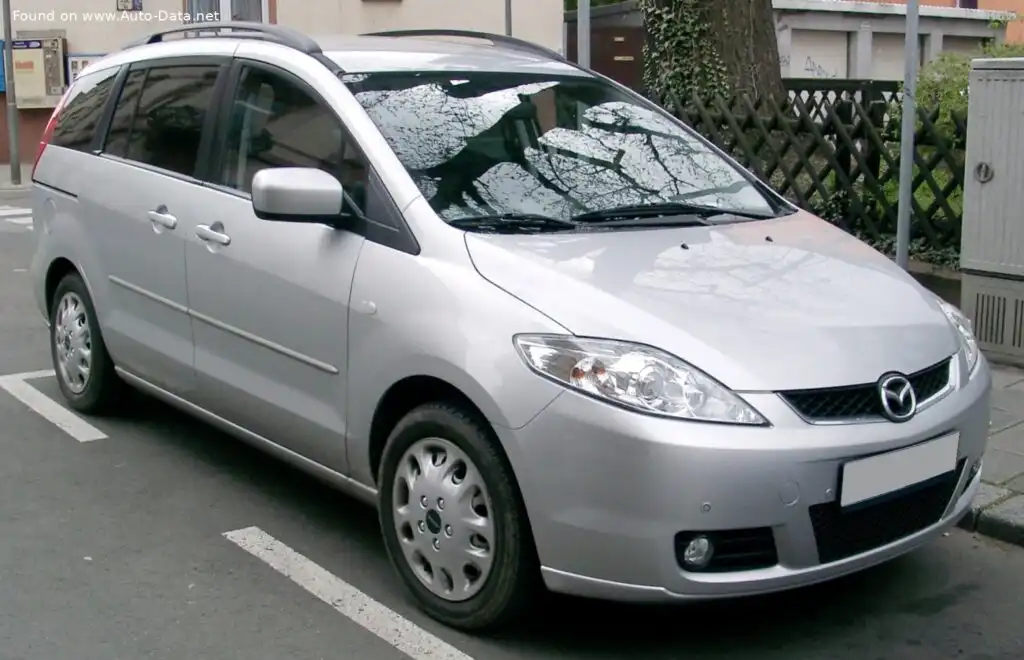
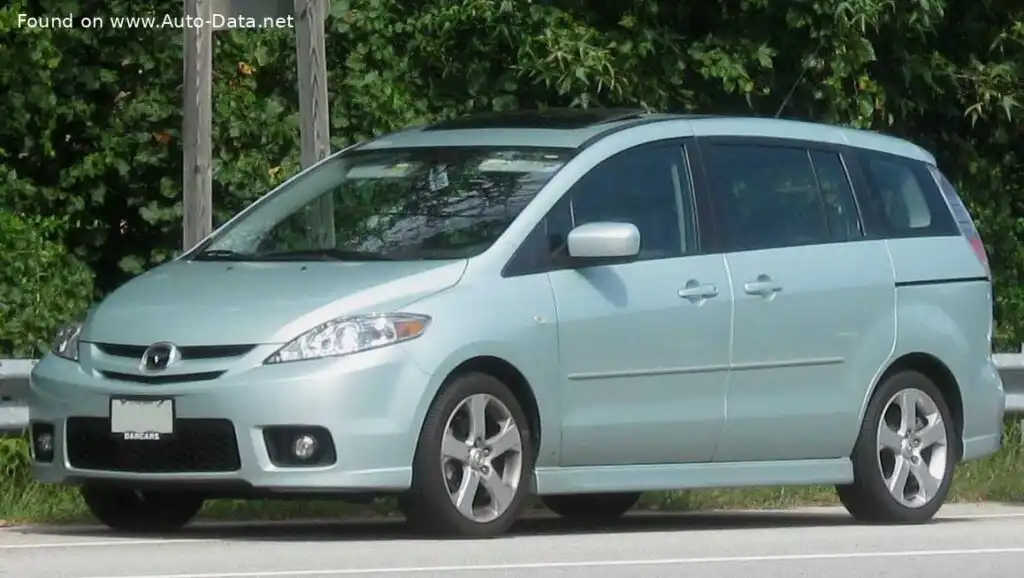
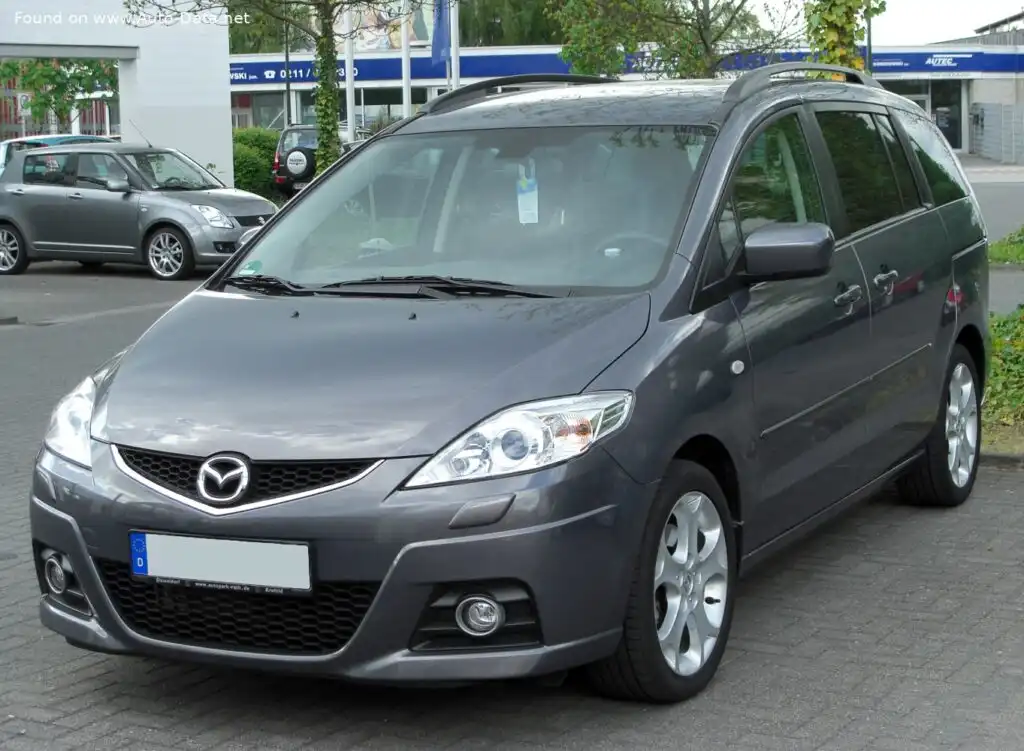
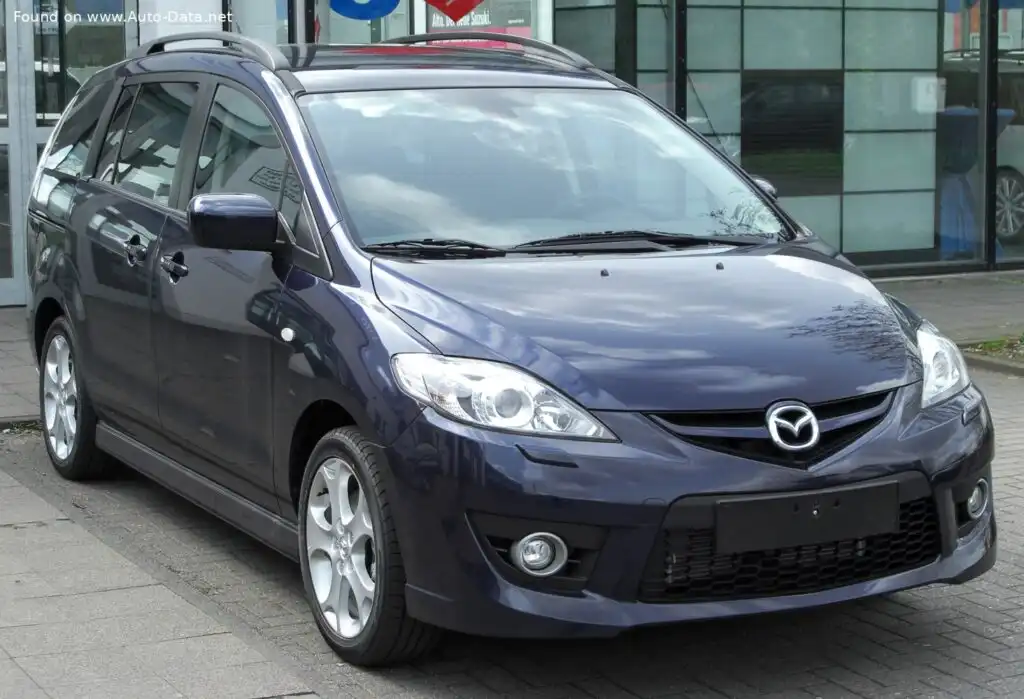
The Mazda 5, also known as the Premacy in certain international markets, marked Mazda’s foray into the compact minivan segment. The first generation (CW) was launched in 2005, and a notable facelift arrived in 2008, bringing with it revised styling and mechanical refinements. This article details the 2008-2010 facelifted Mazda 5 powered by the 2.3-liter gasoline engine coupled with a five-speed automatic transmission. This configuration was primarily offered in North America and select other regions, aiming to provide a balance between practicality and a more engaging driving experience compared to some of its competitors. The 2.3L Automatic trim generally occupied a mid-range position within the Mazda 5 lineup, offering increased power and convenience features over the base 2.0-liter models, while remaining below the fully-equipped options.
Powertrain & Engine Architecture
The core of this Mazda 5 variant is the L3X 2.3-liter inline-four cylinder engine. This engine is a naturally aspirated design, featuring a cast iron engine block and an aluminum cylinder head. It employs multi-port fuel injection and a double overhead camshaft (DOHC) valvetrain, incorporating variable valve timing (VVT) on the intake side. The VVT system is designed to optimize engine performance and fuel efficiency across a broad spectrum of engine speeds. The engine generates 153 horsepower at 6500 rpm and 201 Nm (148 lb-ft) of torque at 4500 rpm. The five-speed automatic transmission, while offering convenience, wasn’t particularly known for its sportiness or fuel efficiency when compared to contemporary automatic transmissions. It included standard torque converter lock-up functionality to enhance fuel economy during highway driving. The transmission’s gear ratios were calibrated for a balance between acceleration and cruising comfort, prioritizing smooth operation over aggressive downshifts.
Driving Characteristics
The combination of the 2.3-liter engine and automatic transmission in the Mazda 5 delivered adequate performance for typical daily driving. Acceleration was reasonable, though not particularly quick. The automatic transmission, while smooth, could sometimes feel hesitant during rapid acceleration attempts. Compared to the available five-speed manual transmission, the automatic resulted in a noticeable reduction in responsiveness and fuel economy. The gear ratios were spaced to provide acceptable acceleration from a standstill, but overtaking maneuvers at highway speeds required careful consideration. The overall driving experience was comfortable and refined, emphasizing ease of use over sporty handling. The relatively light curb weight of approximately 3474 lbs helped to offset some of the performance limitations of the engine and transmission.
Equipment & Trim Levels
The 2.3L Automatic Mazda 5 typically came standard with features such as air conditioning, power windows and locks, keyless entry, and an audio system with a CD player and auxiliary input. Higher trim levels, often designated as “Grand Touring” or similar, added features like leather upholstery, a sunroof, alloy wheels, and upgraded audio systems. Safety features included ABS brakes, front airbags, and side curtain airbags. Optional extras included a navigation system, a rear entertainment system, and heated front seats. Interior upholstery was generally cloth on the base models, with leather available on higher trims. The dashboard layout was functional and straightforward, featuring easy-to-read gauges and logically arranged controls.
Chassis & Braking
The Mazda 5 utilized an independent suspension system on all four wheels. The front suspension employed a McPherson strut design with coil springs and an anti-roll bar, while the rear suspension featured a multi-link setup with a stabilizer bar. This suspension configuration provided a comfortable ride quality and respectable handling characteristics. The braking system consisted of ventilated discs at the front and solid discs at the rear. ABS (Anti-lock Braking System) was standard, improving braking performance and stability, particularly in challenging conditions. The steering system was a rack-and-pinion setup with electric power steering, offering light and responsive steering feel.
Market Reception & Comparison
The 2.3-liter Automatic Mazda 5 received generally favorable reviews from automotive critics. It was commended for its spacious interior, comfortable ride, and practical features. However, the automatic transmission was frequently criticized for its lack of responsiveness and comparatively low fuel economy when compared to the manual transmission. When compared to other compact minivans such as the Toyota Matrix or Honda Fit, the Mazda 5 offered a more engaging driving experience and a more stylish design. Fuel economy figures averaged around 21 mpg city and 27 mpg highway, which was typical for the segment at the time. Reliability was generally good, with few significant issues reported.
Legacy
The 2.3-liter engine and five-speed automatic transmission pairing in the Mazda 5 proved to be a reasonably reliable powertrain. While not renowned for exceptional longevity, these engines generally performed well with routine maintenance. In the used car market, these Mazda 5 variants are often sought after for their practicality and affordability. Common maintenance requirements include regular oil changes, timing belt replacement (if applicable, depending on the model year), and inspection of the automatic transmission fluid. The Mazda 5, as a whole, has cultivated a loyal following among those seeking a compact and versatile vehicle, and the 2.3L Automatic remains a viable option for budget-conscious buyers.