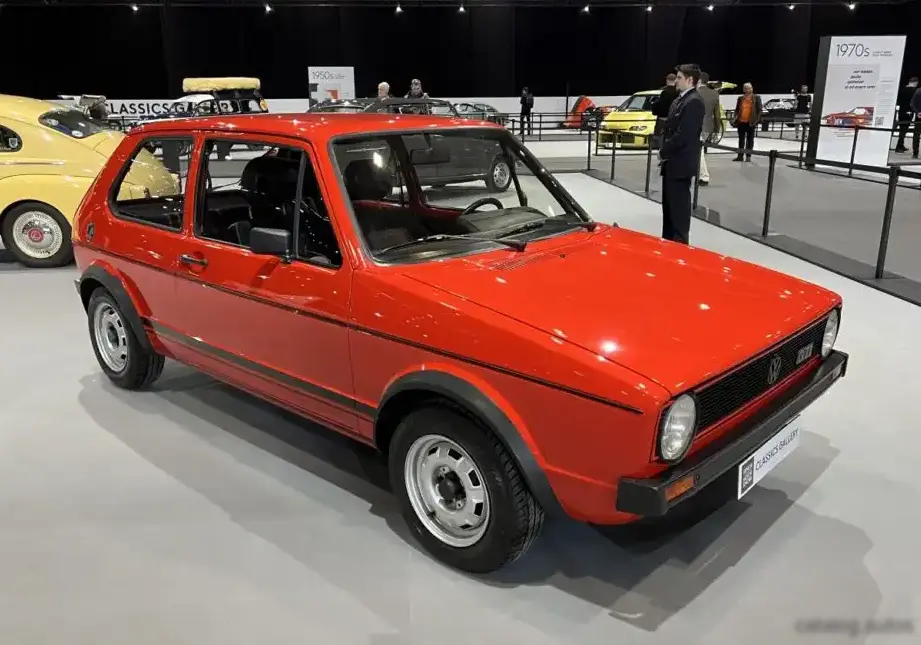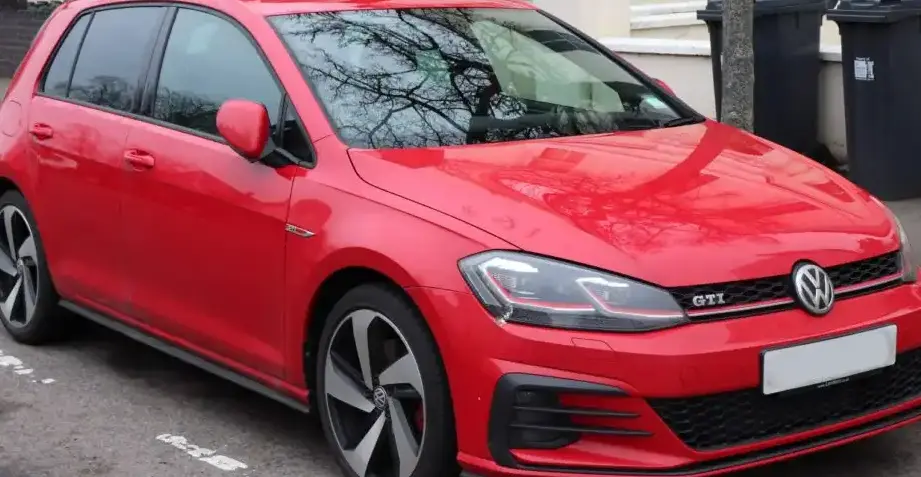
The Volkswagen Golf VII GTI 2.0 TSI (210 hp) represents a significant iteration of Volkswagen’s iconic hot hatch, produced between 2014 and 2017. Positioned as a performance-oriented variant within the seventh-generation Golf (Mk7) lineup, it built upon the success of previous GTI models, offering a blend of everyday usability and engaging driving dynamics. This model year GTI was a key component of Volkswagen’s strategy to appeal to a broader audience seeking a sporty yet practical vehicle, primarily targeting the European and North American markets. It sat firmly in the mid-range of the Mk7 GTI offerings, offering a substantial performance upgrade over the standard Golf models while remaining more accessible than the more potent Performance Pack versions.
Technical Specifications
| Brand | Volkswagen |
| Model | Golf |
| Generation | Golf VII (5-door) |
| Type (Engine) | GTI 2.0 TSI (210 Hp) |
| Start of production | 2014 |
| End of production | 2017 |
| Powertrain Architecture | Internal Combustion engine |
| Body type | Hatchback |
| Seats | 5 |
| Doors | 5 |
| Fuel consumption (economy) – urban (EPA) | 9.4 l/100 km (25 US mpg, 30.1 UK mpg, 10.6 km/l) |
| Fuel consumption (economy) – extra urban (EPA) | 6.9 l/100 km (34.1 US mpg, 40.9 UK mpg, 14.5 km/l) |
| Fuel consumption (economy) – combined (EPA) | 8.4 l/100 km (28 US mpg, 33.6 UK mpg, 11.9 km/l) |
| Fuel Type | Petrol (Gasoline) |
| Emission standard | SULEV |
| Weight-to-power ratio | 6.5 kg/Hp, 152.7 Hp/tonne |
| Weight-to-torque ratio | 3.9 kg/Nm, 254.5 Nm/tonne |
| Power | 210 Hp @ 4500 rpm |
| Power per litre | 105.8 Hp/l |
| Torque | 350 Nm @ 1500 rpm (258.15 lb.-ft. @ 1500 rpm) |
| Engine layout | Front, Transverse |
| Engine Model/Code | EA888 / CNTA, CXCA |
| Engine displacement | 1984 cm3 (121.07 cu. in.) |
| Number of cylinders | 4 |
| Engine configuration | Inline |
| Cylinder Bore | 82.5 mm (3.25 in.) |
| Piston Stroke | 92.8 mm (3.65 in.) |
| Compression ratio | 9.6:1 |
| Number of valves per cylinder | 4 |
| Fuel injection system | Direct injection |
| Engine aspiration | Turbocharger, Intercooler |
| Valvetrain | DOHC |
| Engine oil capacity | 5.7 l (6.02 US qt | 5.02 UK qt) |
| Coolant | 10 l (10.57 US qt | 8.8 UK qt) |
| Kerb Weight | 1375 kg (3031.36 lbs.) |
| Max. weight | 1900 kg (4188.78 lbs.) |
| Max load | 525 kg (1157.43 lbs.) |
| Trunk (boot) space – minimum | 380 l (13.42 cu. ft.) |
| Trunk (boot) space – maximum | 1270 l (44.85 cu. ft.) |
| Fuel tank capacity | 50 l (13.21 US gal | 11 UK gal) |
| Length | 4268 mm (168.03 in.) |
| Width | 1799 mm (70.83 in.) |
| Width including mirrors | 2027 mm (79.8 in.) |
| Height | 1442 mm (56.77 in.) |
| Wheelbase | 2631 mm (103.58 in.) |
| Front track | 1538 mm (60.55 in.) |
| Rear (Back) track | 1516 mm (59.69 in.) |
| Ride height (ground clearance) | 128 mm (5.04 in.) |
| Drag coefficient (Cd) | 0.31 |
| Minimum turning circle (turning diameter) | 10.9 m (35.76 ft.) |
| Drivetrain Architecture | The Internal combustion engine (ICE) drives the front wheels of the vehicle. |
| Drive wheel | Front wheel drive |
| Number of gears and type of gearbox | 6 gears, manual transmission |
| Front suspension | Independent, type McPherson with coil spring and anti-roll bar |
| Rear suspension | Independent multi-link spring suspension with stabilizer |
| Front brakes | Ventilated discs, 312×30 mm |
| Rear brakes | Disc, 272×10 mm |
| Assisting systems | ABS (Anti-lock braking system) |
| Steering type | Steering rack and pinion |
| Power steering | Electric Steering |
| Tires size | 225/40 R18 |
| Wheel rims size | 7.5J x 18 |
Introduction
The Golf VII GTI 2.0 TSI (210 hp) was introduced as part of the Mk7 Golf range, which debuted in 2013. Built on the Volkswagen Group’s MQB platform (A7 generation), the Mk7 represented a significant leap forward in terms of technology, efficiency, and driving experience compared to its predecessor. The GTI variant, in particular, aimed to deliver a more refined and accessible performance package. This 210 hp version served as the standard GTI offering in many markets, providing a compelling balance between performance and fuel economy. It was a popular choice for drivers who wanted a sporty hatchback without the higher price tag and more aggressive character of the Performance Pack model.
Powertrain & Engine Architecture
At the heart of the Golf VII GTI 2.0 TSI (210 hp) lies the EA888 engine, specifically the CNTA or CXCA engine code depending on the market. This is a 1.984-liter (121.07 cubic inches) turbocharged and direct-injected inline-four cylinder engine. The engine utilizes a single-scroll turbocharger with an intercooler to enhance performance and efficiency. Direct injection allows for precise fuel delivery, optimizing combustion and reducing emissions. The engine features a dual overhead camshaft (DOHC) valvetrain with four valves per cylinder, contributing to its responsive nature. The 210 hp output is achieved at 4500 rpm, while peak torque of 350 Nm (258.15 lb-ft) is available from a low 1500 rpm, providing strong acceleration in everyday driving situations. The engine is paired with a six-speed manual transmission as standard, offering precise gear changes and driver engagement. A six-speed dual-clutch transmission (DSG) was also available as an option.
Driving Characteristics
The 210 hp GTI delivers a spirited driving experience, characterized by strong mid-range acceleration and responsive handling. While not as brutally fast as the later Performance Pack versions, the 210 hp model provides ample power for both city driving and highway cruising. The six-speed manual transmission allows for a direct connection between driver and machine, while the optional DSG offers quicker shifts and a more relaxed driving experience. The GTI’s suspension, featuring McPherson struts at the front and a multi-link setup at the rear, provides a comfortable yet controlled ride. The steering is precise and well-weighted, offering good feedback to the driver. Compared to the higher-output Performance Pack GTI, the 210 hp version feels slightly less urgent in its acceleration, but it also offers a more forgiving and approachable driving experience.
Equipment & Trim Levels
The Golf VII GTI 2.0 TSI (210 hp) came standard with a comprehensive list of features, including sport seats upholstered in the classic GTI tartan fabric, a leather-wrapped steering wheel, and a touchscreen infotainment system. Standard exterior features included a unique GTI front bumper, side skirts, and rear spoiler. Optional extras included adaptive dampers, a panoramic sunroof, and a premium sound system. Interior trim options allowed buyers to personalize their GTI with different color schemes and materials. The GTI trim level generally sat above the base Golf models in terms of features and equipment, offering a more premium and sporty interior.
Chassis & Braking
The GTI’s chassis was specifically tuned to enhance handling and stability. The front suspension utilizes a McPherson strut design with a coil spring and anti-roll bar, while the rear features an independent multi-link setup with a stabilizer bar. This configuration provides a good balance between ride comfort and handling precision. Braking duties are handled by ventilated discs at the front and solid discs at the rear. The GTI is equipped with ABS (Anti-lock Braking System) as standard, enhancing safety and control during emergency braking situations. The standard tire size is 225/40 R18, providing good grip and handling characteristics.
Market Reception & Comparison
The Golf VII GTI 2.0 TSI (210 hp) was widely praised by automotive critics for its blend of performance, practicality, and refinement. It was consistently ranked among the best hot hatches on the market. Compared to the higher-output Performance Pack GTI, the 210 hp version offered a more accessible price point and a slightly more comfortable ride. Fuel economy was also a strong point, with the GTI achieving around 28 US mpg in combined driving. Reliability was generally good, although some owners reported minor issues with the turbocharger and direct injection system. Compared to rivals such as the Ford Focus ST and the Renault Mégane RS, the GTI was often praised for its more refined interior and its overall balance of performance and usability.
Legacy
The Golf VII GTI 2.0 TSI (210 hp) remains a popular choice in the used car market today. Its reputation for reliability, performance, and practicality has ensured strong demand. The EA888 engine, while not without its potential issues, is generally considered to be a robust and durable unit. The Mk7 GTI, in general, is seen as a high-water mark for the Golf GTI lineage, offering a compelling combination of modern technology and classic hot hatch appeal. Well-maintained examples of the 210 hp GTI continue to provide an enjoyable and engaging driving experience for enthusiasts.