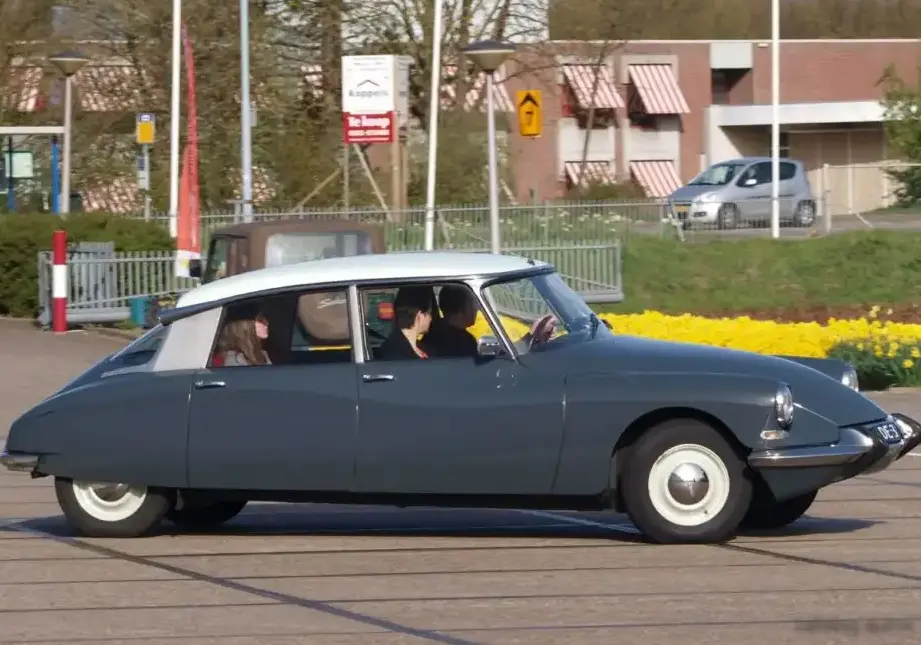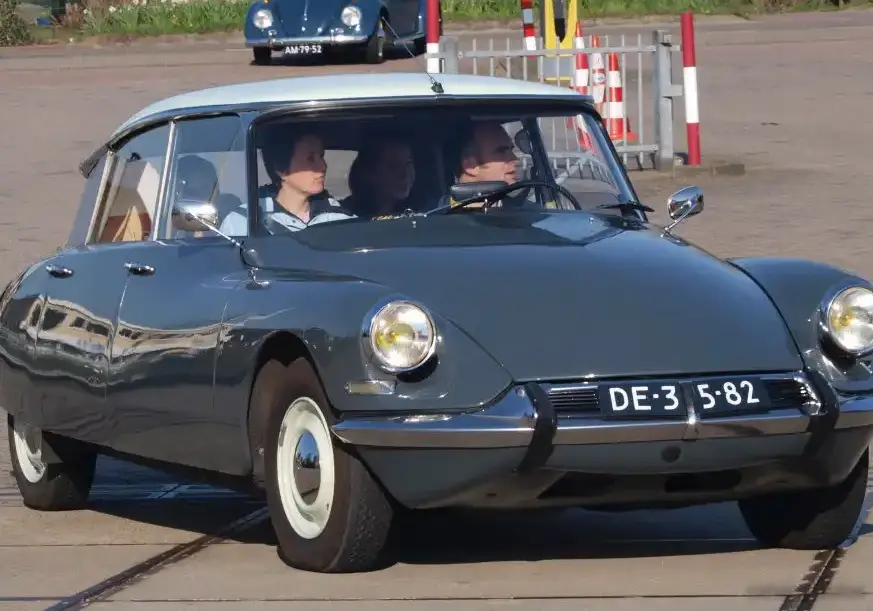
The Citroën ID I 19, produced between 1957 and 1960, represents a pivotal entry point into the larger Citroën ID series. Positioned as a mainstream, family-oriented sedan, the ID I 19 served as the foundation for Citroën’s post-war expansion, offering a blend of comfort, innovative technology (for its time), and affordability. It was part of the broader ID family, which included more luxurious and higher-performance variants like the ID 20 and ID 21. The “19” designation refers to the engine displacement, and this particular model was primarily sold in European markets, offering a relatively economical and practical transportation solution.
Technical Specifications
| Brand | Citroen |
| Model | ID |
| Generation | ID I |
| Type (Engine) | 19 (62 Hp) |
| Start of production | 1957 |
| End of production | 1960 |
| Powertrain Architecture | Internal Combustion engine |
| Body type | Sedan |
| Seats | 5 |
| Doors | 4 |
| Fuel Type | Petrol (Gasoline) |
| Maximum speed | 130 km/h (80.78 mph) |
| Weight-to-power ratio | 18.5 kg/Hp, 53.9 Hp/tonne |
| Weight-to-torque ratio | 9.2 kg/Nm, 108.7 Nm/tonne |
| Power | 62 Hp @ 4000 rpm |
| Power per litre | 32.4 Hp/l |
| Torque | 125 Nm @ 2500 rpm (92.2 lb.-ft. @ 2500 rpm) |
| Engine layout | Front, Longitudinal |
| Engine displacement | 1911 cm3 (116.62 cu. in.) |
| Number of cylinders | 4 |
| Engine configuration | Inline |
| Cylinder Bore | 78 mm (3.07 in.) |
| Piston Stroke | 100 mm (3.94 in.) |
| Compression ratio | 6.8:1 |
| Number of valves per cylinder | 2 |
| Fuel injection system | Carburettor |
| Engine aspiration | Naturally aspirated engine |
| Engine oil capacity | 4 l (4.23 US qt | 3.52 UK qt) |
| Coolant | 9.5 l (10.04 US qt | 8.36 UK qt) |
| Kerb Weight | 1150 kg (2535.32 lbs) |
| Trunk (boot) space – minimum | 500 l (17.66 cu. ft.) |
| Fuel tank capacity | 65 l (17.17 US gal | 14.3 UK gal) |
| Length | 4800 mm (188.98 in.) |
| Width | 1790 mm (70.47 in.) |
| Height | 1470 mm (57.87 in.) |
| Wheelbase | 3125 mm (123.03 in.) |
| Front track | 1500 mm (59.06 in.) |
| Rear (Back) track | 1300 mm (51.18 in.) |
| Drag coefficient (Cd) | 0.38 |
| Minimum turning circle (turning diameter) | 11 m (36.09 ft.) |
| Drivetrain Architecture | The Internal combustion engine (ICE) drives the front wheels of the vehicle. |
| Drive wheel | Front wheel drive |
| Number of gears and type of gearbox | 4 gears, manual transmission |
| Front suspension | Hydraulic elements |
| Rear suspension | Hydraulic elements |
| Front brakes | Disc |
| Rear brakes | Drum |
| Steering type | Steering rack and pinion |
| Power steering | Electric Steering |
Powertrain & Engine Architecture
The Citroën ID I 19 was powered by a 1.9-liter (1911 cc) inline-four cylinder engine. This engine, designated as a naturally aspirated unit, produced 62 horsepower at 4000 rpm and 125 Nm (92.2 lb-ft) of torque at 2500 rpm. The engine featured a relatively low 6.8:1 compression ratio and utilized a single carburetor for fuel delivery. The valvetrain employed two valves per cylinder, a common configuration for engines of this era. The engine was mounted longitudinally in the front of the vehicle, driving the front wheels. The ID I 19 was equipped with a four-speed manual transmission, providing a straightforward driving experience. The engine’s design prioritized reliability and fuel economy over outright performance.
Driving Characteristics
The driving experience in the ID I 19 was characterized by comfort and ease of use. With 62 horsepower, acceleration was modest, and the car was not designed for rapid speeds. However, the engine provided sufficient power for everyday driving, and the four-speed manual transmission allowed drivers to effectively manage the available power. The front-wheel-drive layout contributed to good traction in various conditions. The car’s suspension, utilizing hydraulic elements, provided a remarkably smooth ride, a hallmark of Citroën engineering. Compared to later ID variants with larger engines, the ID I 19 offered a more economical and less demanding driving experience, making it suitable for novice drivers or those prioritizing fuel efficiency.
Equipment & Trim Levels
The ID I 19 was generally equipped with basic, yet functional, features. The interior typically featured cloth upholstery and a simple dashboard layout. Standard equipment included a steering wheel, basic instrumentation (speedometer, fuel gauge, etc.), and manually operated windows. Optional extras, available at an additional cost, could include a radio, heater, and upgraded interior trim. The ID I 19 was positioned as the entry-level model in the ID range, and as such, it lacked the more luxurious appointments found in the ID 20 and ID 21.
Chassis & Braking
The ID I 19 featured a robust chassis designed to provide a comfortable and stable ride. The front suspension utilized hydraulic elements, a pioneering technology for its time, offering exceptional ride quality. The rear suspension also employed hydraulic elements, further enhancing the car’s comfort. The braking system consisted of disc brakes on the front wheels and drum brakes on the rear wheels. The steering system was a rack and pinion setup, providing precise and responsive steering. The car’s relatively lightweight construction (1150 kg / 2535.32 lbs) contributed to its manageable handling characteristics.
Market Reception & Comparison
The Citroën ID I 19 was generally well-received in the European market as a practical and affordable family sedan. Critics praised its comfortable ride, innovative suspension, and fuel efficiency. However, some reviewers noted its modest performance and relatively basic interior. Compared to other models in the ID range, such as the ID 20 and ID 21, the ID I 19 offered a more economical option, appealing to a broader range of buyers. The ID I 19’s fuel economy was competitive for its time, and its relatively simple mechanical design contributed to its reliability.
Legacy
The Citroën ID I 19 played a significant role in establishing Citroën as a leader in automotive innovation and comfort. While not a high-performance vehicle, it offered a compelling combination of practicality, affordability, and advanced technology (particularly its hydraulic suspension). Today, the ID I 19 is considered a classic car, appreciated by enthusiasts for its unique design and engineering. The 1.9-liter engine, while not known for exceptional durability, is generally reliable when properly maintained. Finding well-preserved examples can be challenging, but the ID I 19 remains a testament to Citroën’s commitment to creating comfortable and innovative automobiles.