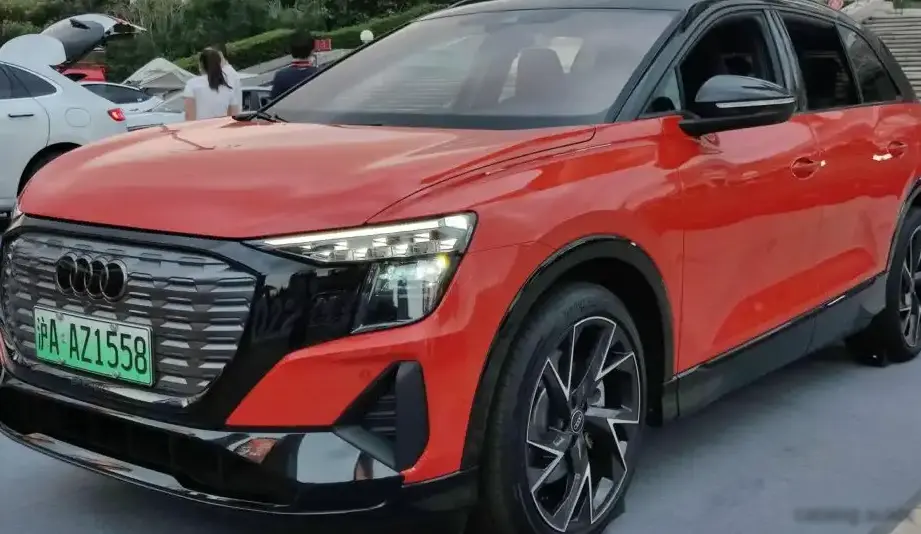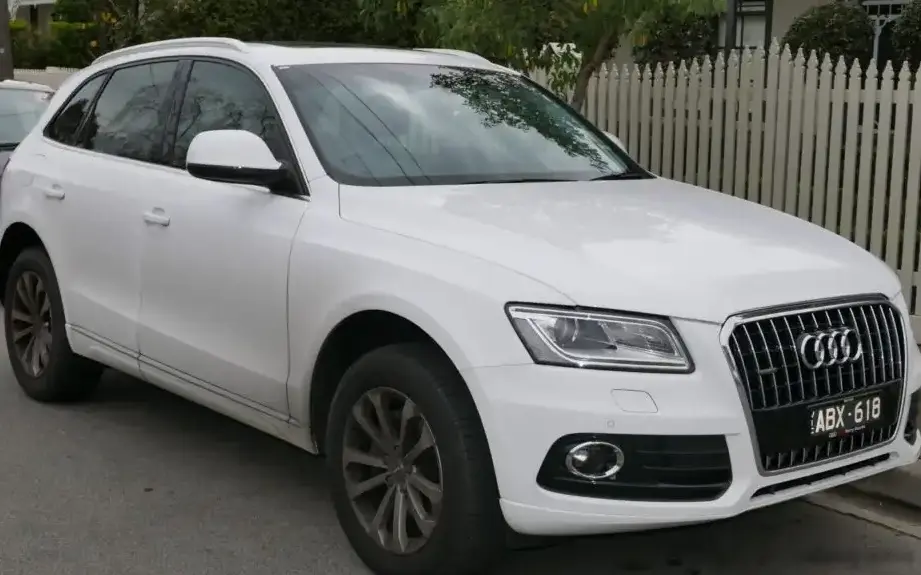
The Audi Q5 I (8R) facelift, specifically the 2.0 TDI quattro variant producing 143 horsepower, was a key model in Audi’s lineup from 2012 to 2013. Positioned as a mid-range offering within the first-generation Q5 range (internally designated 8R), it aimed to balance fuel efficiency, practicality, and Audi’s signature all-wheel-drive capability. This version of the Q5 catered to buyers seeking a premium compact SUV with diesel economy and the added security of quattro all-wheel drive, without the higher price tag of the more powerful engine options. It was a significant player in the European market, where diesel-powered SUVs were particularly popular, and saw moderate sales in other regions as well.
Technical Specifications
| Brand | Audi |
| Model | Q5 |
| Generation | Q5 I (8R, facelift 2012) |
| Type (Engine) | 2.0 TDI (143 Hp) quattro |
| Start of production | 2012 |
| End of production | 2013 |
| Powertrain Architecture | Internal Combustion engine |
| Body type | SUV |
| Seats | 5 |
| Doors | 5 |
| Fuel consumption (urban) | 6.8 l/100 km (34.6 US mpg, 41.5 UK mpg, 14.7 km/l) |
| Fuel consumption (extra urban) | 5.4 l/100 km (43.6 US mpg, 52.3 UK mpg, 18.5 km/l) |
| Fuel consumption (combined) | 5.9 l/100 km (39.9 US mpg, 47.9 UK mpg, 16.9 km/l) |
| CO2 emissions | 154 g/km |
| Fuel Type | Diesel |
| Acceleration 0 – 100 km/h | 10.8 sec |
| Acceleration 0 – 62 mph | 10.8 sec |
| Acceleration 0 – 60 mph | 10.3 sec |
| Maximum speed | 190 km/h (118.06 mph) |
| Emission standard | Euro 5 |
| Weight-to-power ratio | 12.3 kg/Hp, 81.5 Hp/tonne |
| Weight-to-torque ratio | 5.5 kg/Nm, 182.3 Nm/tonne |
| Power | 143 Hp @ 4200 rpm |
| Power per litre | 72.7 Hp/l |
| Torque | 320 Nm @ 1750-2500 rpm (236.02 lb.-ft. @ 1750-2500 rpm) |
| Engine layout | Front, Longitudinal |
| Engine Model/Code | CJCA |
| Engine displacement | 1968 cm3 (120.09 cu. in.) |
| Number of cylinders | 4 |
| Engine configuration | Inline |
| Cylinder Bore | 81 mm (3.19 in.) |
| Piston Stroke | 95.5 mm (3.76 in.) |
| Compression ratio | 16:1 |
| Number of valves per cylinder | 4 |
| Fuel injection system | Diesel Commonrail |
| Engine aspiration | Turbocharger, Intercooler |
| Valvetrain | DOHC |
| Engine oil capacity | 5 l (5.28 US qt | 4.4 UK qt) |
| Coolant | 9 l (9.51 US qt | 7.92 UK qt) |
| Kerb Weight | 1755 kg (3869.11 lbs.) |
| Max. weight | 2365 kg (5213.93 lbs.) |
| Max load | 610 kg (1344.82 lbs.) |
| Trunk (boot) space – minimum | 540 l (19.07 cu. ft.) |
| Trunk (boot) space – maximum | 1560 l (55.09 cu. ft.) |
| Fuel tank capacity | 75 l (19.81 US gal | 16.5 UK gal) |
| Max. roof load | 75 kg (165.35 lbs.) |
| Permitted trailer load with brakes (8%) | 2000 kg (4409.25 lbs.) |
| Permitted trailer load with brakes (12%) | 1800 kg (3968.32 lbs.) |
| Permitted trailer load without brakes | 750 kg (1653.47 lbs.) |
| Permitted towbar download | 100 kg (220.46 lbs.) |
| Length | 4629 mm (182.24 in.) |
| Width | 1898 mm (74.72 in.) |
| Width including mirrors | 2089 mm (82.24 in.) |
| Height | 1655 mm (65.16 in.) |
| Wheelbase | 2807 mm (110.51 in.) |
| Front track | 1617 mm (63.66 in.) |
| Rear (Back) track | 1614 mm (63.54 in.) |
| Front overhang | 895 mm (35.24 in.) |
| Rear overhang | 927 mm (36.5 in.) |
| Ride height (ground clearance) | 200 mm (7.87 in.) |
| Drag coefficient (Cd) | 0.34 |
| Minimum turning circle (turning diameter) | 11.6 m (38.06 ft.) |
| Approach angle | 25° |
| Ramp-over (brakeover) angle | 17.6° |
| Climb angle | 31° |
| Drive wheel | All wheel drive (4×4) |
| Number of gears and type of gearbox | 6 gears, manual transmission |
| Front suspension | Independent multi-link suspension |
| Rear suspension | Independent on trapezoidal lever |
| Front brakes | Ventilated discs |
| Rear brakes | Ventilated discs |
| Assisting systems | ABS (Anti-lock braking system) |
| Steering type | Steering rack and pinion |
| Power steering | Electric Steering |
| Tires size | 235/65 R17 |
| Wheel rims size | 8J x 17 |
INTRODUCTION
The Audi Q5 I (8R) facelift, launched in 2012, represented a mid-cycle refresh of Audi’s popular compact luxury SUV. The 2.0 TDI quattro variant, powered by the CJCA engine producing 143 horsepower, was a significant offering, particularly in Europe. This model sat squarely in the middle of the Q5 range, offering a balance between performance, fuel economy, and price. It built upon the success of the original Q5, addressing some initial criticisms and enhancing the vehicle’s overall refinement. The facelift brought styling updates, improved interior materials, and advancements in technology, solidifying the Q5’s position as a leading contender in the premium compact SUV segment.
Powertrain & Engine Architecture
The heart of the Q5 2.0 TDI quattro is the CJCA engine, a 2.0-liter inline-four cylinder diesel engine. This engine is part of the Volkswagen Group’s modular engine family and features common-rail direct injection, a turbocharger with an intercooler, and a double overhead camshaft (DOHC) valvetrain with four valves per cylinder. The common-rail system, operating at very high pressures, ensures efficient fuel atomization for cleaner combustion and improved power delivery. The turbocharger boosts power output, providing increased torque at lower engine speeds. The engine’s architecture is longitudinally mounted in the engine bay, driving all four wheels through Audi’s renowned quattro all-wheel-drive system. The 143 hp variant was paired with a six-speed manual transmission, offering precise gear changes and a more engaging driving experience. The engine’s design prioritized fuel efficiency and reduced emissions, meeting the stringent Euro 5 standards.
Driving Characteristics
The 2.0 TDI quattro with 143 horsepower delivers a respectable, though not exhilarating, driving experience. Acceleration from 0-60 mph takes around 10.3 seconds, and the top speed is limited to 118 mph. The engine’s 320 Nm (236 lb-ft) of torque, available from 1750-2500 rpm, provides ample pulling power for everyday driving and overtaking maneuvers. Compared to the more powerful 2.0 TDI variants or the 3.0 TDI V6, this version feels less urgent, but it offers a smoother and more relaxed driving style. The six-speed manual transmission allows for good control over the engine’s power band, while the quattro all-wheel-drive system provides excellent traction in all weather conditions. The suspension setup, featuring independent multi-link suspension at the front and an independent trapezoidal lever setup at the rear, delivers a comfortable ride quality, absorbing bumps and imperfections in the road effectively.
Equipment & Trim Levels
The Q5 2.0 TDI quattro typically came well-equipped, even in base trim. Standard features included automatic climate control, a multi-function steering wheel, power windows and mirrors, and an Audi Concert audio system. Upholstery was typically cloth, though leather options were available. Higher trim levels offered features such as a panoramic sunroof, navigation system, heated seats, and parking sensors. The interior design was characterized by Audi’s signature clean lines and high-quality materials. The dashboard layout was intuitive and user-friendly, with all controls within easy reach of the driver. Optional extras allowed buyers to personalize their Q5 to their specific needs and preferences.
Chassis & Braking
The Q5’s chassis is built around a robust steel unibody construction, providing a solid and stable platform. The suspension system, as mentioned, utilizes independent multi-link suspension at the front and an independent trapezoidal lever setup at the rear, offering a good balance between comfort and handling. The quattro all-wheel-drive system distributes power between the front and rear axles as needed, enhancing traction and stability. Braking duties are handled by ventilated discs on all four wheels, providing ample stopping power. The Q5 also features ABS (Anti-lock Braking System) and electronic stability control, further enhancing safety. The steering system is a rack-and-pinion setup with electric power assistance, offering precise and responsive steering feel.
Market Reception & Comparison
The Audi Q5 2.0 TDI quattro was generally well-received by automotive critics. It was praised for its comfortable ride, refined interior, and fuel efficiency. However, some critics noted that the 143 horsepower engine felt underpowered compared to other Q5 variants. Compared to the 2.0 TDI with higher horsepower or the 3.0 TDI V6, this version offered lower running costs but sacrificed some performance. Against competitors like the BMW X3 and Mercedes-Benz GLK, the Q5 2.0 TDI quattro held its own, offering a compelling combination of luxury, practicality, and all-wheel-drive capability. Fuel economy was a strong point, with combined fuel consumption figures around 39.9 US mpg.
Legacy
The CJCA engine, while generally reliable, can be susceptible to issues with the diesel particulate filter (DPF) if not properly maintained. Regular servicing and the use of high-quality diesel fuel are crucial for ensuring long-term reliability. The Q5 2.0 TDI quattro remains a popular choice in the used car market, offering a good value proposition for buyers seeking a premium compact SUV. Its reputation for build quality, refinement, and all-weather capability continues to attract buyers today. While newer Q5 models offer more advanced technology and improved performance, the first-generation Q5 2.0 TDI quattro remains a capable and desirable vehicle.