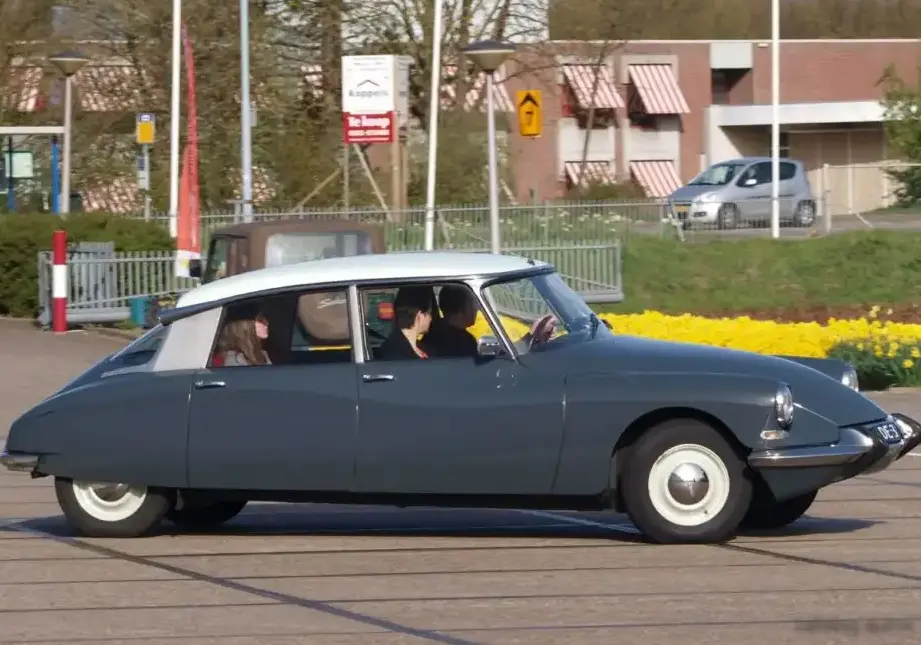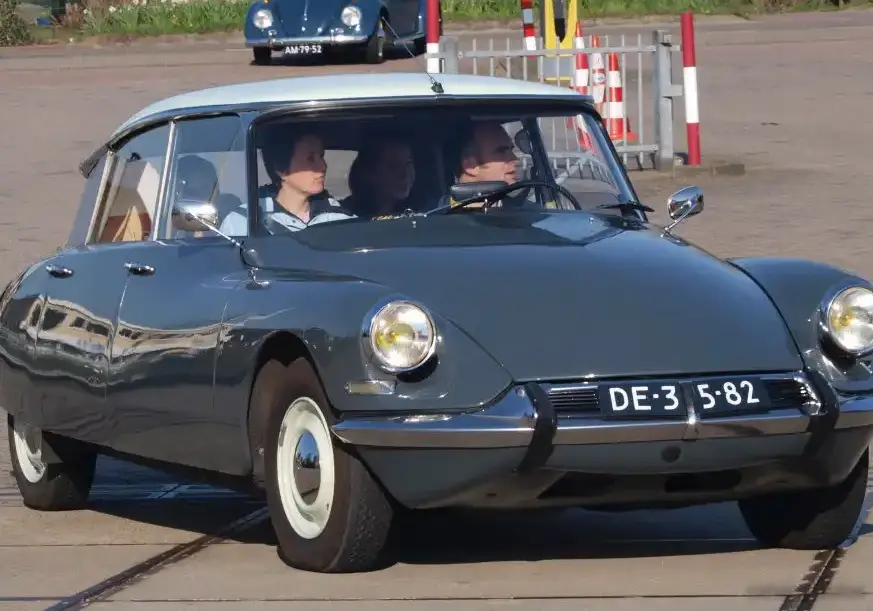
The Citroën ID I 19, produced between 1959 and 1962, represents a pivotal model within the broader Citroën ID series. Positioned as a mainstream, family-oriented sedan, the ID I 19 served as a core offering in Citroën’s lineup during a period of significant post-war automotive development. It was built upon the foundation of the earlier Citroën Traction Avant, inheriting and refining many of its innovative features while offering a more accessible price point than the flagship DS models. The “19” designation refers to the engine displacement, signifying a 1.9-liter four-cylinder engine producing 70 horsepower. This variant was primarily aimed at buyers seeking comfortable, reliable transportation, rather than outright performance.
Technical Specifications
| Brand | Citroen |
| Model | ID |
| Generation | ID I |
| Type (Engine) | 19 (70 Hp) |
| Start of production | 1959 year |
| End of production | 1962 year |
| Powertrain Architecture | Internal Combustion engine |
| Body type | Sedan |
| Seats | 5 |
| Doors | 4 |
| Fuel Type | Petrol (Gasoline) |
| Maximum speed | 145 km/h (90.1 mph) |
| Weight-to-power ratio | 16.1 kg/Hp, 61.9 Hp/tonne |
| Weight-to-torque ratio | 8.2 kg/Nm, 121.2 Nm/tonne |
| Power | 70 Hp @ 4500 rpm |
| Power per litre | 36.6 Hp/l |
| Torque | 137 Nm @ 3000 rpm (101.05 lb.-ft. @ 3000 rpm) |
| Engine layout | Front, Longitudinal |
| Engine displacement | 1911 cm3 (116.62 cu. in.) |
| Number of cylinders | 4 |
| Engine configuration | Inline |
| Cylinder Bore | 78 mm (3.07 in.) |
| Piston Stroke | 100 mm (3.94 in.) |
| Compression ratio | 6.8:1 |
| Number of valves per cylinder | 2 |
| Fuel injection system | Carburettor |
| Engine aspiration | Naturally aspirated engine |
| Engine oil capacity | 4 l (4.23 US qt | 3.52 UK qt) |
| Coolant | 9.5 l (10.04 US qt | 8.36 UK qt) |
| Kerb Weight | 1130 kg (2491.22 lbs.) |
| Max. weight | 1630 kg (3593.53 lbs.) |
| Max load | 500 kg (1102.31 lbs.) |
| Trunk (boot) space – minimum | 500 l (17.66 cu. ft.) |
| Fuel tank capacity | 65 l (17.17 US gal | 14.3 UK gal) |
| Length | 4800 mm (188.98 in.) |
| Width | 1790 mm (70.47 in.) |
| Height | 1470 mm (57.87 in.) |
| Wheelbase | 3125 mm (123.03 in.) |
| Front track | 1500 mm (59.06 in.) |
| Rear (Back) track | 1300 mm (51.18 in.) |
| Drag coefficient (Cd) | 0.38 |
| Minimum turning circle (turning diameter) | 11 m (36.09 ft.) |
| Drivetrain Architecture | The Internal combustion engine (ICE) drives the front wheels of the vehicle. |
| Drive wheel | Front wheel drive |
| Number of gears and type of gearbox | 4 gears, manual transmission |
| Front suspension | Hydraulic elements |
| Rear suspension | Hydraulic elements |
| Front brakes | Disc |
| Rear brakes | Drum |
| Steering type | Steering rack and pinion |
| Power steering | Electric Steering |
Powertrain & Engine Architecture
The heart of the ID I 19 is its 1911cc inline four-cylinder engine. This engine, often referred to by its internal code, utilized a single Solex carburetor for fuel delivery. The engine featured a relatively low 6.8:1 compression ratio, a design choice aimed at maximizing reliability and allowing the use of lower-octane gasoline readily available at the time. The valvetrain employed two valves per cylinder, operated by a single overhead camshaft. The engine’s longitudinal front-engine layout was a continuation of the Traction Avant design, contributing to a balanced weight distribution. The ID I 19 was equipped with a four-speed manual transmission, delivering power to the front wheels. This front-wheel-drive configuration, pioneered by Citroën, offered advantages in traction and handling, particularly in adverse weather conditions.
Driving Characteristics
With 70 horsepower on tap, the ID I 19 offered modest, but adequate, performance for its time. Acceleration was not its strong suit, and overtaking required careful planning. The four-speed manual transmission featured relatively widely spaced gear ratios, prioritizing fuel economy and relaxed cruising over spirited driving. The car’s top speed was around 90 mph (145 km/h). Compared to higher-spec ID models with larger engines, or the more luxurious DS variants, the ID I 19 felt noticeably less powerful. However, its lighter weight and simpler mechanicals contributed to a more nimble and engaging driving experience than its more opulent siblings. The hydraulic suspension, a Citroën hallmark, provided a remarkably smooth and comfortable ride, even on rough roads.
Equipment & Trim Levels
The ID I 19 was positioned as a relatively well-equipped, but not overly luxurious, vehicle. Standard features included comfortable cloth upholstery, a basic dashboard layout with essential gauges, and a spacious interior for five passengers. The car’s interior was characterized by its functional design and durable materials. Optional extras included a radio, heater, and upgraded upholstery. The ID I 19 did not offer the extensive list of power accessories found on the DS models, reflecting its more affordable price point.
Chassis & Braking
The ID I 19 utilized a robust chassis with independent front suspension and a torsion bar rear suspension, both incorporating Citroën’s innovative hydraulic system. This system provided self-leveling and exceptional ride quality. The car featured disc brakes on the front wheels and drum brakes on the rear. Steering was accomplished via a rack and pinion system, offering precise and responsive control. The car’s relatively narrow tires and modest power output meant that braking performance was adequate, but not exceptional, by modern standards.
Market Reception & Comparison
The Citroën ID I 19 was generally well-received by automotive critics and the public. It was praised for its comfortable ride, spacious interior, and innovative hydraulic suspension. However, some critics noted its modest performance and relatively basic interior compared to more expensive competitors. Compared to other ID variants, such as the ID 20 or ID 21, the ID I 19 offered a more affordable entry point into the Citroën range. It also provided a more practical and reliable alternative to the more complex and expensive DS models. Fuel economy was considered good for the era, and the car proved to be relatively reliable, although maintenance of the hydraulic suspension required specialized knowledge.
Legacy
The Citroën ID I 19, while not as iconic as the DS, played a significant role in establishing Citroën as a leader in automotive innovation and comfort. The 1.9-liter engine and four-speed manual transmission proved to be durable and relatively easy to maintain. Today, the ID I 19 is a sought-after classic car, appreciated by enthusiasts for its unique design, comfortable ride, and historical significance. Well-maintained examples command reasonable prices in the used car market, and parts availability, while not always plentiful, is generally adequate. The ID I 19 represents a charming and practical example of 1960s French automotive engineering, offering a glimpse into a bygone era of automotive design and innovation.