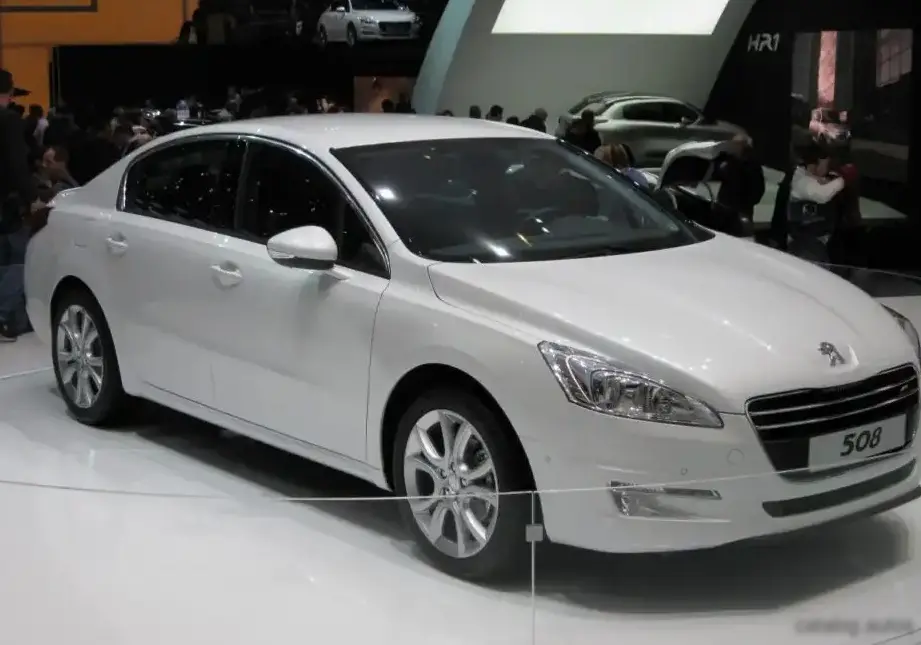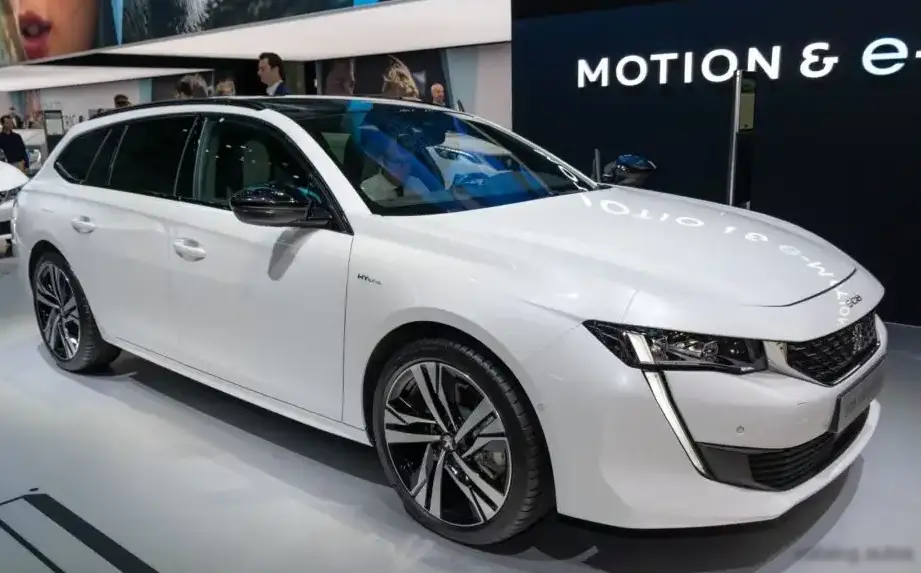
The Peugeot 508 II SW 1.6 PureTech 225 Hp Plug-in Hybrid e-EAT8, produced from 2019 to 2023, represents a significant step in Peugeot’s strategy to offer electrified options within its mainstream lineup. This variant, part of the second-generation 508 SW (estate) range, combines a 1.6-liter turbocharged gasoline engine with an electric motor and a plug-in hybrid system. It’s positioned as a premium offering within the 508 SW range, appealing to buyers seeking reduced emissions, improved fuel economy, and a sophisticated driving experience. The vehicle is built on the EMP2 platform, shared with other PSA Group (now Stellantis) vehicles like the DS 7 Crossback and Opel/Vauxhall Grandland X.
Technical Specifications
| Brand | Peugeot |
| Model | 508 |
| Generation | 508 II SW (Phase I, 2018) |
| Type (Engine) | 1.6 PureTech (225 Hp) Plug-in Hybrid e-EAT8 |
| Start of production | 2019 |
| End of production | 2023 |
| Powertrain Architecture | PHEV (Plug-in Hybrid Electric Vehicle) |
| Body type | Station wagon (estate) |
| Seats | 5 |
| Doors | 5 |
| Combined fuel consumption (WLTP) | 1.3-1.6 l/100 km (180.9 – 147 US mpg, 217.3 – 176.6 UK mpg, 76.9 – 62.5 km/l) |
| CO2 emissions (WLTP) | 30-36 g/km |
| Fuel consumption (NEDC) – combined | 1.4-1.6 l/100 km (168 – 147 US mpg, 201.8 – 176.6 UK mpg, 71.4 – 62.5 km/l) |
| CO2 emissions (NEDC) | 33-36 g/km |
| Fuel Type | Petrol / electricity |
| Acceleration 0 – 100 km/h | 8.2 sec |
| Acceleration 0 – 62 mph | 8.2 sec |
| Acceleration 0 – 60 mph | 7.8 sec |
| Maximum speed | 240 km/h (149.13 mph) |
| Emission standard | Euro 6 |
| Weight-to-power ratio | 7.8 kg/Hp, 128.9 Hp/tonne |
| Weight-to-torque ratio | 4.8 kg/Nm, 206.3 Nm/tonne |
| Gross battery capacity | 11.6 kWh |
| Battery voltage | 300 V |
| Battery technology | Lithium-ion (Li-Ion) |
| Battery location | Below the floor, under the rear seats |
| All-electric range (WLTP) | 52 km (32.31 mi) |
| All-electric range (NEDC) | 56 km (34.8 mi) |
| Average Energy consumption (WLTP) | 14.7-15.7 kWh/100 km (23.66 – 25.27 kWh/100 mi, 142 – 133 MPGe, 6.8 – 6.4 km/kWh, 4.2 – 4 mi/kWh) |
| Max speed (electric) | 135 km/h (83.89 mph) |
| Electric motor power | 110 Hp @ 2500 rpm |
| Electric motor Torque | 320 Nm (236.02 lb.-ft.) |
| Electric motor location | Between the combustion engine and the transmission |
| System power | 225 Hp |
| System torque | 360 Nm (265.52 lb.-ft.) |
| Power | 180 Hp @ 6000 rpm |
| Torque | 300 Nm @ 3000 rpm (221.27 lb.-ft. @ 3000 rpm) |
| Engine layout | Front, Transverse |
| Engine Model/Code | EP6FADTXHPD |
| Engine displacement | 1598 cm3 (97.52 cu. in.) |
| Number of cylinders | 4 |
| Engine configuration | Inline |
| Cylinder Bore | 77 mm (3.03 in.) |
| Piston Stroke | 85.8 mm (3.38 in.) |
| Compression ratio | 10.2:1 |
| Number of valves per cylinder | 4 |
| Fuel injection system | Direct injection |
| Engine aspiration | Turbocharger, Intercooler |
| Valvetrain | DOHC |
| Engine oil capacity | 4.25 l (4.49 US qt | 3.74 UK qt) |
| Kerb Weight | 1745 kg (3847.07 lbs.) |
| Max. weight | 2290 kg (5048.59 lbs.) |
| Max load | 545 kg (1201.52 lbs.) |
| Trunk (boot) space – minimum | 530 l (18.72 cu. ft.) |
| Trunk (boot) space – maximum | 1780 l (62.86 cu. ft.) |
| Fuel tank capacity | 43 l (11.36 US gal | 9.46 UK gal) |
| Max. roof load | 80 kg (176.37 lbs.) |
| Permitted trailer load with brakes (12%) | 1340 kg (2954.19 lbs.) |
| Permitted trailer load without brakes | 745 kg (1642.44 lbs.) |
| Permitted towbar download | 62 kg (136.69 lbs.) |
| Length | 4778 mm (188.11 in.) |
| Width | 1859 mm (73.19 in.) |
| Width with mirrors folded | 1907 mm (75.08 in.) |
| Width including mirrors | 2079 mm (81.85 in.) |
| Height | 1420 mm (55.91 in.) |
| Wheelbase | 2793 mm (109.96 in.) |
| Front track | 1601 mm (63.03 in.) |
| Rear (Back) track | 1597 mm (62.87 in.) |
| Front overhang | 948 mm (37.32 in.) |
| Rear overhang | 1037 mm (40.83 in.) |
| Minimum turning circle (turning diameter) | 10.8 m (35.43 ft.) |
| Drivetrain Architecture | The Internal combustion engine (ICE) and electric motor drive the front wheels of the car with the ability to work in full electric or mixed mode. |
| Drive wheel | Front wheel drive |
| Number of gears and type of gearbox | 8 gears, automatic transmission e-EAT |
| Front suspension | Independent type McPherson |
| Rear suspension | Independent multi-link suspension |
| Front brakes | Ventilated discs, 304×28 mm |
| Rear brakes | Disc, 268×12 mm |
| Assisting systems | ABS (Anti-lock braking system) |
| Steering type | Steering rack and pinion |
| Power steering | Electric Steering |
| Tires size | 215/55 R17; 235/45 R18 |
| Wheel rims size | 7J x 17; 8J x 18 |
INTRODUCTION
The Peugeot 508 II SW 1.6 PureTech 225 Hp Plug-in Hybrid e-EAT8, launched in 2019, is a station wagon that forms part of the second generation of the 508 model line. Built on the EMP2 platform, it represents Peugeot’s commitment to offering a more efficient and environmentally friendly alternative to traditional internal combustion engine vehicles. The “SW” designation signifies the estate (station wagon) body style, offering increased cargo capacity compared to the fastback saloon. This plug-in hybrid variant was introduced as Peugeot expanded its electrified offerings, aiming to appeal to a broader customer base seeking lower running costs and reduced emissions. The Phase I models, produced until approximately 2023, established the core features and technology of this powertrain combination.
Powertrain & Engine Architecture
At the heart of the 508 SW PHEV is the EP6FADTXHPD 1.6-liter turbocharged four-cylinder gasoline engine. This engine, part of Peugeot’s “PureTech” family, utilizes direct fuel injection and a twin-scroll turbocharger to deliver 180 horsepower at 6000 rpm and 300 Nm (221 lb-ft) of torque at 3000 rpm. The engine features a DOHC (Double Overhead Camshaft) valvetrain and a compression ratio of 10.2:1. Integrated with the gasoline engine is an 80kW (110 hp) electric motor, powered by an 11.6 kWh lithium-ion battery pack located under the rear seats and floor. The electric motor produces 320 Nm (236 lb-ft) of torque. The combined system output is 225 horsepower and 360 Nm (265 lb-ft) of torque. The e-EAT8 eight-speed automatic transmission, specifically tuned for hybrid applications, manages power delivery. This transmission is known for its smooth shifting and efficiency. The hybrid system allows for selectable driving modes, including Zero Emission (EV), Hybrid, and Sport, influencing the balance between gasoline and electric power.
Driving Characteristics
The 508 SW 1.6 PureTech 225 Hybrid offers a refined and comfortable driving experience. In electric mode, the vehicle provides near-silent operation and brisk acceleration for urban driving, with a WLTP-rated electric range of 52 km (32 miles). Switching to Hybrid mode seamlessly blends the power of the gasoline engine and electric motor, providing responsive performance and improved fuel economy. The e-EAT8 transmission contributes to smooth gear changes, enhancing overall drivability. While not as overtly sporty as some of its rivals, the 508 SW Hybrid delivers adequate performance, achieving 0-100 km/h (0-62 mph) in approximately 8.2 seconds. Compared to the 1.5 BlueHDi diesel variants, the hybrid offers quicker acceleration and a more refined powertrain, albeit with a slightly higher kerb weight. The weight distribution, however, is well-managed, contributing to balanced handling.
Equipment & Trim Levels
The 508 SW 1.6 PureTech 225 Hybrid typically came well-equipped, reflecting its position as a premium variant. Standard features often included Peugeot’s i-Cockpit interior design with a compact steering wheel and a 12.3-inch digital instrument cluster, an 8-inch touchscreen infotainment system with Apple CarPlay and Android Auto compatibility, automatic climate control, and a suite of advanced driver-assistance systems (ADAS) such as lane-keeping assist, adaptive cruise control, and automatic emergency braking. Interior upholstery was typically a combination of cloth and leather-effect materials. Optional extras included a panoramic sunroof, premium audio system, and full leather upholstery. Trim levels varied by market, but generally offered progressive enhancements in terms of interior appointments and technology features.
Chassis & Braking
The 508 SW 1.6 PureTech 225 Hybrid utilizes an independent suspension setup, with McPherson struts at the front and a multi-link arrangement at the rear. This configuration provides a good balance between ride comfort and handling. The vehicle is equipped with ventilated disc brakes at the front and solid discs at the rear. ABS (Anti-lock Braking System) is standard, along with electronic brakeforce distribution and emergency brake assist. The steering system is an electric power-assisted rack and pinion setup, offering precise and responsive control. The vehicle’s weight, due to the hybrid components, is approximately 1745 kg (3847 lbs), which is higher than some of the non-hybrid variants.
Market Reception & Comparison
The Peugeot 508 SW 1.6 PureTech 225 Hybrid was generally well-received by automotive critics. It was praised for its stylish design, comfortable interior, and efficient powertrain. The plug-in hybrid system was lauded for its ability to deliver significant fuel economy improvements and reduce emissions, particularly for shorter journeys. Compared to the diesel-powered 508 SW models, the hybrid offered a more refined driving experience and lower running costs in certain scenarios. However, the higher purchase price and the added weight were noted as potential drawbacks. Against competitors like the Volkswagen Passat GTE and Skoda Superb iV, the 508 SW Hybrid stood out with its distinctive styling and engaging driving dynamics.
Legacy
The Peugeot 508 SW 1.6 PureTech 225 Hybrid represents a pivotal moment in Peugeot’s transition towards electrification. The powertrain, while not without its complexities, has proven to be relatively reliable in real-world use. The battery pack, with a capacity of 11.6 kWh, provides a useful electric range for daily commuting. On the used car market, these models are becoming increasingly sought after by buyers looking for a stylish, efficient, and well-equipped estate car. Regular maintenance, including battery health checks and servicing of the hybrid system components, is crucial to ensure long-term reliability. The 508 SW PHEV paved the way for Peugeot’s broader range of plug-in hybrid and fully electric vehicles, solidifying its commitment to sustainable mobility.