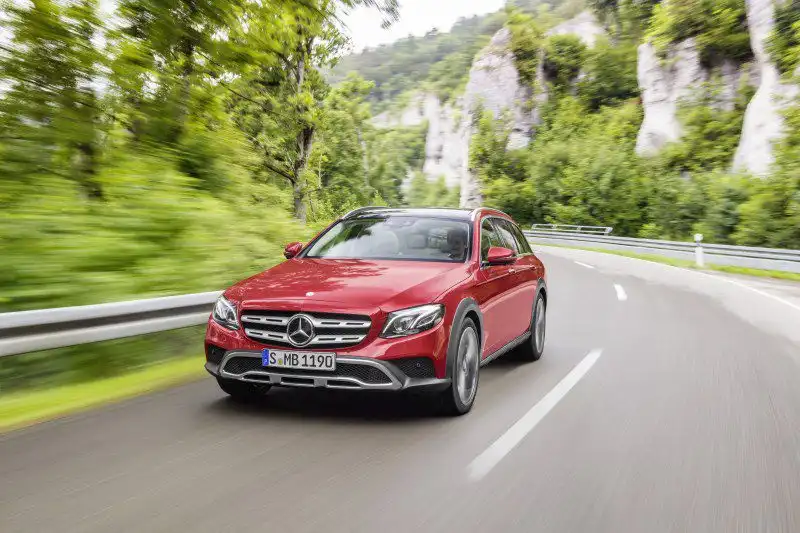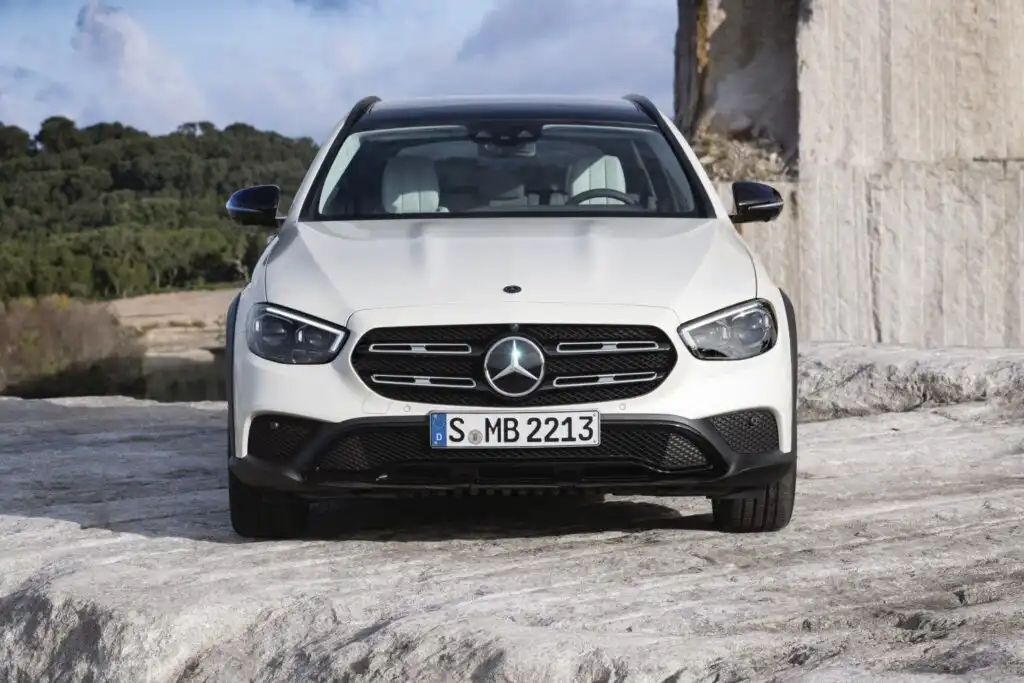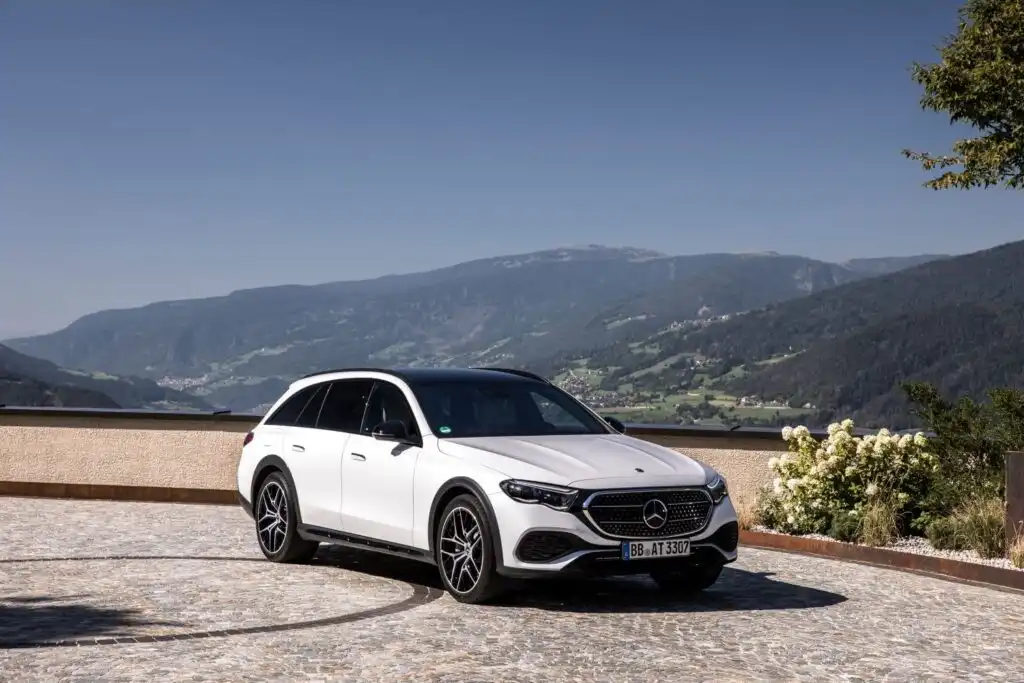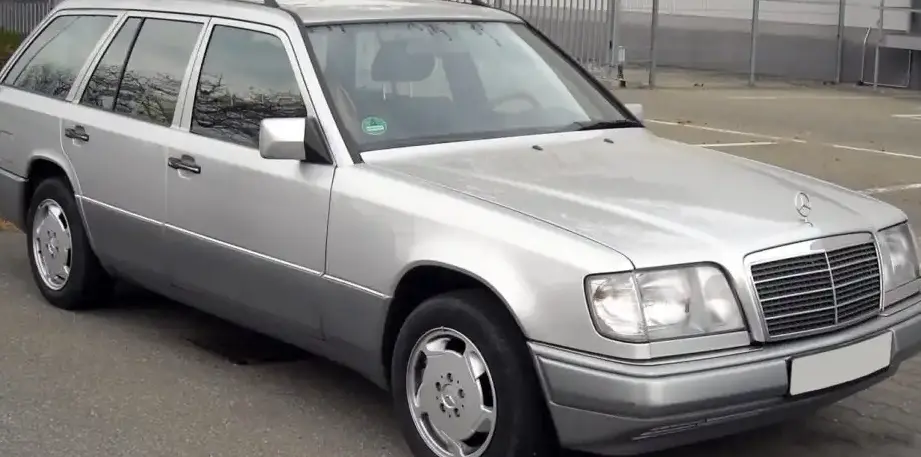
The Mercedes-Benz E-Class T-modell (S124) E 250 T D, producing 113 horsepower, was a diesel-powered station wagon produced from December 1992 to February 1996. It occupied a middle ground within the S124 estate range, offering a balance between practicality, fuel economy, and affordability. Positioned below the more powerful E 300 T D and alongside the gasoline-powered variants, the E 250 T D catered to buyers prioritizing efficiency and durability in a spacious, family-oriented vehicle. This model was primarily sold in Europe, where demand for diesel-powered wagons was significantly higher than in the United States.
Technical Specifications
| Brand | Mercedes-Benz |
| Model | E-class |
| Generation | E-class T-modell (S124) |
| Type (Engine) | E 250 T D (113 Hp) |
| Start of production | December, 1992 |
| End of production | February, 1996 |
| Powertrain Architecture | Internal Combustion engine |
| Body type | Station wagon (estate) |
| Seats | 5 |
| Doors | 5 |
| Fuel consumption (urban) | 9.5 l/100 km (24.8 US mpg, 29.7 UK mpg, 10.5 km/l) |
| Fuel consumption (extra urban) | 5.8 l/100 km (40.6 US mpg, 48.7 UK mpg, 17.2 km/l) |
| Fuel consumption (combined) | 7.6 l/100 km (30.9 US mpg, 37.2 UK mpg, 13.2 km/l) |
| Fuel Type | Diesel |
| Acceleration 0 – 100 km/h | 16.3 sec |
| Acceleration 0 – 62 mph | 16.3 sec |
| Acceleration 0 – 60 mph | 15.5 sec |
| Maximum speed | 180 km/h (111.85 mph) |
| Weight-to-power ratio | 13.5 kg/Hp, 73.9 Hp/tonne |
| Weight-to-torque ratio | 8.8 kg/Nm, 113.1 Nm/tonne |
| Power | 113 Hp @ 5000 rpm |
| Power per litre | 45.3 Hp/l |
| Torque | 173 Nm @ 2800 rpm (127.6 lb.-ft. @ 2800 rpm) |
| Engine layout | Front, Longitudinal |
| Engine Model/Code | OM 605 D 25 / 605.911 |
| Engine displacement | 2497 cm3 (152.38 cu. in.) |
| Number of cylinders | 5 |
| Engine configuration | Inline |
| Cylinder Bore | 87 mm (3.43 in.) |
| Piston Stroke | 84 mm (3.31 in.) |
| Compression ratio | 22:1 |
| Number of valves per cylinder | 4 |
| Fuel injection system | Precombustion chamber injection |
| Engine aspiration | Naturally aspirated engine |
| Valvetrain | DOHC |
| Engine oil capacity | 7 l (7.4 US qt | 6.16 UK qt) |
| Coolant | 9.5 l (10.04 US qt | 8.36 UK qt) |
| Kerb Weight | 1530 kg (3373.07 lbs.) |
| Max. weight | 2190 kg (4828.12 lbs.) |
| Max load | 660 kg (1455.05 lbs.) |
| Trunk (boot) space – minimum | 530 l (18.72 cu. ft.) |
| Trunk (boot) space – maximum | 885 l (31.25 cu. ft.) |
| Fuel tank capacity | 72 l (19.02 US gal | 15.84 UK gal) |
| Length | 4765 mm (187.6 in.) |
| Width | 1740 mm (68.5 in.) |
| Height | 1490 mm (58.66 in.) |
| Wheelbase | 2800 mm (110.24 in.) |
| Front track | 1497 mm (58.94 in.) |
| Rear (Back) track | 1488 mm (58.58 in.) |
| Drivetrain Architecture | The Internal combustion engine (ICE) drives the rear wheels of the vehicle. |
| Drive wheel | Rear wheel drive |
| Number of gears and type of gearbox | 5 gears, manual transmission |
| Front suspension | Wishbone |
| Rear suspension | Independent multi-link suspension |
| Front brakes | Ventilated discs |
| Rear brakes | Disc |
| Assisting systems | ABS (Anti-lock braking system) |
| Steering type | Cone worm with recirculation balls |
| Power steering | Hydraulic Steering |
| Tires size | Front wheel tires: 195/65 R15Rear wheel tires: 195/65 R15 |
| Wheel rims size | Front wheel rims: 6.5J x 15Rear wheel rims: 6.5J x 15 |
Powertrain & Engine Architecture
The E 250 T D was powered by the Mercedes-Benz OM 605 D 25 engine, a 2.5-liter inline five-cylinder diesel. This engine utilized precombustion chamber injection, a system common in Mercedes-Benz diesels of the era. This system involved injecting fuel into a small precombustion chamber connected to the main cylinder, promoting more complete combustion and reducing engine noise. The OM 605 featured a double overhead camshaft (DOHC) valvetrain, contributing to improved breathing and efficiency. The engine produced 113 horsepower at 5000 rpm and 173 Nm (127.6 lb-ft) of torque at 2800 rpm. The five-speed manual transmission was standard, providing a relatively long-legged gearing setup optimized for fuel economy and relaxed highway cruising. An optional four-speed automatic transmission was also available, though it impacted acceleration and fuel consumption.
Driving Characteristics
The E 250 T D, with its 113 horsepower and relatively high weight of 1530 kg (3373 lbs), wasn’t designed for outright performance. Acceleration from 0 to 100 km/h (0-62 mph) took approximately 16.3 seconds. However, the engine’s strong low-end torque made it surprisingly capable for everyday driving and hauling loads. The manual transmission allowed for precise control, while the automatic, though slower, offered convenience. Compared to the more powerful E 300 T D, the E 250 T D felt noticeably less responsive, particularly when fully loaded. The long gearing emphasized fuel efficiency, making it a comfortable long-distance cruiser, but it could feel strained when attempting quick overtaking maneuvers. The rear-wheel drive configuration provided a balanced feel, though it lacked the all-weather capability of all-wheel-drive systems found on some competitors.
Equipment & Trim Levels
The E 250 T D typically came with a reasonable level of standard equipment, reflecting its position as a mid-range offering. This included power windows, central locking, and a basic audio system. Interior upholstery was typically cloth, though leather was available as an option. Dashboard configuration was consistent with other S124 models, featuring a functional and durable design. Optional extras included a sunroof, upgraded audio systems, automatic climate control, and alloy wheels. The T-modell designation itself signified the estate body style, offering a large and versatile cargo area accessible through a rear tailgate.
Chassis & Braking
The S124 chassis featured independent suspension all around, with a wishbone setup at the front and a multi-link suspension at the rear. This provided a comfortable ride and good handling characteristics for a vehicle of its size and weight. Brakes were ventilated discs at the front and solid discs at the rear. Anti-lock braking system (ABS) was standard, enhancing safety. Steering was via a cone worm and recirculation ball system with hydraulic power assistance. The E 250 T D typically rode on 195/65 R15 tires, providing a good balance between comfort and grip.
Market Reception & Comparison
The E 250 T D was generally well-received by critics as a practical and economical estate car. Its fuel efficiency was a major selling point, particularly in Europe where diesel fuel was often cheaper than gasoline. Compared to the E 300 T D, the E 250 T D offered a more affordable entry point into the S124 estate range, albeit with a noticeable performance deficit. Against competitors like the Volvo 940 Estate and the Ford Mondeo Estate, the E 250 T D offered a more premium feel and a reputation for durability. However, it was often more expensive to maintain than some of its rivals.
Legacy
The OM 605 engine, found in the E 250 T D, is renowned for its robustness and longevity. With proper maintenance, these engines can reliably exceed 300,000 kilometers (186,000 miles). Today, the E 250 T D is a sought-after classic car, particularly among enthusiasts who appreciate its simplicity, durability, and practicality. While finding well-maintained examples can be challenging, the E 250 T D remains a testament to Mercedes-Benz’s engineering prowess and a popular choice for those seeking a spacious and reliable estate car with a classic pedigree. Parts availability is generally good, though some specific trim pieces may be difficult to source.