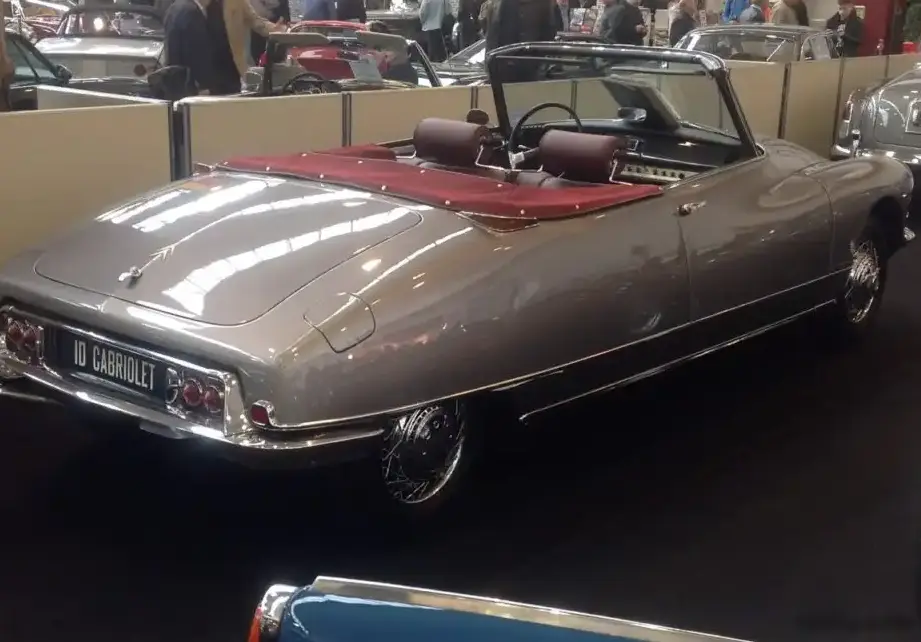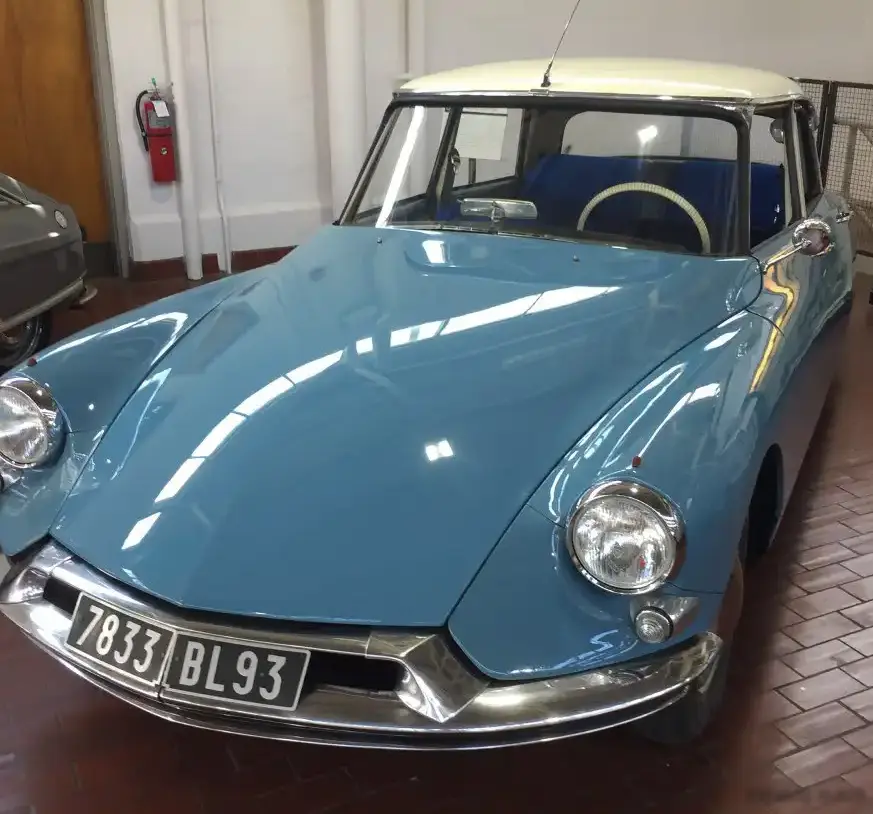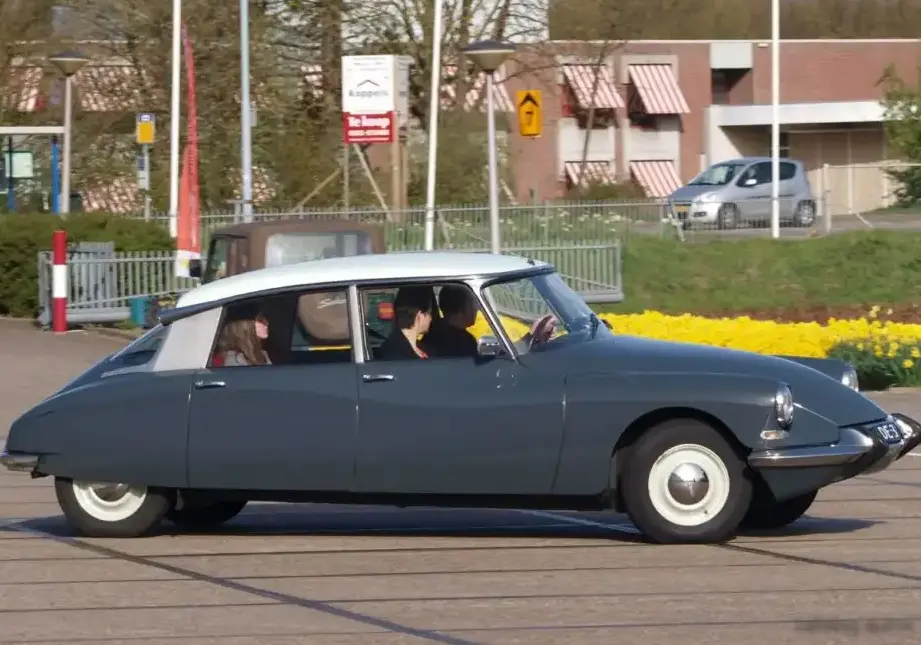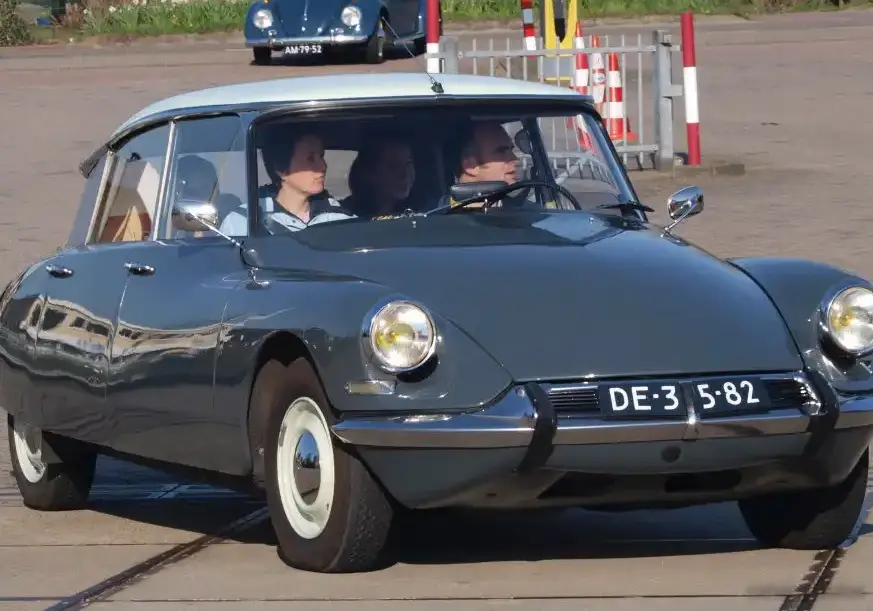
The Citroën ID I Break 19 F (80 hp) was a significant variant of the Citroën ID series, produced between 1962 and 1963. Positioned as a practical and spacious family vehicle, the ID I Break, specifically with the 19F engine, offered a blend of Citroën’s innovative hydropneumatic suspension with a relatively accessible price point. It was part of the larger ID family, which represented Citroën’s mainstream offerings during a period of considerable technological advancement for the French automaker. The “Break” designation signified the estate (station wagon) body style, a popular choice for families needing ample cargo space. This model sat within the ID range, below the more luxurious DS models, and offered a more affordable alternative to competitors like the Peugeot 404 Break.
Technical Specifications
| Brand | Citroen |
| Model | ID |
| Generation | ID I Break |
| Type (Engine) | 19 F (80 Hp) |
| Start of production | 1962 |
| End of production | 1963 |
| Powertrain Architecture | Internal Combustion engine |
| Body type | Station wagon (estate) |
| Seats | 7 |
| Doors | 5 |
| Fuel Type | Petrol (Gasoline) |
| Weight-to-power ratio | 16.5 kg/Hp, 60.6 Hp/tonne |
| Power | 80 Hp |
| Power per litre | 41.9 Hp/l |
| Engine displacement | 1911 cm3 |
| Engine displacement (cu. in.) | 116.62 cu. in. |
| Number of cylinders | 4 |
| Cylinder Bore | 78 mm |
| Cylinder Bore (in.) | 3.07 in. |
| Piston Stroke | 100 mm |
| Piston Stroke (in.) | 3.94 in. |
| Engine aspiration | Naturally aspirated engine |
| Engine oil capacity | 5 l |
| Engine oil capacity (US qt) | 5.28 US qt |
| Engine oil capacity (UK qt) | 4.4 UK qt |
| Coolant | 11 l |
| Coolant (US qt) | 11.62 US qt |
| Coolant (UK qt) | 9.68 UK qt |
| Kerb Weight | 1320 kg |
| Kerb Weight (lbs) | 2910.1 lbs. |
| Max. weight | 2000 kg |
| Max. weight (lbs) | 4409.25 lbs. |
| Max load | 680 kg |
| Max load (lbs) | 1499.14 lbs. |
| Length | 4975 mm |
| Length (in.) | 195.87 in. |
| Width | 1790 mm |
| Width (in.) | 70.47 in. |
| Height | 1530 mm |
| Height (in.) | 60.24 in. |
| Wheelbase | 3125 mm |
| Wheelbase (in.) | 123.03 in. |
| Front track | 1500 mm |
| Front track (in.) | 59.06 in. |
| Rear (Back) track | 1300 mm |
| Rear (Back) track (in.) | 51.18 in. |
| Rear overhang | 885 mm |
| Rear overhang (in.) | 34.84 in. |
| Minimum turning circle (turning diameter) | 11.05 m |
| Minimum turning circle (turning diameter) (ft) | 36.25 ft. |
| Drivetrain Architecture | The Internal combustion engine (ICE) drives the front wheels of the vehicle. |
| Drive wheel | Front wheel drive |
| Number of gears and type of gearbox | 4 gears, manual transmission |
| Front suspension | Hydro-pneumatic element, Double wishbone |
| Rear suspension | Hydro-pneumatic element, Trailing arm |
| Front brakes | Disc |
| Rear brakes | Disc |
| Steering type | Steering rack and pinion |
Powertrain & Engine Architecture
The ID I Break 19 F was powered by a 1.9-liter (1911 cc) inline-four cylinder engine. This engine, designated as the 19F, produced 80 horsepower. It featured a relatively simple, yet robust, design with a single overhead camshaft and a two-barrel Solex carburetor. The engine’s bore and stroke were 78mm x 100mm, respectively. The engine utilized a conventional wet sump lubrication system. The 19F engine was known for its durability and relatively smooth operation, although it wasn’t particularly powerful by contemporary standards. The engine was coupled to a four-speed manual transmission, which was the standard offering for this variant. While an automatic transmission was available on some ID models, it wasn’t typically paired with the 19F engine due to the engine’s power output.
Driving Characteristics
The 1.8L/19F engine and four-speed manual transmission combination in the ID I Break provided adequate, but not exhilarating, performance. Acceleration was modest, and the car was best suited for relaxed cruising rather than spirited driving. The gear ratios were geared towards fuel efficiency and ease of driving, rather than outright speed. The hydropneumatic suspension, a Citroën hallmark, provided a remarkably comfortable ride, absorbing bumps and imperfections in the road with ease. This was a key selling point for the ID I Break, as it offered a level of ride quality rarely found in vehicles of its price range. The front-wheel drive configuration contributed to good traction in most conditions, but also resulted in noticeable understeer when pushed hard.
Equipment & Trim Levels
The ID I Break 19 F was generally equipped with a fairly basic level of trim, reflecting its position as a mainstream family car. Standard features included cloth upholstery, a simple dashboard layout with basic instrumentation, and manually operated windows and door locks. The interior was spacious and practical, with seating for up to seven passengers. Optional extras included a sunroof, a radio, and upgraded upholstery. The Break body style itself was a significant feature, offering a large cargo area accessible through a rear tailgate. The interior trim was typically finished in muted colors, reflecting the car’s practical nature.
Chassis & Braking
The ID I Break featured Citroën’s innovative hydropneumatic suspension system, which utilized self-leveling spheres filled with a nitrogen gas and hydraulic fluid. This system provided a consistently comfortable ride, regardless of the load carried. The front suspension employed a double wishbone configuration, while the rear suspension utilized a trailing arm design. Braking was provided by disc brakes on all four wheels, a relatively advanced feature for the early 1960s. The steering was a rack and pinion system, offering precise and responsive handling. The chassis was a monocoque construction, providing a good balance of strength and weight.
Market Reception & Comparison
The Citroën ID I Break 19 F was generally well-received by the motoring press and the public. Critics praised its comfortable ride, spacious interior, and innovative suspension system. However, some criticized its relatively modest performance and somewhat dated styling. Compared to other ID variants, such as those equipped with larger engines, the 19 F offered a more affordable entry point into the Citroën range. It was also more fuel-efficient than its higher-powered siblings. Compared to competitors like the Peugeot 404 Break, the ID I Break offered a more sophisticated suspension system and a more distinctive design, but was often slightly more expensive.
Legacy
The Citroën ID I Break 19 F, while not the most powerful or glamorous variant of the ID series, remains a fondly remembered classic. Its robust engine and innovative suspension system contributed to its longevity, and many examples are still in use today. The 19F engine is known for its reliability, although regular maintenance is essential to keep it running smoothly. In the used car market, the ID I Break 19 F is valued for its practicality, comfort, and unique Citroën character. It represents a significant chapter in Citroën’s history, showcasing the automaker’s commitment to innovation and engineering excellence. Parts availability can be a challenge, but a dedicated community of Citroën enthusiasts ensures that spares are still obtainable.