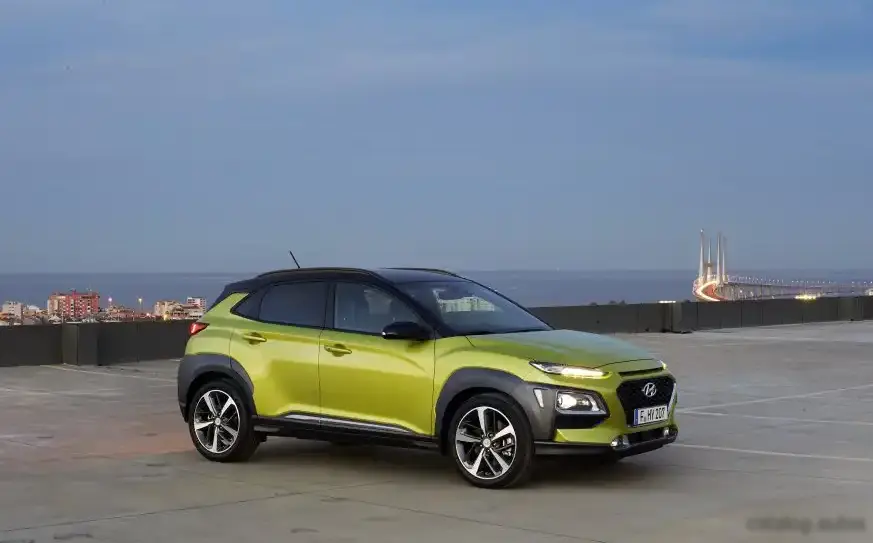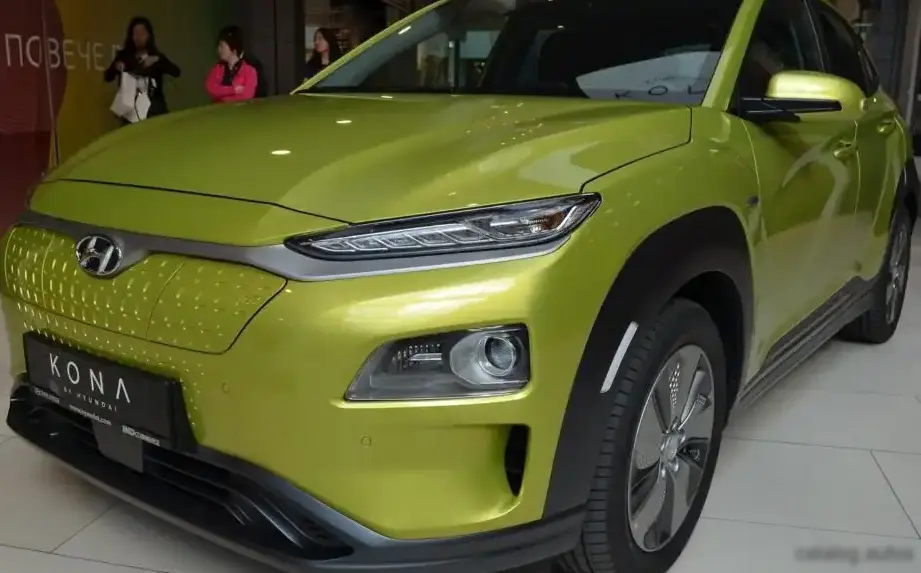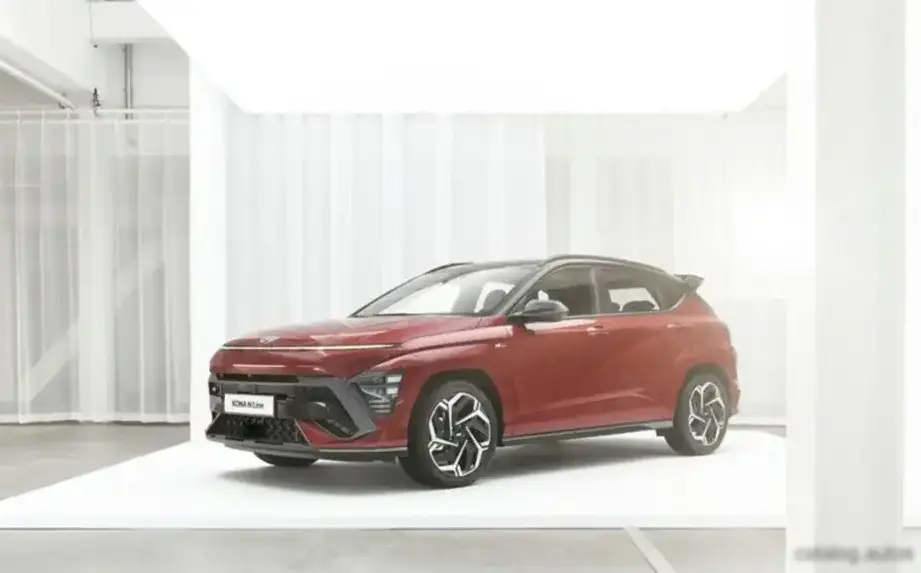
The Hyundai Kona II 2.0 MPI (147 Hp) IVT represents a key variant within the second generation of Hyundai’s popular subcompact SUV, launched in April 2023. Positioned as a mainstream offering in the Kona II lineup, this model balances affordability with a reasonably equipped package, targeting buyers seeking a practical and fuel-efficient vehicle for daily commuting and family use. It slots in as a mid-range option, offering a step up from the base engine while remaining more accessible than the turbocharged or hybrid variants. The Kona II, built on the same platform as its predecessor, aims to improve upon the original’s strengths with updated styling, enhanced technology, and improved interior space.
Technical Specifications
| Brand | Hyundai |
| Model | Kona |
| Generation | Kona II |
| Type (Engine) | 2.0 MPI (147 Hp) IVT |
| Start of production | April, 2023 |
| Powertrain Architecture | Internal Combustion engine |
| Body type | SUV |
| Seats | 5 |
| Doors | 5 |
| Fuel Type | Petrol (Gasoline) |
| Emission standard | WCC + UCC / SULEV 30 |
| Weight-to-power ratio | 9.3 kg/Hp, 107.9 Hp/tonne |
| Weight-to-torque ratio | 7.6 kg/Nm, 131.3 Nm/tonne |
| Power | 147 Hp @ 6200 rpm |
| Power per litre | 73.5 Hp/l |
| Torque | 179 Nm @ 4500 rpm (132.02 lb.-ft. @ 4500 rpm) |
| Engine layout | Front, Transverse |
| Engine Model/Code | Nu PE |
| Engine displacement | 1999 cm3 (121.99 cu. in.) |
| Number of cylinders | 4 |
| Engine configuration | Inline |
| Cylinder Bore | 81 mm (3.19 in.) |
| Piston Stroke | 97 mm (3.82 in.) |
| Compression ratio | 12.5:1 |
| Number of valves per cylinder | 4 |
| Fuel injection system | Multi-port manifold injection |
| Engine aspiration | Naturally aspirated engine |
| Valvetrain | DOHC, DCVVT |
| Kerb Weight | 1363-1430 kg (3004.9 – 3152.61 lbs.) |
| Max. weight | 1855 kg (4089.57 lbs.) |
| Max load | 425-492 kg (936.96 – 1084.67 lbs.) |
| Trunk (boot) space – minimum | 722 l (25.5 cu. ft.) |
| Trunk (boot) space – maximum | 1804 l (63.71 cu. ft.) |
| Fuel tank capacity | 47 l (12.42 US gal | 10.34 UK gal) |
| Max. roof load | 100 kg (220.46 lbs.) |
| Length | 4351 mm (171.3 in.) |
| Width | 1826 mm (71.89 in.) |
| Height | 1585-1590 mm (62.4 – 62.6 in.) |
| Wheelbase | 2659 mm (104.69 in.) |
| Front track | 1582-1590 mm (62.28 – 62.6 in.) |
| Rear (Back) track | 1598-1600 mm (62.91 – 62.99 in.) |
| Front overhang | 861 mm (33.9 in.) |
| Rear overhang | 831 mm (32.72 in.) |
| Ride height (ground clearance) | 170-175 mm (6.69 – 6.89 in.) |
| Drag coefficient (Cd) | 0.302 |
| Minimum turning circle (turning diameter) | 10.6 m (34.78 ft.) |
| Drivetrain Architecture | The Internal combustion engine (ICE) drives the front wheels of the vehicle. |
| Drive wheel | Front wheel drive |
| Number of gears and type of gearbox | automatic transmission IVT |
| Front suspension | Independent type McPherson, Transverse stabilizer |
| Rear suspension | Torsion |
| Front brakes | Ventilated discs, 279.4 mm |
| Rear brakes | Disc, 284.48 mm |
| Assisting systems | ABS (Anti-lock braking system) |
| Steering type | Steering rack and pinion |
| Power steering | Electric Steering |
| Tires size | 215/60 R17; 215/55 R18; 235/50 R18; 235/45 R19 |
| Wheel rims size | 7J x 17; 7J x 18; 7.5J x 18; 8J x 19 |
INTRODUCTION
The Hyundai Kona II 2.0 MPI IVT, introduced in April 2023, is a front-wheel-drive subcompact SUV that forms a core part of Hyundai’s updated Kona lineup. This second-generation model (internally designated as the Kona II) builds upon the success of the first-generation Kona, offering a more refined driving experience, increased interior space, and a bolder exterior design. The 2.0 MPI IVT variant is specifically geared towards buyers prioritizing fuel efficiency and a comfortable ride over outright performance. It represents a sweet spot in the range, offering a balance between price and features. The Kona II competes directly with other popular subcompact SUVs like the Honda HR-V, Mazda CX-30, and Kia Seltos.
Powertrain & Engine Architecture
At the heart of the Kona II 2.0 MPI IVT lies Hyundai’s Nu PE 2.0-liter naturally aspirated inline-four cylinder engine. This engine utilizes multi-port fuel injection and a double overhead camshaft (DOHC) valvetrain with DCVVT (Dual Continuous Variable Valve Timing) to optimize efficiency and power delivery. The engine produces 147 horsepower at 6,200 rpm and 179 Nm (132.02 lb-ft) of torque at 4,500 rpm. The engine’s design emphasizes reliability and ease of maintenance. Paired with this engine is Hyundai’s Intelligent Variable Transmission (IVT), a continuously variable transmission (CVT) marketed under the IVT name. This transmission is designed to provide smooth, seamless acceleration and improved fuel economy compared to traditional automatic transmissions. Unlike some CVTs, Hyundai’s IVT incorporates simulated shift points to mimic the feel of a conventional automatic, addressing a common complaint among CVT drivers.
Driving Characteristics
The 2.0 MPI IVT powertrain delivers adequate performance for everyday driving situations. Acceleration is linear and predictable, though not particularly brisk. The IVT effectively keeps the engine in its optimal power band, providing sufficient power for merging onto highways and navigating city streets. Compared to the turbocharged engine options available in the Kona II lineup, the 2.0 MPI feels less responsive, particularly during quick overtaking maneuvers. The IVT’s programming prioritizes fuel efficiency, which can sometimes result in a slight delay in response when pressing the accelerator. However, the smooth operation of the IVT contributes to a comfortable and refined driving experience. The front-wheel-drive configuration provides predictable handling, and the suspension is tuned for comfort rather than sporty dynamics.
Equipment & Trim Levels
The Kona II 2.0 MPI IVT typically comes standard with a respectable array of features. These generally include air conditioning, power windows and locks, a touchscreen infotainment system with Apple CarPlay and Android Auto compatibility, and a suite of safety features such as automatic emergency braking, lane keeping assist, and driver attention warning. Higher trim levels add features like heated seats, a sunroof, upgraded audio systems, and more advanced driver-assistance technologies. Interior upholstery is typically cloth, with options for leatherette or leather available on higher trims. Dashboard configurations are modern and user-friendly, with a focus on intuitive controls and a clean aesthetic.
Chassis & Braking
The Kona II utilizes a front independent McPherson strut suspension and a rear torsion beam suspension. This setup provides a comfortable ride quality and adequate handling characteristics for its intended purpose. The front brakes are ventilated discs measuring 279.4 mm, while the rear brakes are solid discs measuring 284.48 mm. Anti-lock braking system (ABS) is standard, providing enhanced braking performance and stability. The steering system is an electric rack and pinion, offering light and precise steering feel. The Kona II’s chassis is designed to balance rigidity with weight savings, contributing to its overall handling and fuel efficiency.
Market Reception & Comparison
The Hyundai Kona II 2.0 MPI IVT has been generally well-received by automotive critics as a practical and affordable subcompact SUV. Reviewers have praised its comfortable ride, spacious interior (for its class), and user-friendly technology. However, some have noted that the 2.0-liter engine can feel underpowered, particularly when fully loaded or driving uphill. Compared to the turbocharged Kona variants, the 2.0 MPI offers lower performance but better fuel economy. Its fuel economy figures are competitive within the subcompact SUV segment, typically achieving around 30 mpg combined. Reliability has been a strong point for Hyundai in recent years, and the Kona II is expected to continue this trend.
Legacy
The Hyundai Kona II 2.0 MPI IVT represents a solid and dependable choice in the subcompact SUV market. While not the most exciting option in the lineup, its combination of affordability, fuel efficiency, and practicality makes it a popular choice for budget-conscious buyers. The Nu PE engine has a proven track record of reliability, and the IVT transmission, while not universally loved, is generally considered to be durable and efficient. As the Kona II ages, it is expected to maintain its value as a reliable and affordable used car option, appealing to buyers seeking a practical and economical vehicle.