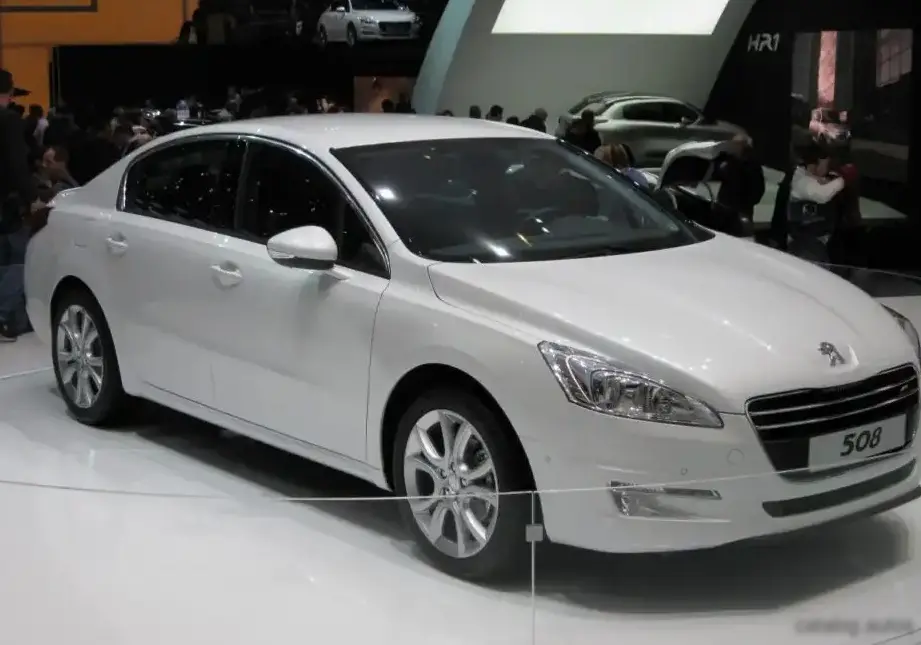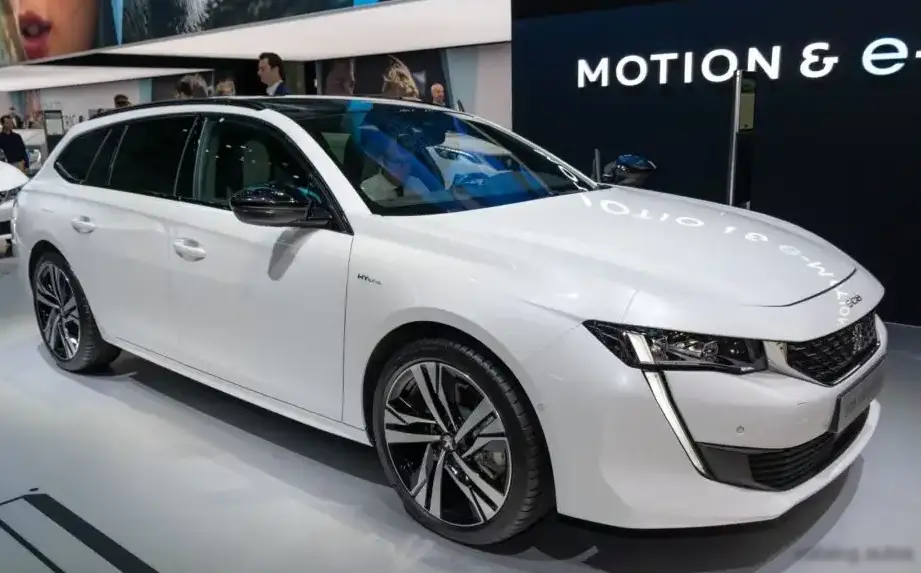
The Peugeot 508 II SW PSE 1.6 PureTech (360 Hp) 4WD Plug-in Hybrid e-EAT8, produced from 2020 to 2023, represents the performance-oriented variant of the second-generation 508 SW (Station Wagon). Positioned as the flagship trim within the 508 SW range, the PSE (Peugeot Sport Engineered) model combined a turbocharged four-cylinder gasoline engine with a dual-electric motor system, delivering substantial power and all-wheel-drive capability. This model was a key component of Peugeot’s strategy to offer high-performance, technologically advanced vehicles, and was primarily marketed in Europe, where the demand for premium station wagons remained strong. It aimed to bridge the gap between practicality and sporty driving dynamics, appealing to buyers seeking a versatile and engaging vehicle.
Technical Specifications
| Brand | Peugeot |
| Model | 508 |
| Generation | 508 II SW (Phase I, 2018) |
| Type (Engine) | PSE 1.6 PureTech (360 Hp) 4WD Plug-in Hybrid e-EAT8 |
| Start of production | 2020 |
| End of production | 2023 |
| Powertrain Architecture | PHEV (Plug-in Hybrid Electric Vehicle) |
| Body type | Station wagon (estate) |
| Seats | 5 |
| Doors | 5 |
| Combined fuel consumption (WLTP) | 1.8 l/100 km (130.7 US mpg, 156.9 UK mpg, 55.6 km/l) |
| CO2 emissions (WLTP) | 42 g/km |
| Fuel consumption (NEDC) – combined | 1.9 l/100 km (123.8 US mpg, 148.7 UK mpg, 52.6 km/l) |
| CO2 emissions (NEDC) | 42 g/km |
| Fuel Type | Petrol / electricity |
| Acceleration 0 – 100 km/h | 5.2 sec |
| Acceleration 0 – 62 mph | 5.2 sec |
| Acceleration 0 – 60 mph | 4.9 sec |
| Maximum speed | 250 km/h (155.34 mph) – Electronically limited |
| Emission standard | Euro 6d |
| Weight-to-power ratio | 5.2 kg/Hp, 192 Hp/tonne |
| Weight-to-torque ratio | 3.6 kg/Nm, 277.3 Nm/tonne |
| Gross battery capacity | 11.5 kWh |
| Battery technology | Lithium-ion (Li-Ion) |
| Battery location | Under the rear seats |
| All-electric range (WLTP) | 45 km (27.96 mi) |
| Average Energy consumption (WLTP) | 15.9 kWh/100 km (25.59 kWh/100 mi, 132 MPGe, 6.3 km/kWh, 3.9 mi/kWh) |
| Max speed (electric) | 135 km/h (83.89 mph) |
| Electric motor power (1) | 110 Hp @ 2500 rpm |
| Electric motor Torque (1) | 320 Nm (236.02 lb.-ft.) |
| Electric motor location (1) | Between the combustion engine and the transmission |
| Electric motor power (2) | 112 Hp @ 14000 rpm |
| Electric motor Torque (2) | 166 Nm (122.44 lb.-ft.) |
| Electric motor location (2) | Rear axle, Transverse |
| System power | 360 Hp |
| System torque | 520 Nm (383.53 lb.-ft.) |
| Power | 200 Hp @ 6000 rpm |
| Power per litre | 125.2 Hp/l |
| Torque | 300 Nm @ 3000 rpm (221.27 lb.-ft. @ 3000 rpm) |
| Engine layout | Front, Transverse |
| Engine Model/Code | EP6FDT |
| Engine displacement | 1598 cm3 (97.52 cu. in.) |
| Number of cylinders | 4 |
| Engine configuration | Inline |
| Cylinder Bore | 77 mm (3.03 in.) |
| Piston Stroke | 85.8 mm (3.38 in.) |
| Compression ratio | 10.2:1 |
| Number of valves per cylinder | 4 |
| Fuel injection system | Direct injection |
| Engine aspiration | Turbocharger, Intercooler |
| Valvetrain | DOHC |
| Engine oil capacity | 4.25 l (4.49 US qt | 3.74 UK qt) |
| Kerb Weight | 1875 kg (4133.67 lbs.) |
| Max. weight | 2360 kg (5202.91 lbs.) |
| Max load | 485 kg (1069.24 lbs.) |
| Trunk (boot) space – minimum | 530 l (18.72 cu. ft.) |
| Trunk (boot) space – maximum | 1780 l (62.86 cu. ft.) |
| Fuel tank capacity | 62 l (16.38 US gal | 13.64 UK gal) |
| Max. roof load | 80 kg (176.37 lbs.) |
| Permitted trailer load with brakes (12%) | 1270 kg (2799.87 lbs.) |
| Permitted trailer load without brakes | 745 kg (1642.44 lbs.) |
| Permitted towbar download | 70 kg (154.32 lbs.) |
| Length | 4790 mm (188.58 in.) |
| Width | 1860 mm (73.23 in.) |
| Width including mirrors | 2079 mm (81.85 in.) |
| Height | 1420 mm (55.91 in.) |
| Wheelbase | 2800 mm (110.24 in.) |
| Front track | 1600 mm (62.99 in.) |
| Rear (Back) track | 1600 mm (62.99 in.) |
| Front overhang | 950 mm (37.4 in.) |
| Rear overhang | 1040 mm (40.94 in.) |
| Minimum turning circle (turning diameter) | 10.8 m (35.43 ft.) |
| Drivetrain Architecture | An Internal combustion engine (ICE) drives the front wheels, one electric motor drives the front wheels, one electric motor drives the rear wheels. There is an ability for running in full electric or mixed mode. |
| Drive wheel | All wheel drive (4×4) |
| Number of gears and type of gearbox | 8 gears, automatic transmission e-EAT |
| Front suspension | Independent, type McPherson with coil spring and anti-roll bar |
| Rear suspension | Independent multi-link spring suspension with stabilizer |
| Front brakes | Ventilated discs, 380 mm |
| Rear brakes | Disc, 290 mm |
| Assisting systems | ABS (Anti-lock braking system) |
| Steering type | Steering rack and pinion |
| Power steering | Electric Steering |
| Tires size | 245/35 R20 |
| Wheel rims size | 20 |
Powertrain & Engine Architecture
The heart of the 508 SW PSE is a sophisticated plug-in hybrid powertrain. It centers around Peugeot’s EP6FDT 1.6-liter turbocharged four-cylinder gasoline engine, producing 200 horsepower and 300 Nm (221 lb-ft) of torque. This engine utilizes direct fuel injection and a twin-scroll turbocharger for enhanced responsiveness. Crucially, the PSE doesn’t simply add an electric motor to assist the gasoline engine; it employs a dual-motor setup. The primary electric motor, rated at 110 horsepower and 320 Nm (236 lb-ft) of torque, is integrated between the engine and the eight-speed e-EAT automatic transmission, driving the front wheels. A second, 112 horsepower and 166 Nm (122 lb-ft) electric motor powers the rear axle, providing on-demand all-wheel drive. This configuration allows for a combined system output of 360 horsepower and 520 Nm (383 lb-ft) of torque. The 11.5 kWh lithium-ion battery pack, positioned under the rear seats, provides an all-electric range of up to 45 kilometers (28 miles) under WLTP testing. The e-EAT8 transmission is specifically tuned for the hybrid system, offering smooth and efficient gear changes.
Driving Characteristics
The 508 SW PSE delivers a markedly different driving experience compared to lower-powered 508 SW variants. The instant torque from the electric motors, combined with the gasoline engine’s output, results in brisk acceleration – 0 to 100 km/h (0-62 mph) in just 5.2 seconds. The all-wheel-drive system provides excellent traction, particularly in adverse weather conditions. The e-EAT8 transmission is well-matched to the powertrain, offering quick and seamless shifts. In electric mode, the vehicle operates silently and efficiently, ideal for urban driving. Switching to Sport mode sharpens throttle response and steering feel, while also utilizing both power sources for maximum performance. Compared to the 1.5 BlueHDi diesel or 1.6 PureTech gasoline models with lower horsepower, the PSE offers significantly more power and a more engaging driving experience, albeit with a higher price tag.
Equipment & Trim Levels
The PSE trim level was exceptionally well-equipped. Standard features included a premium leather interior with unique stitching and badging, a panoramic sunroof, a high-end audio system, and a comprehensive suite of advanced driver-assistance systems (ADAS) such as adaptive cruise control, lane-keeping assist, and automatic emergency braking. The instrument cluster featured a dedicated hybrid display providing real-time information on energy flow and electric range. Optional extras included a Nappa leather upholstery upgrade and a more powerful audio system. The interior design emphasized a sporty and modern aesthetic, with carbon fiber trim accents and aluminum pedals.
Chassis & Braking
The 508 SW PSE features a specially tuned chassis to handle the increased power output. The suspension utilizes stiffer springs and dampers, along with a thicker stabilizer bar, to reduce body roll and improve handling. Brakes are upgraded to larger, ventilated discs all around – 380mm at the front and 290mm at the rear – providing ample stopping power. The steering is precise and well-weighted, offering good feedback to the driver. The all-wheel-drive system actively distributes torque between the front and rear axles, optimizing traction and stability.
Market Reception & Comparison
The Peugeot 508 SW PSE received generally positive reviews from automotive critics. It was praised for its impressive performance, refined driving dynamics, and luxurious interior. However, some reviewers noted that the hybrid system added significant weight, impacting handling slightly compared to lighter 508 SW models. Fuel economy was excellent, particularly when utilizing the electric driving range. Compared to the 1.5 BlueHDi diesel, the PSE offered more power and a more engaging driving experience, but at a higher cost and with a slightly reduced real-world fuel economy when operating solely on gasoline. The PSE positioned itself as a competitor to other high-performance plug-in hybrid wagons, such as the BMW 330e Touring and the Mercedes-Benz C300e Estate.
Legacy
The Peugeot 508 SW PSE represents a significant step in Peugeot’s electrification strategy. While production was limited, the model demonstrated the brand’s ability to create high-performance, technologically advanced vehicles. The powertrain technology developed for the PSE has influenced subsequent Peugeot hybrid models. On the used car market, the 508 SW PSE holds its value well due to its rarity, performance, and comprehensive equipment. The powertrain is generally considered reliable, although the complexity of the hybrid system requires specialized maintenance. The PSE remains a desirable option for buyers seeking a unique and engaging station wagon with a blend of performance, efficiency, and practicality.