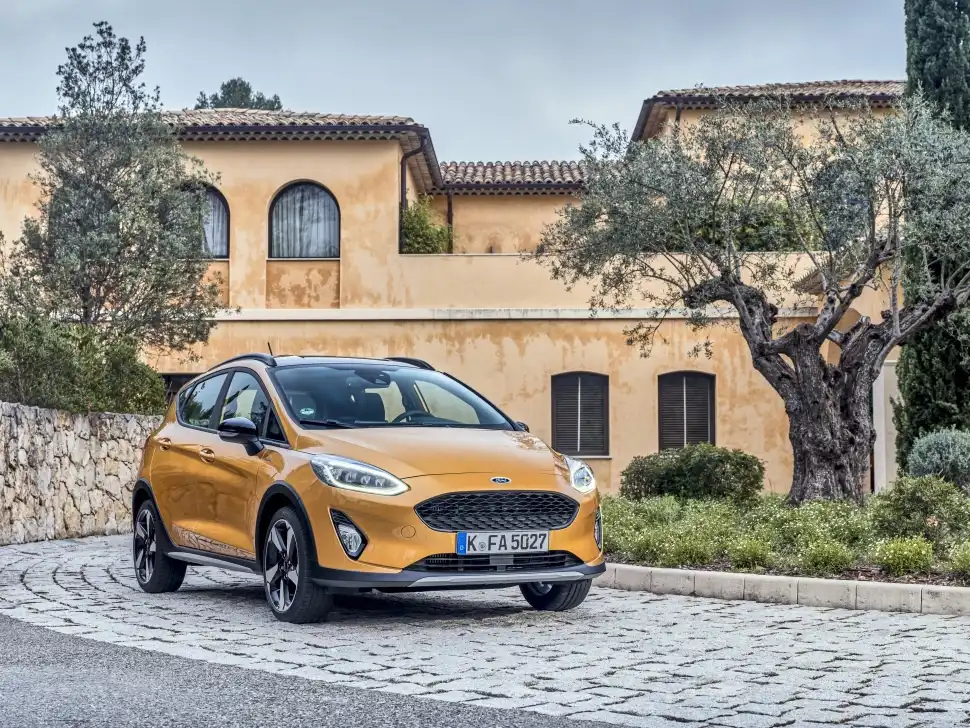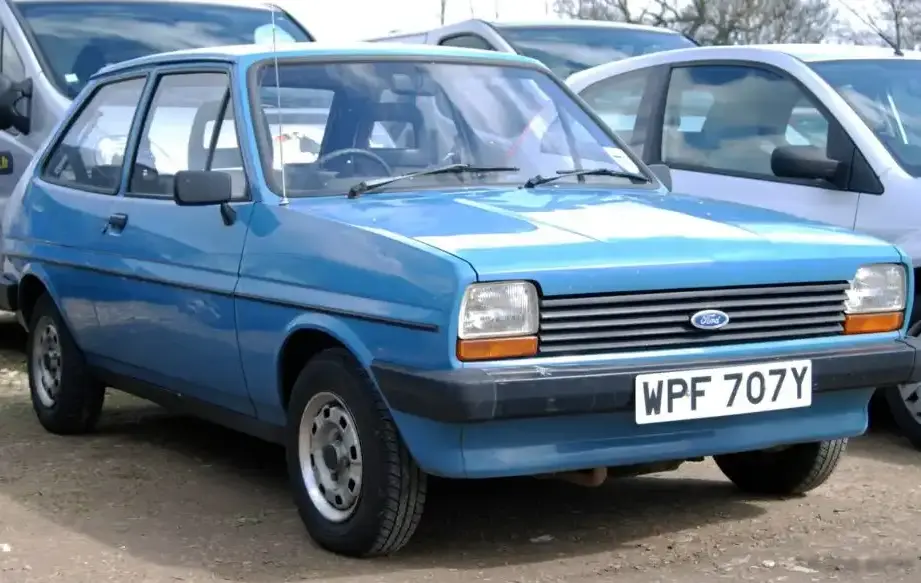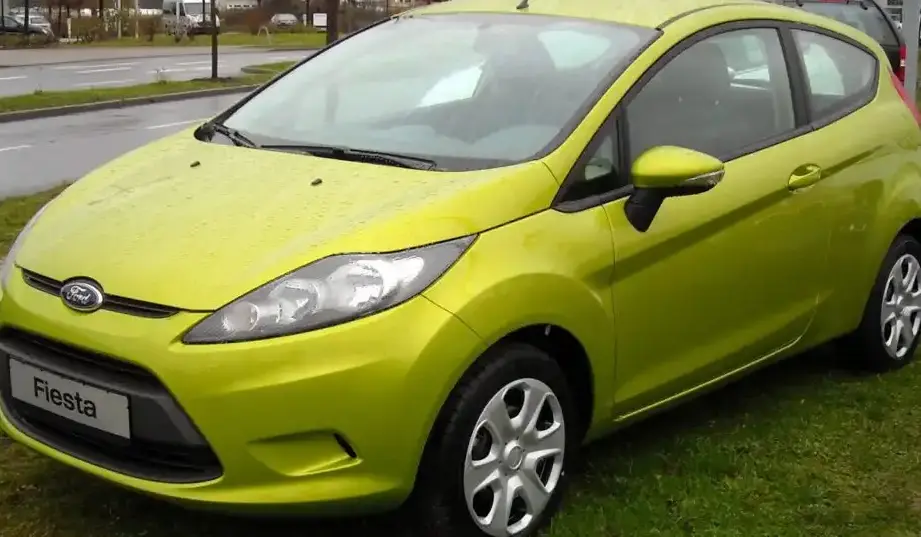
The Ford Fiesta Mk7, produced from 2008 to 2019, represented a significant leap forward for Ford’s supermini. The 3-door 1.6 TDCi variant, available primarily in Europe from 2009 to 2010, offered a fuel-efficient diesel option aimed at buyers prioritizing economy over outright performance. This model occupied the lower-mid range of the Mk7 Fiesta lineup, positioned above the base 1.25L petrol engine but below the more powerful 1.6L petrol and diesel variants. It was designed to appeal to drivers seeking a practical and economical city car with reasonable highway capability.
Technical Specifications
| Brand | Ford |
| Model | Fiesta |
| Generation | Fiesta VII (Mk7) 3 door |
| Type (Engine) | 1.6 TDCi (75 Hp) |
| Start of production | 2009 |
| End of production | 2010 |
| Powertrain Architecture | Internal Combustion engine |
| Body type | Hatchback |
| Seats | 5 |
| Doors | 3 |
| Fuel consumption (urban) | 5.2 l/100 km (45.2 US mpg, 54.3 UK mpg, 19.2 km/l) |
| Fuel consumption (extra urban) | 3.6 l/100 km (65.3 US mpg, 78.5 UK mpg, 27.8 km/l) |
| Fuel consumption (combined) | 4.2 l/100 km (56 US mpg, 67.3 UK mpg, 23.8 km/l) |
| CO2 emissions | 110 g/km |
| Fuel Type | Diesel |
| Acceleration 0 – 100 km/h | 13.9 sec |
| Acceleration 0 – 62 mph | 13.9 sec |
| Acceleration 0 – 60 mph | 13.2 sec |
| Maximum speed | 167 km/h (103.77 mph) |
| Emission standard | Euro 4 |
| Weight-to-power ratio | 13.6 kg/Hp, 73.4 Hp/tonne |
| Weight-to-torque ratio | 5.5 kg/Nm, 181 Nm/tonne |
| Power | 75 Hp @ 4000 rpm |
| Power per litre | 48.1 Hp/l |
| Torque | 185 Nm @ 1750 rpm (136.45 lb.-ft. @ 1750 rpm) |
| Engine layout | Front, Transverse |
| Engine Model/Code | HHJD |
| Engine displacement | 1560 cm3 (95.2 cu. in.) |
| Number of cylinders | 4 |
| Engine configuration | Inline |
| Cylinder Bore | 75 mm (2.95 in.) |
| Piston Stroke | 88.3 mm (3.48 in.) |
| Number of valves per cylinder | 4 |
| Fuel injection system | Diesel Commonrail |
| Engine aspiration | Turbocharger, Intercooler |
| Valvetrain | DOHC |
| Engine oil capacity | 3.85 l (4.07 US qt | 3.39 UK qt) |
| Kerb Weight | 1022 kg (2253.12 lbs.) |
| Trunk (boot) space – minimum | 295 l (10.42 cu. ft.) |
| Trunk (boot) space – maximum | 979 l (34.57 cu. ft.) |
| Fuel tank capacity | 45 l (11.89 US gal | 9.9 UK gal) |
| Length | 3950 mm (155.51 in.) |
| Width | 1722 mm (67.8 in.) |
| Width including mirrors | 1973 mm (77.68 in.) |
| Height | 1481 mm (58.31 in.) |
| Wheelbase | 2489 mm (97.99 in.) |
| Front track | 1493 mm (58.78 in.) |
| Rear (Back) track | 1480 mm (58.27 in.) |
| Minimum turning circle | 10.2 m (33.46 ft.) |
| Drivetrain Architecture | Front wheel drive |
| Number of gears | 5 |
| Gearbox type | Manual transmission |
| Front suspension | Independent, McPherson with coil spring and anti-roll bar |
| Rear suspension | Coil spring, Torsion |
| Front brakes | Ventilated discs |
| Rear brakes | Drum |
| Assisting systems | ABS (Anti-lock braking system) |
| Steering type | Steering rack and pinion |
| Power steering | Electric |
| Tires size | 175/65 R14; 195/50 R15 |
| Wheel rims size | 5.5J x 14; 6J x 15 |
Powertrain & Engine Architecture
The 1.6 TDCi engine, designated with the HHJD engine code, was a common-rail direct injection diesel engine. This engine was part of Ford’s Duratorq family, known for its robustness and fuel efficiency. The 1.6L displacement was achieved with a bore of 75mm and a stroke of 88.3mm. The engine featured a single overhead camshaft (SOHC) design operating four valves per cylinder (DOHC). The common-rail fuel injection system, supplied by Bosch, delivered fuel at extremely high pressure, optimizing combustion and reducing emissions. A turbocharger with an intercooler was employed to boost power output and improve torque across a wider rev range. The 5-speed manual transmission was chosen for its simplicity and efficiency, contributing to the car’s overall fuel economy. The gearbox ratios were geared towards maximizing fuel efficiency rather than providing rapid acceleration.
Driving Characteristics
The 1.6 TDCi 75 hp engine in the Fiesta Mk7 provided adequate, but not exhilarating, performance. Acceleration from 0-60 mph took around 13.2 seconds, and top speed was approximately 104 mph. The engine’s strength lay in its low-end torque, making it well-suited for urban driving and overtaking at lower speeds. However, the engine could feel strained at higher speeds or when fully loaded. Compared to the 1.6L petrol version, the TDCi offered significantly better fuel economy but lacked the petrol engine’s responsiveness. The manual transmission, while precise, had relatively long throws. The gear ratios were optimized for economy, meaning frequent shifting was required to maintain optimal power delivery.
Equipment & Trim Levels
The 1.6 TDCi variant typically came equipped with basic features as standard, including power steering, ABS, front airbags, and a basic audio system. Higher trim levels, such as Zetec, added features like alloy wheels, air conditioning, electric windows, and a more comprehensive audio system. Interior upholstery was typically cloth, with a functional, if somewhat basic, dashboard layout. Optional extras included parking sensors, a trip computer, and upgraded audio systems. The 3-door configuration emphasized a sportier aesthetic, appealing to younger buyers or those prioritizing practicality over rear passenger access.
Chassis & Braking
The Fiesta Mk7 utilized a McPherson strut front suspension and a torsion beam rear suspension. This setup provided a good balance between ride comfort and handling. The front brakes were ventilated discs, offering adequate stopping power, while the rear brakes were drums, a cost-saving measure common in this segment. The electric power steering provided light and precise steering feel, making it easy to maneuver in tight spaces. Stabilizer bars were fitted to both the front and rear axles to reduce body roll during cornering.
Market Reception & Comparison
The 1.6 TDCi Fiesta was generally well-received by critics for its fuel efficiency and low running costs. However, some reviewers noted the engine’s lack of refinement and relatively slow acceleration. Compared to the 1.6L petrol version, the TDCi offered superior fuel economy but less engaging driving experience. The 1.6 TDCi was also positioned as a more economical alternative to the higher-powered diesel variants, such as the 1.6 TDCi 90 hp, which offered more performance but at a higher price point and with slightly increased running costs.
Legacy
The 1.6 TDCi engine proved to be relatively reliable, although common issues included diesel particulate filter (DPF) clogging, particularly on vehicles used primarily for short journeys. Regular servicing and the use of quality diesel fuel were crucial for maintaining the engine’s longevity. In the used car market, the 1.6 TDCi Fiesta Mk7 remains a popular choice for budget-conscious buyers seeking a fuel-efficient and practical city car. Its affordability and low running costs continue to make it an attractive option, despite its age.