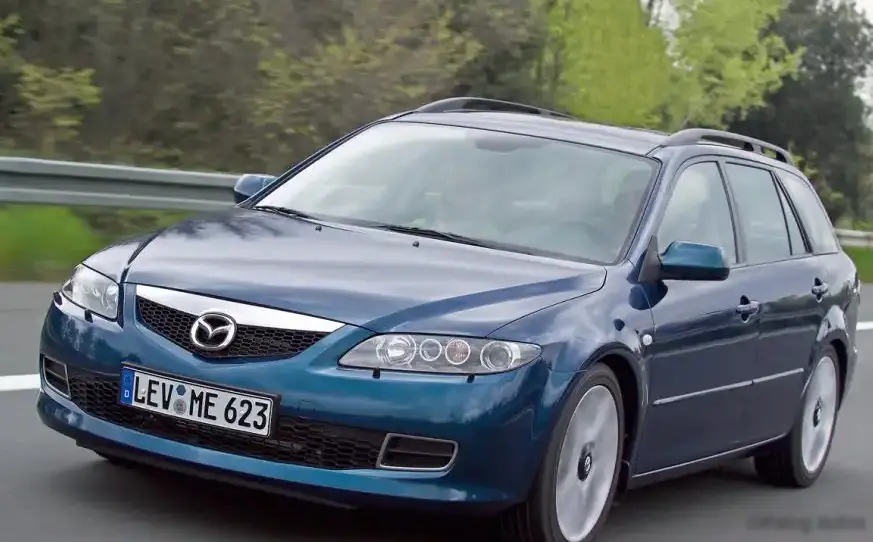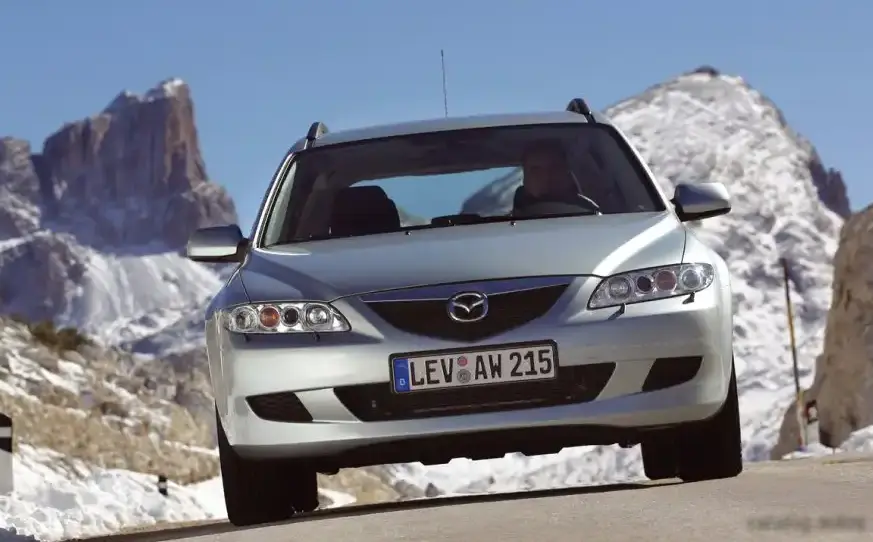
The Mazda 6 first generation Combi (estate) model, specifically the 2.0 CD variant producing 136 horsepower, was manufactured between 2002 and 2005. Representing a key offering in Mazda’s lineup, this model – designated Typ GG/GY/GG1 – aimed to provide a practical and fuel-efficient option within the increasingly competitive mid-size wagon segment. It was positioned as a step up from the base gasoline engines, offering more torque for towing and a more relaxed driving experience, while remaining more affordable than the later, more powerful diesel options. This variant primarily targeted European markets where wagons were highly popular, offering a blend of practicality, comfort, and Mazda’s signature driving dynamics.
Technical Specifications
| Brand | Mazda |
| Model | 6 |
| Generation | 6 I Combi (Typ GG/GY/GG1) |
| Type (Engine) | 2.0 CD (136 Hp) |
| Start of production | 2002 |
| End of production | 2005 |
| Powertrain Architecture | Internal Combustion engine |
| Body type | Station wagon (estate) |
| Seats | 5 |
| Doors | 5 |
| Fuel consumption (urban) | 8.2 l/100 km (28.7 US mpg, 34.4 UK mpg, 12.2 km/l) |
| Fuel consumption (extra urban) | 5.4 l/100 km (43.6 US mpg, 52.3 UK mpg, 18.5 km/l) |
| Fuel consumption (combined) | 6.4 l/100 km (36.8 US mpg, 44.1 UK mpg, 15.6 km/l) |
| CO2 emissions | 176 g/km |
| Fuel Type | Diesel |
| Acceleration 0 – 100 km/h | 10.7 sec |
| Acceleration 0 – 62 mph | 10.7 sec |
| Acceleration 0 – 60 mph | 10.2 sec |
| Maximum speed | 196 km/h (121.79 mph) |
| Emission standard | Euro 3 |
| Weight-to-power ratio | 10.8 kg/Hp, 92.8 Hp/tonne |
| Weight-to-torque ratio | 4.7 kg/Nm, 211.6 Nm/tonne |
| Power | 136 Hp @ 3500 rpm |
| Power per litre | 68.1 Hp/l |
| Torque | 310 Nm @ 2000 rpm (228.64 lb.-ft. @ 2000 rpm) |
| Engine layout | Front, Transverse |
| Engine Model/Code | RF5C |
| Engine displacement | 1998 cm3 (121.93 cu. in.) |
| Number of cylinders | 4 |
| Engine configuration | Inline |
| Cylinder Bore | 86 mm (3.39 in.) |
| Piston Stroke | 86 mm (3.39 in.) |
| Compression ratio | 18.3:1 |
| Number of valves per cylinder | 4 |
| Fuel injection system | Diesel Commonrail |
| Engine aspiration | Turbocharger, Intercooler |
| Valvetrain | SOHC |
| Engine oil capacity | 5 l (5.28 US qt | 4.4 UK qt) |
| Coolant | 9 l (9.51 US qt | 7.92 UK qt) |
| Kerb Weight | 1465 kg (3229.77 lbs.) |
| Max. weight | 2010 kg (4431.29 lbs.) |
| Max load | 545 kg (1201.52 lbs.) |
| Trunk (boot) space – minimum | 505 l (17.83 cu. ft.) |
| Trunk (boot) space – maximum | 1712 l (60.46 cu. ft.) |
| Fuel tank capacity | 64 l (16.91 US gal | 14.08 UK gal) |
| Permitted trailer load with brakes (12%) | 1800 kg (3968.32 lbs.) |
| Permitted trailer load without brakes | 550 kg (1212.54 lbs.) |
| Length | 4700 mm (185.04 in.) |
| Width | 1780 mm (70.08 in.) |
| Height | 1480 mm (58.27 in.) |
| Wheelbase | 2675 mm (105.31 in.) |
| Front track | 1550 mm (61.02 in.) |
| Rear (Back) track | 1550 mm (61.02 in.) |
| Ride height (ground clearance) | 130 mm (5.12 in.) |
| Drag coefficient (Cd) | 0.32 |
| Minimum turning circle (turning diameter) | 10.8 m (35.43 ft.) |
| Drivetrain Architecture | The Internal combustion engine (ICE) drives the front wheels of the vehicle. |
| Drive wheel | Front wheel drive |
| Number of gears and type of gearbox | 5 gears, manual transmission |
| Front brakes | Ventilated discs |
| Rear brakes | Disc |
| Assisting systems | ABS (Anti-lock braking system) |
| Steering type | Steering rack and pinion |
| Tires size | 205/55 R16 H |
| Wheel rims size | 16 |
Powertrain & Engine Architecture
The heart of this Mazda 6 Combi variant is the RF5C 2.0-liter four-cylinder diesel engine. This engine utilizes a common rail direct injection system, delivering fuel at extremely high pressure for optimized combustion. The engine features a single overhead camshaft (SOHC) valvetrain operating four valves per cylinder. A turbocharger with an intercooler is employed to boost power and torque, providing 136 horsepower at 3500 rpm and a substantial 310 Nm (228.64 lb.-ft.) of torque at just 2000 rpm. This torque output was a significant advantage for drivers needing to carry loads or tow trailers. The engine’s 18.3:1 compression ratio is typical for a diesel engine, contributing to its efficiency. The engine is transversely mounted in the front of the vehicle, driving the front wheels.
Driving Characteristics
The 2.0 CD with the five-speed manual transmission offered a balanced driving experience. While not particularly sporty, it provided ample torque for everyday driving and overtaking maneuvers. The relatively low horsepower figure meant acceleration wasn’t brisk – 0-60 mph took around 10.2 seconds – but the readily available torque masked this somewhat. Compared to the gasoline engines, the diesel offered superior fuel economy and a more relaxed cruising experience. Against higher-output diesel variants, like those with more advanced turbocharging systems, this 136 hp version felt less powerful, particularly at higher speeds. The five-speed gearbox was well-matched to the engine’s characteristics, providing adequate spacing between gears for both urban and highway driving.
Equipment & Trim Levels
The 2.0 CD trim typically included standard features such as air conditioning, power windows, central locking, and an integrated audio system. Interior upholstery was generally cloth, with options for upgraded materials available. Depending on the market and optional packages, features like alloy wheels, a sunroof, and upgraded audio systems could be added. Safety features included ABS brakes and front airbags. The specific trim level within the Mazda 6 range varied by country, but the 2.0 CD generally represented a mid-range offering, providing a good balance of features and affordability.
Chassis & Braking
The Mazda 6 Combi featured a MacPherson strut front suspension and a multi-link rear suspension, providing a comfortable and controlled ride. The front brakes were ventilated discs, while the rear brakes were solid discs. ABS (Anti-lock Braking System) was standard, enhancing braking performance and safety. The chassis was designed to provide a good balance between handling and ride comfort, typical of Mazda’s engineering philosophy. Stabilizer bars were fitted to both the front and rear axles to reduce body roll during cornering.
Market Reception & Comparison
The Mazda 6 Combi 2.0 CD was generally well-received by automotive critics. It was praised for its fuel efficiency, spacious interior, and comfortable ride. However, some reviewers noted that the engine lacked the refinement of some of its competitors. Compared to the gasoline-powered Mazda 6 models, the 2.0 CD offered significantly better fuel economy and torque. When compared to other diesel wagons in its class, such as the Ford Mondeo and Volkswagen Passat, the Mazda 6 offered a competitive package, particularly in terms of value for money.
Legacy
The RF5C engine, while not known for being exceptionally complex, proved to be reasonably reliable when properly maintained. Common issues included turbocharger wear and potential problems with the fuel injection system. Today, well-maintained examples of the Mazda 6 Combi 2.0 CD can still be found on the used car market. They represent an affordable and practical option for those seeking a spacious and fuel-efficient wagon. The engine’s relatively simple design makes it easier and less expensive to repair compared to more modern diesel engines. However, potential buyers should be aware of the age-related issues common to older diesel vehicles, such as injector problems and potential for diesel particulate filter (DPF) issues.