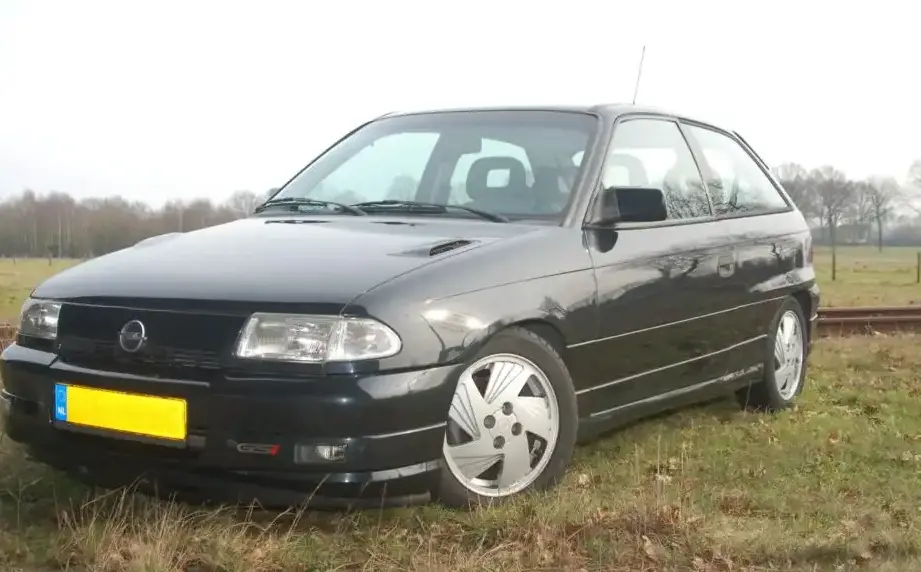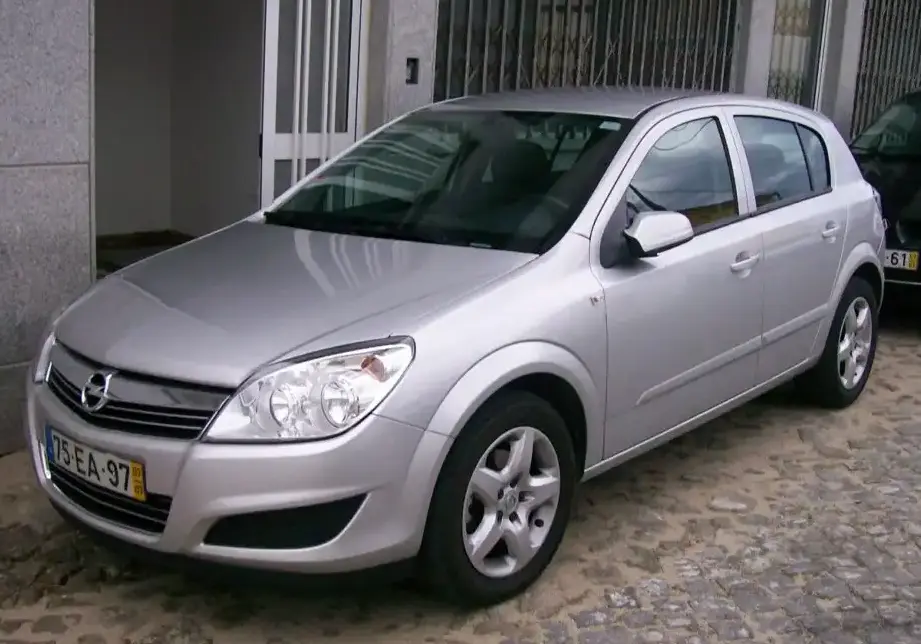
The Opel Astra H (facelift, produced 2007-2009) 1.7 CDTI ecoFLEX, generating 110 horsepower, represented a key variant within the broader Astra H range. Introduced as part of the facelifted H generation (produced 2004-2009), this model aimed to balance fuel efficiency with acceptable performance for everyday driving. Positioned as a mid-range offering, it slotted between the lower-powered base engines and the more potent petrol and diesel options. Production of this specific configuration ran from 2008 to 2009, primarily targeting the European market where fuel economy and emissions regulations were increasingly stringent.
Technical Specifications
| Brand | Opel |
| Model | Astra |
| Generation | Astra H (facelift 2007) |
| Type (Engine) | 1.7 CDTI ecoFLEX (110 Hp) |
| Start of production | 2008 |
| End of production | 2009 |
| Powertrain Architecture | Internal Combustion engine |
| Body type | Hatchback |
| Seats | 5 |
| Doors | 5 |
| Fuel consumption (urban) | 5.6 l/100 km (42 US mpg, 50.4 UK mpg) |
| Fuel consumption (extra urban) | 3.9 l/100 km (60.3 US mpg, 72.4 UK mpg) |
| Fuel consumption (combined) | 4.5 l/100 km (52.3 US mpg, 62.8 UK mpg) |
| CO2 emissions | 119 g/km |
| Fuel Type | Diesel |
| Acceleration 0 – 100 km/h | 12 sec |
| Acceleration 0 – 62 mph | 12 sec |
| Acceleration 0 – 60 mph | 11.4 sec |
| Maximum speed | 188 km/h (116.82 mph) |
| Emission standard | Euro 4 |
| Weight-to-power ratio | 11.9 kg/Hp |
| Weight-to-torque ratio | 5 kg/Nm |
| Power | 110 Hp @ 3800 rpm |
| Torque | 260 Nm @ 2300 rpm (191.77 lb.-ft. @ 2300 rpm) |
| Engine layout | Front, Transverse |
| Engine Model/Code | Z17DTJ |
| Engine displacement | 1686 cm3 (102.89 cu. in.) |
| Number of cylinders | 4 |
| Engine configuration | Inline |
| Cylinder Bore | 79 mm (3.11 in.) |
| Piston Stroke | 86 mm (3.39 in.) |
| Compression ratio | 18:1 |
| Number of valves per cylinder | 4 |
| Fuel injection system | Diesel Commonrail |
| Engine aspiration | Turbocharger, Intercooler |
| Valvetrain | DOHC |
| Engine oil capacity | 5.4 l (5.71 US qt | 4.75 UK qt) |
| Coolant capacity | 7.1 l (7.5 US qt | 6.25 UK qt) |
| Kerb Weight | 1310 kg (2888.06 lbs.) |
| Max. weight | 1840 kg (4056.51 lbs.) |
| Max load | 530 kg (1168.45 lbs.) |
| Trunk (boot) space – minimum | 380 l (13.42 cu. ft.) |
| Trunk (boot) space – maximum | 1295 l (45.73 cu. ft.) |
| Fuel tank capacity | 52 l (13.74 US gal | 11.44 UK gal) |
| Max. roof load | 75 kg (165.35 lbs.) |
| Permitted trailer load (braked) | 1000 kg (2204.62 lbs.) |
| Permitted trailer load (unbraked) | 680 kg (1499.14 lbs.) |
| Length | 4249 mm (167.28 in.) |
| Width | 1753 mm (69.02 in.) |
| Width with mirrors folded | 1804 mm (71.02 in.) |
| Width including mirrors | 2033 mm (80.04 in.) |
| Height | 1460 mm (57.48 in.) |
| Wheelbase | 2614 mm (102.91 in.) |
| Front track | 1488 mm (58.58 in.) |
| Rear track | 1488 mm (58.58 in.) |
| Front overhang | 871 mm (34.29 in.) |
| Rear overhang | 764 mm (30.08 in.) |
| Ride height (ground clearance) | 160 mm (6.3 in.) |
| Drag coefficient (Cd) | 0.32 |
| Minimum turning circle | 11.2 m (36.75 ft.) |
| Drivetrain | Front wheel drive |
| Number of gears | 6 |
| Gearbox type | Manual transmission |
| Front suspension | Independent, McPherson with coil spring and anti-roll bar |
| Rear suspension | Torsion |
| Front brakes | Ventilated discs |
| Rear brakes | Disc |
| Assisting systems | ABS (Anti-lock braking system) |
| Steering type | Steering rack and pinion |
| Power steering | Electric |
| Tires size | 195/65 R15; 205/55 R16; 225/45 R17; 225/40 R18 |
| Wheel rims size | 6.5J x 15; 6.5J x 16; 7J x 17; 7.5J x 18 |
Powertrain & Engine Architecture
The Astra H 1.7 CDTI ecoFLEX utilized the Z17DTJ engine, a 1.7-liter inline-four cylinder diesel engine. This engine was part of Opel/Vauxhall’s family of common-rail direct injection diesel engines. The ‘ecoFLEX’ designation indicated features aimed at improving fuel efficiency, such as optimized engine mapping and reduced rolling resistance tires. The Z17DTJ featured a turbocharger with an intercooler to boost power output, and a Diesel Particulate Filter (DPF) to reduce emissions, complying with Euro 4 standards. The engine employed a Double Overhead Camshaft (DOHC) valvetrain with four valves per cylinder, enhancing breathing and contributing to its power delivery. Fuel was delivered via a common rail direct injection system, allowing for precise fuel metering and improved combustion. The engine produced 110 horsepower at 3800 rpm and 260 Nm (191.77 lb-ft) of torque at 2300 rpm. The engine was transversely mounted in the front of the vehicle, driving the front wheels.
Driving Characteristics
The 1.7 CDTI ecoFLEX, paired with a six-speed manual transmission, offered a balance between fuel economy and usability. Acceleration from 0-100 km/h (0-62 mph) took approximately 12 seconds, which was adequate for everyday driving but not particularly sporty. The engine’s torque peak at 2300 rpm provided reasonable pulling power for overtaking and climbing hills. Compared to the more powerful 1.9 CDTI variants, the 1.7 CDTI felt less responsive, particularly at higher engine speeds. However, the 1.7 offered significantly better fuel economy. The six-speed gearbox helped to keep the engine within its optimal rev range, maximizing efficiency and minimizing noise. The gear ratios were tuned for economy rather than outright performance.
Equipment & Trim Levels
The 1.7 CDTI ecoFLEX typically came equipped with a reasonable level of standard features. These included air conditioning, power steering, electric front windows, and a basic audio system. Safety features such as ABS, front airbags, and seatbelt pretensioners were also standard. Higher trim levels, such as ‘Enjoy’ or ‘Cosmo’, added features like alloy wheels, rear electric windows, cruise control, and upgraded audio systems. Optional extras included a sunroof, parking sensors, and leather upholstery. Interior upholstery was typically cloth, with a functional and durable design. The dashboard layout was typical of the Astra H, with a clear instrument cluster and logically arranged controls.
Chassis & Braking
The Astra H 1.7 CDTI ecoFLEX utilized an independent McPherson strut suspension setup at the front, providing a comfortable ride and decent handling. The rear suspension employed a torsion beam, which was a cost-effective solution that offered acceptable ride quality. Braking duties were handled by ventilated discs at the front and solid discs at the rear. ABS (Anti-lock Braking System) was standard, enhancing braking performance and stability. The steering was rack and pinion with electric power assistance, providing a light and responsive feel. Stabilizer bars were fitted to both the front and rear axles to reduce body roll during cornering.
Market Reception & Comparison
The Astra H 1.7 CDTI ecoFLEX was generally well-received by critics for its fuel efficiency and low running costs. It was seen as a practical and economical choice for drivers who prioritized fuel economy over outright performance. Compared to the 1.9 CDTI models, the 1.7 CDTI offered lower fuel consumption but less power. The 1.9 CDTI was favored by drivers who needed more performance or frequently carried heavy loads. The 1.7 CDTI also compared favorably to petrol-powered Astra variants in terms of fuel economy, making it an attractive option for those seeking a more economical alternative.
Legacy
The Z17DTJ engine, while generally reliable, is known to require regular maintenance, particularly regarding the DPF. Proper servicing, including regular oil changes and DPF regeneration, is crucial to prevent issues. In the used car market, the Astra H 1.7 CDTI ecoFLEX remains a popular choice for budget-conscious buyers. Its fuel efficiency and relatively low maintenance costs make it an appealing option. However, potential buyers should be aware of the potential for DPF-related problems and ensure that the vehicle has been properly maintained. The Astra H 1.7 CDTI ecoFLEX represents a significant step in Opel’s efforts to produce fuel-efficient and environmentally friendly vehicles.