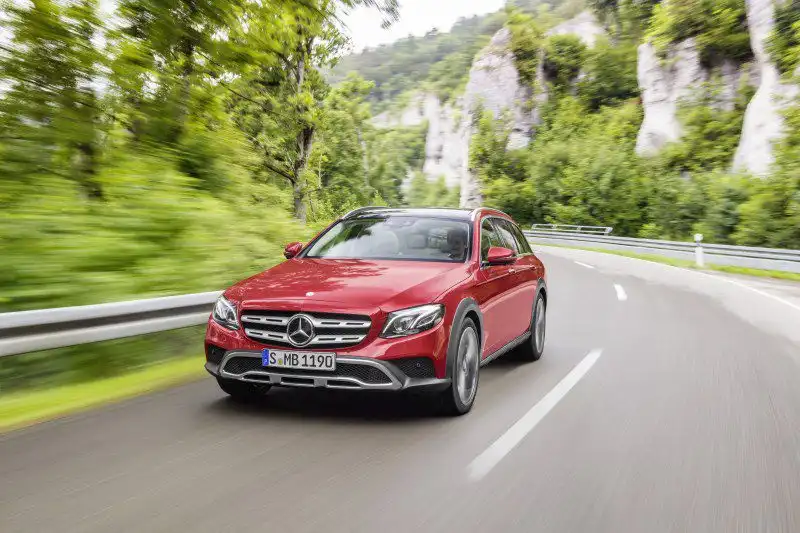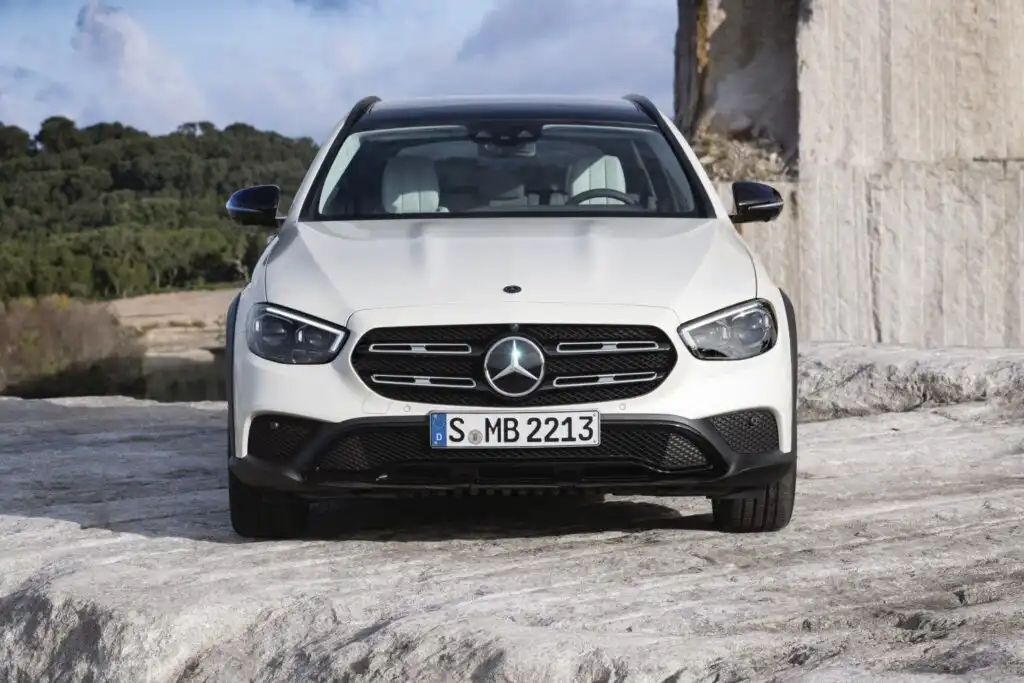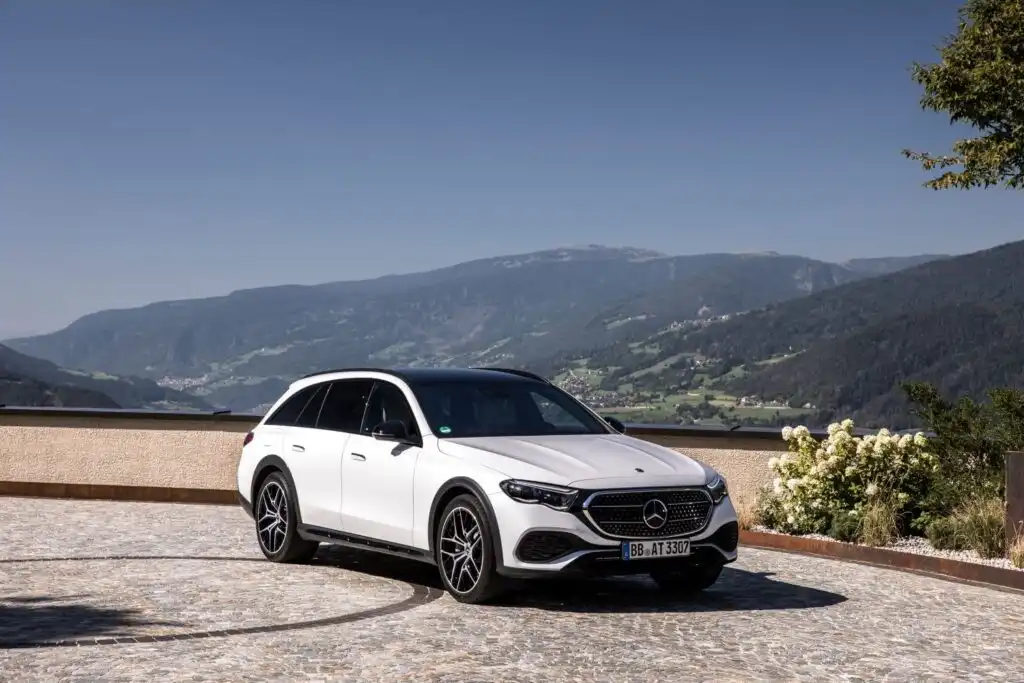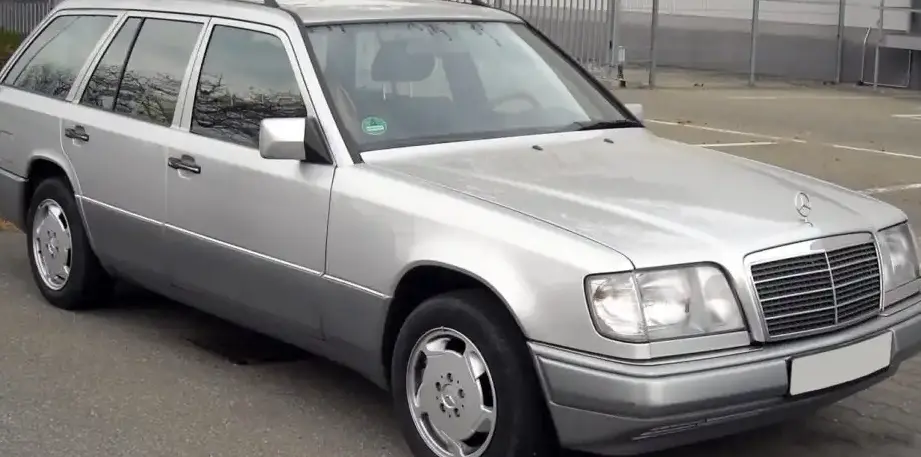
The Mercedes-Benz E 320 T, part of the S124 series T-Modell (estate) range, was produced from July 1993 to February 1996. Representing a sophisticated blend of performance and practicality, the E 320 T occupied a premium position within the lineup, offering a more powerful alternative to the base E 220 T and E 280 T models. It was a key offering in the European market, where estate cars were – and continue to be – highly valued for their versatility. The S124 series, known for its robust build quality and engineering, cemented Mercedes-Benz’s reputation for durable and luxurious vehicles.
Technical Specifications
| Brand | Mercedes-Benz |
| Model | E-class |
| Generation | E-class T-modell (S124) |
| Type (Engine) | E 320 T (220 Hp) |
| Start of production | July, 1993 |
| End of production | February, 1996 |
| Powertrain Architecture | Internal Combustion engine |
| Body type | Station wagon (estate) |
| Seats | 5 |
| Doors | 5 |
| Fuel consumption (urban) | 15.1 l/100 km (15.6 US mpg, 18.7 UK mpg, 6.6 km/l) |
| Fuel consumption (extra urban) | 8.8 l/100 km (26.7 US mpg, 32.1 UK mpg, 11.4 km/l) |
| Fuel consumption (combined) | 11.6 l/100 km (20.3 US mpg, 24.4 UK mpg, 8.6 km/l) |
| Fuel Type | Petrol (Gasoline) |
| Acceleration 0 – 100 km/h | 8.6 sec |
| Acceleration 0 – 62 mph | 8.6 sec |
| Acceleration 0 – 60 mph | 8.2 sec |
| Maximum speed | 225 km/h (139.81 mph) |
| Weight-to-power ratio | 7.2 kg/Hp, 138.4 Hp/tonne |
| Weight-to-torque ratio | 5 kg/Nm, 198.1 Nm/tonne |
| Power | 220 Hp @ 5500 rpm |
| Power per litre | 68.8 Hp/l |
| Torque | 315 Nm @ 3850 rpm (232.33 lb.-ft. @ 3850 rpm) |
| Engine layout | Front, Longitudinal |
| Engine Model/Code | M 104 E 32 / 104.992 |
| Engine displacement | 3199 cm3 (195.21 cu. in.) |
| Number of cylinders | 6 |
| Engine configuration | Inline |
| Cylinder Bore | 89.9 mm (3.54 in.) |
| Piston Stroke | 84 mm (3.31 in.) |
| Compression ratio | 10:1 |
| Number of valves per cylinder | 4 |
| Fuel injection system | Multi-port manifold injection |
| Engine aspiration | Naturally aspirated engine |
| Valvetrain | DOHC |
| Engine oil capacity | 7.5 l (7.93 US qt | 6.6 UK qt) |
| Coolant | 9 l (9.51 US qt | 7.92 UK qt) |
| Kerb Weight | 1590 kg (3505.35 lbs.) |
| Max. weight | 2230 kg (4916.31 lbs.) |
| Max load | 640 kg (1410.96 lbs.) |
| Trunk (boot) space – minimum | 530 l (18.72 cu. ft.) |
| Trunk (boot) space – maximum | 885 l (31.25 cu. ft.) |
| Fuel tank capacity | 72 l (19.02 US gal | 15.84 UK gal) |
| Length | 4765 mm (187.6 in.) |
| Width | 1740 mm (68.5 in.) |
| Height | 1490 mm (58.66 in.) |
| Wheelbase | 2800 mm (110.24 in.) |
| Front track | 1497 mm (58.94 in.) |
| Rear (Back) track | 1488 mm (58.58 in.) |
| Drivetrain Architecture | The Internal combustion engine (ICE) drives the rear wheels of the vehicle. |
| Drive wheel | Rear wheel drive |
| Number of gears and type of gearbox | 5 gears, manual transmission |
| Front suspension | Wishbone |
| Rear suspension | Independent multi-link suspension |
| Front brakes | Ventilated discs |
| Rear brakes | Disc |
| Assisting systems | ABS (Anti-lock braking system) |
| Steering type | Cone worm with recirculation balls |
| Power steering | Hydraulic Steering |
| Tires size | Front wheel tires: 195/65 R15Rear wheel tires: 195/65 R15 |
| Wheel rims size | Front wheel rims: 6.5J x 15Rear wheel rims: 6.5J x 15 |
Powertrain & Engine Architecture
The heart of the E 320 T is the M104 E 32 inline-six cylinder engine. This 3.2-liter powerplant, designated with engine code 104.992, was a significant upgrade over the smaller engines offered in the E-Class range. It featured a cast iron block with aluminum cylinder heads, a design choice that balanced durability with weight reduction. The engine employed multi-port fuel injection, delivering precise fuel metering for optimal combustion. The double overhead camshaft (DOHC) valvetrain, with four valves per cylinder, further enhanced breathing and contributed to the engine’s responsive nature. The engine produced 220 horsepower at 5500 rpm and 315 Nm (232 lb-ft) of torque at 3850 rpm. The five-speed manual transmission was standard, providing drivers with full control over the engine’s power.
Driving Characteristics
The E 320 T offered a noticeably more spirited driving experience compared to its four and six-cylinder siblings. The increased power and torque allowed for confident acceleration and effortless cruising, even when fully loaded. While not a sports car, the E 320 T provided a refined and capable driving experience. The manual transmission, while offering greater driver engagement, had gear ratios tailored for both fuel efficiency and usable power. The rear-wheel drive configuration contributed to balanced handling, although it could be challenging in low-traction conditions. Compared to the later, more fuel-efficient engines, the E 320 T prioritized performance over economy.
Equipment & Trim Levels
The E 320 T typically came well-equipped, reflecting its position as a premium model. Standard features included power windows, central locking, and an upgraded audio system. Leather upholstery was often standard or a popular option. The interior design was typical of Mercedes-Benz at the time – functional, elegant, and built to last. Optional extras included a sunroof, automatic climate control, and upgraded sound systems. The T-Modell designation meant a spacious cargo area, accessible through a large rear hatch, making it ideal for families or those needing to transport bulky items.
Chassis & Braking
The S124 chassis was renowned for its robust construction and comfortable ride. The E 320 T featured a wishbone front suspension and an independent multi-link rear suspension, providing a good balance between handling and ride quality. Braking duties were handled by ventilated discs at the front and solid discs at the rear, assisted by an Anti-lock Braking System (ABS). The steering was a recirculating ball system with hydraulic power assistance, offering a good level of feel and precision. The E 320 T’s weight (approximately 1590 kg or 3505 lbs) necessitated a capable braking system and a robust suspension setup.
Market Reception & Comparison
The E 320 T was generally well-received by automotive critics. It was praised for its powerful engine, comfortable ride, and spacious interior. However, its fuel consumption was noted as being relatively high compared to the smaller-engined models. Compared to the E 220 T and E 280 T, the E 320 T offered a significant performance advantage, but at a higher price point. It provided a compelling alternative to other luxury estate cars of the time, such as the BMW 5 Series Touring and the Volvo 960 Estate.
Legacy
The M104 engine, found in the E 320 T, is considered a durable and reliable powerplant. With proper maintenance, these engines can accumulate high mileage. Today, the S124 E 320 T is gaining recognition as a classic Mercedes-Benz, appreciated by enthusiasts for its build quality, timeless design, and engaging driving experience. While finding well-maintained examples can be challenging, the E 320 T remains a desirable and rewarding vehicle for those seeking a blend of luxury, performance, and practicality. Parts availability is generally good, although some specific trim pieces may be difficult to source. The E 320 T represents a high point in Mercedes-Benz estate car design and engineering.