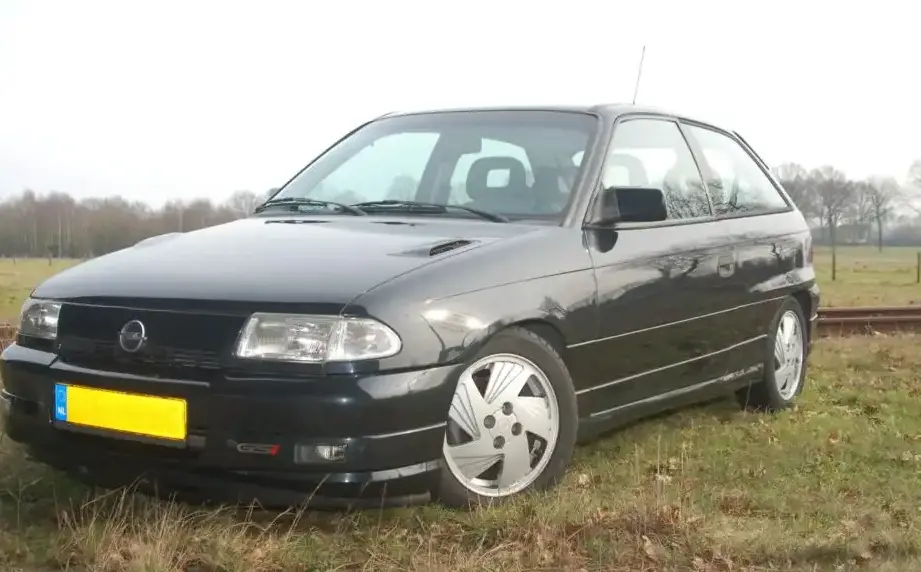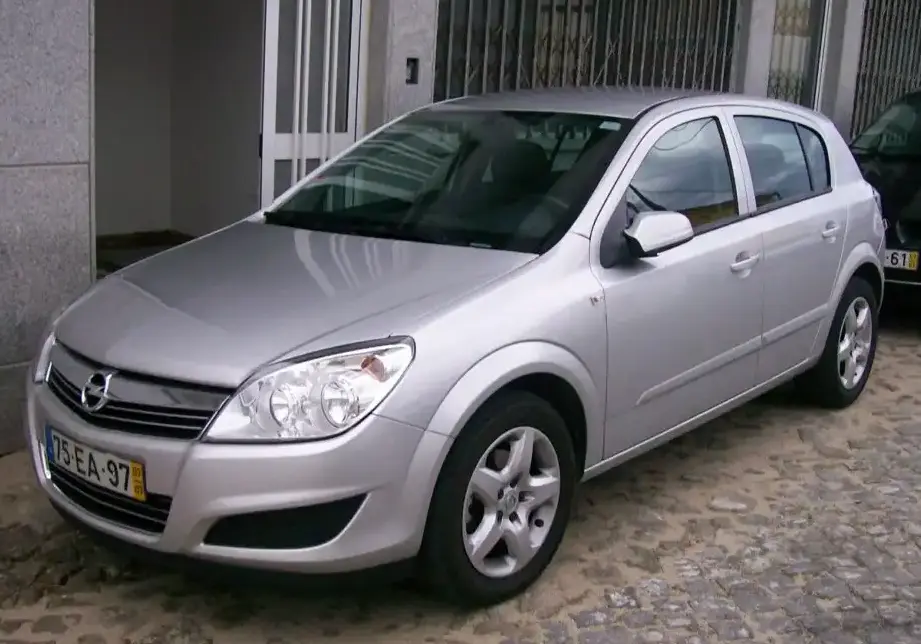
The Opel Astra H (facelift, produced 2007-2009) 1.7 CDTI ECOTEC, generating 125 horsepower, represented a significant offering in the European compact car market. This variant, powered by the Z17DTR engine, was positioned as a fuel-efficient and practical choice within the broader Astra H range, which included petrol and higher-output diesel options. The facelift brought styling updates and refinements to the already popular Astra H, solidifying its position as a strong competitor against rivals like the Volkswagen Golf, Ford Focus, and Peugeot 308. This specific engine and transmission combination aimed to balance affordability with acceptable performance for everyday driving.
Technical Specifications
| Brand | Opel |
| Model | Astra |
| Generation | Astra H (facelift 2007) |
| Type (Engine) | 1.7 CDTI ECOTEC (125 Hp) |
| Start of production | 2007 |
| End of production | 2009 |
| Powertrain Architecture | Internal Combustion engine |
| Body type | Hatchback |
| Seats | 5 |
| Doors | 5 |
| Fuel consumption (urban) | 6.7 l/100 km (35.1 US mpg, 42.2 UK mpg, 14.9 km/l) |
| Fuel consumption (extra urban) | 4.6 l/100 km (51.1 US mpg, 61.4 UK mpg, 21.7 km/l) |
| Fuel consumption (combined) | 5.4 l/100 km (43.6 US mpg, 52.3 UK mpg, 18.5 km/l) |
| CO2 emissions | 146 g/km |
| Fuel Type | Diesel |
| Acceleration 0 – 100 km/h | 10.5 sec |
| Acceleration 0 – 62 mph | 10.5 sec |
| Acceleration 0 – 60 mph | 10 sec |
| Maximum speed | 195 km/h (121.17 mph) |
| Emission standard | Euro 4 |
| Weight-to-power ratio | 10.5 kg/Hp |
| Weight-to-torque ratio | 4.7 kg/Nm |
| Power | 125 Hp @ 4000 rpm |
| Torque | 280 Nm @ 2300 rpm (206.52 lb.-ft. @ 2300 rpm) |
| Engine layout | Front, Transverse |
| Engine Model/Code | Z17DTR |
| Engine displacement | 1686 cm3 (102.89 cu. in.) |
| Number of cylinders | 4 |
| Engine configuration | Inline |
| Cylinder Bore | 79 mm (3.11 in.) |
| Piston Stroke | 86 mm (3.39 in.) |
| Compression ratio | 18:1 |
| Number of valves per cylinder | 4 |
| Fuel injection system | Diesel Commonrail |
| Engine aspiration | Turbocharger, Intercooler |
| Valvetrain | DOHC |
| Engine oil capacity | 5.4 l (5.71 US qt | 4.75 UK qt) |
| Coolant capacity | 7.1 l (7.5 US qt | 6.25 UK qt) |
| Kerb Weight | 1310 kg (2888.06 lbs.) |
| Max. weight | 1840 kg (4056.51 lbs.) |
| Max load | 530 kg (1168.45 lbs.) |
| Trunk (boot) space – minimum | 380 l (13.42 cu. ft.) |
| Trunk (boot) space – maximum | 1295 l (45.73 cu. ft.) |
| Fuel tank capacity | 52 l (13.74 US gal | 11.44 UK gal) |
| Max. roof load | 75 kg (165.35 lbs.) |
| Permitted trailer load (braked) | 1400 kg (3086.47 lbs.) |
| Permitted trailer load (unbraked) | 680 kg (1499.14 lbs.) |
| Length | 4249 mm (167.28 in.) |
| Width | 1753 mm (69.02 in.) |
| Width with mirrors folded | 1804 mm (71.02 in.) |
| Width including mirrors | 2033 mm (80.04 in.) |
| Height | 1460 mm (57.48 in.) |
| Wheelbase | 2614 mm (102.91 in.) |
| Front track | 1488 mm (58.58 in.) |
| Rear track | 1488 mm (58.58 in.) |
| Front overhang | 871 mm (34.29 in.) |
| Rear overhang | 764 mm (30.08 in.) |
| Ride height (ground clearance) | 160 mm (6.3 in.) |
| Drag coefficient (Cd) | 0.32 |
| Minimum turning circle | 11.2 m (36.75 ft.) |
| Drivetrain | Front wheel drive |
| Number of gears | 6 |
| Gearbox type | Manual transmission |
| Front suspension | Independent, McPherson with coil spring and anti-roll bar |
| Rear suspension | Torsion |
| Front brakes | Ventilated discs |
| Rear brakes | Disc |
| Assisting systems | ABS (Anti-lock braking system) |
| Steering type | Steering rack and pinion |
| Power steering | Electric |
| Tires size | 205/55 R16; 225/45 R17; 225/40 R18 |
| Wheel rims size | 6.5J x 16; 7J x 17; 7.5J x 18 |
Powertrain & Engine Architecture
The heart of this Astra variant is the Z17DTR, a 1.7-liter inline-four cylinder diesel engine. This engine belongs to Opel/Vauxhall’s ‘ECOTEC’ family, known for its focus on efficiency and refinement. The Z17DTR utilizes a common rail direct injection system, delivering fuel at extremely high pressure for optimized combustion. A turbocharger with an intercooler is employed to boost power output, providing 125 horsepower at 4000 rpm and a healthy 280 Nm (206.52 lb-ft) of torque at 2300 rpm. The engine features a double overhead camshaft (DOHC) valvetrain with four valves per cylinder, contributing to its breathing efficiency. The engine’s 18:1 compression ratio is typical for a diesel engine, maximizing energy extraction from the fuel. The 6-speed manual transmission was the standard offering, providing a good balance between fuel economy and driver control.
Driving Characteristics
The 1.7 CDTI ECOTEC with the 6-speed manual gearbox offered a practical and economical driving experience. While not a performance-oriented variant, the 125 hp and 280 Nm of torque provided adequate power for everyday driving situations, including highway cruising and overtaking. The gear ratios were tuned for fuel efficiency, meaning the engine needed to be revved slightly to access its peak power. Compared to the more powerful 1.9 CDTI models, this version felt less eager to accelerate, but it offered significantly better fuel economy. The manual transmission allowed for greater driver engagement and control compared to the optional automatic transmission available on other Astra H models.
Equipment & Trim Levels
The 1.7 CDTI ECOTEC typically came equipped as a mid-range trim level. Standard features generally included air conditioning, power windows, central locking, an audio system with CD player, and ABS brakes. Interior upholstery was typically cloth, with a functional and durable design. Optional extras included alloy wheels, a sunroof, parking sensors, and upgraded audio systems. The Astra H offered a relatively spacious interior for its class, with comfortable seating for five passengers. The hatchback body style provided good cargo capacity, further enhancing its practicality.
Chassis & Braking
The Astra H utilized a McPherson strut front suspension and a torsion beam rear suspension. This setup provided a good balance between ride comfort and handling. The front brakes were ventilated discs, offering good stopping power, while the rear brakes were solid discs. The electric power steering provided light and precise steering feel. Stabilizer bars were fitted to both the front and rear axles to reduce body roll during cornering. The chassis was designed to be relatively lightweight, contributing to the car’s fuel efficiency and agility.
Market Reception & Comparison
The Opel Astra H 1.7 CDTI ECOTEC was generally well-received by automotive critics as a sensible and economical choice. It was praised for its fuel efficiency, comfortable ride, and practical interior. However, some critics noted that the engine could feel strained when fully loaded or driving uphill. Compared to the 1.9 CDTI models, the 1.7 CDTI offered lower running costs but less outright performance. Against competitors like the Volkswagen Golf and Ford Focus, the Astra H offered a competitive package in terms of price, features, and fuel economy.
Legacy
The Z17DTR engine, while generally reliable, is known to have some potential issues with the diesel particulate filter (DPF) if not properly maintained. Regular servicing and the use of high-quality diesel fuel are crucial for ensuring the longevity of this engine. In the used car market, the Astra H 1.7 CDTI ECOTEC remains a popular choice for buyers seeking an affordable and fuel-efficient compact car. Its relatively simple mechanical design and readily available parts contribute to its ongoing appeal. The combination of practicality, economy, and reasonable reliability has ensured that this Astra variant continues to be a common sight on roads throughout Europe.