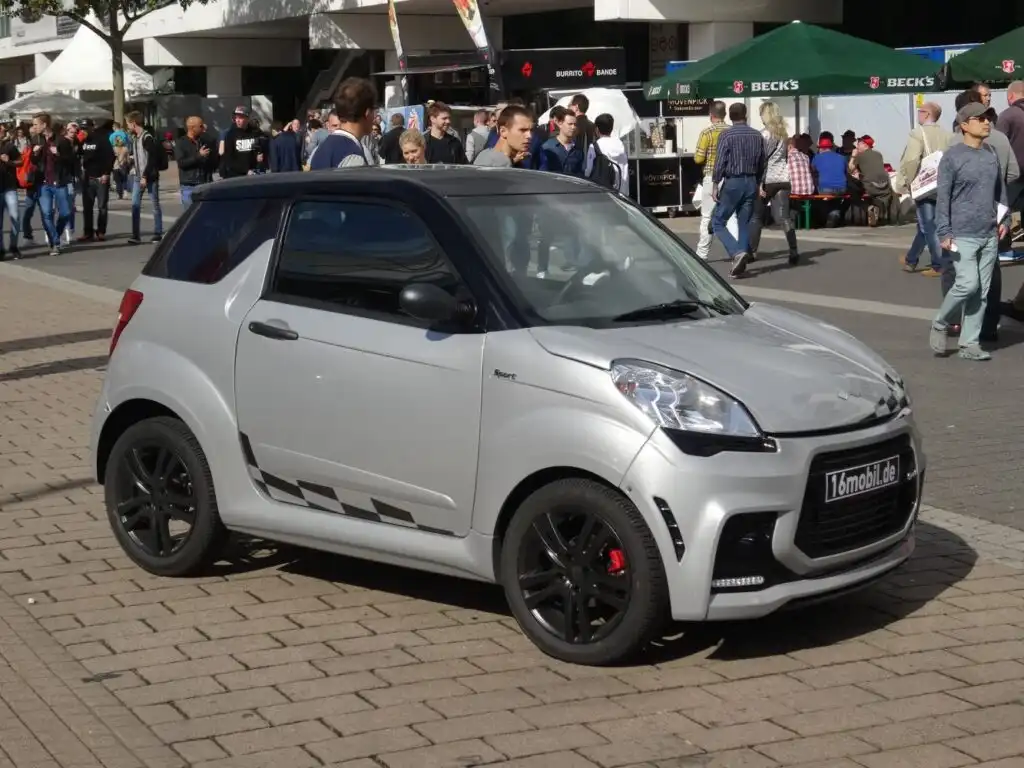
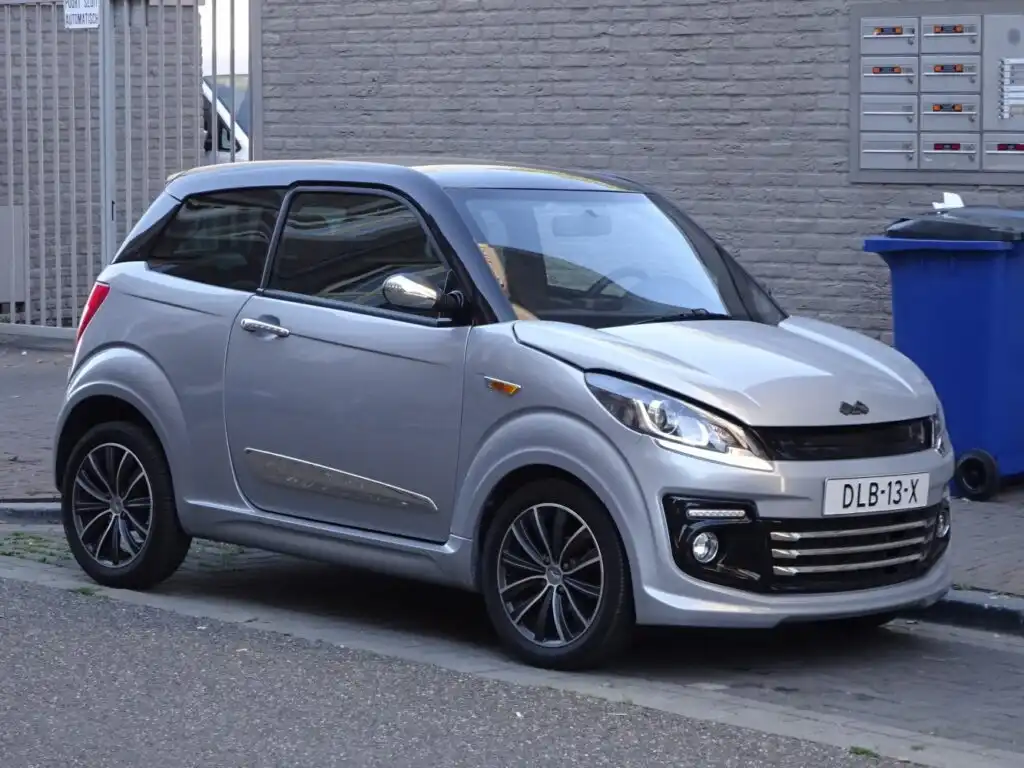
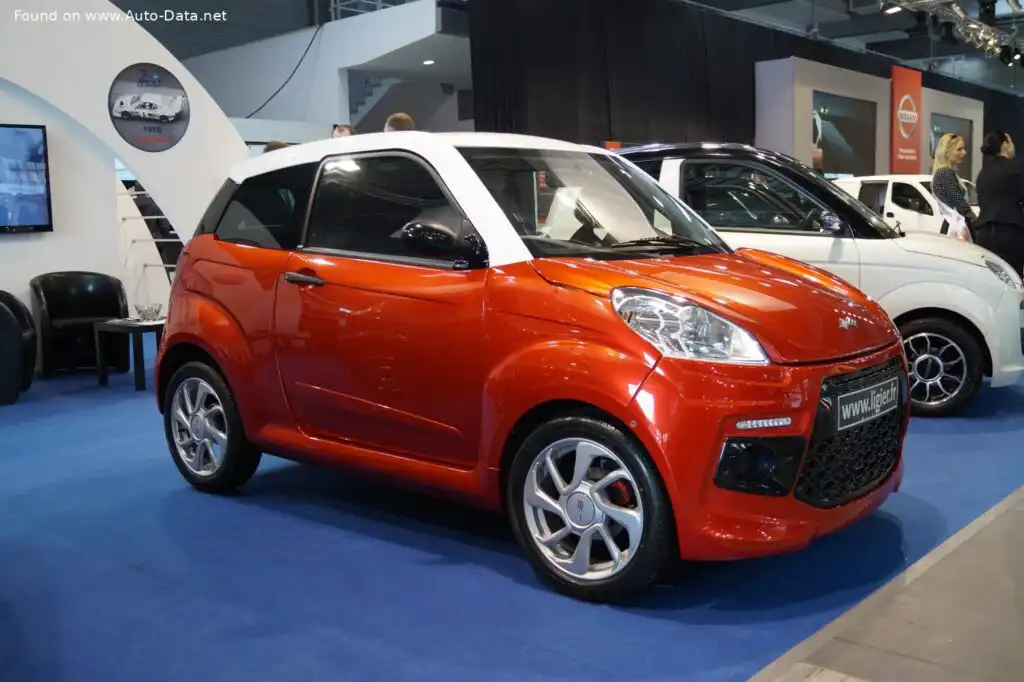
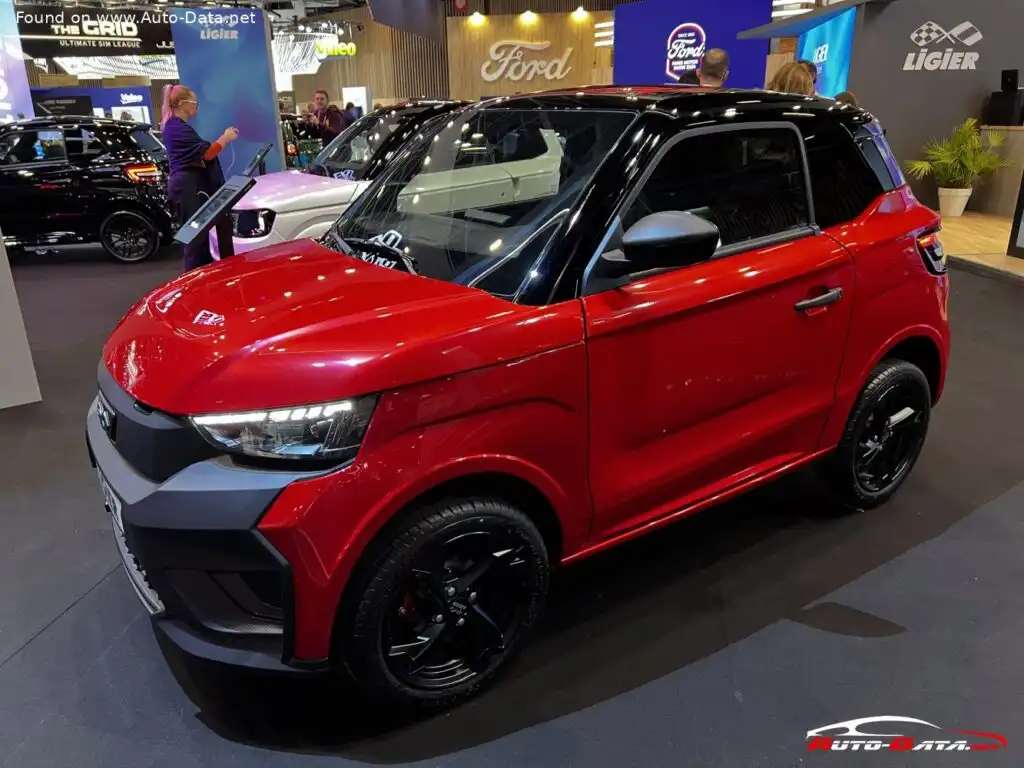
The Ligier JS50 I (facelift 2017) 0.5 Progress, powered by an 8 horsepower engine and utilizing a continuously variable transmission (CVT), represents a unique segment of the automotive market – the European quadricycle. Introduced in 2019 and continuing through 2024, this variant of the JS50 was designed to meet the specific regulatory requirements for lightweight vehicles in Europe, offering a mobility solution primarily for urban environments. It falls under the heavy quadricycle category, allowing for a slightly larger engine and increased speed compared to lighter quadricycles. The JS50, in general, aimed to provide an affordable and practical transportation option, particularly for younger drivers or those needing a compact vehicle for city commuting.
Technical Specifications
| Brand | Ligier |
| Model | JS50 |
| Generation | JS50 I (facelift 2017) |
| Type (Engine) | 0.5 Progress (8 Hp) CVT |
| Start of production | 2019 |
| End of production | 2024 |
| Powertrain Architecture | Internal Combustion engine |
| Body type | Quadricycle |
| Seats | 2 |
| Doors | 3 |
| Fuel consumption (combined) | 3.57 l/100 km (65.9 US mpg, 79.1 UK mpg, 28 km/l) |
| CO2 emissions | 92.9 g/km |
| Fuel Type | Diesel |
| Maximum speed | 45 km/h (27.96 mph) |
| Emission standard | Euro 5 |
| Weight-to-power ratio | 43.1 kg/Hp, 23.2 Hp/tonne |
| Weight-to-torque ratio | 20.3 kg/Nm, 49.3 Nm/tonne |
| Power | 8 Hp @ 3000 rpm |
| Power per litre | 15.8 Hp/l |
| Torque | 17 Nm @ 1700 rpm (12.54 lb.-ft. @ 1700 rpm) |
| Maximum engine speed | 3200 rpm |
| Engine layout | Front, Transverse |
| Engine Model/Code | LDW502M3 |
| Engine displacement | 505 cm3 (30.82 cu. in.) |
| Number of cylinders | 2 |
| Engine configuration | Inline |
| Cylinder Bore | 72 mm (2.83 in.) |
| Piston Stroke | 62 mm (2.44 in.) |
| Number of valves per cylinder | 2 |
| Fuel injection system | Pump-nozzle (Unit Injector) |
| Engine aspiration | Naturally aspirated engine |
| Valvetrain | SOHC |
| Engine oil capacity | 1.4 l (1.48 US qt | 1.23 UK qt) |
| Coolant | 3.2 l (3.38 US qt | 2.82 UK qt) |
| Kerb Weight | 345 kg (760.59 lbs.) |
| Fuel tank capacity | 17.5 l (4.62 US gal | 3.85 UK gal) |
| Length | 2850 mm (112.2 in.) |
| Width | 1500 mm (59.06 in.) |
| Height | 1466 mm (57.72 in.) |
| Minimum turning circle | 8.7 m (28.54 ft.) |
| Drivetrain Architecture | The Internal combustion engine (ICE) drives the front wheels of the vehicle. |
| Drive wheel | Front wheel drive |
| Number of gears and type of gearbox | automatic transmission CVT |
| Front suspension | Independent type McPherson |
| Rear suspension | Independent coil spring |
| Front brakes | Disc, 220 mm |
| Rear brakes | Disc, 180 mm |
| Steering type | Steering rack and pinion |
| Tires size | 155/60 R15; 165/50 R16 |
| Wheel rims size | 15; 16 |
Powertrain & Engine Architecture
The heart of the JS50 0.5 Progress is the LDW502M3, a 505cc two-cylinder diesel engine. This engine, while small, is a robust unit designed for reliability and fuel efficiency. It utilizes a pump-nozzle (unit injector) fuel injection system, a technology known for its precise fuel delivery and contribution to lower emissions. The engine features a single overhead camshaft (SOHC) valvetrain, operating two valves per cylinder. The engine produces a modest 8 horsepower at 3000 rpm and 17 Nm (12.54 lb-ft) of torque at 1700 rpm. This power is then transferred to the front wheels via a continuously variable transmission (CVT). The CVT is chosen for its smooth operation and ability to keep the engine operating within its optimal efficiency range, maximizing fuel economy.
Driving Characteristics
The driving experience in the JS50 0.5 Progress is dictated by its limited power output. Acceleration is understandably slow, and the vehicle is best suited for urban environments with lower speed limits. The CVT helps to mitigate some of the engine’s limitations by providing a seamless and continuously adjusted gear ratio. This allows the engine to operate near its peak efficiency, but it doesn’t translate to particularly brisk acceleration. Compared to potential higher-powered variants (had they been offered), the 0.5 Progress prioritizes fuel economy and ease of use over performance. The limited top speed of 45 km/h (27.96 mph) reflects its intended use case and regulatory constraints.
Equipment & Trim Levels
The “Progress” trim level, while being the base offering for the JS50, included a reasonable level of standard equipment for a quadricycle. Features typically included basic instrumentation, comfortable seating for two, and a functional interior layout. While not lavish, the interior was designed for practicality and durability. Optional extras could include upgraded audio systems, different interior color schemes, and potentially, basic air conditioning depending on the market. The exterior styling was relatively simple, focusing on functionality and aerodynamic efficiency.
Chassis & Braking
The JS50 I features a lightweight chassis designed to maximize efficiency. The front suspension utilizes an independent McPherson strut setup, providing a reasonable level of ride comfort and handling. The rear suspension employs an independent coil spring arrangement. Braking is provided by disc brakes on all four wheels – 220mm discs at the front and 180mm discs at the rear. Steering is rack and pinion, offering precise and responsive control. The vehicle is equipped with 15 or 16-inch wheels, typically fitted with 155/60 R15 or 165/50 R16 tires.
Market Reception & Comparison
The Ligier JS50 0.5 Progress was generally well-received as a practical and affordable urban mobility solution. Critics praised its fuel efficiency and ease of driving, particularly in congested city environments. However, its limited power and speed were often noted as drawbacks. Compared to other quadricycles or small city cars, the JS50 offered a compelling value proposition, especially for those seeking a basic and reliable transportation option. Its diesel engine provided excellent fuel economy, but also meant it was subject to stricter emissions regulations in some areas. The CVT transmission was seen as a positive feature, contributing to a smooth and comfortable driving experience.
Legacy
The Ligier JS50, and specifically the 0.5 Progress variant, has established itself as a popular choice in the European quadricycle market. Its simple, robust design and fuel-efficient engine contribute to its long-term reliability. On the used car market, these vehicles are generally affordable and relatively easy to maintain. While not known for high performance, the JS50 0.5 Progress remains a viable option for those seeking a cost-effective and practical solution for short-distance urban commuting. The LDW502M3 engine, while small, has proven to be a durable and dependable powerplant, ensuring that many JS50s remain on the road today.