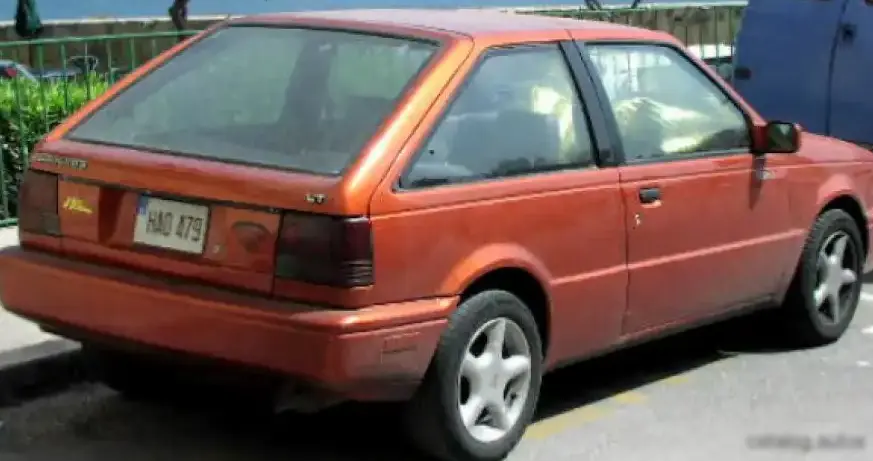
The Isuzu Gemini JT 1.7 TD, produced between 1988 and 1992, represented a significant offering in the compact car segment, particularly in European and Asian markets. This variant, powered by a turbocharged diesel engine, aimed to provide fuel efficiency and reasonable performance in a practical, affordable package. The JT series Gemini was Isuzu’s entry in the competitive small family car class, sharing a platform with the Holden Nova in Australia and undergoing various iterations throughout its production run. The 1.7 TD model occupied a niche position within the Gemini lineup, appealing to buyers prioritizing economy and torque over outright speed, and often serving as a fleet vehicle or a sensible choice for high-mileage drivers.
Technical Specifications
| Brand | Isuzu |
| Model | Gemini |
| Generation | Gemini (JT) |
| Type (Engine) | 1.7 TD (88 Hp) |
| Start of production | 1988 |
| End of production | 1992 |
| Powertrain Architecture | Internal Combustion engine |
| Body type | Sedan |
| Seats | 5 |
| Doors | 4 |
| Fuel consumption (urban) | 9 l/100 km (26.1 US mpg, 31.4 UK mpg, 11.1 km/l) |
| Fuel consumption (extra urban) | 6 l/100 km (39.2 US mpg, 47.1 UK mpg, 16.7 km/l) |
| Fuel Type | Diesel |
| Maximum speed | 165 km/h (102.53 mph) |
| Weight-to-power ratio | 11.8 kg/Hp, 84.6 Hp/tonne |
| Weight-to-torque ratio | 6.2 kg/Nm, 160.6 Nm/tonne |
| Power | 88 Hp @ 4500 rpm |
| Power per litre | 52.2 Hp/l |
| Torque | 167 Nm @ 2500 rpm (123.17 lb.-ft. @ 2500 rpm) |
| Engine layout | Front, Transverse |
| Engine displacement | 1686 cm3 (102.89 cu. in.) |
| Number of cylinders | 4 |
| Engine configuration | Inline |
| Cylinder Bore | 79 mm (3.11 in.) |
| Piston Stroke | 86 mm (3.39 in.) |
| Compression ratio | 22:1 |
| Number of valves per cylinder | 2 |
| Fuel injection system | Precombustion chamber injection |
| Engine aspiration | Turbocharger |
| Kerb Weight | 1040 kg (2292.81 lbs.) |
| Trunk (boot) space (minimum) | 325 l (11.48 cu. ft.) |
| Fuel tank capacity | 47 l (12.42 US gal, 10.34 UK gal) |
| Length | 4195 mm (165.16 in.) |
| Width | 1680 mm (66.14 in.) |
| Height | 1370 mm (53.94 in.) |
| Wheelbase | 2450 mm (96.46 in.) |
| Front track | 1430 mm (56.3 in.) |
| Rear track | 1400 mm (55.12 in.) |
| Drivetrain Architecture | The Internal combustion engine (ICE) drives the front wheels of the vehicle. |
| Drive wheel | Front wheel drive |
| Number of gears and type of gearbox | 5 gears, manual transmission |
| Front suspension | Coil spring |
| Rear suspension | Coil spring |
| Front brakes | Ventilated discs |
| Rear brakes | Disc |
| Assisting systems | ABS (Anti-lock braking system) |
| Steering type | Steering rack and pinion |
| Power steering | Hydraulic Steering |
Powertrain & Engine Architecture
The heart of the Gemini 1.7 TD was the Isuzu 4ZE1 engine, a 1.7-liter inline-four diesel. This engine utilized a precombustion chamber injection system, a common design for diesel engines of the era, which improved combustion efficiency and reduced noise compared to direct injection systems. The addition of a turbocharger significantly boosted power output to 88 horsepower at 4500 rpm and 167 Nm (123.17 lb-ft) of torque at 2500 rpm. The 4ZE1 engine featured a relatively low compression ratio of 22:1, contributing to its durability and ability to run on lower-quality diesel fuel. The engine was transversely mounted in the front of the vehicle, driving the front wheels. The JT Gemini 1.7 TD was exclusively offered with a five-speed manual transmission, optimized for maximizing fuel economy and utilizing the engine’s torque band effectively.
Driving Characteristics
The 1.7 TD Gemini offered a distinctly different driving experience compared to its gasoline-powered siblings. While lacking the outright acceleration of the 1.6-liter petrol versions, the diesel provided significantly more low-end torque. This made it particularly well-suited for everyday driving, offering effortless cruising and strong pulling power, especially when fully loaded. The five-speed manual transmission allowed drivers to keep the engine in its optimal torque range, maximizing fuel efficiency. The gear ratios were relatively long, prioritizing economy over sporty performance. Compared to the later 1.8-liter gasoline engines, the 1.7 TD felt less refined but offered superior fuel economy and a more robust feel. The turbocharger did introduce a degree of turbo lag, but once spooled up, it provided a noticeable boost in power.
Equipment & Trim Levels
The Isuzu Gemini 1.7 TD was generally positioned as a mid-range trim level. Standard equipment typically included power steering, a basic audio system, and cloth upholstery. Air conditioning was often an optional extra, as were power windows and central locking. The interior design was functional and straightforward, prioritizing practicality over luxury. The dashboard layout was typical of cars from the late 1980s, with clearly labeled controls and a simple instrument cluster. The exterior styling was relatively understated, with a focus on aerodynamic efficiency. Available colors included a range of solid and metallic finishes.
Chassis & Braking
The Gemini JT utilized a relatively simple chassis design, featuring coil springs and a stabilizer bar at both the front and rear. The front suspension employed MacPherson struts, while the rear utilized a twist beam setup. Braking duties were handled by ventilated discs at the front and solid discs at the rear. An anti-lock braking system (ABS) was available as an option, enhancing safety and control, particularly on slippery surfaces. The steering system was a rack-and-pinion setup, providing precise and responsive handling. The overall suspension tuning was geared towards comfort and ride quality, rather than sporty handling.
Market Reception & Comparison
The Isuzu Gemini 1.7 TD was generally well-received by critics for its fuel efficiency and robust engine. It was often praised as a sensible and practical choice for drivers covering long distances or those seeking a reliable and economical vehicle. However, it was also noted that the engine was somewhat noisy and lacked the refinement of some of its competitors. Compared to other diesel-powered cars in its class, such as the Peugeot 205 Diesel or the Renault 5 Diesel, the Gemini offered a competitive level of performance and economy. Against gasoline-powered rivals, it traded outright speed for superior fuel efficiency and lower running costs.
Legacy
The Isuzu Gemini JT 1.7 TD, while not a particularly iconic or collectible vehicle, holds a respectable place in automotive history as a practical and economical compact car. The 4ZE1 diesel engine proved to be remarkably durable and reliable, with many examples still running today. In the used car market, these Geminis are often sought after by enthusiasts looking for a simple, affordable, and fuel-efficient vehicle. While maintenance can be challenging due to the age of the vehicles and the limited availability of parts, the 1.7 TD Gemini remains a testament to Isuzu’s engineering prowess and its commitment to building reliable and practical automobiles.