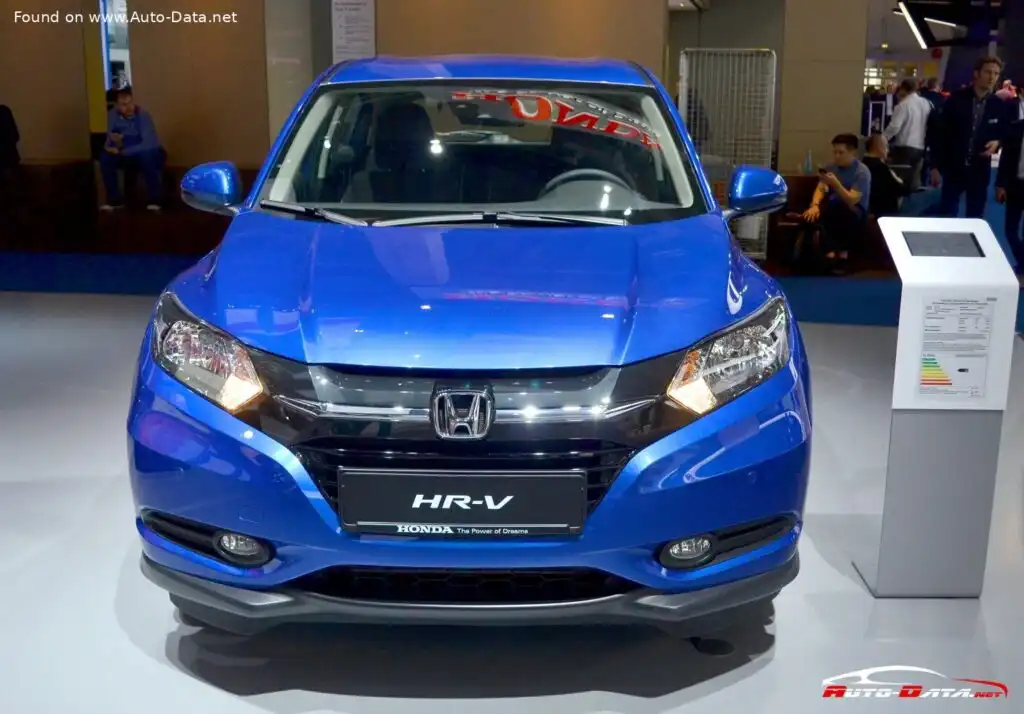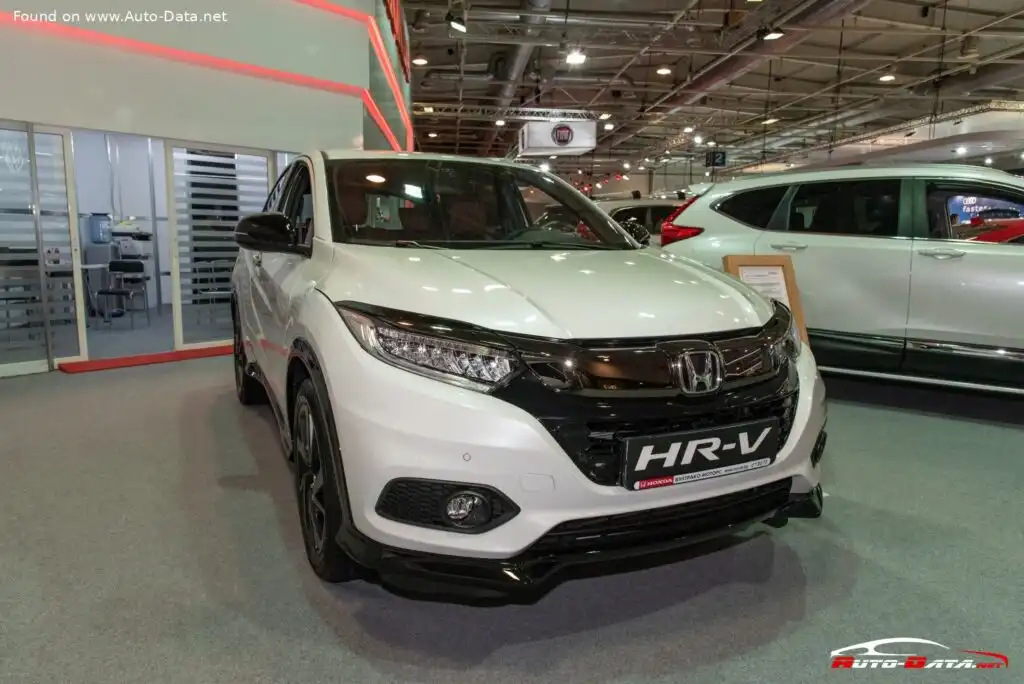
The Honda HR-V II, specifically the 1.8 i-VTEC (141 Hp) AWD CVT variant produced from 2018 to 2022, represents a significant iteration of Honda’s subcompact crossover SUV. This facelifted version of the second-generation HR-V (internally designated as the RU platform) aimed to refine the original’s strengths – practicality, fuel efficiency, and Honda’s reputation for reliability – while addressing some criticisms regarding performance and interior refinement. Positioned as a mid-range offering within the HR-V lineup, this AWD CVT model bridged the gap between the more affordable base trims and the potentially more feature-rich (but often more expensive) EX and EX-L variants. It was primarily marketed towards buyers seeking a versatile, all-weather capable vehicle with a focus on everyday usability.
Technical Specifications
| Brand | Honda |
| Model | HR-V |
| Generation | HR-V II (facelift 2018) |
| Type (Engine) | 1.8 i-VTEC (141 Hp) AWD CVT |
| Start of production | 2018 |
| End of production | 2022 |
| Powertrain Architecture | Internal Combustion engine |
| Body type | SUV, Crossover |
| Seats | 5 |
| Doors | 5 |
| Fuel consumption (urban) | 8.7 l/100 km (27 US mpg, 32.5 UK mpg, 11.5 km/l) |
| Fuel consumption (extra urban) | 7.5 l/100 km (31.4 US mpg, 37.7 UK mpg, 13.3 km/l) |
| Fuel consumption (combined) | 8.1 l/100 km (29 US mpg, 34.9 UK mpg, 12.3 km/l) |
| Fuel Type | Petrol (Gasoline) |
| Weight-to-power ratio | 9.9 kg/Hp, 101.4 Hp/tonne |
| Weight-to-torque ratio | 8.1 kg/Nm, 123.7 Nm/tonne |
| Power | 141 Hp @ 6500 rpm |
| Power per litre | 78.4 Hp/l |
| Torque | 172 Nm @ 4300 rpm (126.86 lb.-ft. @ 4300 rpm) |
| Maximum engine speed | 6700 rpm |
| Engine layout | Front, Transverse |
| Engine Model/Code | R18Z9 |
| Engine displacement | 1799 cm3 (109.78 cu. in.) |
| Number of cylinders | 4 |
| Engine configuration | Inline |
| Cylinder Bore | 81 mm (3.19 in.) |
| Piston Stroke | 87.3 mm (3.44 in.) |
| Compression ratio | 10.6:1 |
| Number of valves per cylinder | 4 |
| Fuel injection system | Multi-port manifold injection |
| Engine aspiration | Naturally aspirated engine |
| Valvetrain | SOHC i-VTEC |
| Engine oil capacity | 3.7 l (3.91 US qt | 3.26 UK qt) |
| Coolant capacity | 5.25 l (5.55 US qt | 4.62 UK qt) |
| Kerb Weight | 1391 kg (3066.63 lbs.) |
| Trunk (boot) space – minimum | 657 l (23.2 cu. ft.) |
| Trunk (boot) space – maximum | 1631 l (57.6 cu. ft.) |
| Fuel tank capacity | 50 l (13.21 US gal | 11 UK gal) |
| Length | 4328 mm (170.39 in.) |
| Width | 1773 mm (69.8 in.) |
| Height | 1605 mm (63.19 in.) |
| Wheelbase | 2611 mm (102.8 in.) |
| Front track | 1534 mm (60.39 in.) |
| Rear track | 1539 mm (60.59 in.) |
| Ride height (ground clearance) | 170 mm (6.69 in.) |
| Minimum turning circle | 11.3 m (37.07 ft.) |
| Drive wheel | All wheel drive (4×4) |
| Number of gears and type of gearbox | automatic transmission CVT |
| Front suspension | Independent, type McPherson with coil spring and anti-roll bar |
| Rear suspension | Suspension De-Dion |
| Front brakes | Ventilated discs |
| Rear brakes | Disc |
| Assisting systems | ABS (Anti-lock braking system) |
| Steering type | Steering rack and pinion |
| Power steering | Electric Steering |
| Tires size | 215/55 R17 94V |
| Wheel rims size | 17 |
Powertrain & Engine Architecture
At the heart of the 2018-2022 HR-V 1.8 i-VTEC AWD CVT lies the Honda R18Z9 engine, a 1.8-liter inline-four cylinder gasoline engine. This engine is part of Honda’s R-series, known for its reliability and fuel efficiency. The R18Z9 utilizes a single overhead camshaft (SOHC) configuration with Honda’s intelligent Variable Valve Timing and Lift Electronic Control (i-VTEC) system. This system allows for variable valve timing and lift, optimizing engine performance across a wider RPM range. Fuel delivery is managed by a multi-point fuel injection system. The engine produces 141 horsepower at 6500 rpm and 172 Nm (126.86 lb-ft) of torque at 4300 rpm. The engine is transversely mounted in the front of the vehicle. Paired with this engine is a Continuously Variable Transmission (CVT), which provides smooth, stepless gear changes. The all-wheel-drive system is a reactive system, primarily front-wheel drive, engaging the rear wheels when slip is detected.
Driving Characteristics
The 1.8L i-VTEC engine with the CVT transmission delivers adequate, but not exhilarating, performance. Acceleration is linear, with the CVT keeping the engine in its optimal power band. While the CVT eliminates traditional gear shifts, it can sometimes exhibit a “rubber band” feel, where engine RPMs rise quickly under hard acceleration without a corresponding increase in speed. Compared to the manual transmission options available in some markets, the CVT prioritizes fuel efficiency over sporty driving dynamics. The AWD system provides enhanced traction in inclement weather conditions, making it a practical choice for regions with snow or rain. The steering is light and precise, making it easy to maneuver in urban environments. Overall, the driving experience is comfortable and refined, geared towards everyday commuting and practicality.
Equipment & Trim Levels
The 1.8 i-VTEC AWD CVT trim typically included standard features such as automatic climate control, a multi-function steering wheel, a rearview camera, and Honda’s infotainment system with a touchscreen display. Interior upholstery was generally cloth, with options for upgraded materials in higher trim levels. Available optional extras included a sunroof, heated front seats, and advanced safety features like lane departure warning and adaptive cruise control. The specific feature set varied slightly depending on the model year and regional market.
Chassis & Braking
The HR-V II utilizes a McPherson strut front suspension and a De-Dion rear suspension. This setup provides a good balance between ride comfort and handling. The front suspension incorporates a stabilizer bar to reduce body roll during cornering. Braking duties are handled by ventilated discs at the front and solid discs at the rear. The vehicle is equipped with an Anti-lock Braking System (ABS) as standard. The electric power steering provides a light and responsive feel.
Market Reception & Comparison
The 2018-2022 Honda HR-V 1.8 i-VTEC AWD CVT was generally well-received by automotive critics. It was praised for its spacious interior, fuel efficiency, and Honda’s reputation for reliability. However, some reviewers noted that the engine could feel underpowered, especially when fully loaded or driving uphill. Compared to other trims in the HR-V lineup, the 1.8L AWD CVT offered a good balance of features and affordability. The 1.5L turbo engine, available in some markets, provided more spirited performance but often came at a higher price point. The 1.8L engine was considered more reliable and less prone to maintenance issues than the turbocharged variant.
Legacy
The Honda R18Z9 engine, paired with the CVT transmission, has proven to be a reliable powertrain. Common maintenance items include regular oil changes and CVT fluid replacements. The HR-V II, in general, has maintained a strong reputation for long-term durability. On the used car market, the 1.8 i-VTEC AWD CVT variant remains a popular choice due to its practicality, fuel efficiency, and relatively low running costs. Its all-wheel-drive capability adds to its appeal in regions with challenging weather conditions, making it a sensible and dependable option for buyers seeking a compact crossover SUV.