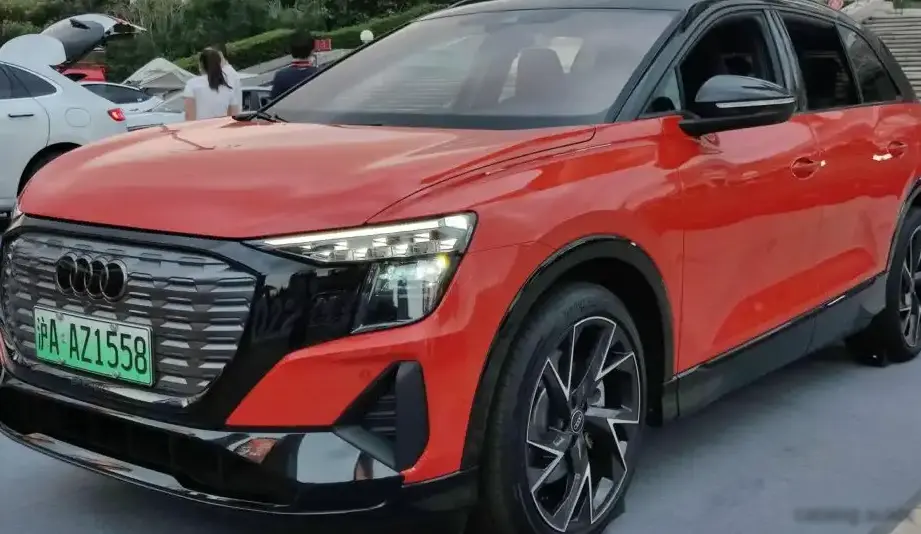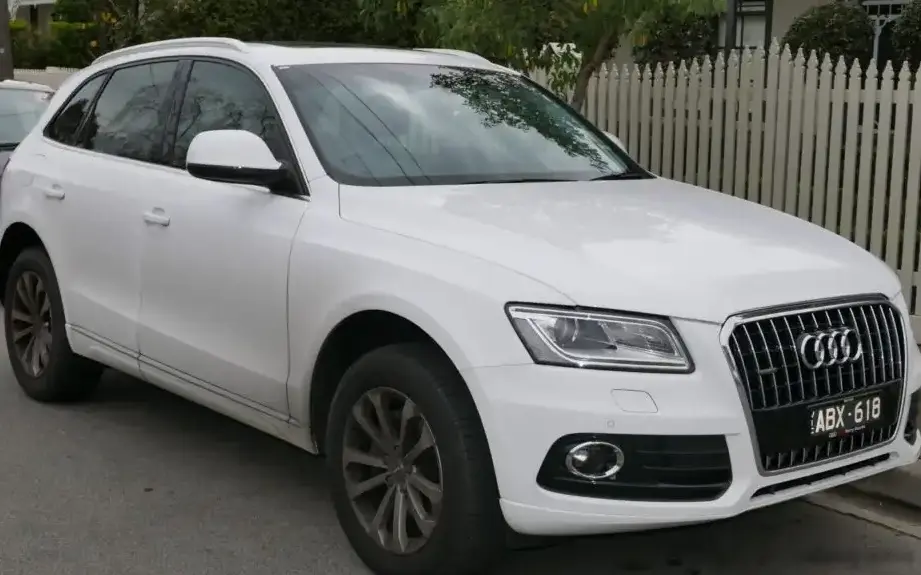
The Audi Q5 I (8R) facelift, specifically the 2.0 TFSI Hybrid quattro Tiptronic model produced from 2012 to 2016, represented a significant step in Audi’s integration of hybrid technology into its popular luxury SUV lineup. This variant, positioned as a mid-range offering within the Q5 range, combined a turbocharged four-cylinder gasoline engine with an electric motor to deliver a balance of performance, efficiency, and all-weather capability. It was primarily marketed in Europe and other regions where fuel economy and emissions regulations were becoming increasingly stringent, offering a premium SUV experience with a reduced environmental footprint.
Technical Specifications
| Brand | Audi |
| Model | Q5 |
| Generation | Q5 I (8R, facelift 2012) |
| Type (Engine) | 2.0 TFSI Hybrid (245 Hp) quattro Tiptronic |
| Start of production | 2012 |
| End of production | 2016 |
| Powertrain Architecture | FHEV (Full Hybrid Electric Vehicle) |
| Body type | SUV |
| Seats | 5 |
| Doors | 5 |
| Fuel consumption (urban) | 7.1 l/100 km (33.1 US mpg, 39.8 UK mpg, 14.1 km/l) |
| Fuel consumption (extra urban) | 6.6 l/100 km (35.6 US mpg, 42.8 UK mpg, 15.2 km/l) |
| Fuel consumption (combined) | 6.9 l/100 km (34.1 US mpg, 40.9 UK mpg, 14.5 km/l) |
| CO2 emissions | 159 g/km |
| Fuel Type | Petrol (Gasoline) |
| Acceleration 0 – 100 km/h | 7.1 sec |
| Acceleration 0 – 62 mph | 7.1 sec |
| Acceleration 0 – 60 mph | 6.7 sec |
| Maximum speed | 225 km/h (139.81 mph) |
| Emission standard | Euro 6 |
| Weight-to-power ratio | 7.8 kg/Hp, 128.3 Hp/tonne |
| Weight-to-torque ratio | 4 kg/Nm, 251.3 Nm/tonne |
| Gross battery capacity | 1.3 kWh |
| All-electric range | 3 km (1.86 mi) |
| Electric motor power | 54 Hp |
| Electric motor Torque | 210 Nm (154.89 lb.-ft.) |
| System power | 245 Hp |
| System torque | 480 Nm (354.03 lb.-ft.) |
| Engine Power | 211 Hp @ 4300-6000 rpm |
| Engine Torque | 350 Nm @ 1500-4200 rpm (258.15 lb.-ft. @ 1500-4200 rpm) |
| Engine Model/Code | CHJA |
| Engine displacement | 1984 cm3 (121.07 cu. in.) |
| Number of cylinders | 4 |
| Engine configuration | Inline |
| Cylinder Bore | 82.5 mm (3.25 in.) |
| Piston Stroke | 92.8 mm (3.65 in.) |
| Compression ratio | 9.6:1 |
| Number of valves per cylinder | 4 |
| Fuel injection system | Direct injection |
| Engine aspiration | Turbocharger, Intercooler |
| Valvetrain | DOHC |
| Engine oil capacity | 4.6 l (4.86 US qt | 4.05 UK qt) |
| Coolant | 6.8 l (7.19 US qt | 5.98 UK qt) |
| Kerb Weight | 1910 kg (4210.83 lbs.) |
| Max. weight | 2490 kg (5489.51 lbs.) |
| Max load | 580 kg (1278.68 lbs.) |
| Trunk (boot) space – minimum | 540 l (19.07 cu. ft.) |
| Trunk (boot) space – maximum | 1560 l (55.09 cu. ft.) |
| Fuel tank capacity | 72 l (19.02 US gal | 15.84 UK gal) |
| Max. roof load | 75 kg (165.35 lbs.) |
| Permitted trailer load with brakes (8%) | 2400 kg (5291.09 lbs.) |
| Permitted trailer load without brakes | 750 kg (1653.47 lbs.) |
| Permitted towbar download | 100 kg (220.46 lbs.) |
| Length | 4629 mm (182.24 in.) |
| Width | 1898 mm (74.72 in.) |
| Width including mirrors | 2089 mm (82.24 in.) |
| Height | 1655 mm (65.16 in.) |
| Wheelbase | 2807 mm (110.51 in.) |
| Front track | 1617 mm (63.66 in.) |
| Rear (Back) track | 1614 mm (63.54 in.) |
| Front overhang | 895 mm (35.24 in.) |
| Rear overhang | 927 mm (36.5 in.) |
| Ride height (ground clearance) | 200 mm (7.87 in.) |
| Drag coefficient (Cd) | 0.33 |
| Minimum turning circle (turning diameter) | 11.6 m (38.06 ft.) |
| Approach angle | 25° |
| Ramp-over (brakeover) angle | 17.6° |
| Climb angle | 31° |
| Wading depth | 500 mm (19.69 in.) |
| Drive wheel | All wheel drive (4×4) |
| Number of gears and type of gearbox | 8 gears, automatic transmission Tiptronic |
| Front suspension | Independent multi-link suspension |
| Rear suspension | Independent on trapezoidal lever |
| Front brakes | Ventilated discs |
| Rear brakes | Ventilated discs |
| Assisting systems | ABS (Anti-lock braking system) |
| Steering type | Steering rack and pinion |
| Power steering | Electric Steering |
| Tires size | 235/55 R19 |
| Wheel rims size | 19 |
INTRODUCTION
The Audi Q5 I (8R) facelift, launched in 2012, brought a refreshed design and updated technology to Audi’s popular compact luxury SUV. The 2.0 TFSI Hybrid quattro Tiptronic variant was a key component of this update, representing Audi’s commitment to improving fuel efficiency without sacrificing the driving experience expected from the brand. Utilizing a 2.0-liter turbocharged four-cylinder engine paired with an electric motor and Audi’s quattro all-wheel-drive system, this model aimed to appeal to buyers seeking a sophisticated and environmentally conscious SUV. It sat in the middle of the Q5 range, offering a step up in efficiency from the standard gasoline engines while providing a more accessible price point than the higher-performance SQ5.
Powertrain & Engine Architecture
At the heart of the Q5 Hybrid lies the CHJA engine code, a 1.984-liter (121.07 cubic inches) inline-four cylinder gasoline engine. This engine features direct fuel injection and a turbocharger with an intercooler, producing 211 horsepower at 4300-6000 rpm and 350 Nm (258.15 lb-ft) of torque between 1500-4200 rpm. The engine is coupled with a 54 horsepower electric motor, integrated into the eight-speed Tiptronic automatic transmission. The electric motor contributes an additional 210 Nm (154.89 lb-ft) of torque. The combined system output is 245 horsepower and 480 Nm (354.03 lb-ft) of torque. The hybrid system utilizes a 1.3 kWh lithium-ion battery pack, allowing for a limited all-electric range of approximately 3 kilometers (1.86 miles). The Tiptronic transmission offers both automatic shifting and manual control via steering wheel-mounted paddles, providing drivers with flexibility in managing power delivery.
Driving Characteristics
The 2.0 TFSI Hybrid quattro Tiptronic Q5 delivers a refined and comfortable driving experience. The electric motor provides instant torque, supplementing the gasoline engine during acceleration, resulting in brisk performance. The 0-60 mph sprint takes approximately 6.7 seconds, and the car reaches a top speed of 225 km/h (139.81 mph). The eight-speed Tiptronic transmission provides smooth and seamless gear changes, enhancing the overall driving experience. While not as sporty as the higher-powered Q5 variants, the hybrid model offers ample power for everyday driving and highway cruising. The quattro all-wheel-drive system provides excellent traction and stability in various weather conditions. The hybrid system prioritizes electric driving at low speeds and during gentle acceleration, maximizing fuel efficiency. However, under hard acceleration or when climbing hills, the gasoline engine takes over to provide additional power.
Equipment & Trim Levels
The 2.0 TFSI Hybrid quattro Tiptronic Q5 typically came well-equipped with standard features such as leather upholstery, tri-zone automatic climate control, a premium sound system, and Audi’s Multi Media Interface (MMI) infotainment system with a central display screen. Standard safety features included ABS, electronic stability control, and multiple airbags. Optional extras included features like a panoramic sunroof, navigation system, advanced driver-assistance systems (such as adaptive cruise control and blind-spot monitoring), and upgraded interior trim options. The interior design was typically characterized by Audi’s signature high-quality materials and meticulous attention to detail.
Chassis & Braking
The Q5 Hybrid utilizes an independent multi-link suspension at the front and an independent trapezoidal lever suspension at the rear, providing a comfortable ride and precise handling. Ventilated disc brakes are fitted on all four wheels, offering strong stopping power. The suspension is tuned to balance comfort and handling, providing a stable and controlled driving experience. The quattro all-wheel-drive system distributes power between the front and rear axles as needed, optimizing traction and stability. The steering is precise and responsive, providing good feedback to the driver.
Market Reception & Comparison
The Audi Q5 Hybrid was generally well-received by automotive critics, who praised its fuel efficiency, refined driving experience, and luxurious interior. Compared to the standard 2.0 TFSI Q5, the hybrid model offered significantly improved fuel economy, particularly in urban driving conditions. However, the hybrid system added some weight to the vehicle, resulting in slightly slower acceleration compared to the non-hybrid 2.0 TFSI model. Compared to the Q5 3.0 TFSI, the hybrid offered less overall power and performance but provided a more environmentally friendly alternative. Reliability reports suggest that the hybrid system is generally reliable, but the added complexity of the system could potentially lead to higher maintenance costs over the long term.
Legacy
The Audi Q5 I (8R) 2.0 TFSI Hybrid quattro Tiptronic represents an important step in Audi’s development of hybrid technology. While the first-generation Q5 Hybrid is no longer in production, it paved the way for subsequent generations of hybrid and plug-in hybrid Q5 models. On the used car market, these models are often sought after by buyers looking for a fuel-efficient and luxurious SUV. The powertrain, while complex, has proven to be reasonably durable, and parts availability is generally good. However, potential buyers should be aware of the potential for higher maintenance costs associated with the hybrid system and ensure that the battery pack is in good condition.