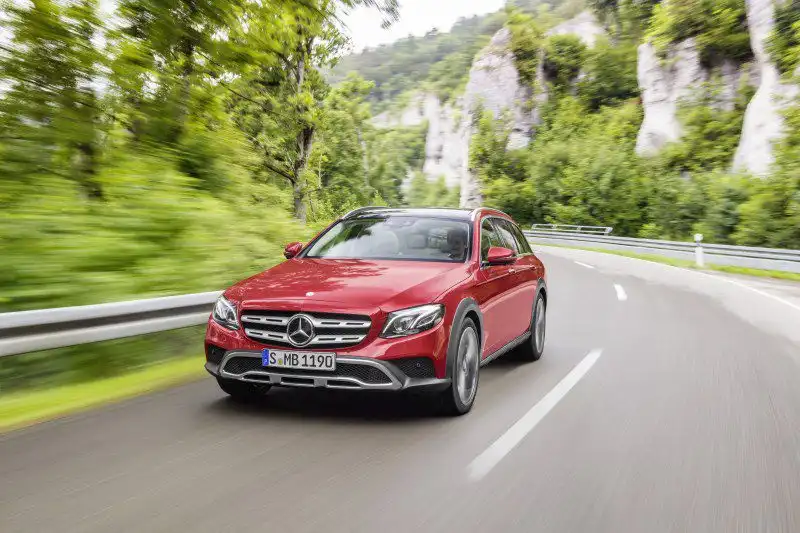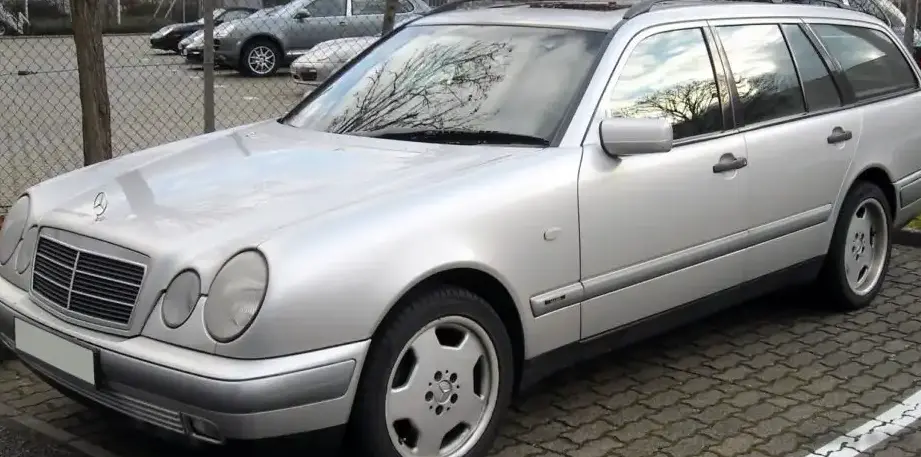
The Mercedes-Benz E-Class T-modell (S210) E 220 CDI Automatic, produced from January 1998 to July 1999, represented a compelling blend of practicality and diesel efficiency within the W210 series. This variant occupied a mid-range position in the T-modell (estate) lineup, offering a balance between performance and economy for buyers seeking a versatile family vehicle. It was a key offering in the European market, where estate cars held significant popularity, and aimed to provide a refined driving experience with the added benefit of a spacious cargo area.
Technical Specifications
| Brand | Mercedes-Benz |
| Model | E-Class |
| Generation | E-Class T-modell (S210) |
| Type (Engine) | E 220 CDI (125 Hp) Automatic |
| Start of production | January, 1998 |
| End of production | July, 1999 |
| Powertrain Architecture | Internal Combustion engine |
| Body type | Station wagon (estate) |
| Seats | 5 |
| Doors | 5 |
| Fuel consumption (urban) | 10.2 l/100 km (23.1 US mpg, 27.7 UK mpg, 9.8 km/l) |
| Fuel consumption (extra urban) | 5.4 l/100 km (43.6 US mpg, 52.3 UK mpg, 18.5 km/l) |
| Fuel consumption (combined) | 7.2 l/100 km (32.7 US mpg, 39.2 UK mpg, 13.9 km/l) |
| Fuel Type | Diesel |
| Acceleration 0 – 100 km/h | 12 sec |
| Acceleration 0 – 62 mph | 12 sec |
| Acceleration 0 – 60 mph | 11.4 sec |
| Maximum speed | 194 km/h (120.55 mph) |
| Weight-to-power ratio | 13.2 kg/Hp, 75.8 Hp/tonne |
| Weight-to-torque ratio | 5.5 kg/Nm, 181.8 Nm/tonne |
| Power | 125 Hp @ 4200 rpm |
| Power per litre | 58.1 Hp/l |
| Torque | 300 Nm @ 1800 rpm (221.27 lb.-ft. @ 1800 rpm) |
| Engine layout | Front, Longitudinal |
| Engine Model/Code | OM 611 DE 22 LA / 611.960 |
| Engine displacement | 2151 cm3 (131.26 cu. in.) |
| Number of cylinders | 4 |
| Engine configuration | Inline |
| Cylinder Bore | 88 mm (3.46 in.) |
| Piston Stroke | 88.4 mm (3.48 in.) |
| Compression ratio | 19:1 |
| Number of valves per cylinder | 4 |
| Fuel injection system | Diesel Commonrail |
| Engine aspiration | Turbocharger, Intercooler |
| Valvetrain | DOHC |
| Engine oil capacity | 6 l (6.34 US qt | 5.28 UK qt) |
| Coolant | 9.5 l (10.04 US qt | 8.36 UK qt) |
| Kerb Weight | 1650 kg (3637.63 lbs.) |
| Max. weight | 2230 kg (4916.31 lbs.) |
| Max load | 580 kg (1278.68 lbs.) |
| Trunk (boot) space – minimum | 600 l (21.19 cu. ft.) |
| Trunk (boot) space – maximum | 1975 l (69.75 cu. ft.) |
| Fuel tank capacity | 70 l (18.49 US gal | 15.4 UK gal) |
| Length | 4816 mm (189.61 in.) |
| Width | 1799 mm (70.83 in.) |
| Height | 1505 mm (59.25 in.) |
| Wheelbase | 2833 mm (111.54 in.) |
| Front track | 1542 mm (60.71 in.) |
| Rear (Back) track | 1546 mm (60.87 in.) |
| Drivetrain Architecture | Rear wheel drive |
| Drive wheel | Rear wheel drive |
| Number of gears and type of gearbox | 5 gears, automatic transmission |
| Front suspension | Double wishbone |
| Rear suspension | Hydraulic elements, Independent multi-link suspension |
| Front brakes | Ventilated discs |
| Rear brakes | Disc |
| Assisting systems | ABS (Anti-lock braking system) |
| Steering type | Steering rack and pinion |
| Power steering | Hydraulic Steering |
| Tires size | 205/65 R15 |
| Wheel rims size | 7J x 15 |
Powertrain & Engine Architecture
The E 220 CDI was powered by the OM 611 DE 22 LA engine, a 2.2-liter inline-four cylinder diesel. This engine was a significant step forward for Mercedes-Benz, incorporating common rail direct injection technology. The OM611 featured a cast iron block and aluminum cylinder head, contributing to its durability. The common rail system, operating at extremely high pressures, allowed for precise fuel metering and multiple injections per combustion cycle, resulting in improved efficiency, reduced noise, and lower emissions compared to earlier diesel designs. A turbocharger with an intercooler further enhanced performance, boosting power output to 125 horsepower and 300 Nm (221 lb-ft) of torque. The engine was longitudinally mounted in the engine bay. The five-speed automatic transmission, a robust unit designed to handle the engine’s torque, provided smooth and relatively quick shifts.
Driving Characteristics
The E 220 CDI Automatic offered a comfortable and refined driving experience, prioritizing fuel economy and ease of use over outright performance. Acceleration from 0-60 mph took around 11.4 seconds, and top speed was limited to 194 km/h (120.55 mph). While not a sports car, the engine provided ample torque for everyday driving and overtaking maneuvers. The automatic transmission, while smooth, could feel somewhat hesitant at times, particularly during kickdown. Compared to the more powerful E 280 or E 320 models, the E 220 CDI lacked the same level of responsiveness. However, it offered significantly better fuel economy, making it an attractive option for drivers covering long distances. The gear ratios were optimized for fuel efficiency, with a relatively tall final drive.
Equipment & Trim Levels
The E 220 CDI Automatic typically came equipped with a respectable level of standard features, including automatic climate control, power windows, central locking, and an audio system. Interior upholstery was usually cloth, although leather was available as an option. The dashboard layout was typical of the W210 series, characterized by a functional and understated design. Optional extras included a sunroof, upgraded audio systems, heated seats, and parking sensors. The wood trim was standard, giving the interior a luxurious feel.
Chassis & Braking
The S210 chassis featured a double wishbone front suspension and an independent multi-link rear suspension, providing a comfortable ride and good handling characteristics. The E 220 CDI was equipped with ventilated disc brakes at the front and solid discs at the rear. Anti-lock braking system (ABS) was standard, enhancing safety and stability during braking. The steering was a hydraulic power-assisted rack and pinion system, offering precise and responsive control. The suspension was tuned for comfort, prioritizing ride quality over sporty handling.
Market Reception & Comparison
The E 220 CDI Automatic was well-received in the European market as a practical and economical estate car. Critics praised its fuel efficiency, comfortable ride, and spacious interior. However, some noted that the engine lacked the refinement and performance of its gasoline counterparts. Compared to the E 280 or E 320, the E 220 CDI offered significantly better fuel economy but at the expense of performance. The 1.8L gasoline models were less expensive but offered even less power and torque. The E 220 CDI struck a balance between these extremes, appealing to buyers who prioritized economy and practicality.
Legacy
The OM 611 engine proved to be a durable and reliable powerplant, and many E 220 CDI models are still on the road today. While maintenance costs can increase with age, the engine is generally considered to be robust and capable of high mileage. The five-speed automatic transmission is also relatively reliable, although regular fluid changes are essential. In the used car market, the E 220 CDI Automatic remains a popular choice for buyers seeking a practical and economical estate car with a reputation for reliability. Its combination of space, comfort, and fuel efficiency continues to make it a compelling option, even decades after its initial production.