
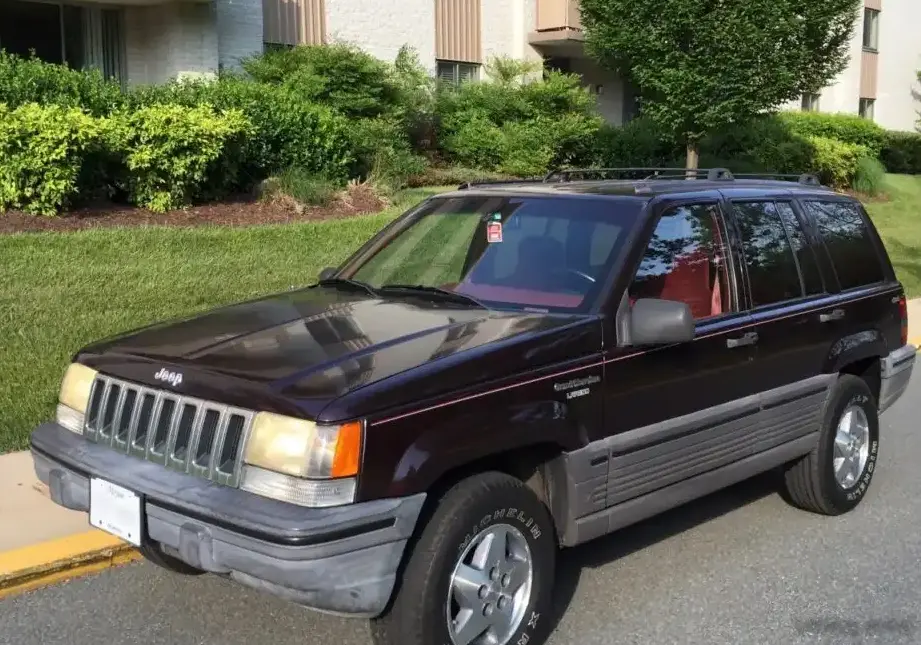
The Jeep Grand Cherokee (ZJ), produced from 1991 to 1999, marked a pivotal moment for the Jeep brand, transitioning it into the increasingly competitive luxury SUV segment. The 4.0i variant, featuring a 4.0-liter inline-six engine generating 190 horsepower and coupled with a four-speed automatic transmission, was a cornerstone of the ZJ lineup throughout its production. This configuration aimed to strike a balance between capability, comfort, and affordability, appealing to a wide range of buyers seeking a versatile family vehicle with genuine off-road prowess. It occupied a mid-range position within the lineup, positioned above the base 2.5L models and below the more powerful and costly V8-equipped Grand Cherokees.
Technical Specifications
| Brand | Jeep |
| Model | Grand Cherokee |
| Generation | Grand Cherokee I (ZJ) |
| Type (Engine) | 4.0i (190 Hp) 4×4 Automatic |
| Start of production | 1991 |
| End of production | 1999 |
| Powertrain Architecture | Internal Combustion engine |
| Body type | SUV |
| Seats | 5 |
| Doors | 5 |
| Fuel consumption (combined) | 13.9 l/100 km (16.9 US mpg, 20.3 UK mpg, 7.2 km/l) |
| Fuel Type | Petrol (Gasoline) |
| Weight-to-power ratio | 8.8 kg/Hp, 114 Hp/tonne |
| Weight-to-torque ratio | 5.5 kg/Nm, 183 Nm/tonne |
| Power | 190 Hp @ 4750 rpm |
| Power per litre | 48 Hp/l |
| Torque | 305 Nm @ 4000 rpm (224.96 lb.-ft. @ 4000 rpm) |
| Engine layout | Front, Longitudinal |
| Engine Model/Code | ERH |
| Engine displacement | 3960 cm3 (241.65 cu. in.) |
| Number of cylinders | 6 |
| Engine configuration | Inline |
| Cylinder Bore | 98.5 mm (3.88 in.) |
| Piston Stroke | 86.7 mm (3.41 in.) |
| Compression ratio | 8.8:1 |
| Number of valves per cylinder | 2 |
| Fuel injection system | Multi-port manifold injection |
| Engine aspiration | Naturally aspirated engine |
| Engine oil capacity | 5.7 l (6.02 US qt | 5.02 UK qt) |
| Coolant capacity | 11.4 l (12.05 US qt | 10.03 UK qt) |
| Kerb Weight | 1667 kg (3675.11 lbs.) |
| Trunk (boot) space – minimum | 732 l (25.85 cu. ft.) |
| Trunk (boot) space – maximum | 1483 l (52.37 cu. ft.) |
| Fuel tank capacity | 87 l (22.98 US gal | 19.14 UK gal) |
| Length | 4548 mm (179.06 in.) |
| Width | 1800 mm (70.87 in.) |
| Height | 1647 mm (64.84 in.) |
| Wheelbase | 2690 mm (105.91 in.) |
| Front track | 1473 mm (57.99 in.) |
| Rear track | 1473 mm (57.99 in.) |
| Drive wheel | All wheel drive (4×4) |
| Number of gears and type of gearbox | 4 gears, automatic transmission |
| Front suspension | Coil spring |
| Rear suspension | Coil spring |
| Front brakes | Ventilated discs |
| Rear brakes | Drum |
| Assisting systems | ABS (Anti-lock braking system), Hydraulic Power Steering |
| Tires size | 215/75 R15 S |
Powertrain & Engine Architecture
The 4.0i Grand Cherokee’s powertrain revolved around the 4.0-liter (3960 cc) AMC inline-six engine, internally designated the ERH. This engine traced its lineage back to designs originating in the 1960s, and was highly regarded for its inherent durability and relatively smooth operation. It featured a robust cast iron block and cylinder head, coupled with a simple two-valve-per-cylinder configuration. Fuel delivery was managed by a multi-port fuel injection system, a significant upgrade from earlier carbureted iterations, contributing to improved fuel efficiency and reduced emissions. The engine produced 190 horsepower at 4750 rpm and 225 lb-ft of torque at 4000 rpm. The four-speed automatic transmission, typically the 42RE or 45RFE depending on the model year, was selected for its user-friendliness and suitability for both on-road driving and moderate off-road conditions. While not delivering the same level of acceleration as the V8 models, the 4.0L automatic offered a respectable performance profile for everyday driving needs.
Driving Characteristics
The 4.0i automatic Grand Cherokee delivered a comfortable and capable driving experience. Acceleration was adequate for most situations, though not particularly quick. The automatic transmission, while generally smooth, could occasionally exhibit some hesitation during rapid acceleration or overtaking maneuvers. The gear ratios were calibrated to prioritize fuel economy and towing capacity over outright performance. Compared to the manual transmission versions of the 4.0L engine, the automatic sacrificed some responsiveness in exchange for convenience. The V8-powered Grand Cherokees offered substantially more power and quicker acceleration, but at the expense of increased fuel consumption. The 4.0i’s strength resided in its ability to effortlessly handle daily commutes, family road trips, and light off-road excursions.
Equipment & Trim Levels
The 4.0i Grand Cherokee typically came equipped with standard features such as air conditioning, power windows and door locks, and an AM/FM stereo system. Higher trim levels, including the Laredo and Limited, added enhancements like leather upholstery, upgraded audio systems, alloy wheels, and a sunroof. A range of optional extras were available, including a tow package, heavy-duty suspension components, and various interior convenience features. The interior design was functional and offered a relatively spacious cabin, comfortably accommodating five passengers. The dashboard layout was straightforward and intuitive, with clearly marked and easily accessible controls.
Chassis & Braking
The ZJ Grand Cherokee employed a traditional body-on-frame construction, providing a robust and durable chassis. The suspension system utilized coil springs at all four corners, contributing to a comfortable ride quality. The front brakes consisted of ventilated discs, while the rear brakes were drums. Anti-lock brakes (ABS) were standard on the majority of models. The 4×4 system featured a part-time transfer case, allowing drivers to seamlessly switch between two-wheel drive and four-wheel drive modes as required. The consistent track width at both the front and rear axles enhanced handling stability. The standard tire size was 215/75R15, offering a balanced combination of on-road comfort and off-road traction.
Market Reception & Comparison
The 4.0i Grand Cherokee was generally well-received by both consumers and automotive critics. It was lauded for its comfortable ride, spacious interior, and capable four-wheel-drive system. However, some reviewers pointed out that the 4.0-liter engine could feel somewhat underpowered, particularly when towing or navigating steep inclines. Fuel economy was also a concern for some, averaging around 16.9 US mpg in combined driving conditions. In comparison to the V8 models, the 4.0i provided a more affordable entry point into the Grand Cherokee lineup, making it a popular choice for budget-conscious buyers. It also demonstrated a reputation for greater reliability than some of the earlier V8 engine options, resulting in lower long-term maintenance expenses.
Legacy
The Jeep Grand Cherokee ZJ 4.0i continues to be a sought-after vehicle in the used car market. The 4.0-liter inline-six engine is renowned for its longevity and relatively straightforward maintenance procedures. While older models may necessitate some restoration work, parts remain readily available and are generally affordable. The ZJ Grand Cherokee has established a reputation as a durable and capable SUV, making it a dependable choice for those seeking a classic off-road vehicle. Its combination of comfort, capability, and affordability has ensured its enduring popularity in the used car market, cementing its position as a significant vehicle in Jeep’s history.
