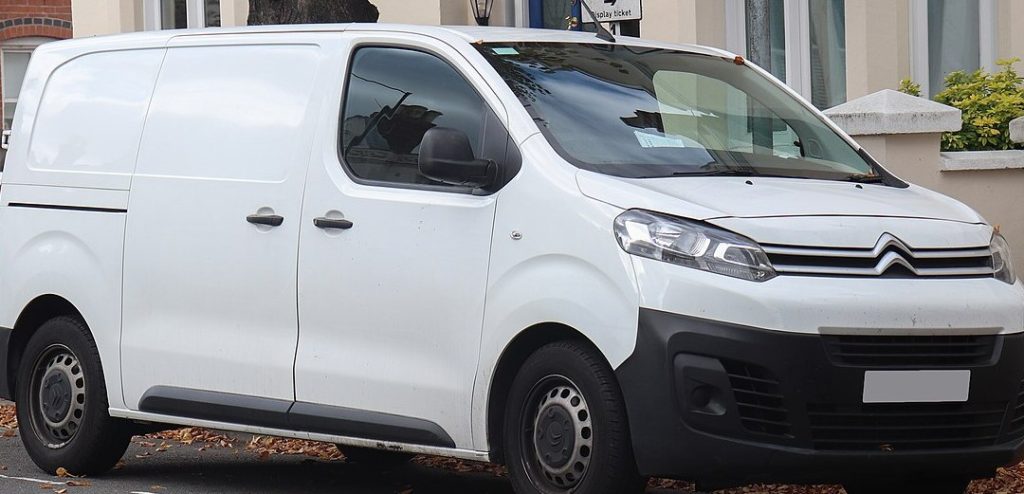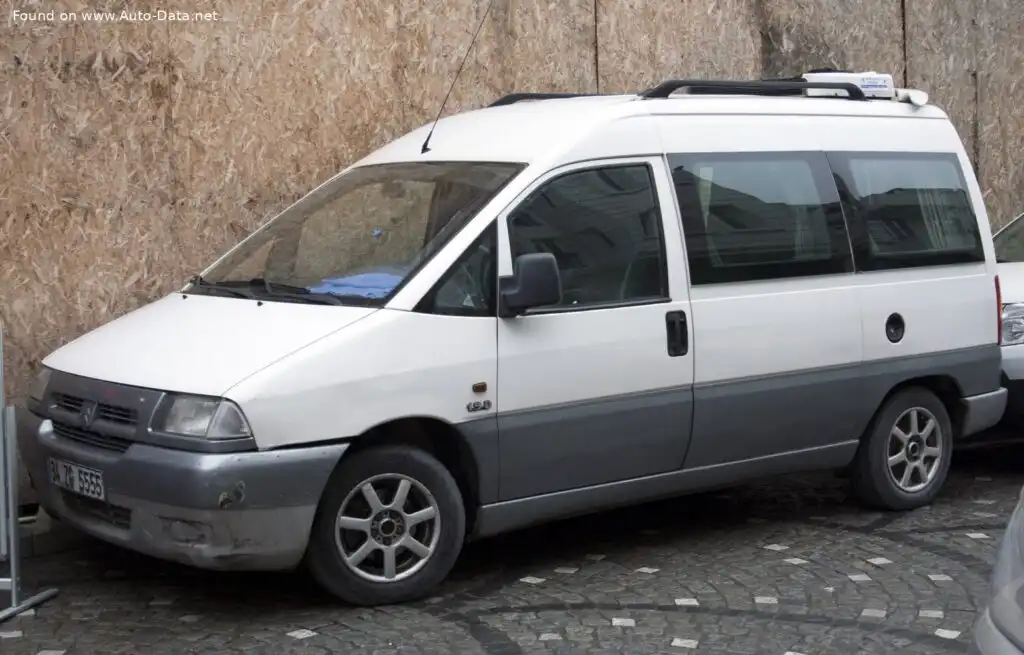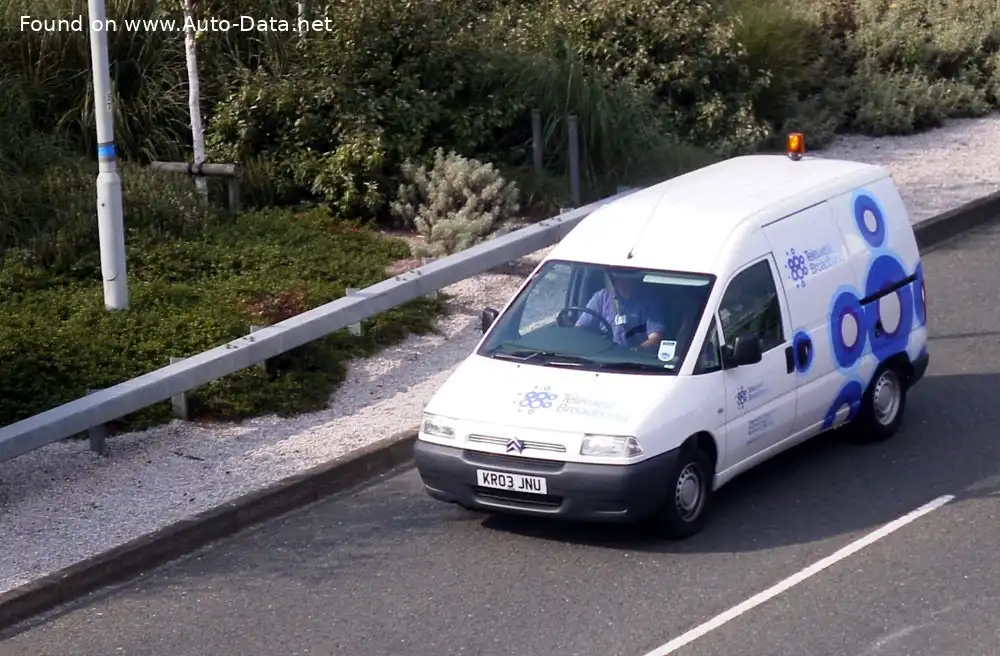
The Citroen Jumpy I 1.9D, producing 70 horsepower, was a mainstay of the first-generation Jumpy (also known as the Fiat Scudo and Peugeot Expert) range, manufactured between 2000 and 2003. Positioned as the entry-level engine option, it catered to buyers prioritizing practicality and low running costs over outright performance. This variant played a significant role in establishing the Jumpy as a popular choice in the European light commercial vehicle (LCV) market, particularly among small businesses and tradespeople needing a versatile and affordable van. The Jumpy I series, built on the shared PSA/Fiat platform, aimed to provide a modern alternative to older, more basic van designs.
Technical Specifications
| Brand | Citroen |
| Model | Jumpy |
| Generation | Jumpy I |
| Type (Engine) | 1.9D (70 Hp) |
| Start of production | 2000 year |
| End of production | 2003 year |
| Powertrain Architecture | Internal Combustion engine |
| Body type | Minivan |
| Seats | 2 |
| Doors | 4 |
| Fuel consumption (economy) – urban | 10.1 l/100 km (23.3 US mpg, 28 UK mpg, 9.9 km/l) |
| Fuel consumption (economy) – extra urban | 6.6 l/100 km (35.6 US mpg, 42.8 UK mpg, 15.2 km/l) |
| Fuel consumption (economy) – combined | 7.9 l/100 km (29.8 US mpg, 35.8 UK mpg, 12.7 km/l) |
| Fuel Type | Diesel |
| Acceleration 0 – 100 km/h | 22.3 sec |
| Acceleration 0 – 62 mph | 22.3 sec |
| Acceleration 0 – 60 mph | 21.2 sec |
| Maximum speed | 138 km/h (85.75 mph) |
| Emission standard | Euro 2 |
| Weight-to-power ratio | 19.7 kg/Hp, 50.7 Hp/tonne |
| Weight-to-torque ratio | 11 kg/Nm, 90.6 Nm/tonne |
| Power | 70 Hp @ 4600 rpm |
| Power per litre | 37.5 Hp/l |
| Torque | 125 Nm @ 2500 rpm (92.2 lb.-ft. @ 2500 rpm) |
| Engine layout | Front, Transverse |
| Engine Model/Code | WJZ DW8 |
| Engine displacement | 1868 cm3 (113.99 cu. in.) |
| Number of cylinders | 4 |
| Engine configuration | Inline |
| Cylinder Bore | 82.2 mm (3.24 in.) |
| Piston Stroke | 88 mm (3.46 in.) |
| Number of valves per cylinder | 2 |
| Fuel injection system | Precombustion chamber injection |
| Engine aspiration | Naturally aspirated engine |
| Valvetrain | SOHC |
| Engine oil capacity | 4.2 l (4.44 US qt | 3.7 UK qt) |
| Coolant | 9 l (9.51 US qt | 7.92 UK qt) |
| Kerb Weight | 1380 kg (3042.38 lbs.) |
| Max. weight | 2190 kg (4828.12 lbs.) |
| Max load | 810 kg (1785.74 lbs.) |
| Trunk (boot) space – maximum | 4000 l (141.26 cu. ft.) |
| Fuel tank capacity | 80 l (21.13 US gal | 17.6 UK gal) |
| Max. roof load | 100 kg (220.46 lbs.) |
| Permitted trailer load with brakes (8%) | 1600 kg (3527.4 lbs.) |
| Permitted trailer load with brakes (12%) | 1100 kg (2425.08 lbs.) |
| Permitted trailer load without brakes | 690 kg (1521.19 lbs.) |
| Permitted towbar download | 60 kg (132.28 lbs.) |
| Length | 4440 mm (174.8 in.) |
| Width | 1810 mm (71.26 in.) |
| Width including mirrors | 2134 mm (84.02 in.) |
| Height | 1927 mm (75.87 in.) |
| Wheelbase | 2824 mm (111.18 in.) |
| Front track | 1540 mm (60.63 in.) |
| Rear (Back) track | 1540 mm (60.63 in.) |
| Front overhang | 846 mm (33.31 in.) |
| Rear overhang | 770 mm (30.31 in.) |
| Minimum turning circle | 12.35 m (40.52 ft.) |
| Drivetrain Architecture | The Internal combustion engine (ICE) drives the front wheels of the vehicle. |
| Drive wheel | Front wheel drive |
| Number of gears and type of gearbox | 5 gears, manual transmission |
| Front suspension | Independent, type McPherson with coil spring and anti-roll bar |
| Rear suspension | Semi-dependent beam with stabilizer lateral stability |
| Front brakes | Ventilated discs |
| Rear brakes | Drum |
| Assisting systems | ABS (Anti-lock braking system) |
| Steering type | Steering rack and pinion |
| Power steering | Hydraulic Steering |
| Tires size | 195/70 R14 |
Powertrain & Engine Architecture
The Citroen Jumpy I 1.9D was powered by the WJZ DW8 engine, a 1.9-liter inline-four diesel engine. This engine, a product of PSA Peugeot Citroën, utilized a precombustion chamber injection system. This system, common in diesel engines of the era, involved injecting fuel into a precombustion chamber connected to the main cylinder, promoting more complete combustion. The engine featured a single overhead camshaft (SOHC) valvetrain operating two valves per cylinder. The DW8 engine was known for its robustness and relatively simple design, contributing to its longevity. The 70 horsepower output was achieved at 4600 rpm, with a torque figure of 125 Nm (92.2 lb.-ft.) available at 2500 rpm. The engine was transversely mounted in the front of the vehicle, driving the front wheels. The standard transmission was a five-speed manual gearbox, optimized for fuel efficiency rather than rapid acceleration.
Driving Characteristics
The 1.9D engine, paired with the five-speed manual transmission, delivered modest performance. Acceleration was slow, with a 0-100 km/h (0-62 mph) time of around 22.3 seconds. The focus was clearly on fuel economy and load-carrying capacity rather than spirited driving. The gear ratios were relatively long, prioritizing efficiency at cruising speeds. Compared to higher-output versions of the Jumpy, such as those equipped with the 2.0HDi engine, the 1.9D felt significantly underpowered, especially when fully loaded. However, the engine proved to be reliable and provided adequate power for typical urban and highway driving, provided expectations were realistic. The manual transmission offered a degree of control not found in later automatic options.
Equipment & Trim Levels
The 1.9D variant of the Jumpy I was typically offered in basic trim levels, reflecting its position as the entry point to the range. Standard equipment generally included power steering, a driver’s airbag, and basic instrumentation. Interior upholstery was typically hard-wearing cloth. Options included air conditioning, upgraded audio systems, and electric windows. The Jumpy I was primarily designed as a workhorse, so luxury features were limited, even as optional extras. The emphasis was on providing a functional and durable vehicle for commercial use.
Chassis & Braking
The Jumpy I featured an independent McPherson strut front suspension with a coil spring and anti-roll bar, providing a reasonable level of ride comfort and handling. The rear suspension utilized a semi-dependent beam with a stabilizer, a cost-effective solution for load-carrying applications. The braking system consisted of ventilated discs on the front wheels and drum brakes on the rear. Anti-lock Braking System (ABS) was standard, enhancing safety during emergency braking. The steering was a rack and pinion system with hydraulic power assistance, providing relatively light and precise steering feel.
Market Reception & Comparison
The Citroen Jumpy I 1.9D was well-received in the European LCV market as a practical and affordable van. Critics praised its fuel efficiency and reliability, but noted its lack of outright performance. Compared to the more powerful 2.0HDi variants, the 1.9D offered lower running costs but compromised on acceleration and towing capacity. The 1.9D was often favored by businesses and individuals who primarily used the van for local deliveries or light-duty trades, where outright speed was less critical. Its simplicity also meant lower maintenance costs compared to the more complex, higher-output engines.
Legacy
The DW8 engine, found in the Jumpy I 1.9D, gained a reputation for its durability and longevity. Many examples remain on the road today, testament to its robust construction. While not known for its refinement or performance, the 1.9D powertrain proved to be a reliable workhorse. In the used car market, these vans are often sought after by those looking for an affordable and dependable vehicle for basic commercial tasks. However, potential buyers should be aware of the age-related issues common to older diesel engines, such as injector wear and potential turbocharger problems (though the 1.9D is naturally aspirated). Overall, the Citroen Jumpy I 1.9D represents a solid and practical choice for those seeking a no-frills, dependable van.