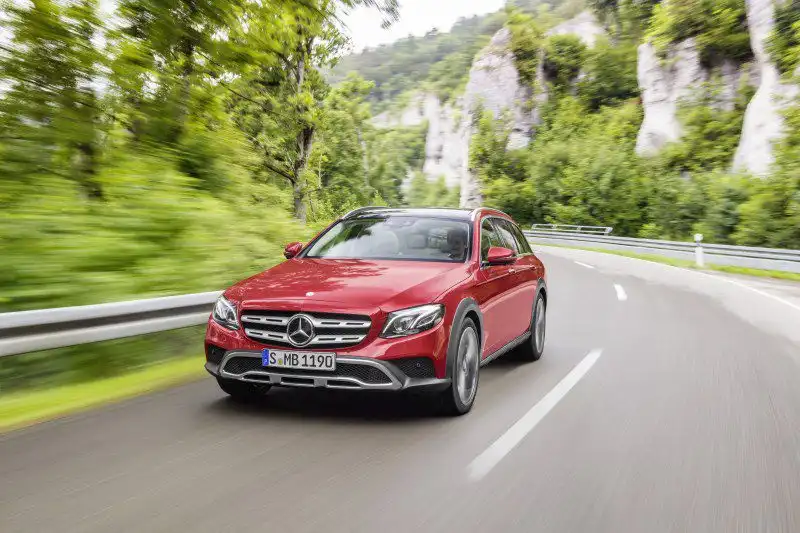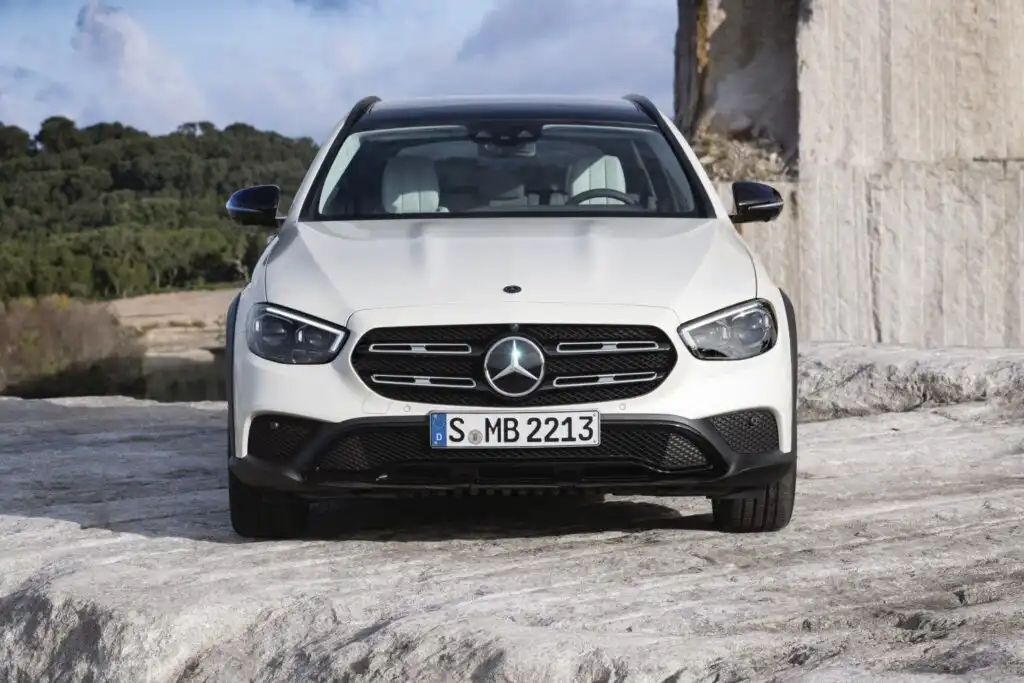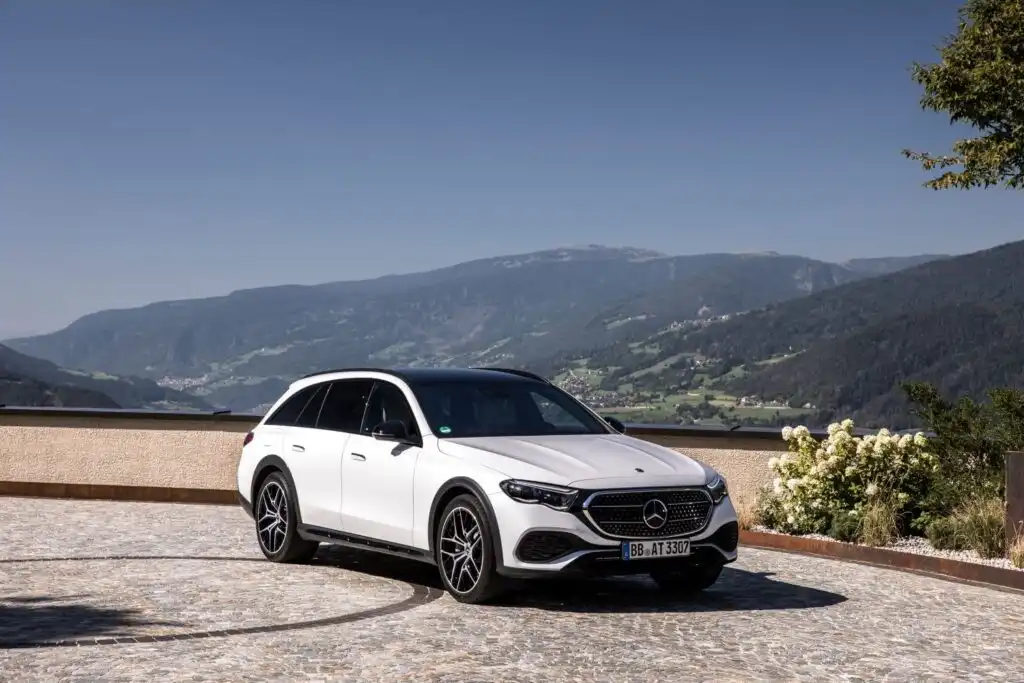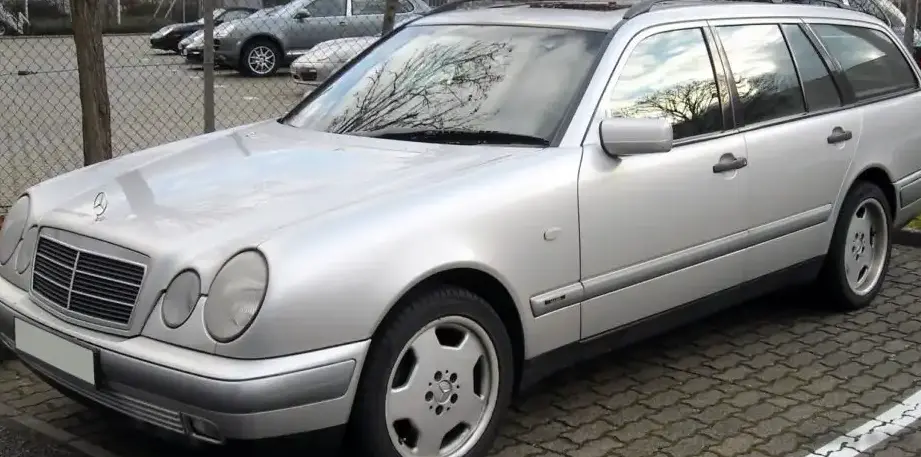
The Mercedes-Benz E 240 T-modell (S210), produced from October 1996 to July 1999, was a key variant within the W210 E-Class estate range. Representing a blend of practicality and luxury, the E 240 offered a compelling alternative to the more powerful E 320 and the diesel-powered E 300 Turbodiesel. Positioned as a mid-range offering, it aimed to provide a comfortable and refined driving experience for families and those requiring substantial cargo space without the higher price tag of the flagship models. The S210 chassis, introduced in 1996, brought a modern estate car design to the E-Class lineup, replacing the previous W124 generation.
Technical Specifications
| Brand | Mercedes-Benz |
| Model | E-class |
| Generation | E-class T-modell (S210) |
| Type (Engine) | E 240 (170 Hp) |
| Start of production | October, 1996 |
| End of production | July, 1999 |
| Powertrain Architecture | Internal Combustion engine |
| Body type | Station wagon (estate) |
| Seats | 5 |
| Doors | 5 |
| Fuel consumption (urban) | 15.2 l/100 km (15.5 US mpg, 18.6 UK mpg, 6.6 km/l) |
| Fuel consumption (extra urban) | 8.7 l/100 km (27 US mpg, 32.5 UK mpg, 11.5 km/l) |
| Fuel consumption (combined) | 10.1 l/100 km (23.3 US mpg, 28 UK mpg, 9.9 km/l) |
| Fuel Type | Petrol (Gasoline) |
| Acceleration 0 – 100 km/h | 10.5 sec |
| Acceleration 0 – 62 mph | 10.5 sec |
| Acceleration 0 – 60 mph | 10 sec |
| Maximum speed | 216 km/h (134.22 mph) |
| Weight-to-power ratio | 9.4 kg/Hp, 106.9 Hp/tonne |
| Weight-to-torque ratio | 7.1 kg/Nm, 141.5 Nm/tonne |
| Power | 170 Hp @ 5900 rpm |
| Power per litre | 70.9 Hp/l |
| Torque | 225 Nm @ 3000 rpm (165.95 lb.-ft. @ 3000 rpm) |
| Engine layout | Front, Longitudinal |
| Engine Model/Code | M 112 E 24 / 112.911 |
| Engine displacement | 2397 cm3 (146.27 cu. in.) |
| Number of cylinders | 6 |
| Engine configuration | V-engine |
| Cylinder Bore | 83.2 mm (3.28 in.) |
| Piston Stroke | 73.5 mm (2.89 in.) |
| Compression ratio | 10:1 |
| Number of valves per cylinder | 3 |
| Fuel injection system | Multi-port manifold injection |
| Engine aspiration | Naturally aspirated engine |
| Valvetrain | SOHC |
| Engine oil capacity | 8 l (8.45 US qt | 7.04 UK qt) |
| Coolant | 10 l (10.57 US qt | 8.8 UK qt) |
| Kerb Weight | 1590 kg (3505.35 lbs.) |
| Max. weight | 2170 kg (4784.03 lbs.) |
| Max load | 580 kg (1278.68 lbs.) |
| Trunk (boot) space – minimum | 600 l (21.19 cu. ft.) |
| Trunk (boot) space – maximum | 1975 l (69.75 cu. ft.) |
| Fuel tank capacity | 70 l (18.49 US gal | 15.4 UK gal) |
| Length | 4816 mm (189.61 in.) |
| Width | 1799 mm (70.83 in.) |
| Height | 1505 mm (59.25 in.) |
| Wheelbase | 2833 mm (111.54 in.) |
| Front track | 1542 mm (60.71 in.) |
| Rear (Back) track | 1546 mm (60.87 in.) |
| Drivetrain Architecture | The Internal combustion engine (ICE) drives the rear wheels of the vehicle. |
| Drive wheel | Rear wheel drive |
| Number of gears and type of gearbox | 5 gears, manual transmission |
| Front suspension | Double wishbone |
| Rear suspension | Hydro-pneumatic element, Independent multi-link suspension |
| Front brakes | Ventilated discs |
| Rear brakes | Disc |
| Assisting systems | ABS (Anti-lock braking system) |
| Steering type | Steering rack and pinion |
| Power steering | Hydraulic Steering |
| Tires size | 205/65 R15 |
| Wheel rims size | 7J x 15 |
Powertrain & Engine Architecture
The E 240 T-modell was powered by the M112 E 24 engine, a 2.4-liter naturally aspirated V6. This engine, part of Mercedes-Benz’s new generation of V6 powerplants, featured all-aluminum construction, a significant departure from the cast-iron blocks of previous generations. The M112 utilized a SOHC valvetrain with three valves per cylinder (two intake, one exhaust) and a multi-port fuel injection system. This configuration contributed to a relatively smooth and refined power delivery. The engine produced 170 horsepower at 5900 rpm and 225 Nm (165.95 lb-ft) of torque at 3000 rpm. The five-speed manual transmission was standard, providing a direct connection to the rear wheels. While an automatic transmission was available, the manual offered a more engaging driving experience and slightly improved fuel economy.
Driving Characteristics
The E 240 T-modell, with its 170 hp and manual transmission, offered a balanced driving experience. Acceleration from 0 to 60 mph took around 10 seconds, which was respectable for the era, but noticeably slower than the E 320. The engine provided adequate power for everyday driving and highway cruising, but lacked the outright punch of its larger displacement sibling. The manual gearbox was well-matched to the engine’s characteristics, offering precise shifts and a reasonable spread of ratios. Compared to the automatic version, the manual E 240 felt more responsive and engaging. The suspension, a combination of double wishbones at the front and a multi-link setup at the rear, provided a comfortable ride while maintaining good handling characteristics.
Equipment & Trim Levels
The E 240 T-modell came standard with a respectable level of equipment, including power windows, power locks, and air conditioning. Interior upholstery was typically cloth, although leather was available as an option. Standard features also included an AM/FM radio with cassette player, and a trip computer. Optional extras included a sunroof, upgraded audio system, automatic climate control, and heated seats. The dashboard layout was typical of the W210 E-Class, featuring a clean and functional design with easy-to-read gauges. The wood trim added a touch of luxury to the interior.
Chassis & Braking
The S210 chassis provided a solid foundation for the E 240 T-modell. The front suspension utilized double wishbones, while the rear featured an independent multi-link setup. This configuration offered a good balance of ride comfort and handling precision. The braking system consisted of ventilated discs at the front and solid discs at the rear, with ABS (Anti-lock Braking System) as standard. The steering was rack and pinion with hydraulic power assistance, providing a responsive and precise feel. The E 240 T-modell rode on 205/65 R15 tires mounted on 7J x 15 inch wheels.
Market Reception & Comparison
The E 240 T-modell was generally well-received by critics, who praised its practicality, comfort, and refined driving experience. However, some reviewers noted that the engine lacked the power of the E 320. Fuel economy was considered reasonable for a vehicle of its size and class, averaging around 23.3 US mpg in combined driving. Compared to the E 300 Turbodiesel, the E 240 offered a smoother and quieter driving experience, but with lower fuel economy. The E 240 positioned itself as a sensible choice for buyers who prioritized comfort and practicality over outright performance.
Legacy
The M112 engine family, including the 2.4-liter variant found in the E 240, proved to be relatively reliable. While not immune to age-related issues, these engines are generally known for their durability and longevity. Today, the E 240 T-modell is a sought-after classic among Mercedes-Benz enthusiasts. Well-maintained examples are becoming increasingly rare and can command a premium price. The combination of practicality, comfort, and classic Mercedes-Benz styling makes it a desirable vehicle for collectors and everyday drivers alike. The S210 estate body style remains a popular choice for those seeking a spacious and versatile vehicle with a touch of elegance.