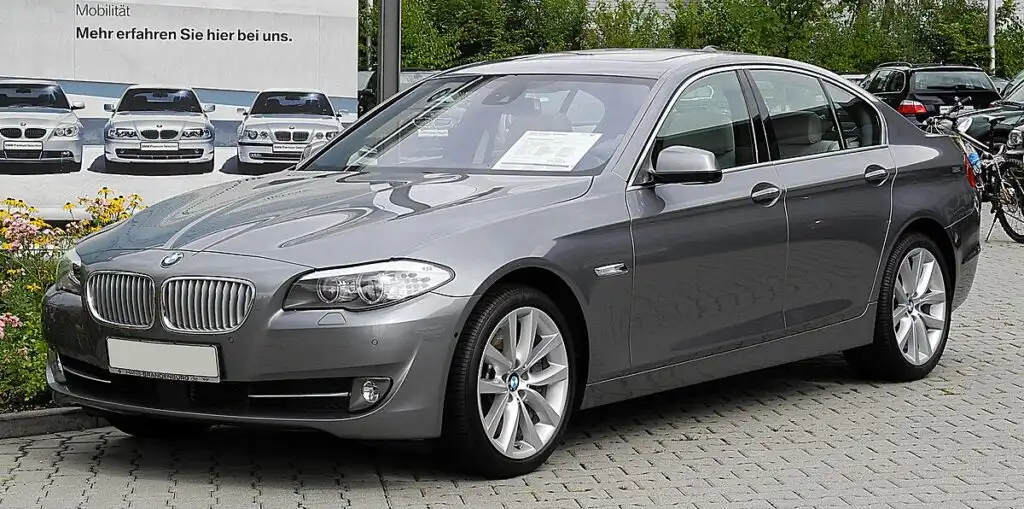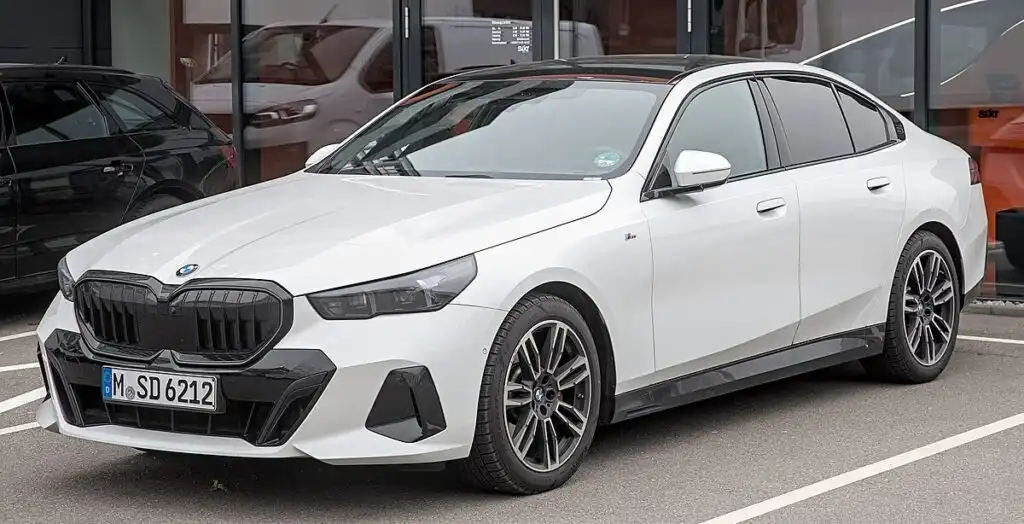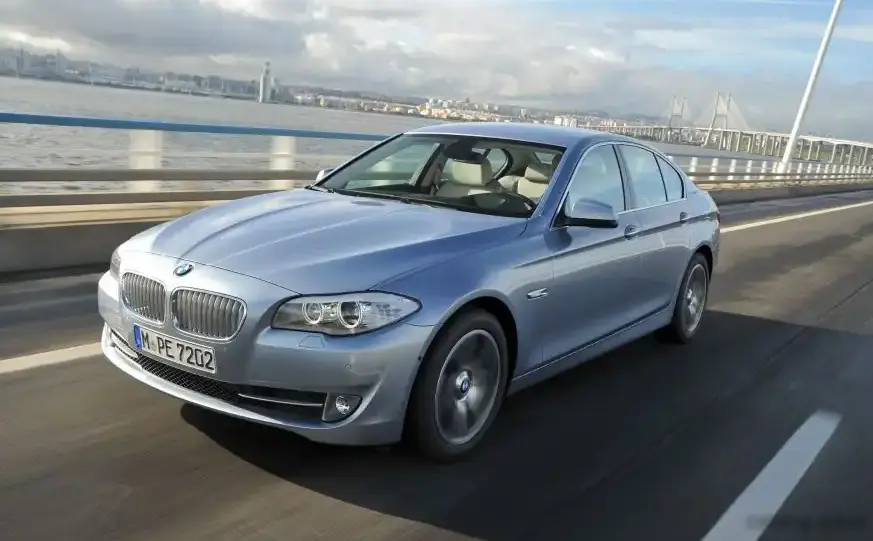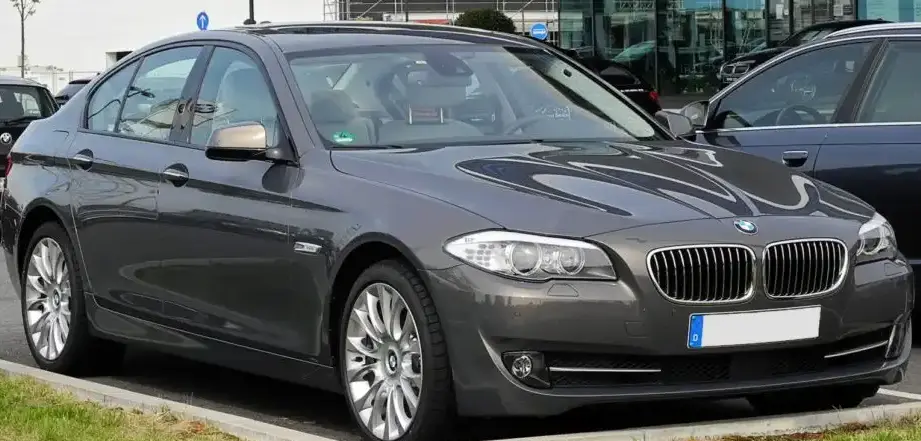
The BMW 5 Series Sedan (F10) 530d, producing 245 horsepower, was a key variant within the sixth generation of BMW’s flagship executive car, produced from 2010 to 2011. Positioned as a mid-range offering in the 5 Series lineup, it bridged the gap between the more economical 520d models and the higher-performance 535i and 550i. The F10 generation, launched in 2010, represented a significant departure from its predecessor (E60), incorporating advancements in technology, chassis design, and engine efficiency. The 530d specifically targeted buyers seeking a blend of performance, refinement, and fuel economy, appealing to both corporate drivers and private owners.
Technical Specifications
| Brand | BMW |
| Model | 5 Series |
| Generation | 5 Series Sedan (F10) |
| Type (Engine) | 530d (245 Hp) |
| Start of production | 2010 |
| End of production | 2011 |
| Powertrain Architecture | Internal Combustion engine |
| Body type | Sedan |
| Seats | 5 |
| Doors | 4 |
| Fuel consumption (economy) – urban | 8 l/100 km (29.4 US mpg, 35.3 UK mpg, 12.5 km/l) |
| Fuel consumption (economy) – extra urban | 5.3 l/100 km (44.4 US mpg, 53.3 UK mpg, 18.9 km/l) |
| Fuel consumption (economy) – combined | 6.3 l/100 km (37.3 US mpg, 44.8 UK mpg, 15.9 km/l) |
| CO2 emissions | 166 g/km |
| Fuel Type | Diesel |
| Acceleration 0 – 100 km/h | 6.3 sec |
| Acceleration 0 – 62 mph | 6.3 sec |
| Acceleration 0 – 60 mph | 6 sec |
| Maximum speed | 250 km/h (155.34 mph) |
| Emission standard | Euro 5 |
| Weight-to-power ratio | 7 kg/Hp, 142.9 Hp/tonne |
| Weight-to-torque ratio | 3.2 kg/Nm, 314.9 Nm/tonne |
| Power | 245 Hp @ 4000 rpm |
| Power per litre | 81.9 Hp/l |
| Torque | 540 Nm @ 1750-3000 rpm (398.28 lb.-ft. @ 1750-3000 rpm) |
| Engine layout | Front, Longitudinal |
| Engine Model/Code | N57D30A |
| Engine displacement | 2993 cm3 (182.64 cu. in.) |
| Number of cylinders | 6 |
| Engine configuration | Inline |
| Cylinder Bore | 84 mm (3.31 in.) |
| Piston Stroke | 90 mm (3.54 in.) |
| Compression ratio | 16.5:1 |
| Number of valves per cylinder | 4 |
| Fuel injection system | Diesel Commonrail |
| Engine aspiration | Turbocharger, Intercooler |
| Engine oil capacity | 6.5 l (6.87 US qt | 5.72 UK qt) |
| Coolant | 10 l (10.57 US qt | 8.8 UK qt) |
| Kerb Weight | 1715 kg (3780.93 lbs.) |
| Max. weight | 2325 kg (5125.75 lbs.) |
| Max load | 610 kg (1344.82 lbs.) |
| Trunk (boot) space – minimum | 520 l (18.36 cu. ft.) |
| Fuel tank capacity | 70 l (18.49 US gal | 15.4 UK gal) |
| Max. roof load | 100 kg (220.46 lbs.) |
| Permitted trailer load with brakes (12%) | 2000 kg (4409.25 lbs.) |
| Permitted trailer load without brakes | 750 kg (1653.47 lbs.) |
| Permitted towbar download | 90 kg (198.42 lbs.) |
| Length | 4899 mm (192.87 in.) |
| Width | 1860 mm (73.23 in.) |
| Height | 1464 mm (57.64 in.) |
| Wheelbase | 2968 mm (116.85 in.) |
| Front track | 1600 mm (62.99 in.) |
| Rear (Back) track | 1627 mm (64.06 in.) |
| Ride height (ground clearance) | 141 mm (5.55 in.) |
| Drag coefficient (Cd) | 0.28 |
| Minimum turning circle (turning diameter) | 11.95 m (39.21 ft.) |
| Drivetrain Architecture | The Internal combustion engine (ICE) drives the rear wheels of the vehicle. |
| Drive wheel | Rear wheel drive |
| Number of gears and type of gearbox | 6 gears, manual transmission |
| Front suspension | Double wishbone |
| Rear suspension | Independent multi-link suspension |
| Front brakes | Ventilated discs |
| Rear brakes | Disc |
| Assisting systems | ABS (Anti-lock braking system) |
| Steering type | Steering rack and pinion |
| Power steering | Electric Steering |
| Tires size | 225/55 R17 97W |
| Wheel rims size | 8J x 17 |
INTRODUCTION
The BMW 530d (F10) represented a significant step forward in diesel technology for the 5 Series. Introduced as part of the F10 generation, which ran from 2010 to 2017, the 530d aimed to deliver a compelling combination of performance and efficiency. It utilized BMW’s then-new N57D30A engine, a 3.0-liter inline-six diesel, and was available with both six-speed manual and eight-speed automatic transmissions. The 530d was positioned as a popular choice for drivers covering high mileage, offering a refined driving experience and lower running costs compared to its petrol-powered siblings. In the US market, the 5 Series traditionally favored gasoline engines, but the 530d found a niche among those prioritizing fuel economy and torque.
Powertrain & Engine Architecture
At the heart of the 530d lies the N57D30A engine, a 2,993 cc inline-six diesel. This engine featured a common-rail direct injection system operating at a maximum pressure of 1,800 bar, ensuring precise fuel delivery and efficient combustion. The N57 engine family was known for its robust construction and advanced technologies, including a variable geometry turbocharger (VGT) and an intercooler to enhance power and torque. The engine also incorporated a diesel particulate filter (DPF) to meet stringent Euro 5 emission standards. The 530d’s 245 horsepower and 540 Nm (398 lb-ft) of torque were readily available across a broad rev range, providing strong acceleration and effortless cruising. The six-speed manual transmission offered a more engaging driving experience, while the optional eight-speed automatic provided smoother shifts and improved fuel efficiency. The automatic transmission featured steering wheel-mounted paddle shifters for manual control.
Driving Characteristics
The 530d offered a distinctly different driving experience compared to the higher-output 535i or 550i models. While lacking the outright acceleration of its petrol counterparts, the 530d excelled in providing strong, usable torque from low engine speeds. This made it particularly well-suited for overtaking maneuvers and navigating challenging road conditions. The six-speed manual transmission, while offering a more connected feel, had slightly taller gear ratios compared to the eight-speed automatic, resulting in a marginally lower fuel economy. The automatic transmission, with its wider gear spread, allowed the engine to operate more efficiently at highway speeds. The 530d’s rear-wheel-drive configuration provided a balanced chassis and predictable handling, while the optional Dynamic Driving Control system allowed drivers to adjust the suspension and steering characteristics to suit their preferences.
Equipment & Trim Levels
The 530d typically came well-equipped, even in base trim. Standard features included leather upholstery, automatic climate control, a multi-function steering wheel, and a BMW Professional radio system. Optional extras included the BMW Navigation System Professional, a head-up display, adaptive cruise control, and a premium sound system. Interior trim options ranged from wood veneers to aluminum accents, allowing buyers to personalize the cabin to their taste. The 530d could also be specified with the M Sport package, which added a more aggressive exterior styling, sport seats, and a sport-tuned suspension. The standard seats offered excellent support and comfort, making the 530d a comfortable long-distance cruiser.
Chassis & Braking
The F10 5 Series featured a sophisticated chassis design, utilizing a double-wishbone front suspension and an independent multi-link rear suspension. This configuration provided a comfortable ride and precise handling. The 530d’s suspension was tuned to balance comfort and control, offering a compliant ride over uneven surfaces while maintaining stability during cornering. Braking duties were handled by ventilated disc brakes at all four corners, providing ample stopping power. The 530d was equipped with ABS (Anti-lock Braking System), Dynamic Stability Control (DSC), and Brake Assist, enhancing safety and driver confidence. The standard tire size was 225/55 R17, providing a good balance of grip and ride comfort.
Market Reception & Comparison
The 530d was generally well-received by automotive critics, who praised its fuel efficiency, strong torque, and refined driving experience. Compared to the 520d, the 530d offered a noticeable performance upgrade, while remaining more economical than the 535i and 550i. The 530d’s fuel economy was a key selling point, particularly in Europe, where diesel fuel was often cheaper than gasoline. However, some critics noted that the 530d lacked the sporty character of its petrol-powered siblings. In terms of reliability, the N57 engine proved to be generally robust, although some owners reported issues with the DPF and turbocharger over the long term.
Legacy
The BMW 530d (F10) remains a popular choice in the used car market today, offering a compelling combination of luxury, performance, and efficiency. The N57 engine is known for its durability and relatively low maintenance costs, making it a reliable option for buyers seeking a well-rounded executive car. However, potential buyers should be aware of the potential for DPF issues and ensure that the vehicle has been properly maintained. The F10 5 Series, including the 530d, has established itself as a benchmark in the executive car segment, offering a refined driving experience and a high level of build quality.