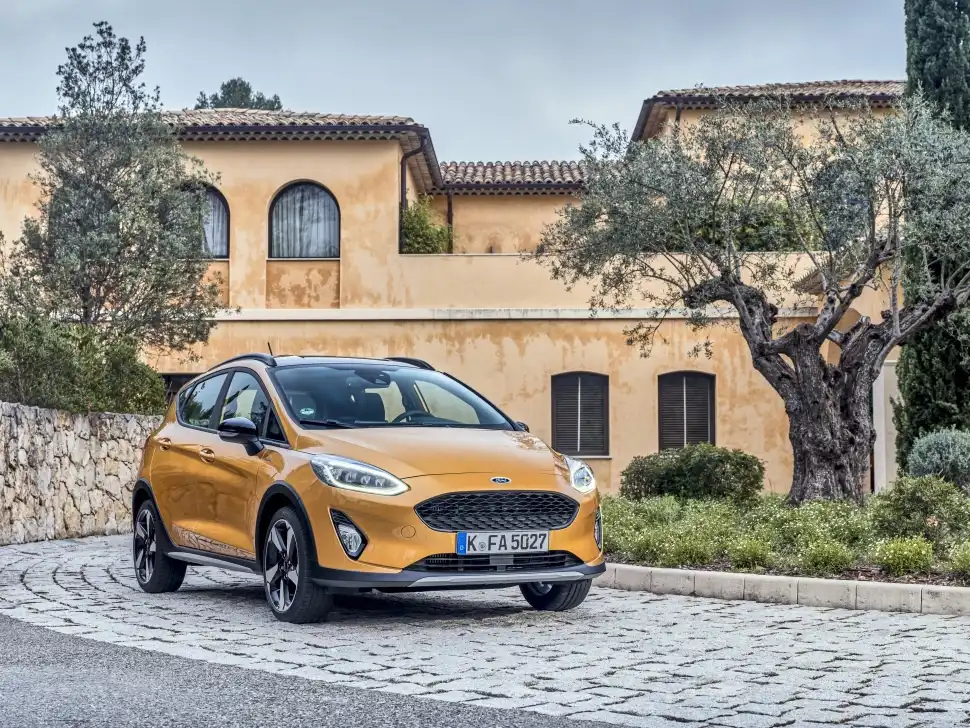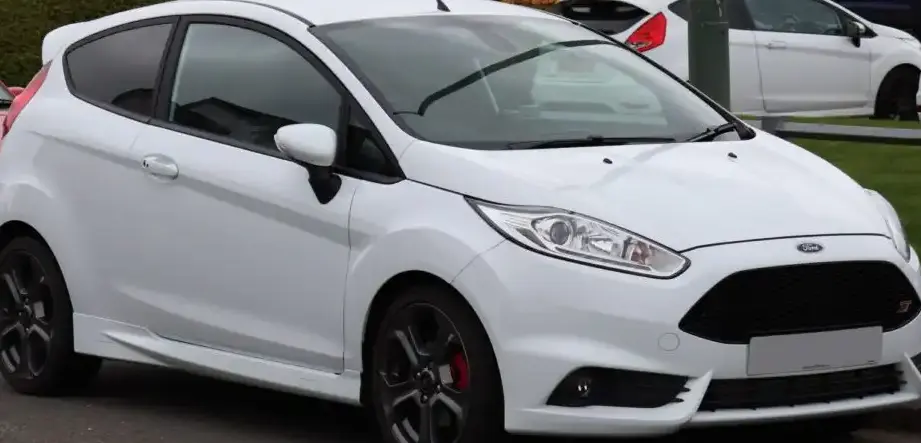
The Ford Fiesta VII, specifically the facelifted model produced from 2013 to 2017, represented a significant evolution of Ford’s popular subcompact hatchback. Among the various engine and transmission combinations offered, the 3-door version equipped with the 1.0 EcoBoost 100 horsepower engine and PowerShift dual-clutch automatic transmission occupied a key position in the lineup. This variant aimed to provide a balance between fuel efficiency, affordability, and modern convenience, appealing to buyers seeking a practical and economical city car. It was built on the global B-platform, also known as the 1HX0/A3 platform, shared with other Ford and partner vehicles.
Technical Specifications
| Brand | Ford |
| Model | Fiesta |
| Generation | Fiesta VII (Mk7, facelift 2013) |
| Type (Engine) | 1.0 EcoBoost (100 Hp) PowerShift |
| Start of production | 2013 |
| End of production | 2017 |
| Powertrain Architecture | Internal Combustion engine |
| Body type | Hatchback |
| Seats | 5 |
| Doors | 3 |
| Fuel consumption (urban) | 6.6 l/100 km (35.6 US mpg, 42.8 UK mpg, 15.2 km/l) |
| Fuel consumption (extra urban) | 3.9 l/100 km (60.3 US mpg, 72.4 UK mpg, 25.6 km/l) |
| Fuel consumption (combined) | 4.9 l/100 km (48 US mpg, 57.6 UK mpg, 20.4 km/l) |
| CO2 emissions | 114 g/km |
| Fuel Type | Petrol (Gasoline) |
| Acceleration 0 – 100 km/h | 10.8 sec |
| Acceleration 0 – 62 mph | 10.8 sec |
| Acceleration 0 – 60 mph | 10.3 sec |
| Maximum speed | 180 km/h (111.85 mph) |
| Emission standard | Euro 5 |
| Weight-to-power ratio | 10.4 kg/Hp, 96.4 Hp/tonne |
| Weight-to-torque ratio | 6.1 kg/Nm, 163.9 Nm/tonne |
| Power | 100 Hp @ 6000 rpm |
| Power per litre | 100.2 Hp/l |
| Torque | 170 Nm @ 1400-4000 rpm (125.39 lb.-ft. @ 1400-4000 rpm) |
| Engine layout | Front, Transverse |
| Engine Model/Code | SFJA, SFJB, SFJC, SFJD |
| Engine displacement | 998 cm3 (60.9 cu. in.) |
| Number of cylinders | 3 |
| Engine configuration | Inline |
| Number of valves per cylinder | 4 |
| Fuel injection system | Direct injection |
| Engine aspiration | Turbocharger, Intercooler |
| Engine oil capacity | 4.1 l (4.33 US qt | 3.61 UK qt) |
| Coolant capacity | 5.8 l (6.13 US qt | 5.1 UK qt) |
| Kerb Weight | 1037 kg (2286.19 lbs.) |
| Max. weight | 1570 kg (3461.26 lbs.) |
| Max load | 533 kg (1175.06 lbs.) |
| Trunk (boot) space – minimum | 281 l (9.92 cu. ft.) |
| Trunk (boot) space – maximum | 965 l (34.08 cu. ft.) |
| Fuel tank capacity | 42 l (11.1 US gal | 9.24 UK gal) |
| Permitted trailer load with brakes (12%) | 900 kg (1984.16 lbs.) |
| Permitted trailer load without brakes | 545 kg (1201.52 lbs.) |
| Length | 3969 mm (156.26 in.) |
| Width | 1722 mm (67.8 in.) |
| Width with mirrors folded | 1787 mm (70.35 in.) |
| Width including mirrors | 1973 mm (77.68 in.) |
| Height | 1495 mm (58.86 in.) |
| Wheelbase | 2489 mm (97.99 in.) |
| Minimum turning circle | 10.2 m (33.46 ft.) |
| Drivetrain Architecture | Front wheel drive |
| Number of gears and type of gearbox | 6 gears, automatic transmission PowerShift |
| Front suspension | Independent, type McPherson with coil spring and anti-roll bar |
| Rear suspension | Coil spring, Torsion |
| Front brakes | Ventilated discs |
| Rear brakes | Drum |
| Assisting systems | ABS (Anti-lock braking system) |
| Steering type | Steering rack and pinion |
| Power steering | Electric Steering |
| Tires size | 175/65 R14; 195/55 R15 |
| Wheel rims size | 5.5J x 14; 6J x 15 |
INTRODUCTION
The 2013-2017 Ford Fiesta VII facelift, particularly the 3-door 1.0 EcoBoost 100 hp PowerShift model, was a key offering in Ford’s European and increasingly, North American, small car lineup. This iteration of the Fiesta aimed to deliver a compelling package of fuel efficiency, affordability, and practicality. The 1.0 EcoBoost engine, a three-cylinder turbocharged unit, was a cornerstone of Ford’s powertrain strategy, offering impressive fuel economy without sacrificing all driving enjoyment. The PowerShift dual-clutch transmission (DCT) provided automated gear changes, appealing to drivers seeking the convenience of an automatic without the traditional fuel economy penalty. This specific trim level generally sat in the mid-range of the Fiesta lineup, offering more features than the base models but remaining more accessible than the higher-specification versions.
Powertrain & Engine Architecture
The heart of this Fiesta variant is the 1.0-liter EcoBoost engine, specifically the SFJA, SFJB, SFJC, or SFJD engine code depending on the specific market and year. This engine is a marvel of downsizing and turbocharging technology. It features direct fuel injection, a single scroll turbocharger, and variable valve timing. The direct injection system allows for precise fuel delivery, optimizing combustion efficiency and reducing emissions. The turbocharger provides a significant boost in power despite the small displacement. The engine’s aluminum block contributes to weight savings. The PowerShift 6-speed dual-clutch transmission (DCT) is a key component of this variant. Unlike a traditional automatic transmission with a torque converter, the PowerShift uses two separate clutches for odd and even gears, allowing for quicker and smoother gear changes. This transmission is electronically controlled and offers a manual shift mode for drivers who prefer more control.
Driving Characteristics
The 1.0 EcoBoost 100 hp PowerShift Fiesta delivers a surprisingly capable driving experience. While not a performance-oriented model, the turbocharger provides a noticeable boost in power, making it feel more responsive than its displacement might suggest. Acceleration from 0-60 mph takes around 10.3 seconds, which is adequate for everyday driving. The PowerShift transmission generally provides smooth and quick gear changes, although some early versions of the PowerShift experienced reliability issues. The gear ratios are tuned for fuel efficiency, with taller gearing in higher gears. Compared to the 1.6-liter naturally aspirated engine offered in some Fiesta models, the 1.0 EcoBoost provides more torque at lower RPMs, making it feel more flexible in city driving. However, it lacks the overall power of the higher-output 1.0 EcoBoost variants (125 hp) or the larger engines like the 1.6 Ti-VCT.
Equipment & Trim Levels
The 1.0 EcoBoost 100 hp PowerShift Fiesta typically came equipped with a reasonable level of standard features. These often included air conditioning, power windows, power door locks, a basic audio system with USB connectivity, and alloy wheels. Higher trim levels, such as Zetec or Titanium, added features like a more advanced infotainment system with touchscreen display, Bluetooth connectivity, cruise control, and automatic headlights. Interior upholstery was typically cloth, with options for upgraded materials on higher trims. Optional extras included a panoramic sunroof, parking sensors, and a premium sound system.
Chassis & Braking
The Fiesta VII utilized a McPherson strut front suspension and a torsion beam rear suspension. This setup provided a good balance between ride comfort and handling. The front suspension featured a coil spring and anti-roll bar to reduce body roll. The rear torsion beam suspension is a cost-effective and space-efficient solution. Braking on this variant typically consisted of ventilated discs on the front wheels and drum brakes on the rear. ABS (Anti-lock Braking System) was standard. The relatively light weight of the 1.0 EcoBoost engine helped to contribute to balanced handling.
Market Reception & Comparison
The 1.0 EcoBoost 100 hp PowerShift Fiesta was generally well-received by automotive critics. It was praised for its fuel efficiency, surprisingly peppy engine, and comfortable ride. However, the PowerShift transmission received some criticism due to reports of reliability issues, particularly in early production models. Compared to the 1.6-liter Fiesta, the 1.0 EcoBoost offered better fuel economy and comparable performance in everyday driving. The 1.0 EcoBoost 125 hp version provided more power but at a slightly higher price point. The diesel-powered Fiesta models (e.g., 1.6 TDCi) offered even better fuel economy but were generally more expensive to purchase and maintain.
Legacy
The 1.0 EcoBoost engine has proven to be a remarkably durable and efficient powertrain. While the PowerShift transmission had some early reliability concerns, many units have proven reliable with proper maintenance. Today, the 2013-2017 Fiesta 1.0 EcoBoost PowerShift remains a popular choice in the used car market, particularly for buyers seeking an economical and practical city car. Its combination of fuel efficiency, affordability, and relatively modern features makes it a compelling option. However, potential buyers should be aware of the potential for PowerShift transmission issues and ensure that any vehicle they consider has a well-documented service history.