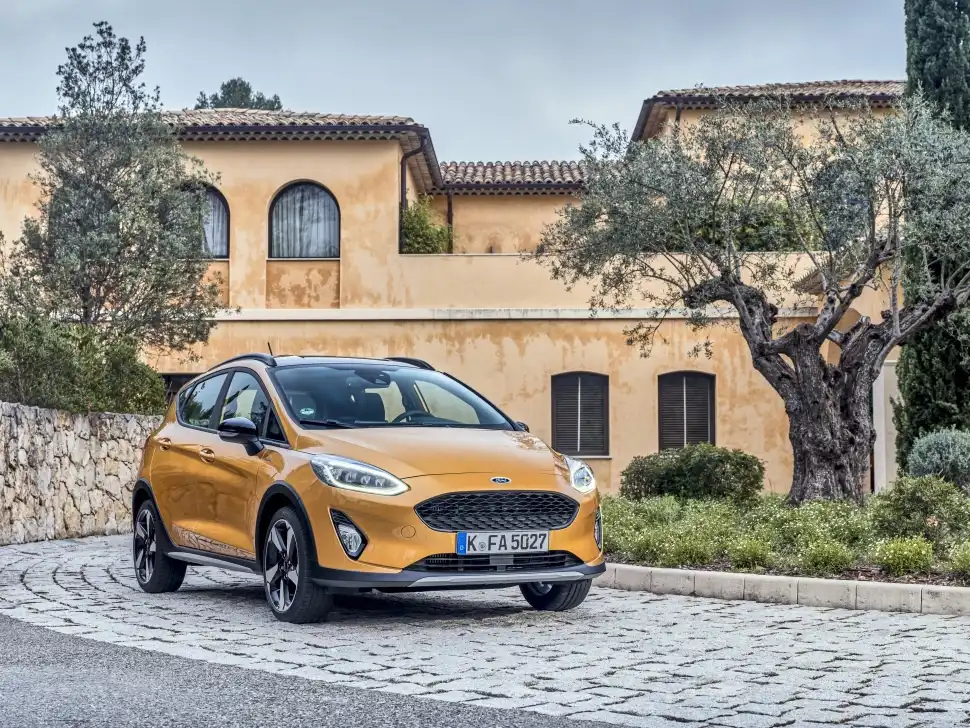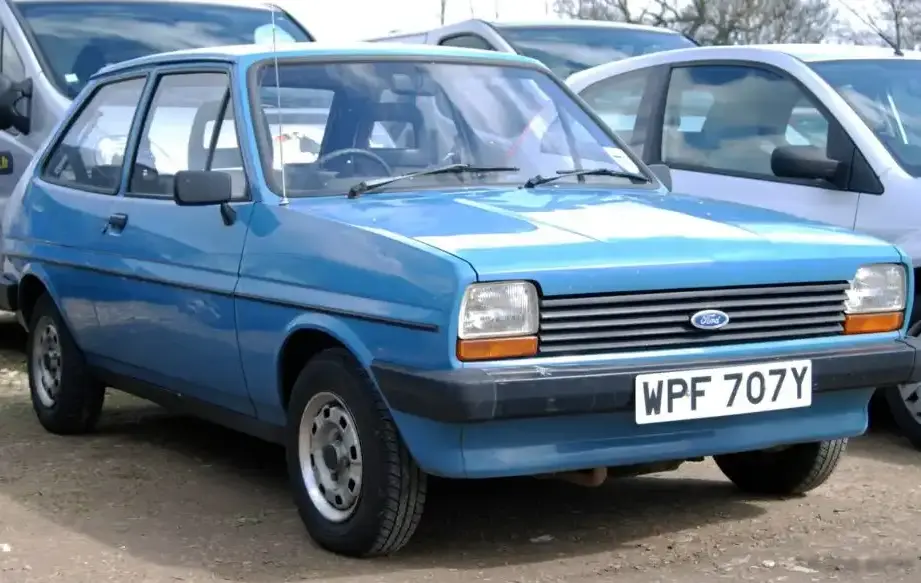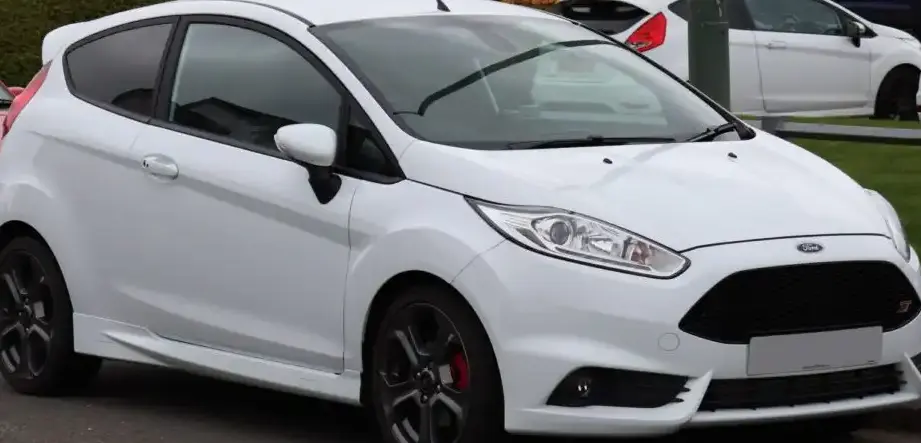
The Ford Fiesta VII, specifically the facelifted model introduced in 2013, represented a significant evolution of Ford’s popular subcompact car. The three-door 1.0 EcoBoost 100 horsepower variant, produced from 2013 to 2017, was positioned as an efficient and accessible entry point into the Fiesta range. This model benefited from the Mk7’s mid-cycle refresh, incorporating revised styling and updated technology. It played a key role in Ford’s strategy to offer fuel-efficient, technologically advanced vehicles to the European and, to a lesser extent, North American markets. The Fiesta Mk7 utilized Ford’s global B-car platform, known internally as the B2E, which also underpinned models like the Ford Focus.
Technical Specifications
| Brand | Ford |
| Model | Fiesta |
| Generation | Fiesta VII (Mk7, facelift 2013) 3 door |
| Type (Engine) | 1.0 EcoBoost (100 Hp) Start&Stop |
| Start of production | 2013 |
| End of production | 2017 |
| Powertrain Architecture | Internal Combustion engine |
| Body type | Hatchback |
| Seats | 5 |
| Doors | 3 |
| Fuel consumption (urban) | 5.3 l/100 km (44.4 US mpg, 53.3 UK mpg, 18.9 km/l) |
| Fuel consumption (extra urban) | 3.7 l/100 km (63.6 US mpg, 76.3 UK mpg, 27 km/l) |
| Fuel consumption (combined) | 4.3 l/100 km (54.7 US mpg, 65.7 UK mpg, 23.3 km/l) |
| CO2 emissions | 99 g/km |
| Fuel Type | Petrol (Gasoline) |
| Acceleration 0 – 100 km/h | 11.2 sec |
| Acceleration 0 – 62 mph | 11.2 sec |
| Acceleration 0 – 60 mph | 10.6 sec |
| Maximum speed | 180 km/h (111.85 mph) |
| Emission standard | Euro 5 |
| Weight-to-power ratio | 10.2 kg/Hp, 98.4 Hp/tonne |
| Weight-to-torque ratio | 6 kg/Nm, 167.3 Nm/tonne |
| Power | 100 Hp @ 6000 rpm |
| Power per litre | 100.2 Hp/l |
| Torque | 170 Nm @ 1400-4000 rpm (125.39 lb.-ft. @ 1400-4000 rpm) |
| Engine layout | Front, Transverse |
| Engine Model/Code | SFJA, SFJB, SFJC, SFJD |
| Engine displacement | 998 cm3 (60.9 cu. in.) |
| Number of cylinders | 3 |
| Engine configuration | Inline |
| Number of valves per cylinder | 4 |
| Fuel injection system | Direct injection |
| Engine aspiration | Turbocharger, Intercooler |
| Engine oil capacity | 4.1 l (4.33 US qt | 3.61 UK qt) |
| Coolant | 5.8 l (6.13 US qt | 5.1 UK qt) |
| Kerb Weight | 1016 kg (2239.9 lbs.) |
| Max. weight | 1550 kg (3417.17 lbs.) |
| Max load | 534 kg (1177.27 lbs.) |
| Trunk (boot) space – minimum | 281 l (9.92 cu. ft.) |
| Trunk (boot) space – maximum | 965 l (34.08 cu. ft.) |
| Fuel tank capacity | 42 l (11.1 US gal | 9.24 UK gal) |
| Permitted trailer load with brakes (12%) | 900 kg (1984.16 lbs.) |
| Permitted trailer load without brakes | 545 kg (1201.52 lbs.) |
| Length | 3969 mm (156.26 in.) |
| Width | 1722 mm (67.8 in.) |
| Width with mirrors folded | 1787 mm (70.35 in.) |
| Width including mirrors | 1973 mm (77.68 in.) |
| Height | 1495 mm (58.86 in.) |
| Wheelbase | 2489 mm (97.99 in.) |
| Minimum turning circle | 10.2 m (33.46 ft.) |
| Drivetrain Architecture | The Internal combustion engine (ICE) drives the front wheels of the vehicle. |
| Drive wheel | Front wheel drive |
| Number of gears and type of gearbox | 5 gears, manual transmission |
| Front suspension | Independent, type McPherson with coil spring and anti-roll bar |
| Rear suspension | Coil spring, Torsion |
| Front brakes | Ventilated discs |
| Rear brakes | Drum |
| Assisting systems | ABS (Anti-lock braking system) |
| Steering type | Steering rack and pinion |
| Power steering | Electric Steering |
| Tires size | 175/65 R14; 195/55 R15 |
| Wheel rims size | 5.5J x 14; 6J x 15 |
Powertrain & Engine Architecture
The heart of this Fiesta variant is the 1.0-liter EcoBoost engine, specifically the SFJA, SFJB, SFJC, or SFJD engine code depending on the specific market and year. This engine is a three-cylinder, inline gasoline engine featuring direct fuel injection and a single turbocharger with an intercooler. The direct injection system allows for precise fuel delivery, improving efficiency and reducing emissions. The engine utilizes a timing belt to drive the camshaft, and features four valves per cylinder. The 100 horsepower output is achieved at 6000 rpm, while peak torque of 170 Nm (125 lb-ft) is available from 1400 to 4000 rpm. This broad torque curve is a key characteristic of the EcoBoost engine, providing good responsiveness in everyday driving. The engine was typically paired with a five-speed manual transmission, although a six-speed Powershift dual-clutch transmission was also available as an option in some markets. The Powershift transmission, while offering quicker shifts, was known to have some reliability concerns.
Driving Characteristics
The 1.0 EcoBoost 100 hp Fiesta offered a surprisingly lively driving experience for its size and displacement. While not a performance-oriented model, the turbocharger provides a noticeable boost in power, making it capable of keeping up with traffic and providing adequate acceleration for highway merging. The 0-60 mph time of around 10.6 seconds is respectable for a car in this class. The five-speed manual transmission is well-matched to the engine’s characteristics, with gear ratios optimized for both fuel efficiency and responsiveness. Compared to the higher-output 125 hp version of the 1.0 EcoBoost, this variant feels slightly less eager to rev, but the difference is not dramatic. Compared to diesel variants like the 1.6 TDCi, the 1.0 EcoBoost offers a smoother and quieter driving experience, but sacrifices some fuel economy.
Equipment & Trim Levels
The 1.0 EcoBoost 100 hp model typically fell into the mid-range of the Fiesta lineup. Standard equipment generally included air conditioning, power front windows, a basic audio system with USB connectivity, and ABS brakes. Higher trim levels, such as Zetec or Titanium, added features like alloy wheels, a more advanced audio system, cruise control, and automatic headlights. Optional extras included a panoramic sunroof, rear parking sensors, and Ford’s SYNC infotainment system. Interior upholstery was typically cloth, with a relatively simple and functional dashboard layout. The three-door configuration emphasized a sportier aesthetic, appealing to younger buyers or those prioritizing a more compact footprint.
Chassis & Braking
The Fiesta Mk7 utilized a McPherson strut front suspension and a torsion beam rear suspension. This setup provided a good balance between ride comfort and handling. The front brakes were ventilated discs, while the rear brakes were drums, a cost-saving measure common in this segment. ABS was standard, providing enhanced braking performance in emergency situations. The steering was electrically assisted, offering light and precise control. Stabilizer bars were fitted to both the front and rear axles to reduce body roll during cornering.
Market Reception & Comparison
The 1.0 EcoBoost Fiesta was generally well-received by automotive critics. It was praised for its fuel efficiency, surprisingly punchy performance, and affordable price point. However, some reviewers noted that the three-cylinder engine could be a bit rough sounding at higher revs. Compared to other engines in the Fiesta lineup, the 1.0 EcoBoost offered a compelling combination of economy and drivability. The 1.6-liter Ti-VCT engine provided more power but was less fuel-efficient, while the diesel variants offered superior fuel economy but lacked the EcoBoost’s responsiveness.
Legacy
The 1.0 EcoBoost engine proved to be a remarkably durable and reliable powertrain. While some early examples experienced minor issues with the timing belt, these were generally addressed through warranty repairs. Today, well-maintained examples of the 1.0 EcoBoost Fiesta are still relatively common on the used car market. They represent a good value for buyers seeking an economical and reliable subcompact car. The engine’s continued use in later Ford models is a testament to its engineering quality and enduring appeal. The Fiesta Mk7, and particularly the 1.0 EcoBoost variant, helped establish Ford as a leader in small car technology and efficiency.