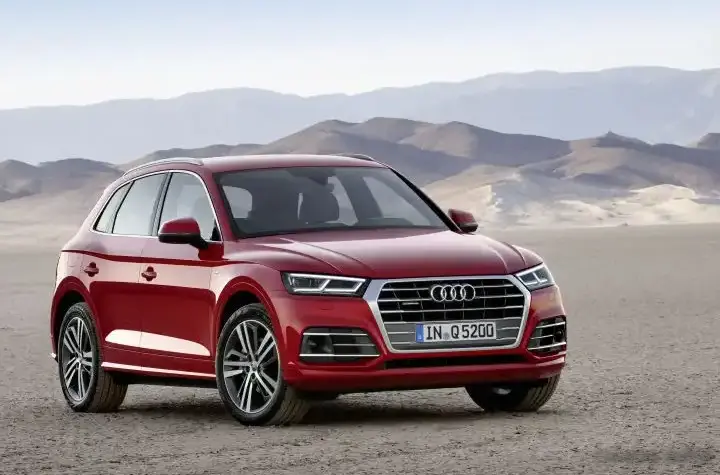
The Audi Q5 II (FY) 2.0 TDI 190 hp quattro, produced between 2016 and 2018, represents a significant iteration of Audi’s popular compact luxury SUV. Falling within the second generation of the Q5 (FY platform, succeeding the 8R series), this variant occupied a key position in the lineup, offering a balance between fuel efficiency, performance, and all-weather capability. It was designed to appeal to buyers seeking a premium SUV experience without the higher costs associated with the more powerful engine options. The Q5 FY series aimed to refine the original Q5’s formula, offering improved technology, interior refinement, and driving dynamics.
Technical Specifications
| Brand | Audi |
| Model | Q5 |
| Generation | Q5 II (FY) |
| Type (Engine) | 2.0 TDI (190 Hp) quattro |
| Start of production | 2016 |
| End of production | 2018 |
| Powertrain Architecture | Internal Combustion engine |
| Body type | SUV |
| Seats | 5 |
| Doors | 5 |
| Fuel consumption (urban) | 6.0-6.1 l/100 km (39.2 – 38.6 US mpg) |
| Fuel consumption (extra urban) | 4.6-4.9 l/100 km (51.1 – 48 US mpg) |
| Fuel consumption (combined) | 5.1-5.3 l/100 km (46.1 – 44.4 US mpg) |
| CO2 emissions | 133-139 g/km |
| Fuel Type | Diesel |
| Acceleration 0 – 100 km/h | 7.6 sec |
| Acceleration 0 – 62 mph | 7.6 sec |
| Acceleration 0 – 60 mph | 7.2 sec |
| Maximum speed | 223 km/h (138.57 mph) |
| Emission standard | Euro 6 |
| Weight-to-power ratio | 9.2 kg/Hp, 108.9 Hp/tonne |
| Weight-to-torque ratio | 4.4 kg/Nm, 229.2 Nm/tonne |
| Power | 190 Hp @ 3800-4200 rpm |
| Torque | 400 Nm @ 1750-3000 rpm (295.02 lb.-ft.) |
| Engine layout | Front, Longitudinal |
| Engine Model/Code | DESA, DETA |
| Engine displacement | 1968 cm3 (120.09 cu. in.) |
| Number of cylinders | 4 |
| Engine configuration | Inline |
| Number of valves per cylinder | 4 |
| Fuel injection system | Diesel Commonrail |
| Engine aspiration | Turbocharger, Intercooler |
| Valvetrain | DOHC |
| Engine oil capacity | 4.7 l (4.97 US qt | 4.14 UK qt) |
| Kerb Weight | 1745 kg (3847.07 lbs.) |
| Max. weight | 2415 kg (5324.16 lbs.) |
| Max load | 670 kg (1477.1 lbs.) |
| Trunk (boot) space – minimum | 550 l (19.42 cu. ft.) |
| Fuel tank capacity | 65 l (17.17 US gal | 14.3 UK gal) |
| Max. roof load | 75 kg (165.35 lbs.) |
| Permitted trailer load with brakes (8%) | 2400 kg (5291.09 lbs.) |
| Permitted trailer load with brakes (12%) | 2400 kg (5291.09 lbs.) |
| Permitted trailer load without brakes | 750 kg (1653.47 lbs.) |
| Permitted towbar download | 100 kg (220.46 lbs.) |
| Length | 4663 mm (183.58 in.) |
| Width | 1893 mm (74.53 in.) |
| Width including mirrors | 2140 mm (84.25 in.) |
| Height | 1659 mm (65.31 in.) |
| Wheelbase | 2819 mm (110.98 in.) |
| Front track | 1616 mm (63.62 in.) |
| Rear (Back) track | 1609 mm (63.35 in.) |
| Front overhang | 899 mm (35.39 in.) |
| Rear overhang | 945 mm (37.2 in.) |
| Minimum turning circle | 11.7 m (38.39 ft.) |
| Drive wheel | All wheel drive (4×4) |
| Number of gears and type of gearbox | 6 gears, manual transmission |
| Front suspension | Independent multi-link suspension |
| Rear suspension | Independent multi-link suspension |
| Front brakes | Ventilated discs |
| Rear brakes | Disc |
Powertrain & Engine Architecture
The heart of the Q5 2.0 TDI 190 quattro is the Volkswagen Group’s 2.0-liter four-cylinder diesel engine, specifically the DESA or DETA engine codes depending on the exact production date and market. This engine utilizes a common rail direct injection system, delivering fuel at extremely high pressures for optimized combustion. The engine features a single turbocharger with an intercooler, boosting power and torque. The DOHC (Double Overhead Camshaft) valvetrain, with four valves per cylinder, contributes to efficient gas exchange. This engine is longitudinally mounted in the engine bay, a configuration common in Audi’s quattro models. The 190 horsepower and 400 Nm (295 lb-ft) of torque are respectable figures for a 2.0-liter diesel, providing a good balance of performance and fuel economy. The six-speed manual transmission was standard, offering precise gear changes and driver engagement.
Driving Characteristics
The 2.0 TDI 190 hp quattro delivers a composed and refined driving experience. While not as overtly sporty as the higher-powered Q5 variants, it provides ample power for everyday driving and highway cruising. The quattro all-wheel-drive system ensures excellent traction in all weather conditions, enhancing stability and confidence. The manual transmission, while requiring more driver involvement than an automatic, allows for greater control over the engine’s powerband. Acceleration from 0-60 mph takes around 7.2 seconds, which is competitive for its class. The gear ratios are tuned for a balance of fuel efficiency and responsiveness, with a focus on providing strong mid-range torque for effortless overtaking. Compared to the more powerful 2.0 TFSI gasoline engine, the TDI offers superior fuel economy and torque, but slightly less outright acceleration. Compared to the 3.0 TDI, it sacrifices some power and refinement but gains in fuel efficiency and lower running costs.
Equipment & Trim Levels
The Q5 2.0 TDI 190 quattro typically came well-equipped, reflecting Audi’s premium positioning. Standard features included automatic climate control, a multi-function steering wheel, power-adjustable front seats, and an infotainment system with a color display. Upholstery was typically cloth or a combination of cloth and leatherette. Optional extras included leather seats, a panoramic sunroof, navigation system, advanced driver-assistance systems (such as adaptive cruise control and lane departure warning), and upgraded sound systems. Trim levels varied by market, but generally offered packages that bundled popular options together. The focus was on providing a comfortable and technologically advanced interior.
Chassis & Braking
The Q5 II (FY) utilizes a robust chassis with independent multi-link suspension at both the front and rear. This suspension setup provides a comfortable ride while maintaining good handling characteristics. The quattro all-wheel-drive system distributes power between the front and rear axles as needed, optimizing traction and stability. Braking duties are handled by ventilated discs at the front and solid discs at the rear. Anti-lock braking system (ABS) is standard, along with electronic stability control (ESC). The suspension tuning is geared towards comfort and stability, rather than outright sportiness, making it well-suited for long journeys and everyday driving.
Market Reception & Comparison
The Audi Q5 2.0 TDI 190 quattro was generally well-received by automotive critics. It was praised for its refined driving experience, comfortable interior, and fuel efficiency. The combination of the diesel engine and all-wheel drive proved popular in European markets, where diesel fuel is more common and winter driving conditions are prevalent. Compared to competitors like the BMW X3 and Mercedes-Benz GLC, the Q5 was often seen as offering a more balanced package, with a strong emphasis on interior quality and technology. Fuel economy figures of around 46 mpg combined were considered excellent for a vehicle of its size and class. Reliability was generally good, although some owners reported issues with the diesel particulate filter (DPF) system, a common concern with modern diesel engines.
Legacy
The Audi Q5 II (FY) 2.0 TDI 190 quattro remains a popular choice in the used car market. Its reputation for reliability, fuel efficiency, and all-weather capability continues to attract buyers. The 2.0 TDI engine, while subject to some scrutiny regarding emissions in the wake of the “Dieselgate” scandal, has proven to be durable and relatively easy to maintain. Regular servicing, including DPF regeneration and oil changes, is crucial for long-term reliability. The quattro all-wheel-drive system remains a significant selling point, particularly in regions with challenging weather conditions. The Q5 FY series helped solidify Audi’s position as a leading manufacturer of premium SUVs, and the 2.0 TDI 190 quattro variant played a key role in its success.