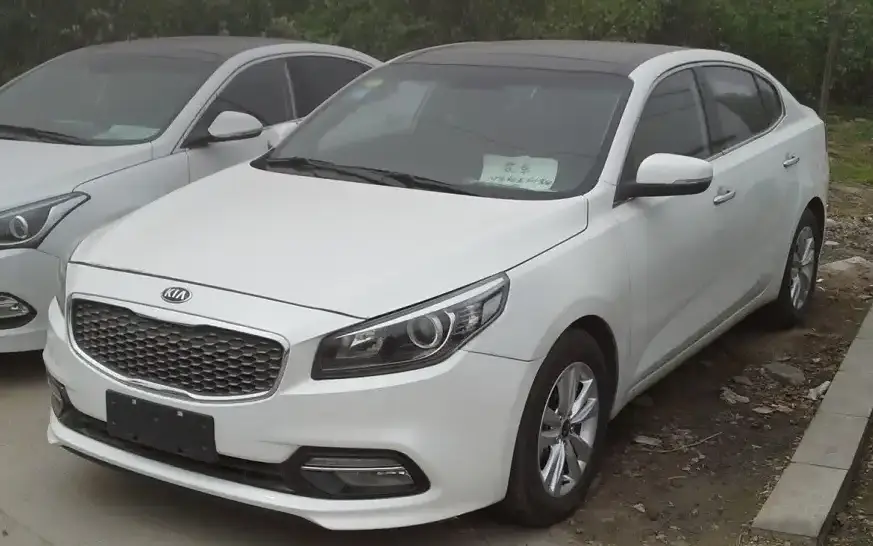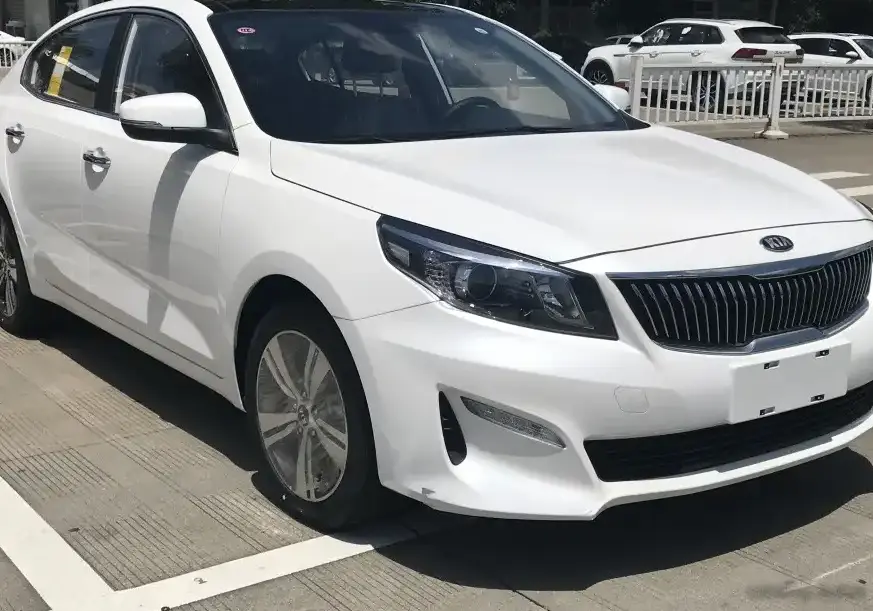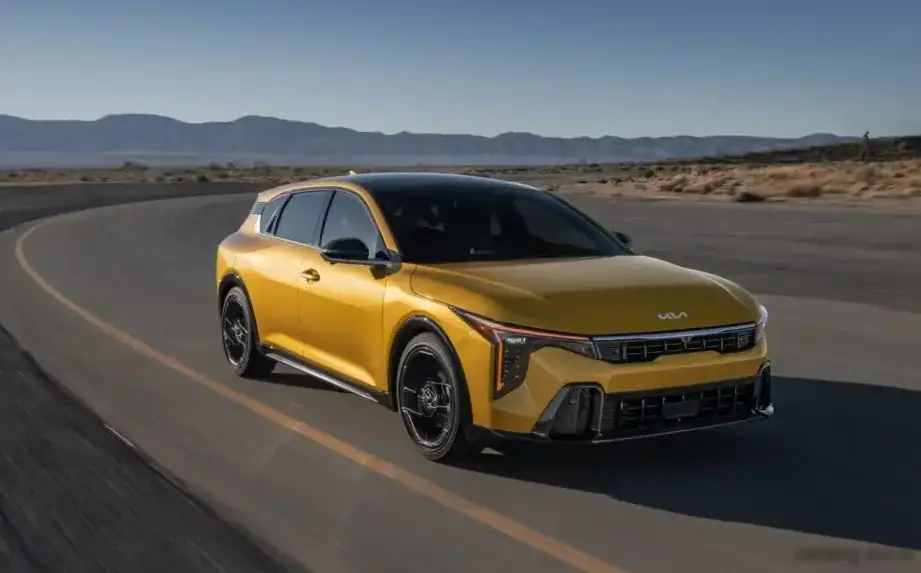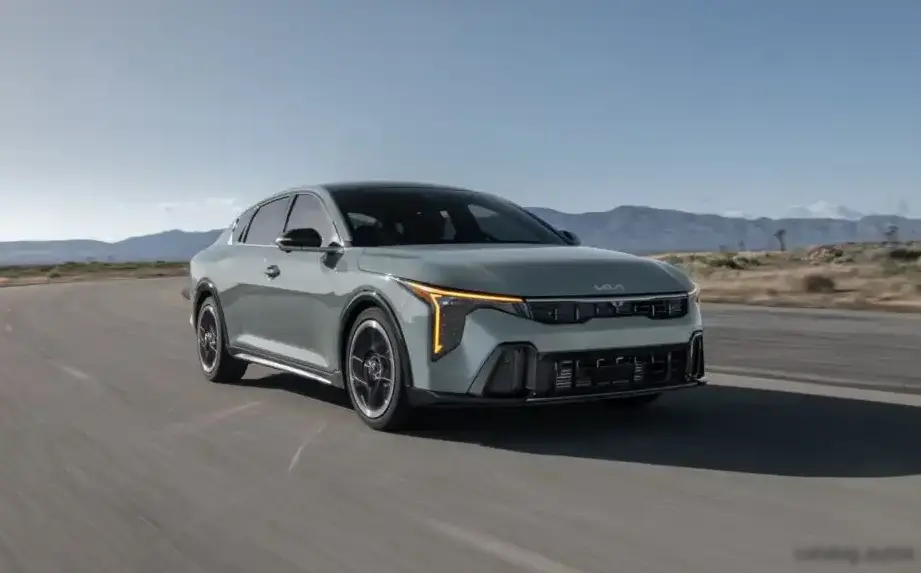
The Kia K4 2.0L (147 hp) IVT represents the entry-level powertrain option for the newly introduced K4 sedan, launched in August 2024 as a replacement for the Forte. Positioned as a mainstream compact sedan, the K4 aims to offer a blend of style, technology, and value within the highly competitive segment. This particular variant, with its naturally aspirated 2.0-liter engine and continuously variable transmission (IVT), is targeted towards buyers prioritizing fuel efficiency and a comfortable driving experience over outright performance. It serves as the foundation of the K4 lineup, with more powerful turbocharged engines available for those seeking a sportier feel.
Technical Specifications
| Brand | Kia |
| Model | K4 |
| Generation | K4 (2025) |
| Type (Engine) | 2.0L (147 Hp) IVT |
| Start of production | August, 2024 |
| Powertrain Architecture | Internal Combustion engine |
| Body type | Sedan |
| Seats | 5 |
| Doors | 4 |
| Fuel consumption (urban) | 7.8-8.1 l/100 km (30.2 – 29 US mpg) |
| Fuel consumption (extra urban) | 5.9-6 l/100 km (39.9 – 39.2 US mpg) |
| Fuel consumption (combined) | 6.9-7.1 l/100 km (34.1 – 33.1 US mpg) |
| Fuel Type | Petrol (Gasoline) |
| Maximum speed | 200 km/h (124.27 mph) |
| Emission standard | SULEV 30 |
| Weight-to-power ratio | 9 kg/Hp, 110.5 Hp/tonne |
| Weight-to-torque ratio | 7.4 kg/Nm, 134.6 Nm/tonne |
| Power | 147 Hp @ 6200 rpm |
| Power per litre | 73.5 Hp/l |
| Torque | 179 Nm @ 4500 rpm (132.02 lb.-ft. @ 4500 rpm) |
| Engine layout | Front, Transverse |
| Engine Model/Code | Smartstream |
| Engine displacement | 1999 cm3 (121.99 cu. in.) |
| Number of cylinders | 4 |
| Engine configuration | Inline |
| Cylinder Bore | 81 mm (3.19 in.) |
| Piston Stroke | 97 mm (3.82 in.) |
| Compression ratio | 12.5:1 |
| Number of valves per cylinder | 4 |
| Fuel injection system | Multi-port manifold injection |
| Engine aspiration | Naturally aspirated engine |
| Valvetrain | DOHC, D-CVVT |
| Engine systems | Start & Stop System |
| Kerb Weight | 1330-1434 kg (2932.15 – 3161.43 lbs.) |
| Max. weight | 1860 kg (4100.6 lbs.) |
| Max load | 426-530 kg (939.17 – 1168.45 lbs.) |
| Trunk (boot) space – minimum | 413 l (14.58 cu. ft.) |
| Fuel tank capacity | 47 l (12.42 US gal | 10.34 UK gal) |
| Length | 4709 mm (185.39 in.) |
| Width | 1849 mm (72.8 in.) |
| Height | 1420 mm (55.91 in.) |
| Wheelbase | 2720 mm (107.09 in.) |
| Front track | 1567-1585 mm (61.69 – 62.4 in.) |
| Rear (Back) track | 1580-1595 mm (62.2 – 62.8 in.) |
| Drag coefficient (Cd) | 0.27-0.29 |
| Minimum turning circle (turning diameter) | 10.8 m (35.43 ft.) |
| Approach angle | 14.2-14.5° |
| Departure angle | 18.7-19° |
| Drivetrain Architecture | The Internal combustion engine (ICE) drives the front wheels of the vehicle. |
| Drive wheel | Front wheel drive |
| Number of gears and type of gearbox | automatic transmission IVT |
| Front suspension | Independent type McPherson |
| Rear suspension | Torsion |
| Front brakes | Ventilated discs, 381 mm |
| Rear brakes | Disc, 355.6-381 mm |
| Assisting systems | ABS (Anti-lock braking system) |
| Steering type | Steering rack and pinion |
| Power steering | Electric Steering |
| Tires size | 205/55 R16; 225/45 R17; 235/40 R18 |
| Wheel rims size | 6.5J x 16; 7.0J x 17; 8.0J x 18 |
Powertrain & Engine Architecture
At the heart of the K4 2.0L IVT lies Kia’s Smartstream 2.0-liter inline-four cylinder engine. This engine utilizes a multi-point fuel injection system and a double overhead camshaft (DOHC) valvetrain with Dual Continuously Variable Valve Timing (D-CVVT). The D-CVVT system optimizes valve timing based on driving conditions, improving both fuel efficiency and engine responsiveness. The engine produces 147 horsepower at 6,200 rpm and 179 Nm (132 lb-ft) of torque at 4,500 rpm. The engine’s 12.5:1 compression ratio contributes to its efficiency. The engine is transversely mounted, driving the front wheels. The Intelligent Variable Transmission (IVT) replaces traditional geared automatic transmissions. An IVT uses a belt and pulley system to provide a seamless and continuously variable gear ratio, optimizing engine speed for efficiency and smoothness. It lacks defined gear steps, offering a more fluid acceleration experience.
Driving Characteristics
The K4 2.0L IVT delivers a comfortable and predictable driving experience. Acceleration is adequate for everyday driving situations, but it’s not particularly brisk. The IVT is programmed to prioritize fuel economy, which means it often keeps the engine at lower rpm levels. This can result in a slight delay in response when accelerating quickly. Compared to the available turbocharged engine options in the K4 lineup, the 2.0L feels noticeably less powerful. However, the IVT contributes to a smooth and quiet ride, making it well-suited for commuting and long highway journeys. The IVT’s continuously variable nature eliminates the shift shock often associated with traditional automatics.
Equipment & Trim Levels
The K4 2.0L typically serves as the entry point to the K4 range, and as such, comes standard with a respectable array of features. Standard equipment generally includes an 8-inch touchscreen infotainment system with wireless Apple CarPlay and Android Auto compatibility, a suite of driver-assistance technologies (such as forward collision warning, lane keeping assist, and automatic emergency braking), and cloth upholstery. Higher trim levels add features like larger touchscreen displays, premium audio systems, leatherette or leather upholstery, and additional driver-assistance features. Optional extras for the 2.0L variant may include a sunroof, heated front seats, and advanced safety features like blind-spot monitoring and rear cross-traffic alert.
Chassis & Braking
The K4 utilizes a front-wheel-drive platform with an independent McPherson strut suspension in the front and a torsion beam suspension in the rear. The torsion beam setup is a cost-effective solution commonly found in compact cars. The front brakes are ventilated discs measuring 381mm, while the rear brakes are discs ranging from 355.6-381mm in size. All K4 models are equipped with an Anti-lock Braking System (ABS) as standard. Steering is provided by a rack and pinion system with electric power assistance.
Market Reception & Comparison
The K4 2.0L IVT is positioned to compete with other mainstream compact sedans like the Honda Civic, Toyota Corolla, and Hyundai Elantra. Critics generally praise the K4’s stylish design and well-equipped interior. The 2.0L engine, while adequate, is often seen as less refined and less powerful than some of its competitors’ offerings. Fuel economy figures are competitive, falling within the typical range for the compact sedan segment. Compared to the turbocharged K4 variants, the 2.0L offers a lower price point but sacrifices performance. The IVT, while smooth, may not appeal to drivers who prefer the more engaging feel of a traditional automatic transmission or a manual gearbox.
Legacy
As a newly introduced model, the long-term reliability of the K4 2.0L IVT powertrain remains to be seen. However, Kia has a growing reputation for building reliable vehicles, and the Smartstream engine family has been used in other Kia and Hyundai models with generally positive results. The IVT, while relatively new to the market, is becoming increasingly common in modern vehicles. The K4’s success in the used car market will likely depend on its overall reliability, fuel efficiency, and the continued appeal of its design and features. Early indications suggest that the K4 will be a popular choice among buyers seeking a stylish, well-equipped, and fuel-efficient compact sedan.