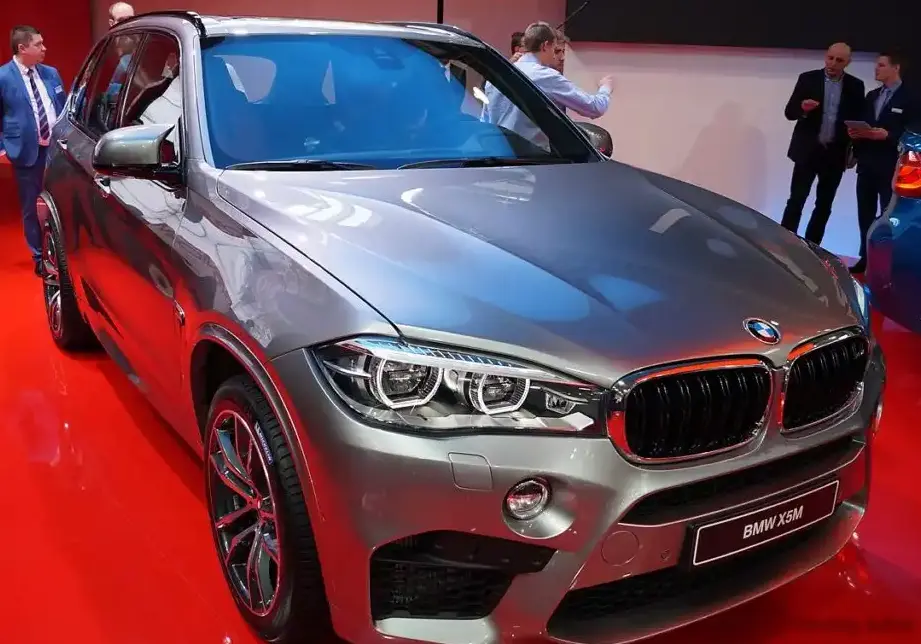
The BMW X5 (E53 LCI), specifically the 3.0i variant producing 231 horsepower, represents a significant mid-cycle refresh of BMW’s first foray into the luxury sport activity vehicle (SAV) segment. Introduced in 2003 and continuing through 2006, the LCI (Life Cycle Impulse – BMW’s term for facelift) brought updated styling, improved interior appointments, and refinements to the powertrain. This 3.0i model occupied a middle ground in the X5 lineup, positioned above the base 3.0 model and below the performance-oriented 4.4i and the diesel-powered 3.0d. It aimed to provide a balance of performance, luxury, and relative fuel efficiency for the North American market, where the X5 found considerable success.
Technical Specifications
| Brand | BMW |
| Model | X5 |
| Generation | X5 (E53 LCI, facelift 2003) |
| Type (Engine) | 3.0i (231 Hp) |
| Start of production | 2003 |
| End of production | 2006 |
| Powertrain Architecture | Internal Combustion engine |
| Body type | SUV |
| Seats | 5 |
| Doors | 5 |
| Fuel consumption (economy) – urban | 17.8 l/100 km (13.2 US mpg, 15.9 UK mpg, 5.6 km/l) |
| Fuel consumption (economy) – extra urban | 9.7 l/100 km (24.2 US mpg, 29.1 UK mpg, 10.3 km/l) |
| Fuel consumption (economy) – combined | 12.7 l/100 km (18.5 US mpg, 22.2 UK mpg, 7.9 km/l) |
| CO2 emissions | 307 g/km |
| Fuel Type | Petrol (Gasoline) |
| Acceleration 0 – 100 km/h | 8.3 sec |
| Acceleration 0 – 62 mph | 8.3 sec |
| Acceleration 0 – 60 mph | 7.9 sec |
| Maximum speed | 215 km/h (133.59 mph) |
| Weight-to-power ratio | 8.6 kg/Hp, 115.8 Hp/tonne |
| Weight-to-torque ratio | 6.7 kg/Nm, 150.4 Nm/tonne |
| Power | 231 Hp @ 5900 rpm |
| Power per litre | 77.5 Hp/l |
| Torque | 300 Nm @ 3500 rpm (221.27 lb.-ft. @ 3500 rpm) |
| Engine layout | Front, Longitudinal |
| Engine Model/Code | M54B30 |
| Engine displacement | 2979 cm3 (181.79 cu. in.) |
| Number of cylinders | 6 |
| Engine configuration | Inline |
| Cylinder Bore | 84 mm (3.31 in.) |
| Piston Stroke | 89.6 mm (3.53 in.) |
| Compression ratio | 10.2:1 |
| Number of valves per cylinder | 4 |
| Fuel injection system | Multi-port manifold injection |
| Engine aspiration | Naturally aspirated engine |
| Engine oil capacity | 6.5 l (6.87 US qt | 5.72 UK qt) |
| Coolant | 10.5 l (11.1 US qt | 9.24 UK qt) |
| Kerb Weight | 1995 kg (4398.22 lbs.) |
| Max. weight | 2595 kg (5721 lbs.) |
| Max load | 600 kg (1322.77 lbs.) |
| Trunk (boot) space – minimum | 465 l (16.42 cu. ft.) |
| Trunk (boot) space – maximum | 1550 l (54.74 cu. ft.) |
| Fuel tank capacity | 93 l (24.57 US gal | 20.46 UK gal) |
| Max. roof load | 100 kg (220.46 lbs.) |
| Permitted trailer load with brakes (8%) | 2700 kg (5952.48 lbs.) |
| Permitted trailer load with brakes (12%) | 2300 kg (5070.63 lbs.) |
| Permitted trailer load without brakes | 750 kg (1653.47 lbs.) |
| Permitted towbar download | 120 kg (264.55 lbs.) |
| Length | 4667 mm (183.74 in.) |
| Width | 1872 mm (73.7 in.) |
| Width including mirrors | 2180 mm (85.83 in.) |
| Height | 1715 mm (67.52 in.) |
| Wheelbase | 2820 mm (111.02 in.) |
| Front track | 1576 mm (62.05 in.) |
| Rear (Back) track | 1576 mm (62.05 in.) |
| Ride height (ground clearance) | 203 mm (7.99 in.) |
| Drive wheel | All wheel drive (4×4) |
| Number of gears and type of gearbox | 5 gears, manual transmission |
| Front suspension | Double wishbone |
| Rear suspension | Independent multi-link suspension |
| Front brakes | Ventilated discs |
| Rear brakes | Disc |
| Assisting systems | ABS (Anti-lock braking system) |
| Steering type | Steering rack and pinion |
| Tires size | 235/65 R17 |
| Wheel rims size | 17 |
Powertrain & Engine Architecture
The heart of the X5 3.0i is BMW’s M54B30 engine, a 3.0-liter inline-six cylinder powerplant. This engine is a naturally aspirated design, utilizing a cast iron block and aluminum cylinder head. It features double overhead camshafts (DOHC) with four valves per cylinder, and a Bosch Motronic MS51.1 engine management system controlling multi-port fuel injection. The M54 engine is renowned for its smooth power delivery and relatively robust construction. The 231 horsepower output at 5900 rpm and 221 lb-ft of torque at 3500 rpm were considered adequate for the X5’s weight, providing respectable acceleration. The 5-speed automatic transmission (specifically the A5S440R) was a common pairing, offering smooth shifts but not the sportiness of the available 6-speed manual. This automatic transmission featured adaptive shift programming, attempting to learn the driver’s style and adjust shift points accordingly.
Driving Characteristics
The X5 3.0i with the automatic transmission delivered a comfortable and capable driving experience. Acceleration from 0-60 mph took around 7.9 seconds, which was competitive for the class but noticeably slower than the 4.4i model. The automatic transmission, while smooth, could feel somewhat hesitant during quick overtaking maneuvers. The gear ratios were tuned for fuel efficiency and cruising comfort rather than outright performance. The X5’s all-wheel-drive system (xDrive) provided excellent traction in various weather conditions, making it a practical choice for drivers in regions with inclement weather. The suspension, while firm enough to control body roll, prioritized ride comfort over razor-sharp handling.
Equipment & Trim Levels
The X5 3.0i came standard with a respectable array of features, including leatherette upholstery, power-adjustable front seats, automatic climate control, and a premium sound system. Optional extras included genuine leather upholstery, a sunroof, navigation system, heated seats, and upgraded audio options. The LCI facelift brought subtle interior refinements, such as revised switchgear and updated trim materials. The 3.0i trim generally targeted buyers who wanted the prestige and capability of the X5 without the higher price tag of the more powerful models.
Chassis & Braking
The X5’s chassis featured a fully independent suspension, with double wishbones at the front and a multi-link setup at the rear. This configuration provided a good balance of ride comfort and handling. The braking system consisted of ventilated discs at all four corners, providing ample stopping power. Anti-lock brakes (ABS) were standard, as was BMW’s Dynamic Stability Control (DSC) system, which helped to maintain stability during cornering and emergency maneuvers. The X5’s relatively high weight necessitated a robust braking system to ensure safe and confident stopping performance.
Market Reception & Comparison
The X5 3.0i was generally well-received by automotive critics. It was praised for its comfortable ride, spacious interior, and capable all-wheel-drive system. However, some reviewers noted that the 3.0-liter engine felt somewhat underpowered for the X5’s size and weight, especially when compared to the more potent 4.4i model. Fuel economy was also a point of criticism, with the X5 3.0i averaging around 18.5 mpg in combined driving. Compared to the 4.4i, the 3.0i offered a more affordable entry point into the X5 lineup, but at the expense of performance. The diesel-powered 3.0d, available in Europe, offered superior fuel economy and comparable torque, but was not widely available in the US market.
Legacy
The BMW X5 (E53) established BMW as a major player in the burgeoning luxury SUV segment. The 3.0i variant, while not the most powerful or fuel-efficient version, remains a popular choice in the used car market due to its relative affordability and reliability. The M54B30 engine is known for its durability, and with proper maintenance, can provide many years of reliable service. However, potential buyers should be aware of common issues such as oil leaks, cooling system failures, and VANOS (variable valve timing) problems. Overall, the X5 3.0i represents a well-rounded and capable luxury SUV that continues to offer a compelling value proposition for discerning buyers.