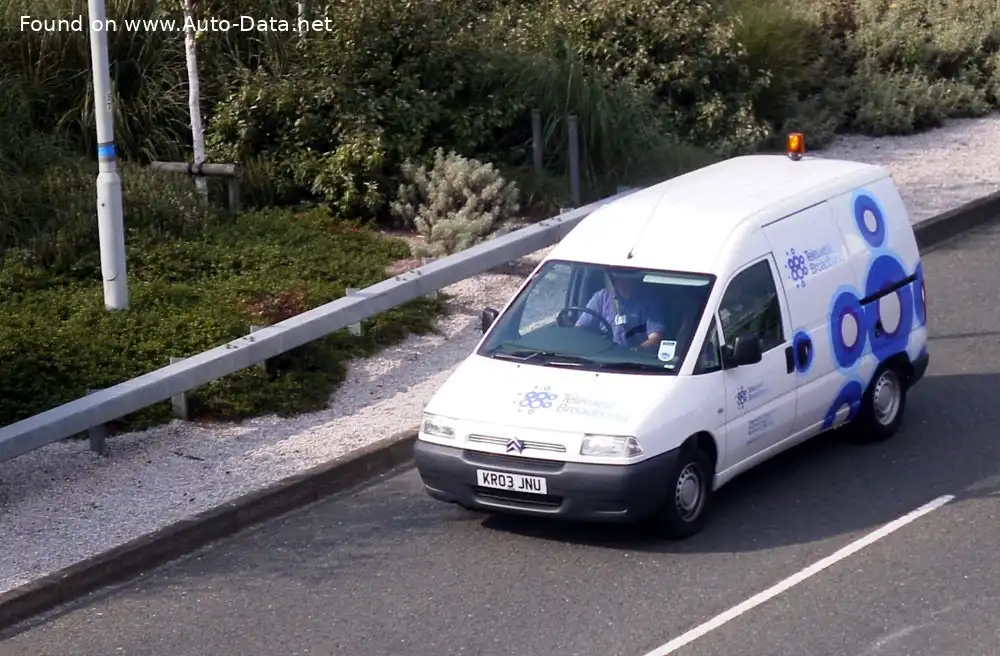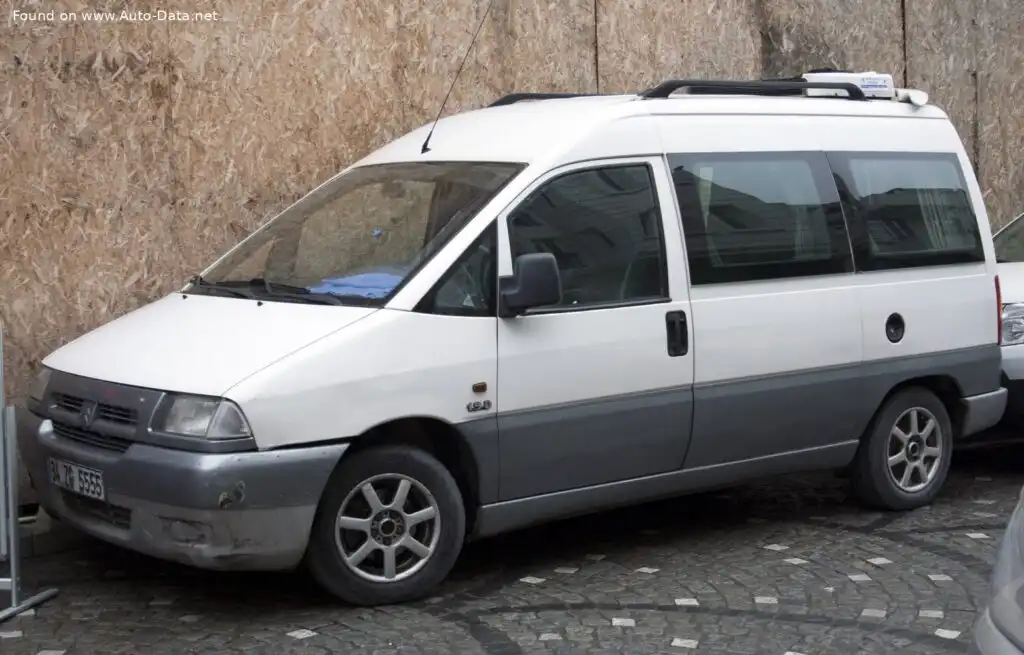
The Citroen Jumpy I, known as the Dispatch in the United Kingdom and other markets, was a popular light commercial vehicle and passenger van produced from 1995 to 2006. The first generation (1995-2006), designated internally as X81, was a collaborative effort between Citroen, Peugeot, and Fiat, resulting in the Peugeot Expert and Fiat Scudo. The 1.9TD 9-seat variant, produced from June 2000 to May 2001, represented a mid-range offering within the Jumpy I lineup, aimed at providing a practical and economical transport solution for families or small businesses. This model combined a diesel engine with an automatic transmission, a relatively uncommon configuration for commercial vehicles of the era.
Technical Specifications
| Brand | Citroen |
| Model | Jumpy |
| Generation | Jumpy I Dispatch |
| Type (Engine) | 1.9TD (90 Hp) 9 Seat |
| Start of production | June, 2000 year |
| End of production | May, 2001 year |
| Powertrain Architecture | Internal Combustion engine |
| Body type | Minivan |
| Seats | 8-9 |
| Doors | 5 |
| Fuel consumption (urban) | 10.2 l/100 km (23.1 US mpg, 27.7 UK mpg, 9.8 km/l) |
| Fuel consumption (extra urban) | 6.9 l/100 km (34.1 US mpg, 40.9 UK mpg, 14.5 km/l) |
| Fuel consumption (combined) | 8.1 l/100 km (29 US mpg, 34.9 UK mpg, 12.3 km/l) |
| Fuel Type | Diesel |
| Acceleration 0 – 100 km/h | 14.7 sec |
| Acceleration 0 – 62 mph | 14.7 sec |
| Acceleration 0 – 60 mph | 14 sec |
| Maximum speed | 155 km/h (96.31 mph) |
| Weight-to-power ratio | 16.8 kg/Hp, 59.4 Hp/tonne |
| Weight-to-torque ratio | 7.7 kg/Nm, 129.3 Nm/tonne |
| Power | 90 Hp @ 4000 rpm |
| Power per litre | 47.2 Hp/l |
| Torque | 196 Nm @ 2250 rpm (144.56 lb.-ft. @ 2250 rpm) |
| Engine layout | Front, Transverse |
| Engine Model/Code | XUD9TE |
| Engine displacement | 1905 cm3 (116.25 cu. in.) |
| Number of cylinders | 4 |
| Engine configuration | Inline |
| Cylinder Bore | 83 mm (3.27 in.) |
| Piston Stroke | 88 mm (3.46 in.) |
| Compression ratio | 21.8:1 |
| Number of valves per cylinder | 2 |
| Fuel injection system | Precombustion chamber injection |
| Engine aspiration | Turbocharger, Intercooler |
| Valvetrain | SOHC |
| Engine oil capacity | 4.2 l (4.44 US qt | 3.7 UK qt) |
| Coolant | 9 l (9.51 US qt | 7.92 UK qt) |
| Kerb Weight | 1516 kg (3342.21 lbs.) |
| Max. weight | 2285 kg (5037.56 lbs.) |
| Max load | 769 kg (1695.35 lbs.) |
| Trunk (boot) space – minimum | 450 l (15.89 cu. ft.) |
| Trunk (boot) space – maximum | 1180 l (41.67 cu. ft.) |
| Fuel tank capacity | 80 l (21.13 US gal | 17.6 UK gal) |
| Max. roof load | 100 kg (220.46 lbs.) |
| Permitted trailer load with brakes (8%) | 1800 kg (3968.32 lbs.) |
| Permitted trailer load with brakes (12%) | 1300 kg (2866.01 lbs.) |
| Permitted trailer load without brakes | 750 kg (1653.47 lbs.) |
| Permitted towbar download | 60 kg (132.28 lbs.) |
| Length | 4440 mm (174.8 in.) |
| Width | 1810 mm (71.26 in.) |
| Width including mirrors | 2134 mm (84.02 in.) |
| Height | 1927 mm (75.87 in.) |
| Wheelbase | 2824 mm (111.18 in.) |
| Front track | 1540 mm (60.63 in.) |
| Rear (Back) track | 1540 mm (60.63 in.) |
| Front overhang | 846 mm (33.31 in.) |
| Rear overhang | 770 mm (30.31 in.) |
| Minimum turning circle | 12.35 m (40.52 ft.) |
| Drivetrain Architecture | The Internal combustion engine (ICE) drives the front wheels of the vehicle. |
| Drive wheel | Front wheel drive |
| Number of gears and type of gearbox | 5 gears, manual transmission |
| Front suspension | Independent, type McPherson with coil spring and anti-roll bar |
| Rear suspension | Trailing arm, Torsion |
| Front brakes | Ventilated discs |
| Rear brakes | Drum |
| Assisting systems | ABS (Anti-lock braking system) |
| Steering type | Steering rack and pinion |
| Power steering | Hydraulic Steering |
| Tires size | 195/70 R14 |
| Wheel rims size | 6J x 14 |
INTRODUCTION
The Citroen Jumpy I Dispatch 1.9TD 9-seat variant, produced between 2000 and 2001, was a practical and versatile people carrier based on the shared platform (1HX0/A3) developed with Peugeot and Fiat. Positioned as a mid-range option, it offered a balance between affordability and functionality, catering to families, shuttle services, or small businesses needing passenger transport. The inclusion of an automatic transmission was somewhat unusual for this class of vehicle, aiming to provide added convenience, though at the expense of some fuel efficiency compared to the manual versions.
Powertrain & Engine Architecture
The heart of this Jumpy variant is the XUD9TE engine, a 1.9-liter inline-four cylinder diesel engine. This engine, a mainstay of Citroen and Peugeot vehicles for many years, is known for its durability and relatively simple mechanical design. The XUD9TE utilizes precombustion chamber injection, a system where fuel is injected into a small pre-chamber within the cylinder head, promoting more complete combustion. A turbocharger with an intercooler is employed to increase power output and improve torque delivery. The engine produces 90 horsepower at 4000 rpm and 196 Nm (144.56 lb-ft) of torque at 2250 rpm. The automatic transmission is a four-speed unit, providing smooth gear changes but contributing to slightly lower fuel economy compared to the available five-speed manual transmission. The transmission’s gear ratios are optimized for hauling passengers and moderate loads, prioritizing drivability over outright performance.
Driving Characteristics
The 1.9TD automatic Jumpy I offers a comfortable, if not particularly exciting, driving experience. Acceleration is modest, taking approximately 14.7 seconds to reach 62 mph (100 km/h). The automatic transmission provides smooth shifts, making it well-suited for urban driving and stop-and-go traffic. However, the lack of a manual override or sport mode limits driver control. Compared to the manual transmission versions, the automatic suffers a slight penalty in fuel economy. The engine’s torque is readily available from low revs, making it easy to maintain speed on inclines and when fully loaded. The steering is light and precise, making maneuvering in tight spaces relatively easy.
Equipment & Trim Levels
The 1.9TD 9-seat variant typically included features such as power steering, central locking, and an anti-lock braking system (ABS). Interior appointments were functional rather than luxurious, with durable cloth upholstery and a straightforward dashboard layout. Optional extras could include air conditioning, electric windows, and a radio/cassette player. The nine-seat configuration involved a 2-3-4 seating arrangement, with the rear seats often foldable or removable to increase cargo space. The trim level was generally considered a step up from the base models, offering a slightly more refined interior and additional convenience features.
Chassis & Braking
The Jumpy I utilizes a McPherson strut independent suspension at the front, providing a comfortable ride and good handling characteristics. The rear suspension employs a trailing arm torsion beam setup, which is simple, robust, and cost-effective. Braking duties are handled by ventilated discs at the front and drum brakes at the rear. The ABS system enhances braking performance and stability, particularly on slippery surfaces. The vehicle’s weight-to-power ratio of 16.8 kg/Hp indicates its focus on practicality rather than performance. The chassis is designed to handle a substantial payload, making it suitable for carrying passengers and their luggage.
Market Reception & Comparison
The Citroen Jumpy I Dispatch 1.9TD 9-seat automatic was generally well-received as a practical and reliable people carrier. Critics praised its spacious interior, comfortable ride, and fuel efficiency (though the automatic version was less efficient than the manual). However, the engine’s performance was often described as adequate rather than exhilarating. Compared to the higher-powered 2.0HDi versions, the 1.9TD offered a more affordable entry point but lacked the extra performance and refinement. Compared to the 1.9D (non-turbo) variant, the 1.9TD provided a noticeable improvement in power and torque, making it more suitable for long journeys and carrying heavy loads.
Legacy
The XUD9TE engine, while now aging, is known for its robustness and longevity when properly maintained. The automatic transmission, while not the most technologically advanced, has proven to be relatively reliable. Today, the Citroen Jumpy I Dispatch 1.9TD 9-seat variant can be found on the used car market at affordable prices. Common issues include wear and tear on suspension components, corrosion (particularly in regions with harsh winters), and potential problems with the fuel injection system. Despite its age, the Jumpy I remains a popular choice for those seeking a practical and affordable people carrier or light commercial vehicle, particularly for those who prioritize simplicity and reliability over modern features and performance.