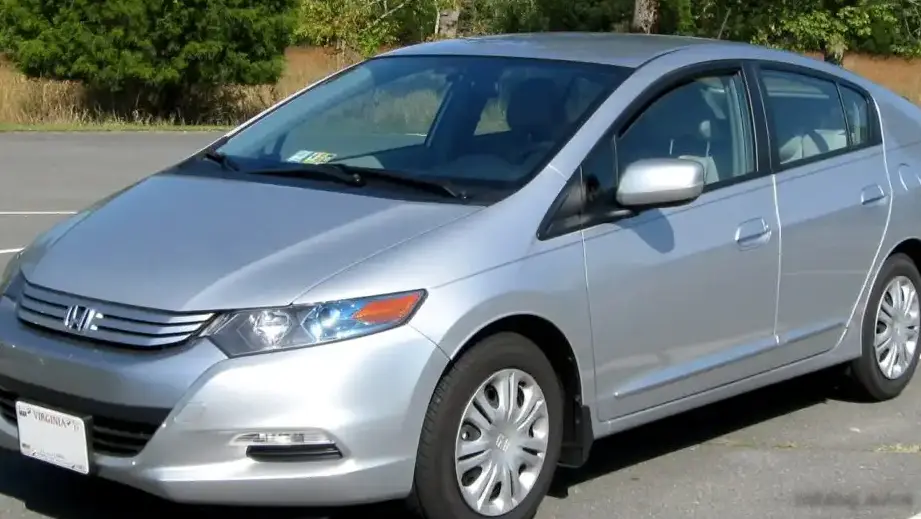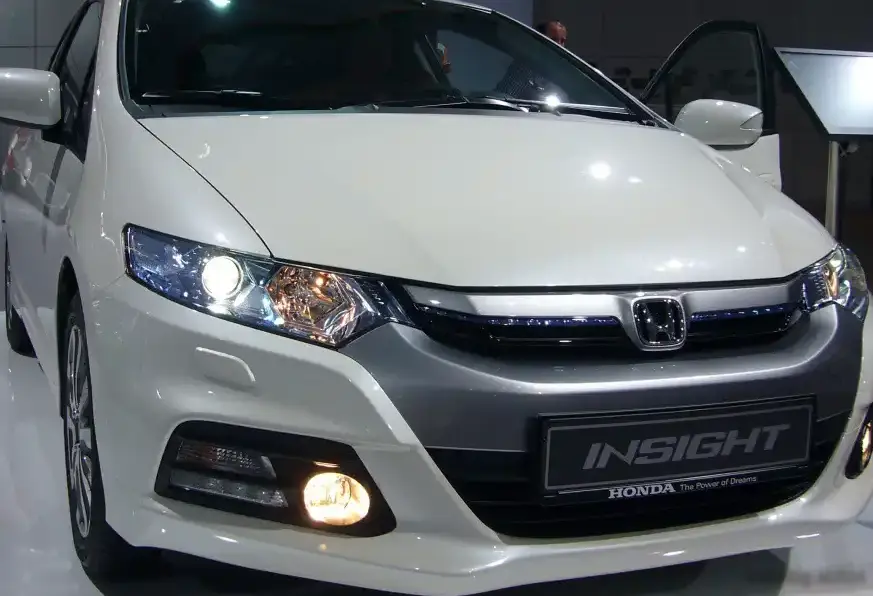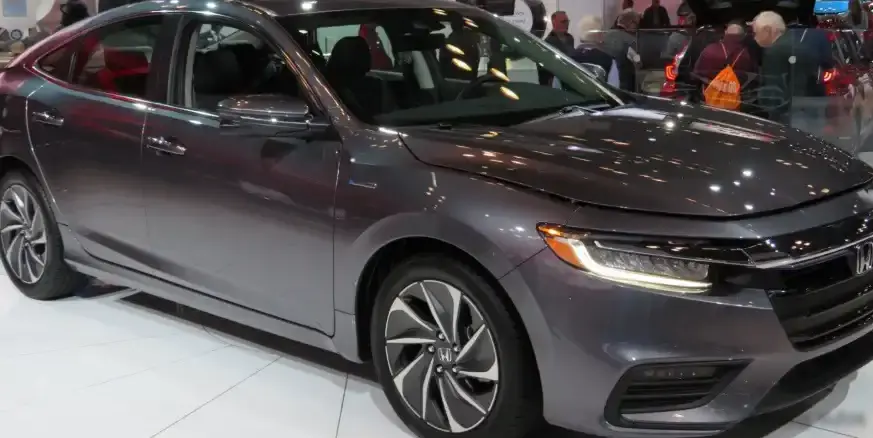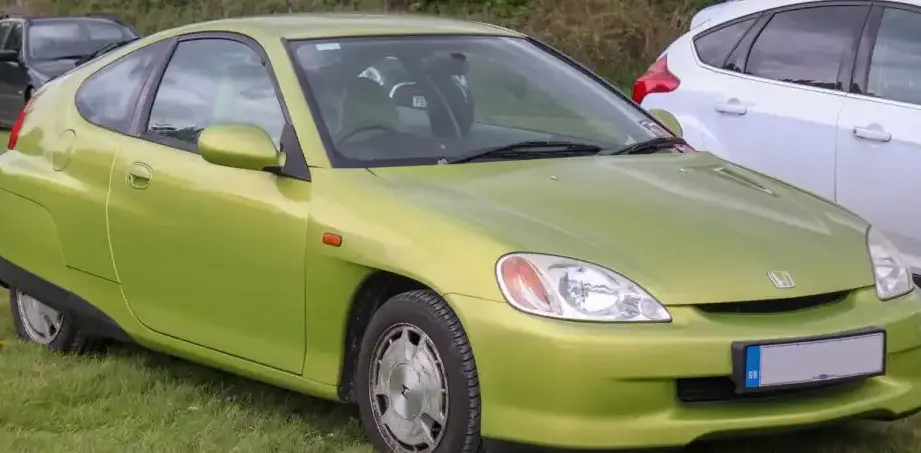
The Honda Insight 1.0 i 12V (76 hp) represents a unique chapter in Honda’s history, marking the brand’s first foray into mass-produced hybrid technology. Produced between 1999 and 2006, this first-generation Insight (designated the ZE series) was a compact, two-seater coupe designed primarily for the Japanese and European markets, with limited US availability. It distinguished itself with its distinctive aluminum body panels and a focus on maximizing fuel efficiency, rather than outright performance. This particular 1.0-liter variant served as the entry point to the Insight range, offering a more affordable option compared to later models and trims.
Technical Specifications
| Brand | Honda |
| Model | Insight |
| Generation | Insight |
| Type (Engine) | 1.0 i 12V (76 Hp) |
| Start of production | 1999 |
| End of production | 2006 |
| Powertrain Architecture | Internal Combustion engine |
| Body type | Coupe |
| Seats | 2 |
| Doors | 3 |
| Fuel consumption (combined) | 3.4 l/100 km (69.2 US mpg, 83.1 UK mpg, 29.4 km/l) |
| Fuel Type | Petrol (Gasoline) |
| Acceleration 0 – 100 km/h | 14.2 sec |
| Acceleration 0 – 62 mph | 14.2 sec |
| Acceleration 0 – 60 mph | 13.5 sec |
| Maximum speed | 177 km/h (109.98 mph) |
| Weight-to-power ratio | 11 kg/Hp |
| Weight-to-torque ratio | 7.4 kg/Nm |
| Power | 76 Hp @ 5700 rpm |
| Power per litre | 76.4 Hp/l |
| Torque | 113 Nm @ 1500 rpm (83.34 lb.-ft. @ 1500 rpm) |
| Engine layout | Front, Transverse |
| Engine displacement | 995 cm3 (60.72 cu. in.) |
| Number of cylinders | 3 |
| Engine configuration | Inline |
| Piston Stroke | 81.5 mm (3.21 in.) |
| Compression ratio | 10.8:1 |
| Number of valves per cylinder | 4 |
| Fuel injection system | Multi-port manifold injection |
| Engine aspiration | Naturally aspirated |
| Valvetrain | OHC |
| Kerb Weight | 835 kg (1840.86 lbs.) |
| Max. weight | 1040 kg (2292.81 lbs.) |
| Max load | 205 kg (451.95 lbs.) |
| Trunk (boot) space – minimum | 140 l (4.94 cu. ft.) |
| Fuel tank capacity | 40 l (10.57 US gal | 8.8 UK gal) |
| Length | 3945 mm (155.31 in.) |
| Width | 1695 mm (66.73 in.) |
| Height | 1355 mm (53.35 in.) |
| Wheelbase | 2400 mm (94.49 in.) |
| Front track | 1435 mm (56.5 in.) |
| Rear (Back) track | 1325 mm (52.17 in.) |
| Drivetrain Architecture | The Internal combustion engine (ICE) drives the front wheels of the vehicle. |
| Drive wheel | Front wheel drive |
| Number of gears and type of gearbox | 5 gears, manual transmission |
| Front suspension | Spring Strut |
| Rear suspension | Coil spring |
| Front brakes | Ventilated discs |
| Rear brakes | Drum |
| Assisting systems | ABS (Anti-lock braking system) |
| Steering type | Steering rack and pinion |
| Power steering | Hydraulic Steering |
| Tires size | 165/65 R14 T |
Powertrain & Engine Architecture
The heart of the Insight 1.0 i is a 995cc inline-three cylinder engine, internally designated as the D10A. This engine utilizes a single overhead camshaft (OHC) and multi-point fuel injection. The 12-valve configuration (four valves per cylinder) helps optimize breathing for its small displacement. The engine’s modest 76 horsepower at 5700 rpm and 83.34 lb-ft of torque at 1500 rpm are augmented by Honda’s Integrated Motor Assist (IMA) hybrid system. This system incorporates a 13-horsepower electric motor that assists the gasoline engine during acceleration and allows for regenerative braking, capturing energy normally lost during deceleration to recharge the battery. The Insight did *not* feature a traditional automatic transmission. It was exclusively offered with a continuously variable transmission (CVT) in most markets, though a 5-speed manual was available in some regions. The CVT was crucial to maximizing fuel efficiency by keeping the engine operating within its optimal power band.
Driving Characteristics
The 1.0-liter Insight, particularly with the CVT, prioritized fuel economy over spirited driving. Acceleration was leisurely, taking around 14.2 seconds to reach 62 mph. The CVT, while efficient, could feel somewhat disconnected and produce a droning sound during hard acceleration. The electric motor provided a noticeable boost during initial acceleration, smoothing out the power delivery. Compared to later, more powerful Insight models (like those with a 1.3-liter engine), the 1.0-liter felt noticeably slower. However, its lightweight construction (around 1840 lbs) and efficient powertrain made it surprisingly nimble in city driving. The steering was light and precise, contributing to a pleasant urban driving experience.
Equipment & Trim Levels
The Insight 1.0 i was generally sparsely equipped, reflecting its positioning as an affordable hybrid. Standard features typically included power windows, central locking, and an AM/FM radio. Air conditioning was often an optional extra. Interior upholstery was basic, typically consisting of cloth seats. The dashboard design was minimalist and functional, emphasizing the car’s focus on efficiency. Optional extras could include alloy wheels, a CD player, and upgraded interior trim. The overall interior ambiance was simple and utilitarian, prioritizing practicality over luxury.
Chassis & Braking
The Insight’s chassis was designed with weight reduction in mind. Extensive use of aluminum in the body panels significantly reduced overall weight. The front suspension utilized a MacPherson strut setup, while the rear employed a coil spring arrangement. Braking was handled by ventilated discs at the front and drum brakes at the rear. Anti-lock Braking System (ABS) was standard, enhancing safety. The relatively light weight of the vehicle meant that the braking system was adequate for its performance level, although it lacked the stopping power of larger, heavier cars. Stabilizer bars were relatively thin, contributing to a softer ride but also more body roll during cornering.
Market Reception & Comparison
The Honda Insight 1.0 i was generally well-received by critics for its exceptional fuel economy and innovative hybrid technology. However, its limited practicality (due to its two-seater configuration) and modest performance were points of criticism. Compared to other hybrids of the time, such as the Toyota Prius, the Insight offered a more affordable entry point into hybrid ownership, but at the expense of interior space and overall refinement. Against non-hybrid competitors in the small car segment, the Insight’s fuel economy was a significant advantage, but its performance and practicality were often lacking. Reliability was generally good, typical of Honda products, although the hybrid system components required specialized maintenance.
Legacy
The first-generation Honda Insight, including the 1.0 i variant, played a pivotal role in popularizing hybrid technology. It demonstrated that fuel efficiency and environmental responsibility could be achieved without sacrificing reliability. While the two-seater configuration limited its mainstream appeal, it paved the way for the more practical and successful second-generation Insight. Today, the Insight 1.0 i is a sought-after vehicle among collectors and enthusiasts interested in early hybrid technology. The powertrain, while not known for high performance, has proven to be relatively durable, and well-maintained examples can still provide reliable and economical transportation. The Insight’s legacy lies in its pioneering spirit and its contribution to the development of hybrid vehicles.