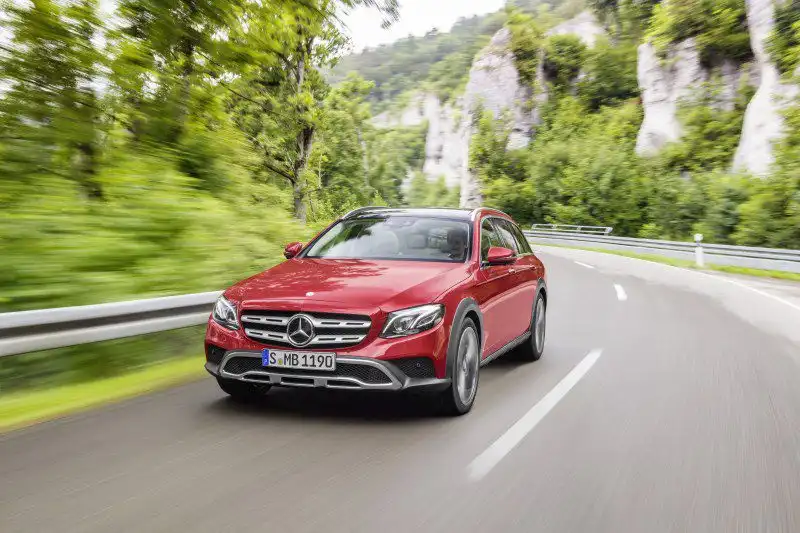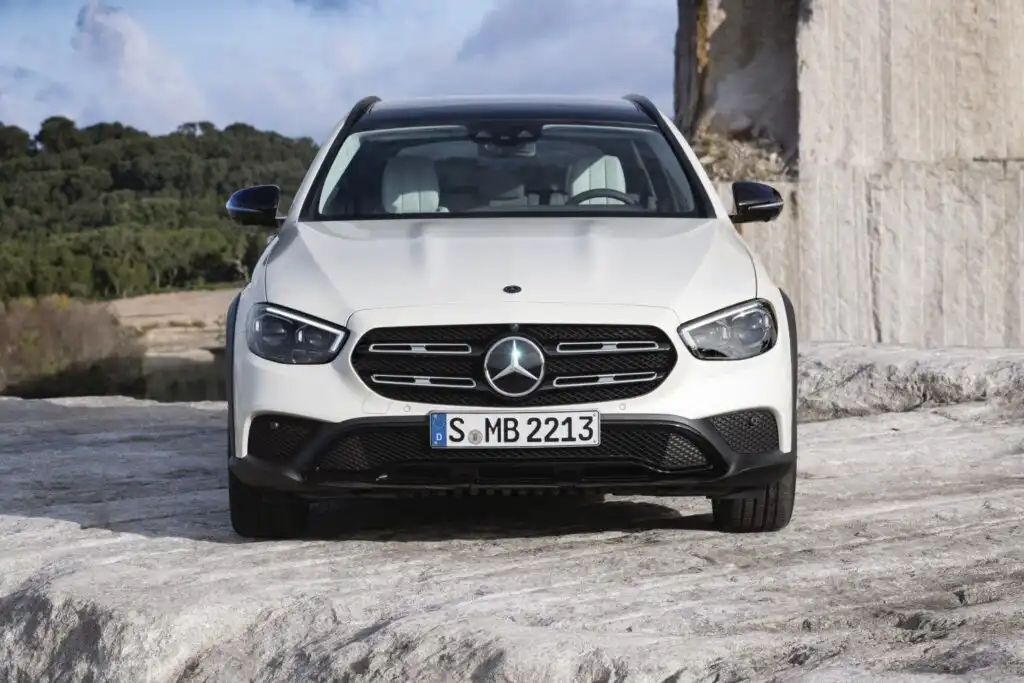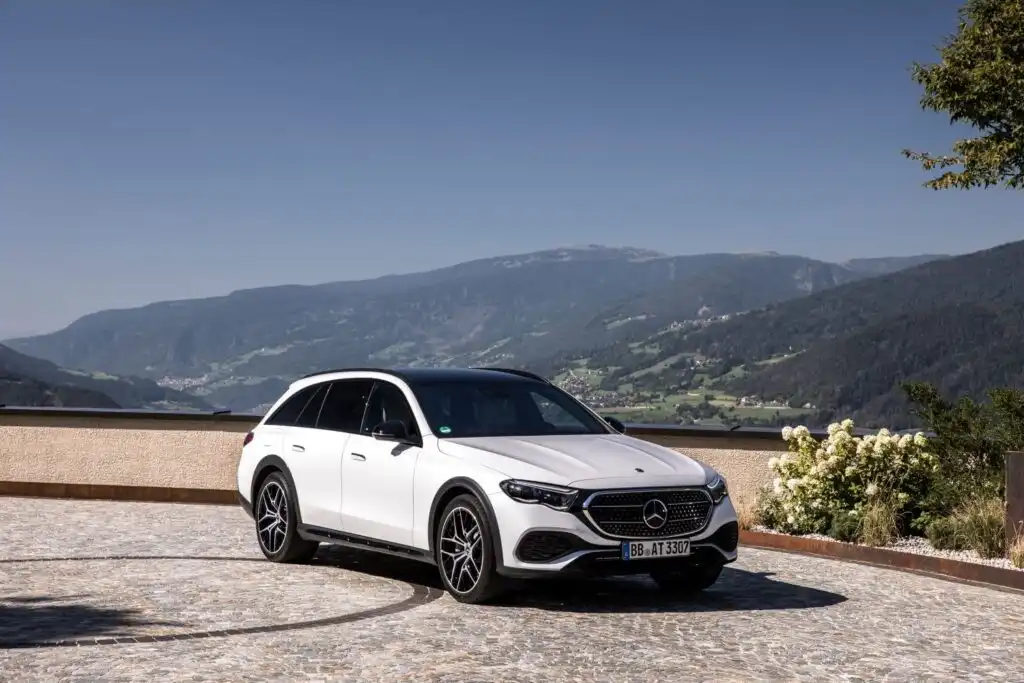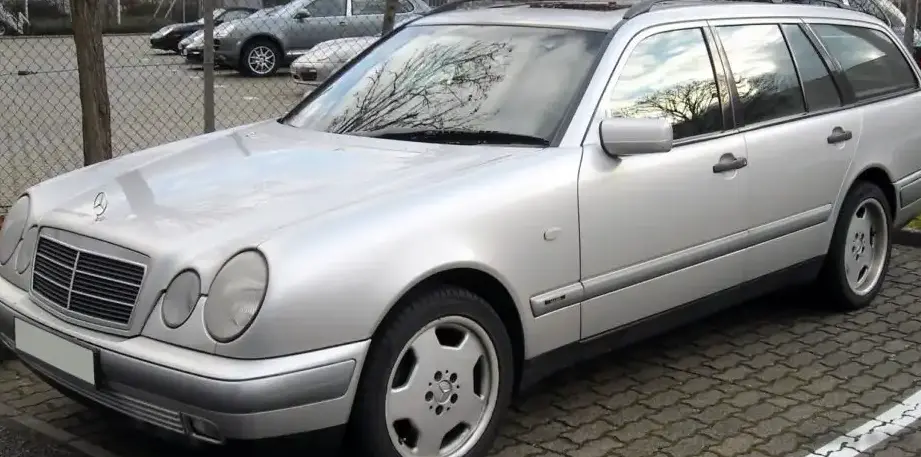
The Mercedes-Benz E 320 4MATIC T-modell (S210), produced between July 1996 and July 1999, represents a compelling blend of luxury, practicality, and all-weather capability within the W210 E-Class range. As the estate (wagon) variant, the T-modell offered the spaciousness expected of a family vehicle, while the E 320 designation signified a potent 3.2-liter V6 engine paired with a five-speed automatic transmission and Mercedes’ 4MATIC all-wheel-drive system. This configuration positioned the E 320 4MATIC T-modell as a mid-to-upper tier offering, appealing to buyers seeking a refined and capable vehicle for both daily commuting and long-distance travel. It was a key model in Mercedes-Benz’s strategy to offer a comprehensive range of E-Class variants to cater to diverse customer needs, particularly in European markets where estate cars held significant popularity.
Technical Specifications
| Brand | Mercedes-Benz |
| Model | E-class |
| Generation | E-class T-modell (S210) |
| Type (Engine) | E 320 (224 Hp) 4MATIC Automatic |
| Start of production | July, 1996 |
| End of production | July, 1999 |
| Powertrain Architecture | Internal Combustion engine |
| Body type | Station wagon (estate) |
| Seats | 5 |
| Doors | 5 |
| Fuel consumption (urban) | 16.2 l/100 km (14.5 US mpg, 17.4 UK mpg, 6.2 km/l) |
| Fuel consumption (extra urban) | 8.5 l/100 km (27.7 US mpg, 33.2 UK mpg, 11.8 km/l) |
| Fuel consumption (combined) | 11.3 l/100 km (20.8 US mpg, 25 UK mpg, 8.8 km/l) |
| Fuel Type | Petrol (Gasoline) |
| Acceleration 0 – 100 km/h | 8.8 sec |
| Acceleration 0 – 62 mph | 8.8 sec |
| Acceleration 0 – 60 mph | 8.4 sec |
| Maximum speed | 224 km/h (139.19 mph) |
| Weight-to-power ratio | 7.5 kg/Hp, 134.1 Hp/tonne |
| Weight-to-torque ratio | 5.3 kg/Nm, 188.6 Nm/tonne |
| Power | 224 Hp @ 5600 rpm |
| Power per litre | 70 Hp/l |
| Torque | 315 Nm @ 3000 rpm (232.33 lb.-ft. @ 3000 rpm) |
| Engine layout | Front, Longitudinal |
| Engine Model/Code | M 112 E 32 / 112.941 |
| Engine displacement | 3199 cm3 (195.21 cu. in.) |
| Number of cylinders | 6 |
| Engine configuration | V-engine |
| Cylinder Bore | 89.9 mm (3.54 in.) |
| Piston Stroke | 84 mm (3.31 in.) |
| Compression ratio | 10:1 |
| Number of valves per cylinder | 3 |
| Fuel injection system | Multi-port manifold injection |
| Engine aspiration | Naturally aspirated engine |
| Valvetrain | SOHC |
| Engine oil capacity | 8 l (8.45 US qt | 7.04 UK qt) |
| Coolant | 10 l (10.57 US qt | 8.8 UK qt) |
| Kerb Weight | 1670 kg (3681.72 lbs.) |
| Max. weight | 2250 kg (4960.4 lbs.) |
| Max load | 580 kg (1278.68 lbs.) |
| Trunk (boot) space – minimum | 600 l (21.19 cu. ft.) |
| Trunk (boot) space – maximum | 1975 l (69.75 cu. ft.) |
| Fuel tank capacity | 70 l (18.49 US gal | 15.4 UK gal) |
| Length | 4816 mm (189.61 in.) |
| Width | 1799 mm (70.83 in.) |
| Height | 1505 mm (59.25 in.) |
| Wheelbase | 2833 mm (111.54 in.) |
| Front track | 1528 mm (60.16 in.) |
| Rear (Back) track | 1538 mm (60.55 in.) |
| Drivetrain Architecture | The Internal combustion engine (ICE) drives permanently the four wheels of the vehicle. |
| Drive wheel | All wheel drive (4×4) |
| Number of gears and type of gearbox | 5 gears, automatic transmission |
| Front suspension | Double wishbone |
| Rear suspension | Hydro-pneumatic element, Independent multi-link suspension |
| Front brakes | Ventilated discs |
| Rear brakes | Disc |
| Assisting systems | ABS (Anti-lock braking system) |
| Steering type | Steering rack and pinion |
| Power steering | Hydraulic Steering |
| Tires size | 215/55 R16 |
| Wheel rims size | 7.5J x 16 |
Powertrain & Engine Architecture
The heart of the E 320 4MATIC T-modell is the M112 E 32 engine, a 3.2-liter naturally aspirated V6. This engine, part of Mercedes-Benz’s new generation of V-engines introduced in the mid-1990s, featured all-aluminum construction, a short-stroke design, and a single overhead camshaft (SOHC) valvetrain with three valves per cylinder (two intake, one exhaust). The M112 utilized a multi-port fuel injection system, delivering fuel directly into the intake ports. This engine was known for its smooth power delivery and relatively refined operation. Paired with the engine was a five-speed automatic transmission (typically the 5G-Tronic), designed for smooth and comfortable shifts. The 4MATIC system employed a single-transfer case and a viscous coupling to distribute power between the front and rear axles, providing enhanced traction in adverse conditions.
Driving Characteristics
The E 320 4MATIC T-modell offered a comfortable and composed driving experience. While not overtly sporty, the 224 horsepower and 315 Nm (232 lb-ft) of torque provided ample power for confident overtaking and effortless cruising. The automatic transmission, while not offering the responsiveness of a manual, was well-matched to the engine’s characteristics, providing smooth gear changes. The 4MATIC system instilled a sense of security, particularly on slippery surfaces, without significantly impacting handling. Compared to the E 280 variants, the E 320 offered a noticeable performance upgrade. However, it lacked the sharper handling and more engaging driving experience of the sportier E 430 models. The gear ratios were tuned for relaxed highway cruising, prioritizing comfort over outright acceleration.
Equipment & Trim Levels
The E 320 4MATIC T-modell typically came well-equipped, reflecting its position in the E-Class lineup. Standard features included automatic climate control, power windows and locks, a premium sound system, and leather upholstery. Wood trim adorned the interior, enhancing the sense of luxury. Optional extras included a sunroof, heated seats, a navigation system, and upgraded audio options. The T-modell also benefited from the estate car’s inherent practicality, with a large cargo area that could be expanded by folding down the rear seats. Trim levels were relatively standardized, with options packages allowing buyers to customize their vehicles to their preferences.
Chassis & Braking
The S210 E-Class T-modell featured a robust chassis designed for both comfort and handling. The front suspension utilized a double wishbone setup, while the rear employed a multi-link independent suspension, often incorporating a hydro-pneumatic leveling system to maintain a consistent ride height regardless of load. Braking duties were handled by ventilated discs at the front and solid discs at the rear, assisted by an Anti-lock Braking System (ABS). The E 320 4MATIC, due to its increased weight from the all-wheel-drive system, often featured slightly uprated suspension components and brakes compared to rear-wheel-drive variants.
Market Reception & Comparison
The E 320 4MATIC T-modell was generally well-received by automotive critics. It was praised for its comfortable ride, spacious interior, and the added security of all-wheel drive. Fuel economy, however, was a common criticism, with the 3.2-liter V6 proving relatively thirsty compared to smaller-engined E-Class models. Compared to the E 280 T-modell, the E 320 offered a significant performance boost, justifying the higher price tag for many buyers. The E 430 T-modell, while offering even more power, came at a substantial premium and was less focused on fuel efficiency.
Legacy
The M112 engine family, including the 3.2-liter variant found in the E 320, proved to be remarkably reliable. With proper maintenance, these engines can accumulate high mileage without major issues. The 5G-Tronic automatic transmission is also generally durable. Today, the E 320 4MATIC T-modell is a sought-after classic, appreciated for its blend of luxury, practicality, and all-weather capability. Well-maintained examples command reasonable prices in the used car market, appealing to enthusiasts seeking a comfortable and reliable estate car with a touch of Mercedes-Benz prestige. The S210 T-modell, and the E 320 4MATIC variant in particular, represents a high point in Mercedes-Benz’s estate car design and engineering.