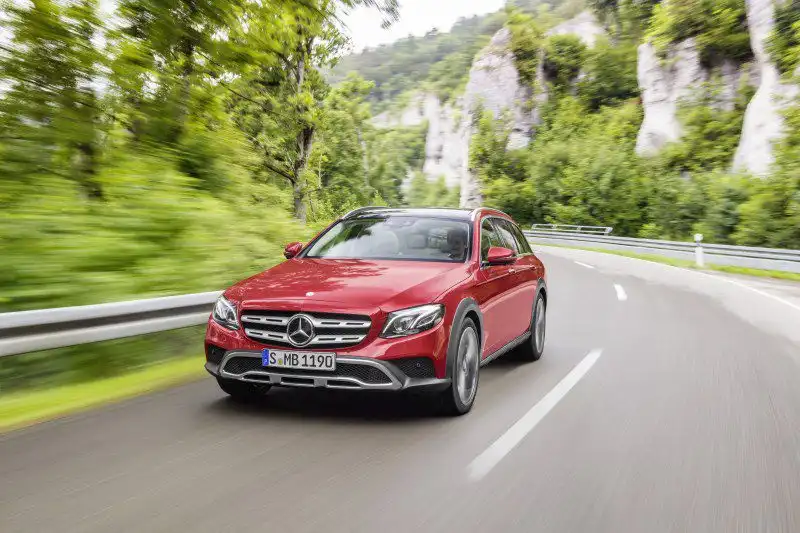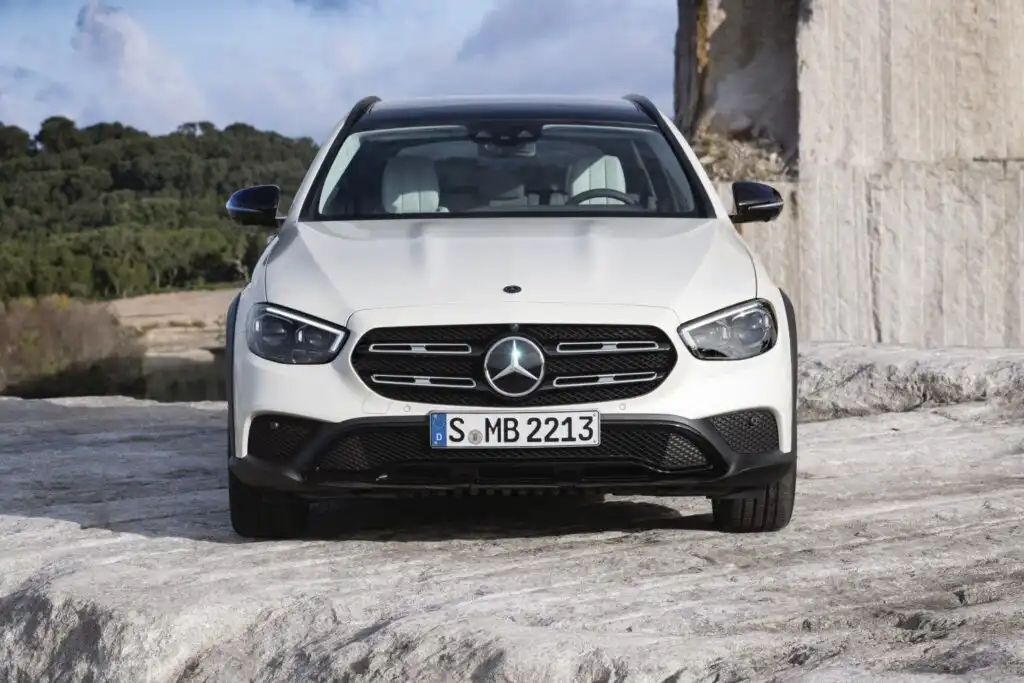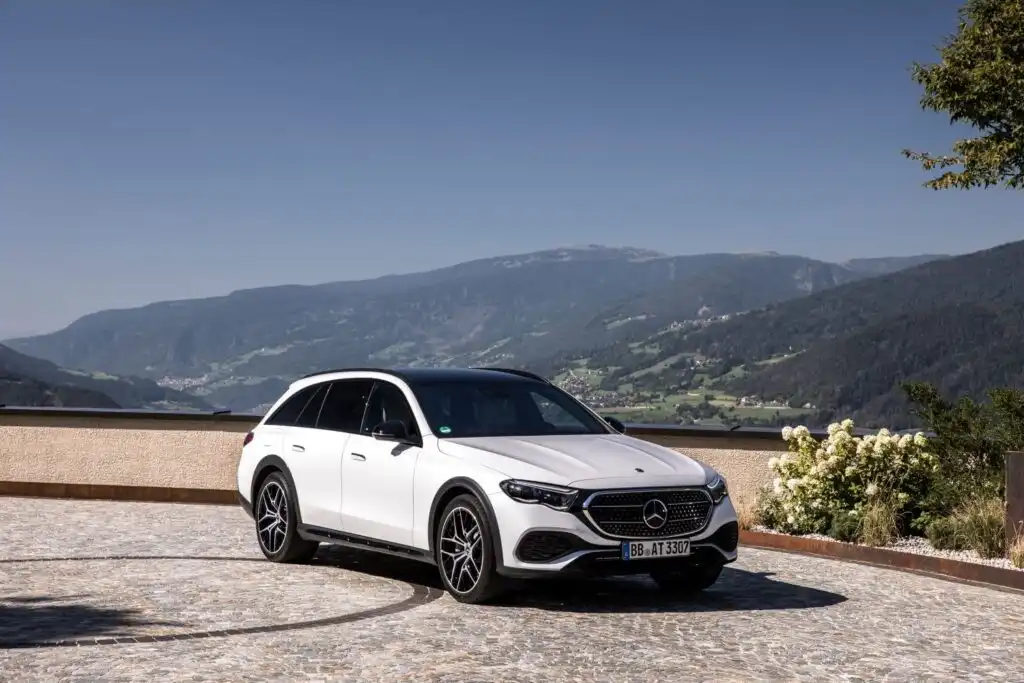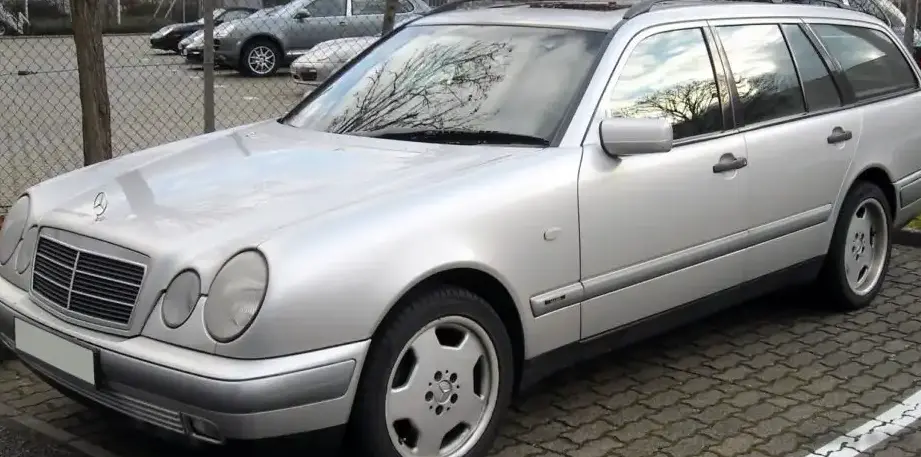
The Mercedes-Benz E-Class T-modell (S210) E 430 V8 Automatic, produced from October 1996 to July 1999, represented the high-performance variant of the S210 estate car range. Positioned as the flagship offering, it combined the practicality of a wagon with the power of Mercedes-Benz’s naturally aspirated V8 engine. This model occupied the premium segment of the E-Class T-modell lineup, appealing to buyers seeking both luxury and performance in a versatile package. It was part of the W210 E-Class generation, known for its significant advancements in safety and technology compared to its predecessor.
Technical Specifications
| Brand | Mercedes-Benz |
| Model | E-Class |
| Generation | E-Class T-modell (S210) |
| Type (Engine) | E 430 V8 (279 Hp) Automatic |
| Start of production | October, 1996 |
| End of production | July, 1999 |
| Powertrain Architecture | Internal Combustion engine |
| Body type | Station wagon (estate) |
| Seats | 5 |
| Doors | 5 |
| Fuel consumption (urban) | 17.4 l/100 km (13.5 US mpg, 16.2 UK mpg, 5.7 km/l) |
| Fuel consumption (extra urban) | 9.1 l/100 km (25.8 US mpg, 31 UK mpg, 11 km/l) |
| Fuel consumption (combined) | 12.1 l/100 km (19.4 US mpg, 23.3 UK mpg, 8.3 km/l) |
| Fuel Type | Petrol (Gasoline) |
| Acceleration 0 – 100 km/h | 6.9 sec |
| Acceleration 0 – 62 mph | 6.9 sec |
| Acceleration 0 – 60 mph | 6.6 sec |
| Maximum speed | 243 km/h (150.99 mph) |
| Weight-to-power ratio | 6.2 kg/Hp, 161.3 Hp/tonne |
| Weight-to-torque ratio | 4.3 kg/Nm, 231.2 Nm/tonne |
| Power | 279 Hp @ 5750 rpm |
| Power per litre | 65.4 Hp/l |
| Torque | 400 Nm @ 3000 rpm (295.02 lb.-ft. @ 3000 rpm) |
| Engine layout | Front, Longitudinal |
| Engine Model/Code | M 113 E 43 / 113.940 |
| Engine displacement | 4266 cm3 (260.33 cu. in.) |
| Number of cylinders | 8 |
| Engine configuration | V-engine |
| Cylinder Bore | 89.9 mm (3.54 in.) |
| Piston Stroke | 84 mm (3.31 in.) |
| Compression ratio | 10:1 |
| Number of valves per cylinder | 3 |
| Fuel injection system | Multi-port manifold injection |
| Engine aspiration | Naturally aspirated engine |
| Valvetrain | SOHC |
| Engine oil capacity | 8 l (8.45 US qt | 7.04 UK qt) |
| Coolant | 11 l (11.62 US qt | 9.68 UK qt) |
| Kerb Weight | 1730 kg (3814 lbs.) |
| Max. weight | 2290 kg (5048.59 lbs.) |
| Max load | 560 kg (1234.59 lbs.) |
| Trunk (boot) space – minimum | 600 l (21.19 cu. ft.) |
| Trunk (boot) space – maximum | 1975 l (69.75 cu. ft.) |
| Fuel tank capacity | 70 l (18.49 US gal | 15.4 UK gal) |
| Length | 4816 mm (189.61 in.) |
| Width | 1799 mm (70.83 in.) |
| Height | 1506 mm (59.29 in.) |
| Wheelbase | 2833 mm (111.54 in.) |
| Front track | 1534 mm (60.39 in.) |
| Rear (Back) track | 1538 mm (60.55 in.) |
| Drivetrain Architecture | Rear wheel drive |
| Number of gears and type of gearbox | 5 gears, automatic transmission |
| Front suspension | Double wishbone |
| Rear suspension | Hydro-pneumatic element, Independent multi-link suspension |
| Front brakes | Ventilated discs |
| Rear brakes | Disc |
| Assisting systems | ABS (Anti-lock braking system) |
| Steering type | Steering rack and pinion |
| Power steering | Hydraulic Steering |
| Tires size | 215/55 R16 |
| Wheel rims size | 7.5J x 16 |
Powertrain & Engine Architecture
The heart of the E 430 T-modell was the M113 E 43 engine, a 4.3-liter naturally aspirated V8. This engine, part of Mercedes-Benz’s modular V8 engine family, featured a three-valve-per-cylinder (two intake, one exhaust) SOHC design and multi-port fuel injection. The engine code 113.940 specifically identifies this variant. The M113 was known for its smooth power delivery and robust construction. The engine produced 279 horsepower at 5750 rpm and 400 Nm (295 lb-ft) of torque at 3000 rpm. Paired with the engine was a 5-speed automatic transmission, providing smooth shifts and contributing to the car’s overall refined driving experience. This transmission was specifically tuned to handle the V8’s torque output and provide comfortable cruising.
Driving Characteristics
The E 430 T-modell offered a distinctly different driving experience compared to the four-cylinder or six-cylinder E-Class wagons. The V8 provided ample power for effortless acceleration and confident highway passing. While not a sports car, the E 430 delivered a responsive and engaging driving experience. The automatic transmission, while smooth, wasn’t particularly sporty, prioritizing comfort over aggressive shifting. The 0-60 mph time of around 6.6 seconds was respectable for a wagon of its size and era. The weight distribution, however, could be felt during cornering, and the suspension, while comfortable, wasn’t as firm as some competitors.
Equipment & Trim Levels
The E 430 T-modell came standard with a generous array of features, reflecting its position as the top-of-the-line wagon. Standard equipment typically included leather upholstery, power-adjustable front seats with memory function, automatic climate control, a premium sound system, and wood trim throughout the interior. Optional extras included a sunroof, navigation system, upgraded sound system, and rear seat entertainment. The interior design was typical of Mercedes-Benz at the time – luxurious, well-built, and focused on comfort. The wagon’s rear seats could be folded down to expand cargo space, offering significant versatility.
Chassis & Braking
The S210 E-Class featured a double wishbone front suspension and an independent multi-link rear suspension, providing a comfortable ride and good handling. The E 430, due to its higher weight, often received slightly stiffer spring rates and dampers compared to lower-spec models. Braking duties were handled by ventilated discs at the front and solid discs at the rear, equipped with ABS (Anti-lock Braking System) as standard. The braking system was generally considered adequate for the car’s performance, but not exceptionally powerful.
Market Reception & Comparison
The E 430 T-modell was generally well-received by automotive critics, who praised its powerful engine, luxurious interior, and spacious cargo area. However, some critics noted the car’s relatively high price and fuel consumption. Compared to the E 320 T-modell (with its inline-six engine), the E 430 offered significantly more power but at the cost of increased fuel consumption and a higher purchase price. The E 430 also differed from the diesel-powered E 300 TD T-modell, which prioritized fuel economy and torque over outright performance.
Legacy
The M113 V8 engine proved to be remarkably reliable, and well-maintained E 430 T-modells continue to be sought after by enthusiasts today. While not as common as the lower-spec models, the E 430 offers a unique combination of luxury, performance, and practicality. Common maintenance items include checking for oil leaks (a typical issue with older Mercedes-Benz engines) and ensuring the automatic transmission is serviced regularly. The S210 E-Class, in general, is known for its build quality and durability, making it a relatively long-lasting vehicle. The E 430 T-modell represents a high point in the evolution of the Mercedes-Benz performance wagon, offering a compelling alternative to more modern rivals.