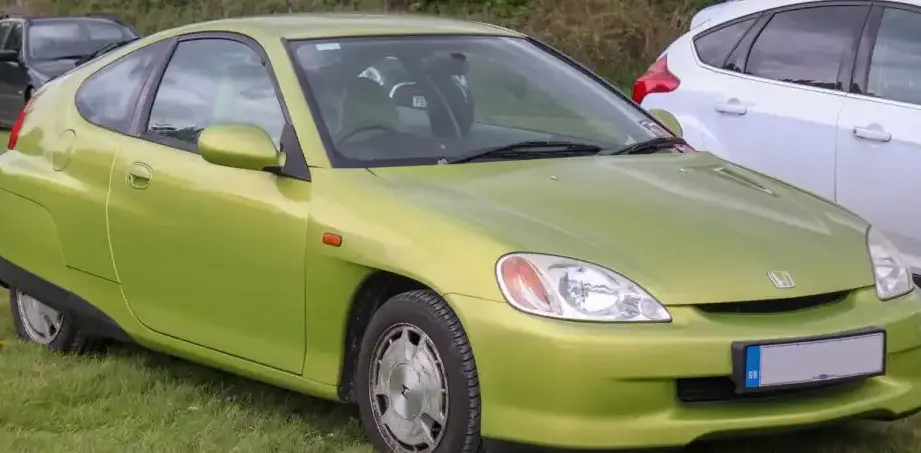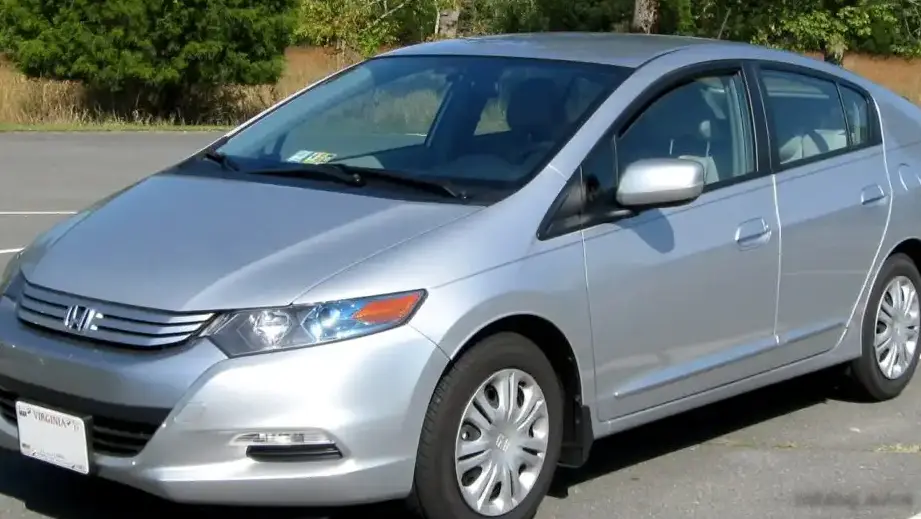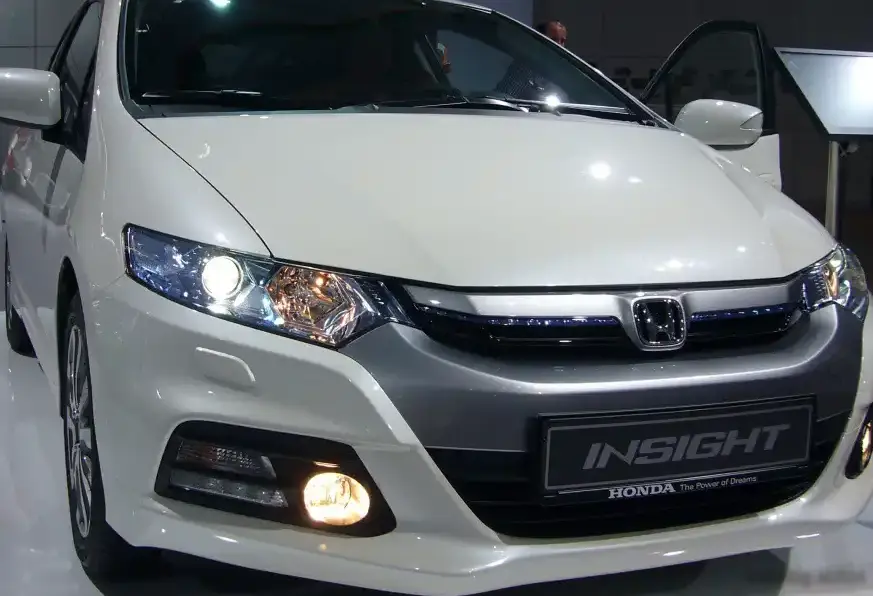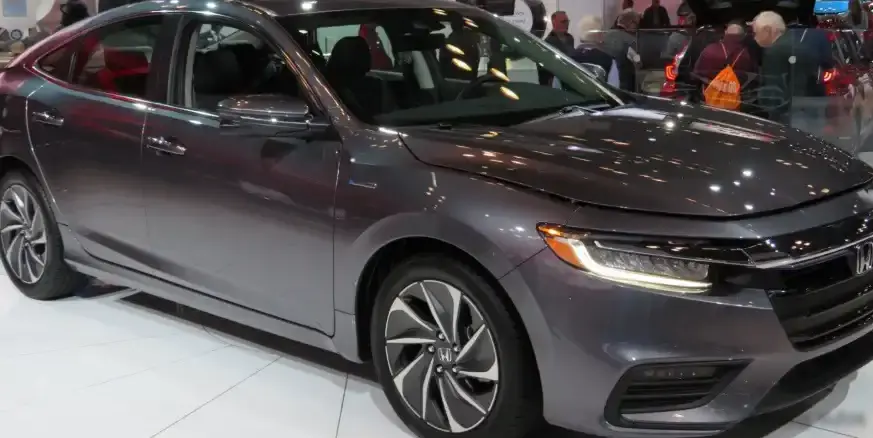
The Honda Insight III, produced from 2019 to 2022, represented Honda’s return to the hybrid sedan market after a hiatus. Positioned as a more mainstream and conventionally styled alternative to the Prius, the Insight aimed to attract buyers seeking fuel efficiency without sacrificing traditional automotive aesthetics. The 1.5-liter hybrid variant, generating a combined 151 horsepower with its e-CVT transmission, was the sole powertrain offered throughout its production run in North America, and served as the primary configuration globally. It was built on the same platform as the Civic, the Insight III sought to blend Honda’s reputation for reliability with cutting-edge hybrid technology.
Technical Specifications
| Brand | Honda |
| Model | Insight |
| Generation | Insight III |
| Type (Engine) | 1.5 (151 Hp) Hybrid e-CVT |
| Start of production | 2019 |
| End of production | 2022 |
| Powertrain Architecture | FHEV (Full Hybrid Electric Vehicle) |
| Body type | Sedan |
| Seats | 5 |
| Doors | 4 |
| Fuel consumption (urban) | 4.3-4.6 l/100 km (54.7 – 51.1 US mpg) |
| Fuel consumption (extra urban) | 4.8-5.2 l/100 km (49 – 45.2 US mpg) |
| Fuel consumption (combined) | 4.5-4.9 l/100 km (52.3 – 48 US mpg) |
| Fuel Type | Petrol (Gasoline) |
| Weight-to-power ratio | 9.2 kg/Hp |
| Weight-to-torque ratio | 10.3 kg/Nm |
| Gross battery capacity | 1.2 kWh |
| Battery technology | Lithium-ion (Li-Ion) |
| Electric motor power | 129 Hp @ 4000-8000 rpm |
| Electric motor Torque | 267 Nm @ 0-3000 rpm (196.93 lb.-ft. @ 0-3000 rpm) |
| System power | 151 Hp @ 6000 rpm |
| Internal combustion engine power | 107 Hp @ 6000 rpm |
| Internal combustion engine torque | 134 Nm @ 5000 rpm (98.83 lb.-ft. @ 5000 rpm) |
| Engine layout | Front, Transverse |
| Engine Model/Code | LEB6 |
| Engine displacement | 1498 cm3 (91.41 cu. in.) |
| Number of cylinders | 4 |
| Engine configuration | Inline |
| Cylinder Bore | 73 mm (2.87 in.) |
| Piston Stroke | 89.5 mm (3.52 in.) |
| Compression ratio | 13.5:1 |
| Number of valves per cylinder | 4 |
| Fuel injection system | Multi-port manifold injection |
| Engine aspiration | Naturally aspirated engine |
| Valvetrain | DOHC, i-VTEC |
| Engine oil capacity | 3.3 l (3.49 US qt | 2.9 UK qt) |
| Coolant capacity | 4.61 l (4.87 US qt | 4.06 UK qt) |
| Kerb Weight | 1382 kg (3046.79 lbs.) |
| Trunk (boot) space (minimum) | 428 l (15.11 cu. ft.) |
| Fuel tank capacity | 40 l (10.57 US gal | 8.8 UK gal) |
| Length | 4663 mm (183.58 in.) |
| Width | 1819 mm (71.61 in.) |
| Width with mirrors folded | 1878 mm (73.94 in.) |
| Width including mirrors | 2087 mm (82.17 in.) |
| Height | 1411 mm (55.55 in.) |
| Wheelbase | 2700 mm (106.3 in.) |
| Front track | 1547 mm (60.91 in.) |
| Rear track | 1565 mm (61.61 in.) |
| Minimum turning circle | 10.9 m (35.76 ft.) |
| Drivetrain Architecture | Front wheel drive. FHEV. ICE and electric motor drive front wheels. |
| Number of gears | e-CVT automatic transmission |
| Front suspension | Independent, McPherson with coil spring and anti-roll bar |
| Rear suspension | Independent multi-link with stabilizer |
| Front brakes | Ventilated discs |
| Rear brakes | Disc |
| Assisting systems | ABS (Anti-lock braking system) |
| Steering type | Steering rack and pinion |
| Power steering | Electric |
| Tires size | 215/55 R16 93V; 215/50 R17 91H |
| Wheel rims size | 16; 17 |
Powertrain & Engine Architecture
The heart of the Insight III is Honda’s LEB6 1.5-liter inline-four cylinder engine, part of the company’s Earth Dreams Technology series. This engine operates on the Atkinson cycle, which prioritizes efficiency over outright power. It produces 107 horsepower and 99 lb-ft of torque. The engine is paired with a 129-horsepower electric motor, drawing power from a 1.2 kWh lithium-ion battery pack. The system’s total output is 151 horsepower. The e-CVT (electronically controlled continuously variable transmission) is not a traditional CVT with belts and pulleys. Instead, it utilizes a power split device, effectively acting as a single-speed transmission that seamlessly blends power from the engine and electric motor. This system allows for smooth acceleration and optimized fuel efficiency. The engine features multi-point fuel injection and a DOHC i-VTEC valvetrain, contributing to its efficiency and responsiveness.
Driving Characteristics
The 1.5-liter hybrid powertrain delivers adequate, though not exhilarating, performance. Acceleration is smooth and linear, thanks to the e-CVT, but the Insight isn’t designed for spirited driving. The combined output provides sufficient power for everyday commuting and highway merging. Compared to a standard gasoline-powered Civic, the Insight feels slightly less responsive, particularly at lower speeds where it relies more heavily on the electric motor. The e-CVT is programmed to prioritize fuel economy, which can sometimes result in a slight delay in response when pressing the accelerator. However, the seamless transitions between electric and gasoline power are a hallmark of the system. The Insight excels in city driving, where the electric motor can handle much of the propulsion, resulting in exceptional fuel economy.
Equipment & Trim Levels
The Honda Insight III was offered in LX, EX, and Touring trim levels. The base LX model included standard features such as Honda Sensing suite of safety technologies (including adaptive cruise control and lane keeping assist), a 7-inch touchscreen infotainment system, and LED headlights. The EX trim added features like a larger 8-inch touchscreen, Apple CarPlay and Android Auto integration, heated front seats, and a sunroof. The top-of-the-line Touring trim included premium features such as leather upholstery, a premium audio system, and additional driver-assistance features like blind spot monitoring. All trims featured a relatively minimalist interior design, focusing on functionality and ease of use.
Chassis & Braking
The Insight III shares its platform with the tenth-generation Honda Civic, benefiting from a well-tuned chassis. The front suspension utilizes a McPherson strut setup, while the rear features an independent multi-link suspension. This configuration provides a comfortable ride and predictable handling. The Insight’s hybrid powertrain adds weight compared to a standard Civic, but the suspension is tuned to compensate. Braking duties are handled by ventilated discs up front and solid discs in the rear. The regenerative braking system captures energy during deceleration, helping to recharge the battery and further improve fuel efficiency. ABS and electronic brake-force distribution are standard safety features.
Market Reception & Comparison
The Honda Insight III was generally well-received by automotive critics, who praised its fuel efficiency, comfortable ride, and attractive styling. It was often compared to the Toyota Prius, with reviewers noting that the Insight offered a more conventional appearance and driving experience. However, the Prius typically offered slightly better fuel economy. Compared to other trims within the Insight lineup, the 1.5-liter hybrid e-CVT was the only option, making it the standard configuration. Its fuel economy figures consistently ranked among the best in its class, and its reliability was in line with Honda’s reputation.
Legacy
The Honda Insight III represented a significant step forward for Honda in the hybrid market. While production ended in 2022, the powertrain technology developed for the Insight continues to influence Honda’s hybrid offerings. The 1.5-liter hybrid system proved to be reliable and durable, and used examples continue to be a popular choice for buyers seeking a fuel-efficient and dependable vehicle. The Insight’s success demonstrated that hybrid technology could be integrated into a mainstream sedan without compromising style or driving experience, paving the way for Honda’s expanded hybrid lineup in subsequent years.