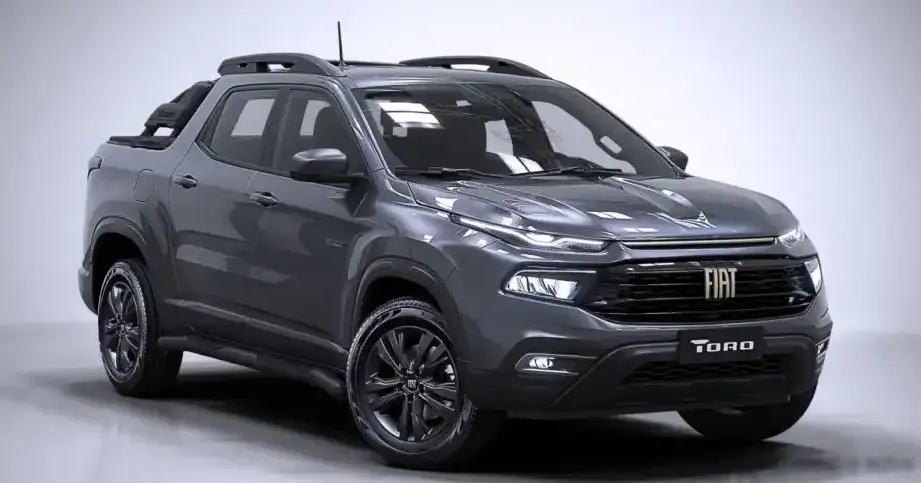
The Fiat Toro 2.4 (174 hp) Automatic, produced from 2016 to 2021, represents a significant entry in Fiat’s foray into the compact pickup truck segment, primarily targeted towards the South American market, particularly Brazil. Positioned as a mid-range offering within the Toro lineup, it bridged the gap between the more basic versions and the higher-performance, diesel-powered models. The Toro, built on a unibody construction – a rarity for pickups in its class at the time – aimed to blend the practicality of a truck with the comfort and refinement of a passenger vehicle. This variant, with its 2.4-liter gasoline engine and nine-speed automatic transmission, was designed to appeal to buyers seeking a versatile vehicle for both work and leisure, prioritizing ease of use and a comfortable driving experience.
Technical Specifications
| Brand | Fiat |
| Model | Toro |
| Generation | Toro |
| Type (Engine) | 2.4 (174 Hp) Automatic |
| Start of production | 2016 year |
| End of production | 2021 year |
| Powertrain Architecture | Internal Combustion engine |
| Body type | Pick-up |
| Seats | 5 |
| Doors | 4 |
| Fuel Type | Petrol (Gasoline) |
| Maximum speed | 197 km/h (122.41 mph) |
| Emission standard | Euro 5 |
| Weight-to-power ratio | 9.8 kg/Hp, 102.1 Hp/tonne |
| Weight-to-torque ratio | 7.4 kg/Nm, 135.6 Nm/tonne |
| Power | 174 Hp @ 6250 rpm |
| Power per litre | 73.7 Hp/l |
| Torque | 231 Nm @ 4000 rpm (170.38 lb.-ft. @ 4000 rpm) |
| Engine layout | Front, Transverse |
| Engine displacement | 2360 cm3 (144.02 cu. in.) |
| Number of cylinders | 4 |
| Engine configuration | Inline |
| Cylinder Bore | 88 mm (3.46 in.) |
| Piston Stroke | 97 mm (3.82 in.) |
| Compression ratio | 11.8:1 |
| Number of valves per cylinder | 4 |
| Fuel injection system | Multi-port manifold injection |
| Engine aspiration | Turbocharger, Intercooler |
| Engine oil capacity | 5.2 l (5.49 US qt | 4.58 UK qt) |
| Coolant | 6.45 l (6.82 US qt | 5.68 UK qt) |
| Kerb Weight | 1704 kg (3756.68 lbs.) |
| Trunk (boot) space – minimum | 820 l (28.96 cu. ft.) |
| Fuel tank capacity | 60 l (15.85 US gal | 13.2 UK gal) |
| Permitted trailer load with brakes (12%) | 750 kg (1653.47 lbs.) |
| Permitted trailer load without brakes | 400 kg (881.85 lbs.) |
| Length | 4915 mm (193.5 in.) |
| Width | 1844 mm (72.6 in.) |
| Width including mirrors | 2033 mm (80.04 in.) |
| Height | 1737 mm (68.39 in.) |
| Wheelbase | 2990 mm (117.72 in.) |
| Front track | 1547 mm (60.91 in.) |
| Rear (Back) track | 1575 mm (62.01 in.) |
| Front overhang | 920 mm (36.22 in.) |
| Rear overhang | 1005 mm (39.57 in.) |
| Ride height (ground clearance) | 235 mm (9.25 in.) |
| Minimum turning circle (turning diameter) | 12.2 m (40.03 ft.) |
| Approach angle | 26.1-26.3° |
| Departure angle | 28.3-28.5° |
| Ramp-over (brakeover) angle | 21.2-21.4° |
| Drivetrain Architecture | The Internal combustion engine (ICE) drives the front wheels of the vehicle. |
| Drive wheel | Front wheel drive |
| Number of gears and type of gearbox | 9 gears, automatic transmission |
| Front suspension | Independent, type McPherson with coil spring and anti-roll bar |
| Rear suspension | Independent multi-link spring suspension with stabilizer |
| Front brakes | Ventilated discs |
| Rear brakes | Drum |
| Assisting systems | ABS (Anti-lock braking system) |
| Steering type | Steering rack and pinion |
| Power steering | Electric Steering |
| Tires size | 215/65 R16; 225/60 R17 |
| Wheel rims size | 6.5J x 16; 6.5J x 17 |
Powertrain & Engine Architecture
The heart of the Toro 2.4 Automatic is Fiat’s 2.4-liter inline-four cylinder gasoline engine, designated as the G5F. This engine utilizes a single overhead camshaft (SOHC) design with four valves per cylinder. A key feature is its turbocharging and intercooling system, which helps to boost power and torque output. The engine employs multi-point fuel injection, delivering fuel directly into the intake ports. The nine-speed automatic transmission, sourced from ZF (9HP48), was a relatively new technology at the time, offering a wide range of gear ratios for improved fuel efficiency and smooth acceleration. This transmission is known for its sophisticated electronic control system and ability to adapt to driving conditions. The engine’s transverse mounting within the front-wheel-drive configuration contributes to a compact engine bay layout.
Driving Characteristics
The 174 hp and 231 Nm (170 lb-ft) of torque delivered by the 2.4-liter engine, coupled with the nine-speed automatic, provided adequate performance for everyday driving. Acceleration was respectable, though not particularly sporty, with a 0-60 mph time estimated around 10-11 seconds. The automatic transmission generally shifted smoothly, but some drivers noted occasional hesitation or hunting for the right gear, particularly during quick acceleration maneuvers. Compared to the more powerful diesel versions of the Toro, the 2.4 Automatic felt less capable when fully loaded or towing. However, its lighter weight and front-wheel-drive configuration contributed to better fuel economy and a more comfortable ride on paved roads. The wide range of gears in the transmission helped to keep the engine operating within its optimal power band, improving responsiveness in various driving situations.
Equipment & Trim Levels
The Toro 2.4 Automatic typically came standard with features such as air conditioning, power windows and locks, a basic audio system with USB connectivity, and ABS brakes. Higher trim levels, such as the Freedom or Volcano, added features like alloy wheels, a touchscreen infotainment system with Bluetooth connectivity, rear parking sensors, and cruise control. Interior upholstery was generally cloth, with leather options available on higher trims. Optional extras included a sunroof, automatic headlights, and a more advanced audio system. The interior design was functional and modern, prioritizing practicality and ease of use.
Chassis & Braking
The Toro’s unibody construction provided a good balance between ride comfort and handling. The front suspension utilized an independent McPherson strut setup, while the rear employed an independent multi-link system, both with coil springs and stabilizer bars. This configuration helped to minimize body roll and provide a relatively smooth ride. The braking system featured ventilated discs on the front wheels and drum brakes on the rear. ABS was standard, providing enhanced stopping power and stability during emergency braking. The steering system was an electric power-assisted rack and pinion, offering light and precise steering feel.
Market Reception & Comparison
The Fiat Toro 2.4 Automatic was generally well-received in the South American market as a versatile and comfortable pickup truck. Critics praised its unibody construction, which provided a more refined driving experience compared to traditional body-on-frame pickups. However, some reviewers noted that its towing capacity and off-road capabilities were limited compared to more rugged trucks. Compared to the Toro’s diesel variants, the 2.4 Automatic offered better fuel economy in city driving but lacked the low-end torque and overall power of the diesel engines. Its price point positioned it as a competitive option within the compact pickup segment, appealing to buyers who prioritized comfort and convenience over outright performance.
Legacy
The Fiat Toro 2.4 Automatic has proven to be a relatively reliable vehicle, with the 2.4-liter engine and ZF nine-speed transmission generally holding up well over time. Common maintenance items include regular oil changes, filter replacements, and inspection of the turbocharger system. On the used car market, the Toro 2.4 Automatic remains a popular choice for buyers seeking a versatile and affordable pickup truck. Its unibody construction and comfortable ride continue to appeal to those who prioritize practicality and refinement. While not as sought after as the diesel versions, the 2.4 Automatic offers a compelling combination of fuel efficiency, ease of use, and overall value.