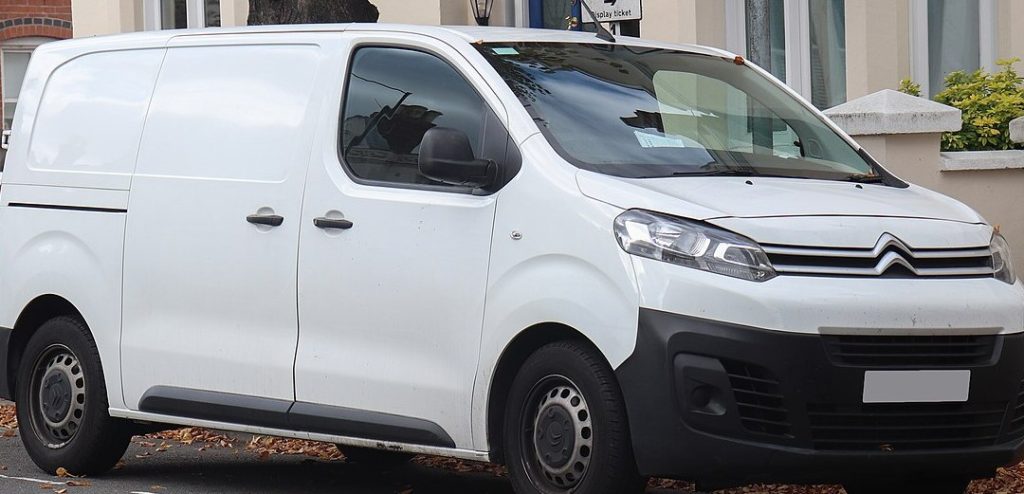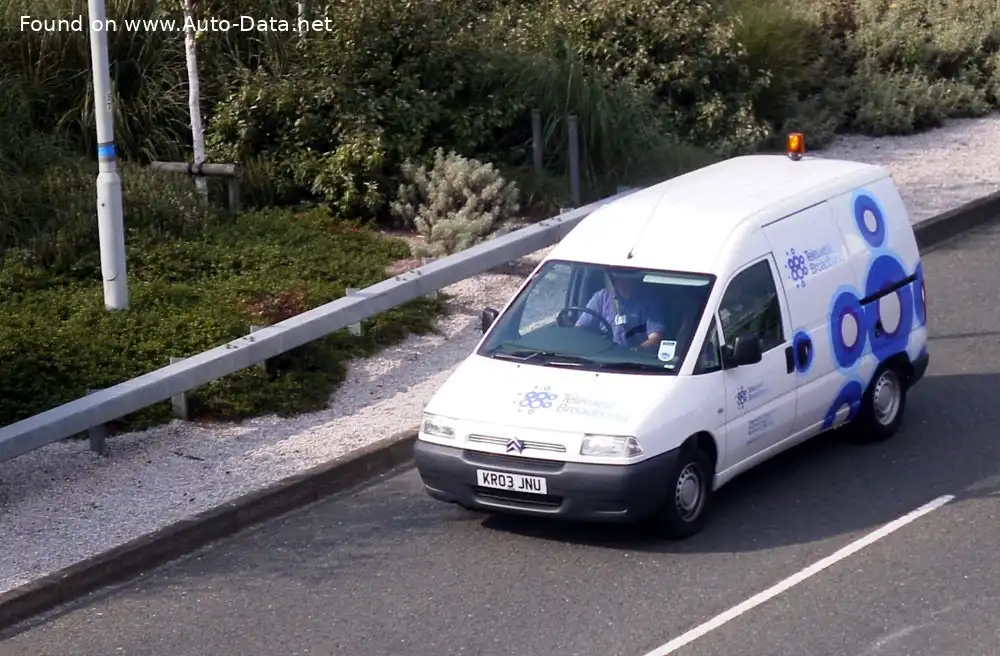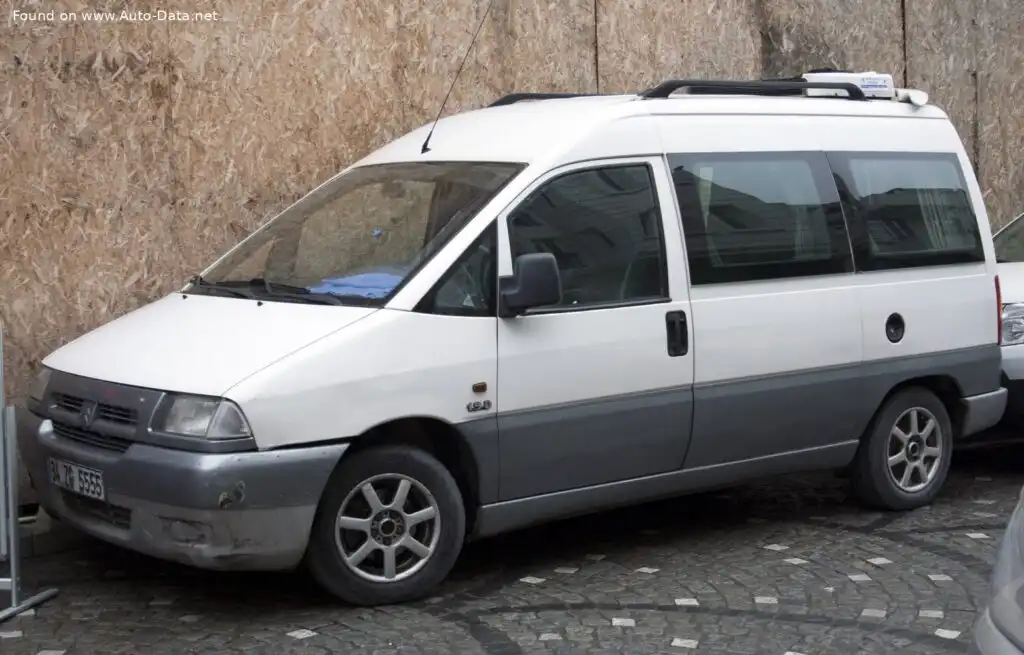
The Citroen Jumpy I, marketed as the Dispatch in the United Kingdom and other markets, was a popular light commercial vehicle and passenger minivan produced from 1995 to 2006. The first generation (1995-2006), designated as the Jumpy I or Dispatch I, was a collaborative effort between Citroen, Peugeot, and Fiat, sharing a common platform and many components. This article focuses specifically on the 2.0-liter (136 horsepower) automatic variant with nine-seat configuration, produced between June 2002 and May 2003. This version represented a mid-range offering within the Jumpy/Dispatch lineup, aimed at families and businesses requiring a versatile and comfortable people carrier with the convenience of an automatic transmission.
Technical Specifications
| Brand | Citroen |
| Model | Jumpy |
| Generation | Jumpy I Dispatch |
| Type | 2.0 (136 Hp) Automatic 9 Seat |
| Start of production | June, 2002 |
| End of production | May, 2003 |
| Powertrain Architecture | Internal Combustion engine |
| Body type | Minivan |
| Seats | 8-9 |
| Doors | 5 |
| Fuel consumption (urban) | 13.5 l/100 km (17.4 US mpg, 20.9 UK mpg, 7.4 km/l) |
| Fuel consumption (extra urban) | 7.6 l/100 km (30.9 US mpg, 37.2 UK mpg, 13.2 km/l) |
| Fuel consumption (combined) | 9.7 l/100 km (24.2 US mpg, 29.1 UK mpg, 10.3 km/l) |
| Fuel Type | Petrol (Gasoline) |
| Acceleration 0 – 100 km/h | 13.7 sec |
| Acceleration 0 – 62 mph | 13.7 sec |
| Acceleration 0 – 60 mph | 13 sec |
| Maximum speed | 172 km/h (106.88 mph) |
| Emission standard | Euro 3 |
| Weight-to-power ratio | 11.4 kg/Hp, 88 Hp/tonne |
| Weight-to-torque ratio | 8.1 kg/Nm, 123 Nm/tonne |
| Power | 136 Hp @ 6000 rpm |
| Power per litre | 68.1 Hp/l |
| Torque | 190 Nm @ 4100 rpm (140.14 lb.-ft. @ 4100 rpm) |
| Engine layout | Front, Transverse |
| Engine Model/Code | RFN EW10J4 |
| Engine displacement | 1997 cm3 (121.86 cu. in.) |
| Number of cylinders | 4 |
| Engine configuration | Inline |
| Cylinder Bore | 85 mm (3.35 in.) |
| Piston Stroke | 88 mm (3.46 in.) |
| Number of valves per cylinder | 4 |
| Fuel injection system | Multi-port manifold injection |
| Engine aspiration | Naturally aspirated engine |
| Valvetrain | DOHC |
| Engine oil capacity | 4.25 l (4.49 US qt | 3.74 UK qt) |
| Coolant | 8.5 l (8.98 US qt | 7.48 UK qt) |
| Kerb Weight | 1545 kg (3406.14 lbs.) |
| Max. weight | 2310 kg (5092.68 lbs.) |
| Max load | 765 kg (1686.54 lbs.) |
| Trunk (boot) space – minimum | 450 l (15.89 cu. ft.) |
| Trunk (boot) space – maximum | 1180 l (41.67 cu. ft.) |
| Fuel tank capacity | 80 l (21.13 US gal | 17.6 UK gal) |
| Max. roof load | 100 kg (220.46 lbs.) |
| Permitted trailer load with brakes (8%) | 1700 kg (3747.86 lbs.) |
| Permitted trailer load with brakes (12%) | 1300 kg (2866.01 lbs.) |
| Permitted trailer load without brakes | 750 kg (1653.47 lbs.) |
| Permitted towbar download | 60 kg (132.28 lbs.) |
| Length | 4440 mm (174.8 in.) |
| Width | 1810 mm (71.26 in.) |
| Width including mirrors | 2134 mm (84.02 in.) |
| Height | 1927 mm (75.87 in.) |
| Wheelbase | 2824 mm (111.18 in.) |
| Front track | 1540 mm (60.63 in.) |
| Rear (Back) track | 1540 mm (60.63 in.) |
| Front overhang | 846 mm (33.31 in.) |
| Rear overhang | 770 mm (30.31 in.) |
| Minimum turning circle | 12.35 m (40.52 ft.) |
| Drivetrain Architecture | The Internal combustion engine (ICE) drives the front wheels of the vehicle. |
| Drive wheel | Front wheel drive |
| Number of gears and type of gearbox | 4 gears, automatic transmission |
| Front suspension | Independent, type McPherson with coil spring and anti-roll bar |
| Rear suspension | Trailing arm, Torsion |
| Front brakes | Ventilated discs |
| Rear brakes | Drum |
| Assisting systems | ABS (Anti-lock braking system) |
| Steering type | Steering rack and pinion |
| Power steering | Hydraulic Steering |
| Tires size | 205/65 R15 |
| Wheel rims size | 6.5J x 15 |
INTRODUCTION
The Citroen Jumpy I, and its Peugeot 806 and Fiat Scudo siblings, represented a significant step forward in the European light commercial vehicle and multi-purpose vehicle (MPV) segment. Introduced in 1995, it offered a more modern and spacious alternative to older van-derived passenger carriers. The 2.0-liter, 136 horsepower automatic variant, produced from 2002-2003, was positioned as a comfortable and convenient option for larger families or businesses needing to transport personnel. The automatic transmission, while not common in this class of vehicle at the time, broadened the Jumpy’s appeal to drivers prioritizing ease of use over outright performance. This particular configuration was sold alongside 1.9-liter diesel and other gasoline engine options, offering a wider range of choices to suit different needs and budgets.
Powertrain & Engine Architecture
The heart of this Jumpy variant is the RFN (or EW10J4) 2.0-liter inline-four cylinder gasoline engine. This engine is part of the EW series developed by PSA Peugeot Citroen. It features a naturally aspirated configuration with multi-point fuel injection and a double overhead camshaft (DOHC) valvetrain. The engine produces 136 horsepower at 6000 rpm and 190 Nm (140 lb-ft) of torque at 4100 rpm. The engine’s design prioritized reliability and reasonable fuel economy over high-performance figures. Paired with this engine is a four-speed automatic transmission. While not the most modern transmission by today’s standards, it provided smooth shifts and simplified the driving experience, particularly in urban environments. The transmission was designed to handle the engine’s torque output adequately, but it wasn’t geared for particularly rapid acceleration.
Driving Characteristics
The 2.0-liter automatic Jumpy I offered a comfortable, if not particularly sporty, driving experience. The automatic transmission, while convenient, did impact acceleration. The 0-62 mph (0-100 km/h) time of 13.7 seconds reflects this. The four-speed gearbox meant that the engine often operated at higher revs during highway cruising, potentially contributing to increased fuel consumption compared to the manual transmission versions. The power delivery was relatively linear, making it easy to modulate, but the engine lacked the punch of the diesel alternatives. The Jumpy’s suspension, tuned for comfort, absorbed bumps well, but body roll was noticeable during cornering. Overall, this variant was best suited for relaxed driving and prioritizing passenger comfort.
Equipment & Trim Levels
The nine-seat configuration of this Jumpy variant was its defining feature. Standard equipment typically included power steering, central locking, and an anti-lock braking system (ABS). Interior trim was functional and durable, with cloth upholstery and a relatively simple dashboard layout. Optional extras could include air conditioning, electric windows, and a radio/CD player. The nine seats were arranged in a 3-3-3 configuration, offering flexibility for transporting large groups. The rear seats could be folded or removed to create more cargo space. The level of trim was generally basic, reflecting the Jumpy’s commercial vehicle roots, but it provided essential comfort and convenience features for its intended purpose.
Chassis & Braking
The Jumpy I utilized a front-wheel-drive layout with an independent McPherson strut suspension at the front and a trailing arm torsion beam suspension at the rear. This setup provided a good balance between ride comfort and handling. The front brakes were ventilated discs, offering adequate stopping power, while the rear brakes were drums. The ABS system enhanced braking safety, particularly on slippery surfaces. The steering was rack and pinion, providing precise control. The chassis was designed to handle the weight of a fully loaded vehicle, ensuring stability and durability.
Market Reception & Comparison
The 2.0-liter automatic Jumpy I received mixed reviews. Critics praised its spacious interior, comfortable ride, and the convenience of the automatic transmission. However, the engine was often criticized for being underpowered, especially when fully loaded. Compared to the 1.9-liter diesel versions, the gasoline engine offered less torque and poorer fuel economy. The diesel models were favored by those prioritizing fuel efficiency and towing capacity. The automatic transmission, while appreciated by some, was seen as detracting from the overall driving experience by others. The Jumpy I generally offered good value for money, making it a popular choice for families and businesses on a budget.
Legacy
The Citroen Jumpy I, including the 2.0-liter automatic variant, remains a relatively common sight on European roads today. While not known for exceptional performance or cutting-edge technology, it earned a reputation for reliability and practicality. The RFN engine, while not without its quirks, is generally considered durable if properly maintained. The automatic transmission, while older, can provide years of service with regular fluid changes. In the used car market, these Jumpy I models are often sought after as affordable and versatile people carriers or light commercial vehicles. Their simple construction and readily available parts make them relatively easy and inexpensive to repair, contributing to their continued popularity.