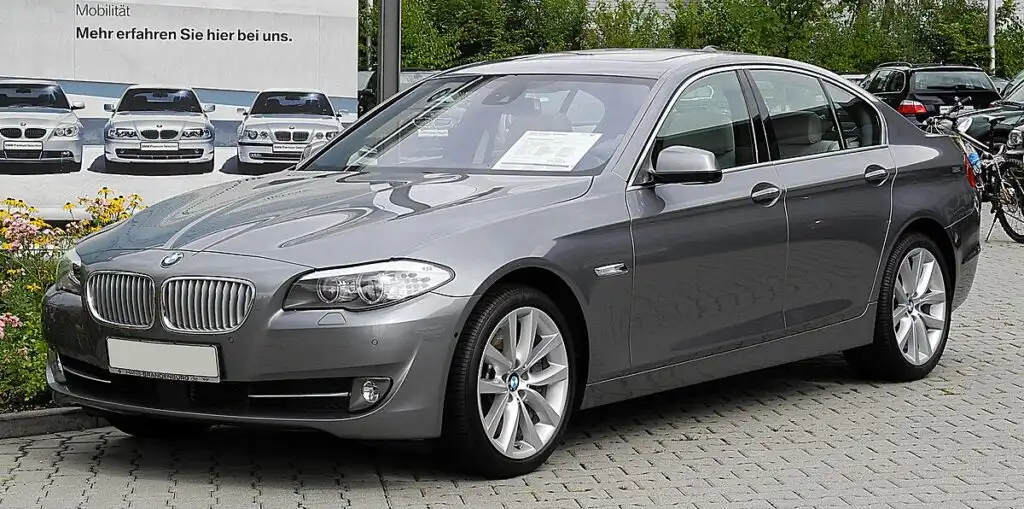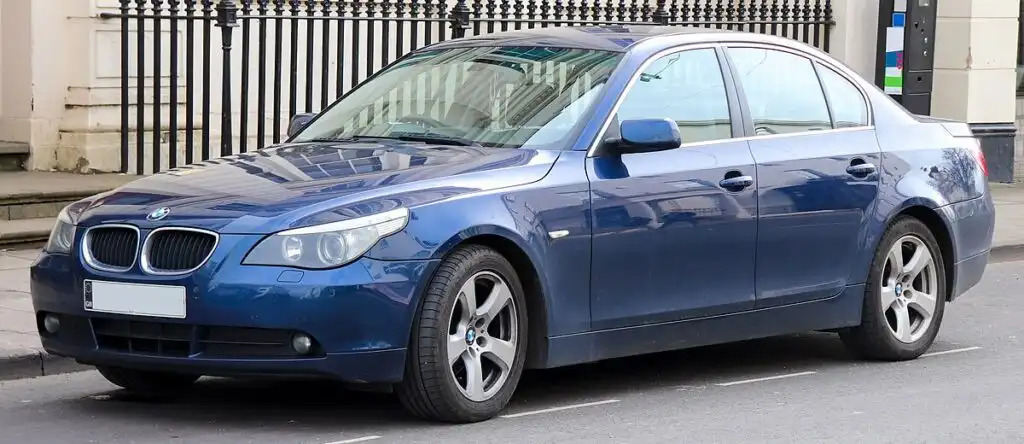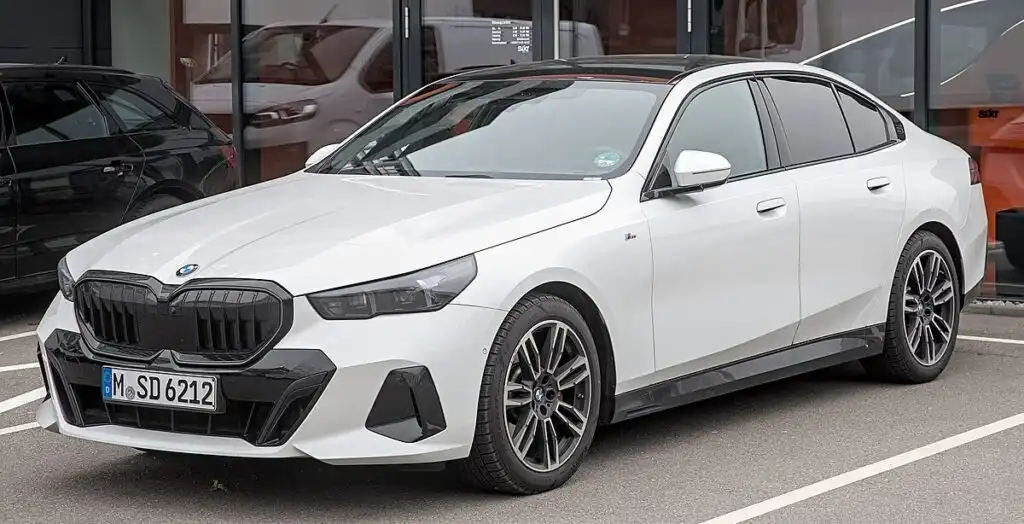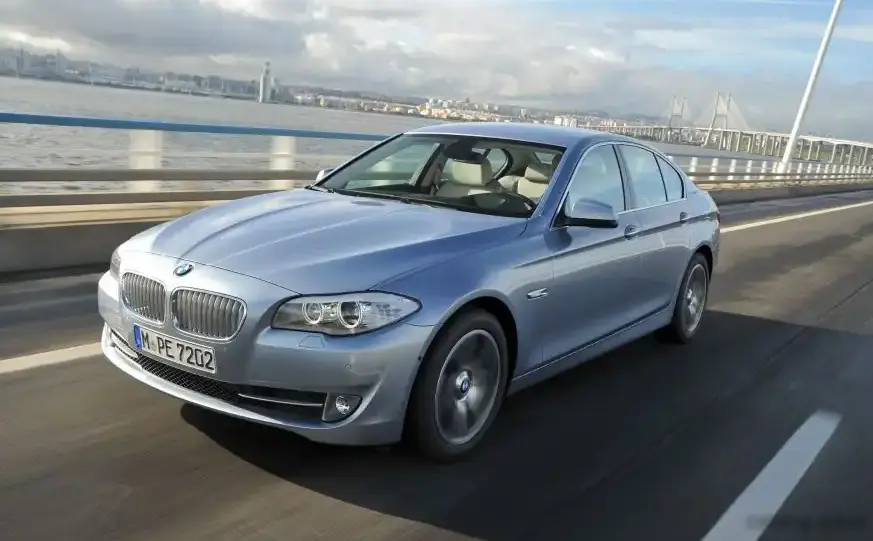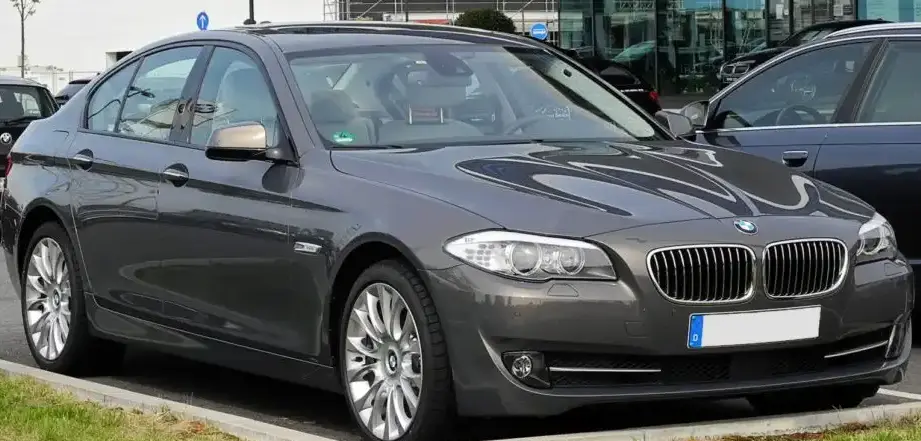
The BMW 5 Series F10 550i xDrive, produced from 2010 to 2013, represented the high-performance end of the fourth-generation 5 Series sedan lineup. Positioned as a luxury performance vehicle, it offered a significant step up in power and refinement compared to the 528i and 535i models. The “xDrive” designation indicated BMW’s all-wheel-drive system, enhancing traction and stability. This variant aimed to deliver a blend of grand touring comfort and spirited driving dynamics, appealing to buyers seeking a powerful and technologically advanced executive sedan.
Technical Specifications
| Brand | BMW |
| Model | 5 Series |
| Generation | 5 Series Sedan (F10) |
| Type (Engine) | 550i V8 (407 Hp) xDrive Steptronic |
| Start of production | 2010 |
| End of production | 2013 |
| Powertrain Architecture | Internal Combustion engine |
| Body type | Sedan |
| Seats | 5 |
| Doors | 4 |
| Fuel consumption (economy) – urban | 16.4 l/100 km (14.3 US mpg, 17.2 UK mpg, 6.1 km/l) |
| Fuel consumption (economy) – extra urban | 7.9 l/100 km (29.8 US mpg, 35.8 UK mpg, 12.7 km/l) |
| Fuel consumption (economy) – combined | 11 l/100 km (21.4 US mpg, 25.7 UK mpg, 9.1 km/l) |
| CO2 emissions | 257 g/km |
| Fuel Type | Petrol (Gasoline) |
| Acceleration 0 – 100 km/h | 4.8 sec |
| Acceleration 0 – 62 mph | 4.8 sec |
| Acceleration 0 – 60 mph | 4.6 sec |
| Maximum speed | 250 km/h (155.34 mph) |
| Emission standard | Euro 5 |
| Weight-to-power ratio | 4.7 kg/Hp, 214.2 Hp/tonne |
| Weight-to-torque ratio | 3.2 kg/Nm, 315.8 Nm/tonne |
| Power | 407 Hp @ 5500-6400 rpm |
| Power per litre | 92.6 Hp/l |
| Torque | 600 Nm @ 1750-4500 rpm (442.54 lb.-ft. @ 1750-4500 rpm) |
| Engine layout | Front, Longitudinal |
| Engine Model/Code | N63B44A |
| Engine displacement | 4395 cm3 (268.2 cu. in.) |
| Number of cylinders | 8 |
| Engine configuration | V-engine |
| Cylinder Bore | 89 mm (3.5 in.) |
| Piston Stroke | 88.3 mm (3.48 in.) |
| Compression ratio | 10:1 |
| Number of valves per cylinder | 4 |
| Fuel injection system | Direct injection |
| Engine aspiration | Twin-power turbo, Intercooler |
| Engine oil capacity | 8.5 l (8.98 US qt | 7.48 UK qt) |
| Coolant | 13.5 l (14.27 US qt | 11.88 UK qt) |
| Kerb Weight | 1900 kg (4188.78 lbs.) |
| Max. weight | 2500 kg (5511.56 lbs.) |
| Max load | 600 kg (1322.77 lbs.) |
| Trunk (boot) space – minimum | 520 l (18.36 cu. ft.) |
| Fuel tank capacity | 70 l (18.49 US gal | 15.4 UK gal) |
| Max. roof load | 100 kg (220.46 lbs.) |
| Permitted trailer load with brakes (12%) | 2000 kg (4409.25 lbs.) |
| Permitted trailer load without brakes | 750 kg (1653.47 lbs.) |
| Permitted towbar download | 90 kg (198.42 lbs.) |
| Length | 4899 mm (192.87 in.) |
| Width | 1860 mm (73.23 in.) |
| Height | 1464 mm (57.64 in.) |
| Wheelbase | 2968 mm (116.85 in.) |
| Front track | 1600 mm (62.99 in.) |
| Rear (Back) track | 1627 mm (64.06 in.) |
| Ride height (ground clearance) | 141 mm (5.55 in.) |
| Drag coefficient (Cd) | 0.30 |
| Minimum turning circle (turning diameter) | 11.95 m (39.21 ft.) |
| Drive wheel | All wheel drive (4×4) |
| Number of gears and type of gearbox | 8 gears, automatic transmission Steptronic |
| Front suspension | Double wishbone |
| Rear suspension | Independent multi-link suspension |
| Front brakes | Ventilated discs |
| Rear brakes | Disc |
| Assisting systems | ABS (Anti-lock braking system) |
| Steering type | Steering rack and pinion |
| Power steering | Electric Steering |
| Tires size | 245/45 R18 96Y |
| Wheel rims size | 8J x 18 |
Powertrain & Engine Architecture
The heart of the 550i xDrive was the N63B44A 4.4-liter twin-turbocharged V8 engine. This engine represented a significant advancement in BMW’s V8 technology, featuring direct fuel injection and variable valve timing (Valvetronic) on both intake and exhaust sides. The twin-turbocharger setup, utilizing two small turbochargers, minimized turbo lag and provided a broad, flat torque curve. The engine produced 407 horsepower at 5,500-6,400 rpm and a substantial 600 Nm (442 lb-ft) of torque between 1,750 and 4,500 rpm. This power was delivered to all four wheels through BMW’s xDrive all-wheel-drive system and an eight-speed Steptronic automatic transmission. The Steptronic transmission offered both fully automatic operation and manual gear selection via steering wheel-mounted paddles.
Driving Characteristics
The 550i xDrive offered a markedly different driving experience compared to the four- and six-cylinder variants. The abundant torque from the V8 engine provided effortless acceleration in virtually any gear. The xDrive system ensured excellent traction, particularly in inclement weather, and contributed to confident handling. While not as overtly sporty as some rear-wheel-drive BMWs, the 550i xDrive delivered a refined and capable driving experience. The eight-speed automatic transmission was well-tuned, providing smooth and quick shifts. The gear ratios were optimized for both performance and fuel efficiency, although the combined fuel economy of 11 l/100 km (21.4 US mpg) reflected the engine’s size and power.
Equipment & Trim Levels
The 550i xDrive typically came well-equipped with standard features including leather upholstery, power-adjustable front seats with memory function, a premium sound system, a navigation system, and automatic climate control. Common optional extras included a head-up display, adaptive cruise control, a panoramic sunroof, and upgraded interior trim options. The interior design was characterized by BMW’s typical focus on driver ergonomics and high-quality materials. The dashboard layout was clean and functional, with a prominent iDrive infotainment system display.
Chassis & Braking
The F10 5 Series featured a sophisticated chassis design with a double-wishbone front suspension and an independent multi-link rear suspension. The 550i xDrive benefited from slightly stiffer spring rates and dampers compared to the lower-powered models to better manage the increased weight and power. The braking system consisted of ventilated discs at all four corners, providing ample stopping power. The ABS (Anti-lock Braking System) and electronic stability control systems were standard, enhancing safety and control.
Market Reception & Comparison
The 550i xDrive was generally well-received by automotive critics, who praised its powerful engine, refined ride, and advanced technology. However, some reviewers noted that the xDrive system added weight, slightly diminishing the car’s agility compared to rear-wheel-drive models. Compared to the 535i, the 550i offered a significant performance advantage but came at a higher price point. The 550i also provided a more luxurious and refined experience than the entry-level 528i. Fuel economy was a common criticism, as the V8 engine consumed considerably more fuel than the four- and six-cylinder options.
Legacy
The N63B44A engine, while powerful, had some early reliability concerns related to fuel injector issues and cooling system components. However, BMW addressed many of these issues with subsequent revisions. Today, well-maintained 550i xDrive models can offer a compelling combination of performance, luxury, and technology at a relatively affordable price on the used car market. The engine’s robust construction and the availability of parts contribute to its long-term viability. However, potential buyers should be aware of the potential for higher maintenance costs compared to the lower-powered variants, particularly as the vehicles age.