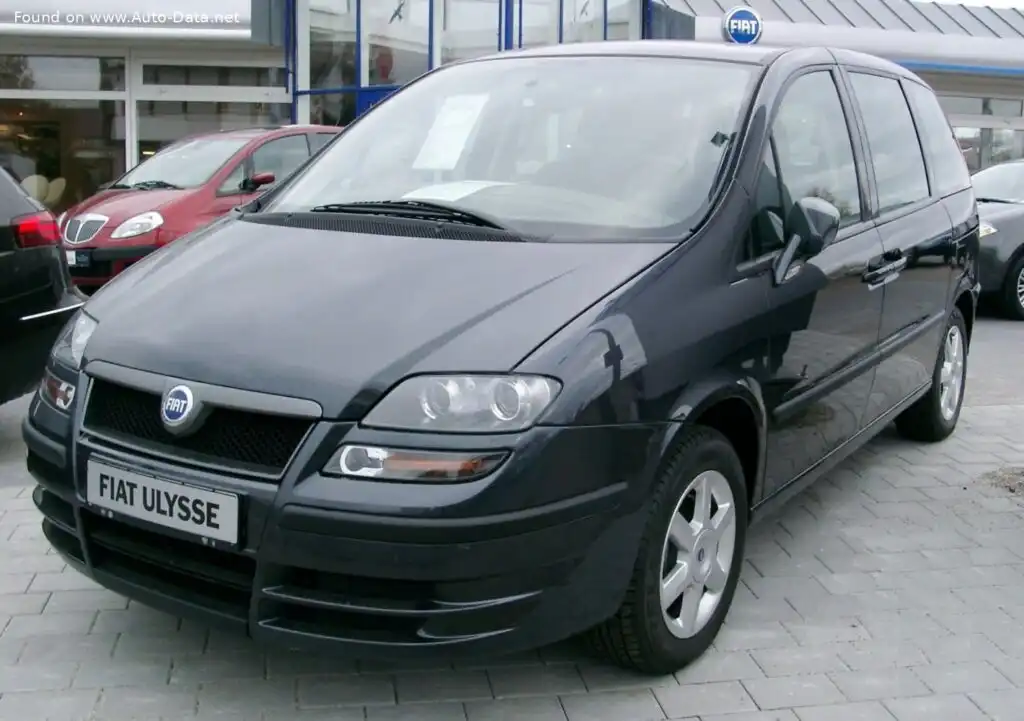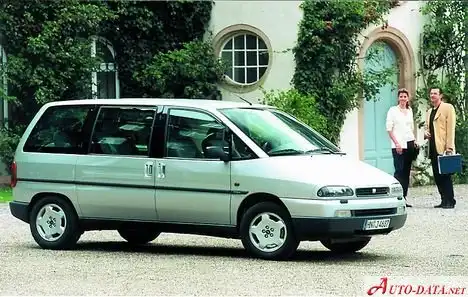
The Fiat Ulysse I, specifically the 1.8 (220.BB5) variant producing 99 horsepower, was a key model in Fiat’s foray into the multi-purpose vehicle (MPV) segment during the late 1990s and early 2000s. Produced from 1997 to 2002, this version of the Ulysse was part of the first generation (Type 22/220) and shared its platform with the Peugeot 806, Citroën Evasion, and Lancia Zeta – a result of the collaborative SEVEL Nord joint venture between Fiat and PSA. The 1.8L engine/automatic transmission combination represented an entry-level offering, aimed at families prioritizing practicality and affordability over outright performance. It occupied a position below the more powerful 2.0L and diesel variants in the Ulysse lineup.
Technical Specifications
| Brand | Fiat |
| Model | Ulysse |
| Generation | Ulysse I (22/220) |
| Type (Engine) | 1.8 (220.BB5) (99 Hp) |
| Start of production | 1997 |
| End of production | 2002 |
| Powertrain Architecture | Internal Combustion engine |
| Body type | Minivan, MPV |
| Seats | 5 |
| Doors | 4 |
| Fuel consumption (urban) | 13.2 l/100 km (17.8 US mpg, 21.4 UK mpg) |
| Fuel consumption (extra urban) | 8.6 l/100 km (27.4 US mpg, 32.8 UK mpg) |
| Fuel Type | Petrol (Gasoline) |
| Acceleration 0 – 100 km/h | 14.3 sec |
| Acceleration 0 – 62 mph | 14.3 sec |
| Acceleration 0 – 60 mph | 13.6 sec |
| Maximum speed | 165 km/h (102.53 mph) |
| Weight-to-power ratio | 14.6 kg/Hp |
| Weight-to-torque ratio | 9.8 kg/Nm |
| Power | 99 Hp @ 5750 rpm |
| Power per litre | 56.2 Hp/l |
| Torque | 147 Nm @ 2600 rpm (108.42 lb.-ft. @ 2600 rpm) |
| Engine layout | Front, Transverse |
| Engine Model/Code | LFW XU7JP |
| Engine displacement | 1762 cm3 (107.52 cu. in.) |
| Number of cylinders | 4 |
| Engine configuration | Inline |
| Cylinder Bore | 83 mm (3.27 in.) |
| Piston Stroke | 81.4 mm (3.2 in.) |
| Compression ratio | 9.5:1 |
| Number of valves per cylinder | 2 |
| Fuel injection system | Multi-port manifold injection |
| Engine aspiration | Naturally aspirated engine |
| Valvetrain | OHC |
| Engine oil capacity | 4.3 l (4.54 US qt | 3.78 UK qt) |
| Coolant capacity | 8.5 l (8.98 US qt | 7.48 UK qt) |
| Kerb Weight | 1445 kg (3185.68 lbs.) |
| Max. weight | 2085 kg (4596.64 lbs.) |
| Max load | 640 kg (1410.96 lbs.) |
| Trunk (boot) space – minimum | 340 l (12.01 cu. ft.) |
| Trunk (boot) space – maximum | 3300 l (116.54 cu. ft.) |
| Fuel tank capacity | 80 l (21.13 US gal | 17.6 UK gal) |
| Length | 4454 mm (175.35 in.) |
| Width | 1834 mm (72.2 in.) |
| Height | 1714 mm (67.48 in.) |
| Wheelbase | 2824 mm (111.18 in.) |
| Front track | 1534 mm (60.39 in.) |
| Rear track | 1540 mm (60.63 in.) |
| Drivetrain Architecture | Front wheel drive |
| Number of gears | 5 |
| Gearbox type | Automatic transmission |
| Front suspension | Double wishbone |
| Rear suspension | Coil spring |
| Front brakes | Ventilated discs |
| Rear brakes | Drum |
| Assisting systems | ABS (Anti-lock braking system) |
| Steering type | Steering rack and pinion |
| Power steering | Hydraulic |
| Tires size | 195/75 R14 |
Powertrain & Engine Architecture
The Fiat Ulysse 1.8 utilized the PSA XU7JP engine, a 1.8-liter inline-four cylinder gasoline engine. This engine, also found in various Peugeot and Citroën models, was known for its relative simplicity and durability. The XU7JP featured a single overhead camshaft (OHC) design with two valves per cylinder. Fuel delivery was managed by a multi-port fuel injection system, providing adequate, though not exceptional, performance. The engine produced 99 horsepower at 5750 rpm and 147 Nm (108 lb-ft) of torque at 2600 rpm. Paired with a four-speed automatic transmission, the powertrain was designed for smooth, comfortable operation rather than sporty acceleration. The automatic transmission, while offering convenience, did impact fuel economy and responsiveness compared to the available five-speed manual gearbox.
Driving Characteristics
The 1.8L automatic Ulysse offered a comfortable, if uninspiring, driving experience. Acceleration was noticeably slower than the 2.0L or diesel variants. The automatic transmission, while smooth, had relatively long shift times and a tendency to hunt for gears under heavy load, particularly when climbing hills. The gear ratios were optimized for fuel efficiency and cruising, rather than quick acceleration. In real-world conditions, overtaking maneuvers required careful planning. The Ulysse’s focus was on providing a spacious and comfortable environment for passengers, and the 1.8L engine/automatic combination suited this purpose well, prioritizing ease of use over dynamic performance.
Equipment & Trim Levels
The 1.8L Ulysse typically came with a reasonable level of standard equipment, though it was less lavishly equipped than the higher-spec models. Standard features generally included power steering, central locking, electric front windows, and an adjustable steering column. Interior upholstery was typically cloth, and the dashboard featured a functional, if somewhat dated, design. Optional extras included air conditioning, rear electric windows, and upgraded audio systems. Trim levels varied slightly depending on the market, but the 1.8L model generally represented the entry point to the Ulysse range.
Chassis & Braking
The Ulysse I featured a front-wheel-drive layout with independent double wishbone suspension at the front and a coil spring rear suspension. This setup provided a reasonably comfortable ride, although it wasn’t particularly sporty. The 1.8L models typically used ventilated disc brakes at the front and drum brakes at the rear. Anti-lock Braking System (ABS) was standard, enhancing safety. The suspension was tuned for comfort and load-carrying capacity, reflecting the Ulysse’s role as a family vehicle. Stabilizer bars were fitted to both the front and rear axles to reduce body roll.
Market Reception & Comparison
The Fiat Ulysse 1.8 automatic received mixed reviews. Critics generally praised its spacious interior, comfortable ride, and practicality. However, the engine was often criticized for being underpowered, especially when paired with the automatic transmission. Fuel economy was adequate but not exceptional. Compared to the 2.0L petrol and diesel variants, the 1.8L offered a more affordable entry point but at the cost of performance. The diesel models, in particular, were favored by those covering long distances due to their superior fuel efficiency. Reliability was generally good, although the automatic transmission could be prone to issues if not properly maintained.
Legacy
The Fiat Ulysse I 1.8 automatic, while not a performance standout, remains a reasonably popular choice in the used car market, particularly among buyers seeking an affordable and spacious MPV. The XU7JP engine is known for its durability, and parts availability is generally good. However, potential buyers should be aware of the potential for automatic transmission issues and ensure that the vehicle has been well-maintained. The Ulysse I, in all its variants, helped establish Fiat as a competitor in the growing MPV segment, paving the way for future models like the Ulysse II.