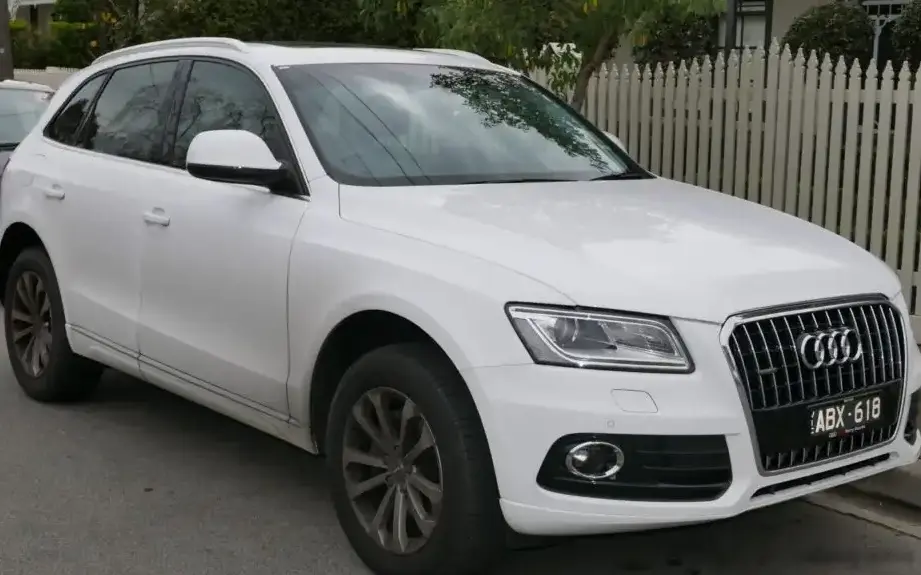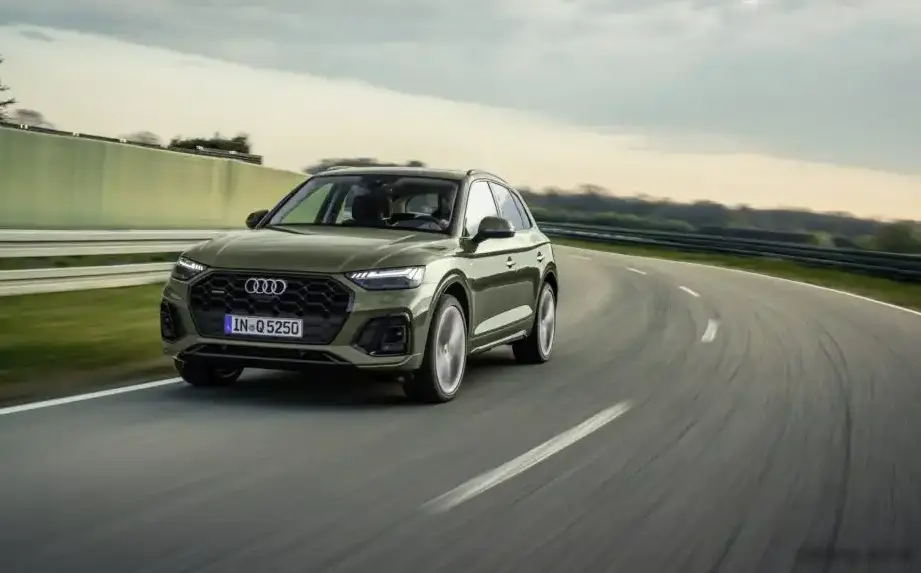
The Audi Q5 II (FY) 40 TDI Mild Hybrid quattro ultra S tronic represents a significant iteration within the second generation of Audi’s popular Q5 SUV. Introduced in June 2020 as part of the facelift for the FY model, and continuing through September 2024, this variant combined a 2.0-liter turbocharged diesel engine with a 48-volt mild hybrid system and Audi’s renowned quattro all-wheel-drive system, paired with a seven-speed S tronic dual-clutch transmission. Positioned as a mid-range offering within the Q5 lineup, it aimed to balance fuel efficiency, performance, and technological sophistication, appealing to buyers seeking a premium SUV experience without the higher price tag of the more powerful models.
Technical Specifications
| Brand | Audi |
| Model | Q5 |
| Generation | Q5 II (FY, facelift 2020) |
| Type (Engine) | 40 TDI (204 Hp) Mild Hybrid quattro ultra S tronic |
| Start of production | June, 2020 |
| End of production | September, 2024 |
| Powertrain Architecture | MHEV (Mild Hybrid Electric Vehicle) |
| Body type | SUV |
| Seats | 5 |
| Doors | 5 |
| Combined fuel consumption (WLTP) | 6.3-6.9 l/100 km (37.3 – 34.1 US mpg) |
| CO2 emissions (WLTP) | 164-181 g/km |
| Fuel consumption (economy) – urban (NEDC) | 6.1 l/100 km (38.6 US mpg) |
| Fuel consumption (economy) – extra urban (NEDC) | 4.8-5.0 l/100 km (49 – 47 US mpg) |
| Fuel consumption (economy) – combined (NEDC) | 5.3-5.4 l/100 km (44.4 – 43.6 US mpg) |
| CO2 emissions (NEDC) | 139-143 g/km |
| Fuel Type | Diesel |
| Acceleration 0 – 100 km/h | 7.6 sec |
| Acceleration 0 – 62 mph | 7.6 sec |
| Acceleration 0 – 60 mph | 7.2 sec |
| Maximum speed | 222 km/h (137.94 mph) |
| Emission standard | EURO 6d – ISC – FCM |
| Weight-to-power ratio | 8.8 kg/Hp |
| Weight-to-torque ratio | 4.5 kg/Nm |
| Power | 204 Hp @ 3800-4200 rpm |
| Torque | 400 Nm @ 1750-3250 rpm (295.02 lb.-ft. @ 1750-3250 rpm) |
| Engine layout | Front, Longitudinal |
| Engine Model/Code | DTPA |
| Engine displacement | 1968 cm3 (120.09 cu. in.) |
| Number of cylinders | 4 |
| Engine configuration | Inline |
| Cylinder Bore | 81 mm (3.19 in.) |
| Piston Stroke | 95.5 mm (3.76 in.) |
| Compression ratio | 15.5:1 |
| Number of valves per cylinder | 4 |
| Fuel injection system | Diesel Commonrail |
| Engine aspiration | Turbocharger, Intercooler |
| Engine oil capacity | 5.5 l (5.81 US qt | 4.84 UK qt) |
| Coolant | 12.3 l (13 US qt | 10.82 UK qt) |
| Kerb Weight | 1805 kg (3979.34 lbs.) |
| Max. weight | 2510 kg (5533.6 lbs.) |
| Max load | 705 kg (1554.26 lbs.) |
| Trunk (boot) space – minimum | 520 l (18.36 cu. ft.) |
| Trunk (boot) space – maximum | 1520 l (53.68 cu. ft.) |
| Fuel tank capacity | 65 l (17.17 US gal | 14.3 UK gal) |
| AdBlue tank | 12 l (3.17 US gal | 2.64 UK gal) |
| Max. roof load | 75 kg (165.35 lbs.) |
| Permitted trailer load with brakes (8%) | 2400 kg (5291.09 lbs.) |
| Permitted trailer load without brakes | 750 kg (1653.47 lbs.) |
| Length | 4682 mm (184.33 in.) |
| Width | 1893 mm (74.53 in.) |
| Height | 1662 mm (65.43 in.) |
| Wheelbase | 2819 mm (110.98 in.) |
| Front track | 1616 mm (63.62 in.) |
| Rear track | 1609 mm (63.35 in.) |
| Drag coefficient (Cd) | 0.30 |
| Minimum turning circle | 11.8 m (38.71 ft.) |
| Front suspension | Independent multi-link suspension |
| Rear suspension | Independent multi-link suspension |
| Front brakes | Ventilated discs |
| Rear brakes | Ventilated discs |
| Number of gears | 7 |
| Type of gearbox | automatic transmission S tronic |
INTRODUCTION
The Q5 II (FY) facelift, launched in 2020, brought updated styling, enhanced technology, and refined powertrain options to Audi’s popular mid-size SUV. The 40 TDI Mild Hybrid quattro ultra variant was a key component of this refresh, designed to appeal to European and increasingly global markets demanding efficient and capable diesel-powered SUVs. The “40 TDI” designation signified a specific power output level within Audi’s naming convention, while “Mild Hybrid” indicated the inclusion of a 48-volt electrical system to assist the engine and improve fuel economy. The “quattro ultra” system represented an on-demand all-wheel-drive system, prioritizing front-wheel drive for efficiency and engaging the rear axle when traction demands it. This model sat comfortably in the middle of the Q5 range, offering a balance between the entry-level 35 TDI and the more potent 45 TDI and SQ5 models.
Powertrain & Engine Architecture
At the heart of the Q5 40 TDI lies the DTPA engine, a 2.0-liter inline-four cylinder diesel engine. This engine is part of Audi’s modular longitudinal engine family (MLB), known for its compact dimensions and versatility. The DTPA utilizes a sophisticated common-rail direct injection system, delivering fuel at pressures up to 2,500 bar for optimized combustion. A single turbocharger with variable geometry turbine (VGT) provides forced induction, boosting power and torque across a wide RPM range. The engine also features an intercooler to cool the intake air, further enhancing performance. The mild hybrid system incorporates a belt starter generator (BSG) and a small lithium-ion battery. The BSG allows for extended start-stop functionality, coasting with the engine off, and a limited amount of regenerative braking. The seven-speed S tronic dual-clutch transmission provides rapid and smooth gear changes, contributing to both performance and efficiency. This transmission is known for its quick shifts and ability to anticipate the driver’s needs.
Driving Characteristics
The Q5 40 TDI Mild Hybrid delivers a refined and capable driving experience. With 204 horsepower and 400 Nm (295 lb-ft) of torque, it offers ample power for everyday driving and highway cruising. Acceleration from 0 to 100 km/h (0-62 mph) takes approximately 7.6 seconds. The S tronic transmission ensures responsive acceleration, and the quattro ultra all-wheel-drive system provides excellent traction in various conditions. Compared to the higher-output 45 TDI, the 40 TDI offers slightly less outright performance, but its lighter weight and more efficient powertrain contribute to improved fuel economy. The mild hybrid system is largely transparent to the driver, providing subtle assistance during acceleration and enabling smoother start-stop operation. The steering is precise and well-weighted, and the suspension provides a comfortable ride without sacrificing handling agility.
Equipment & Trim Levels
The Q5 40 TDI Mild Hybrid typically came well-equipped, reflecting Audi’s premium positioning. Standard features often included Audi’s Virtual Cockpit digital instrument cluster, a touchscreen infotainment system with Apple CarPlay and Android Auto compatibility, leather upholstery, tri-zone automatic climate control, and a suite of driver-assistance systems such as lane departure warning and automatic emergency braking. Optional extras could include a panoramic sunroof, adaptive cruise control, a premium sound system, and various interior trim upgrades. Trim levels varied by market, but generally offered increasing levels of luxury and technology. The base trim provided a comfortable and well-equipped experience, while higher trims added more premium features and styling enhancements.
Chassis & Braking
The Q5 II utilizes a robust chassis with an independent multi-link suspension at both the front and rear axles. This suspension design provides a comfortable ride and precise handling. The quattro ultra system allows for variable torque distribution between the front and rear wheels, optimizing traction and stability. Braking duties are handled by ventilated discs on all four wheels, providing ample stopping power. Anti-lock braking system (ABS), electronic stability control (ESC), and traction control are standard features. The Q5 40 TDI’s suspension was typically tuned for a balance between comfort and handling, offering a composed ride on both smooth and uneven surfaces.
Market Reception & Comparison
The Audi Q5 40 TDI Mild Hybrid was generally well-received by automotive critics. It was praised for its refined engine, comfortable ride, spacious interior, and advanced technology. Compared to other trims in the Q5 lineup, the 40 TDI offered a compelling balance of performance and efficiency. While the 45 TDI provided more power, the 40 TDI’s lower fuel consumption and slightly lower price point made it an attractive option for buyers prioritizing practicality and economy. Competitors in this segment included the BMW X3, Mercedes-Benz GLC, and Volvo XC60, all of which offered similar levels of luxury and performance.
Legacy
The Q5 II (FY) 40 TDI Mild Hybrid represents a significant step in Audi’s transition towards more efficient and sustainable powertrains. The combination of a turbocharged diesel engine and mild hybrid technology provided a good balance of performance and fuel economy. The DTPA engine, while not without its share of diesel particulate filter (DPF) concerns common to modern diesels, has proven to be relatively reliable when properly maintained. On the used car market, these models continue to be sought after for their premium features, comfortable ride, and relatively good fuel efficiency. The quattro ultra system, while effective, has received some criticism for its occasional hesitation when transitioning between front-wheel drive and all-wheel drive, but overall, the Q5 40 TDI remains a popular and well-regarded SUV.