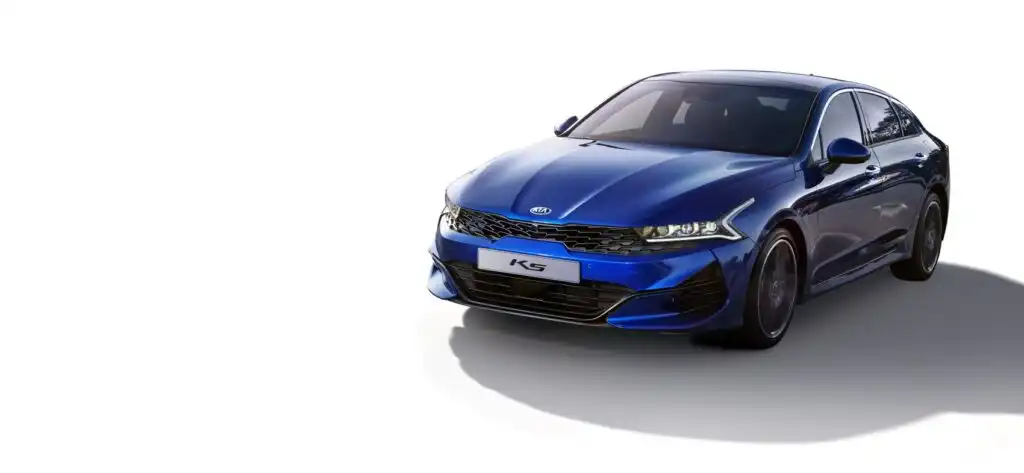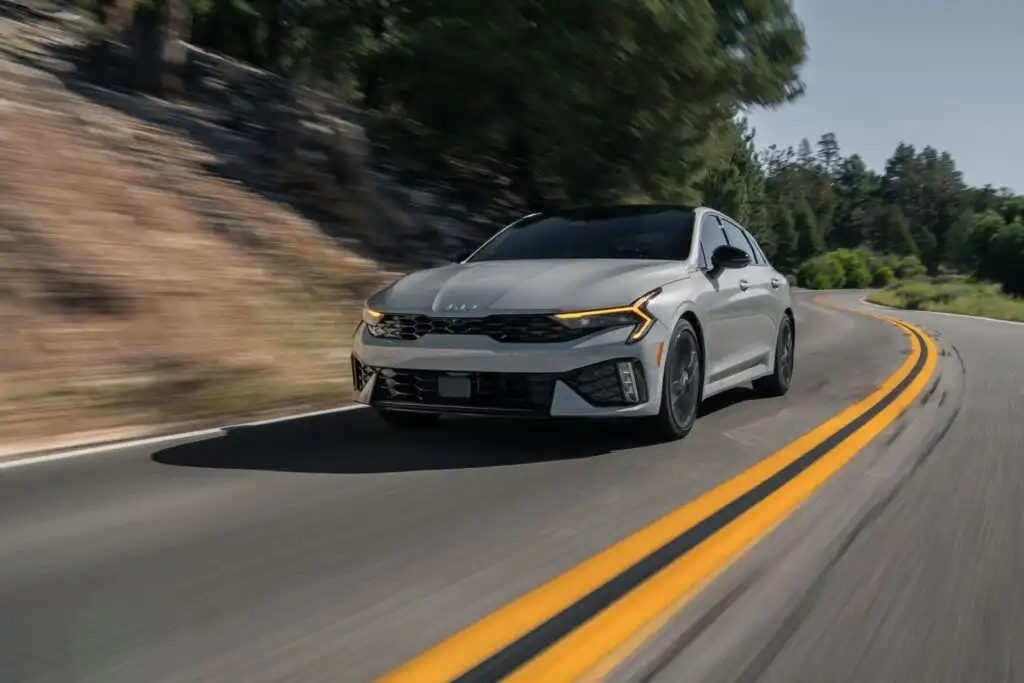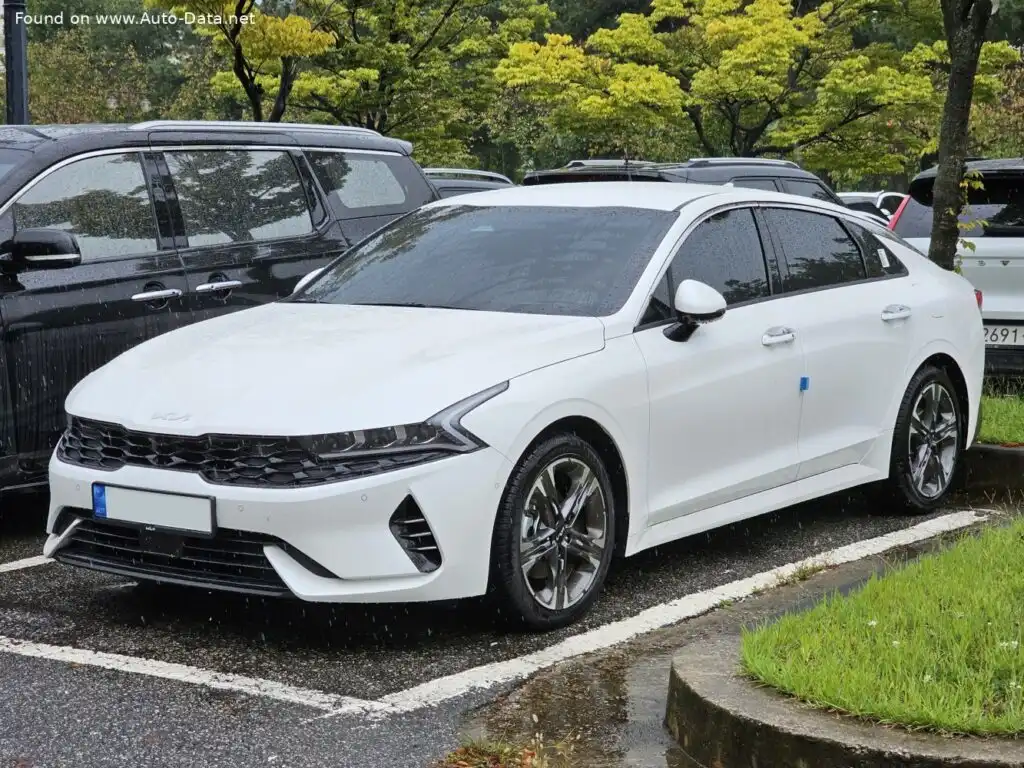
The Kia K5 2.0 Hybrid Automatic, produced from 2020 through October 2023, represents a significant entry in Kia’s mid-size sedan lineup, formerly known as the Optima. This variant, positioned as a fuel-efficient and technologically advanced option, utilizes a full hybrid electric vehicle (FHEV) powertrain. It aimed to appeal to buyers seeking a balance between performance, economy, and modern features within the increasingly competitive mid-size segment. The K5, built on the third-generation platform (codenamed RN8), marked a stylistic departure from its predecessor, adopting a more aggressive and sporty design language. The 2.0 Hybrid trim occupied a middle ground in the K5 range, offering more power and features than the base 1.6L turbocharged model, but remaining more accessible than the higher-performance GT trim.
Technical Specifications
| Brand | Kia |
| Model | K5 |
| Generation | K5 |
| Type (Engine) | 2.0 (192 Hp) Hybrid Automatic |
| Start of production | 2020 |
| End of production | October, 2023 |
| Powertrain Architecture | FHEV (Full Hybrid Electric Vehicle) |
| Body type | Sedan, Fastback |
| Seats | 5 |
| Doors | 4 |
| Fuel consumption (urban) | 5.0-5.5 l/100 km (47 – 42.8 US mpg) |
| Fuel consumption (extra urban) | 4.9-5.2 l/100 km (48 – 45.2 US mpg) |
| Fuel consumption (combined) | 5.0-5.3 l/100 km (47 – 44.4 US mpg) |
| CO2 emissions | 79-85 g/km |
| Fuel Type | Petrol (Gasoline) |
| Weight-to-power ratio | 7.8 kg/Hp, 128.4 Hp/tonne |
| Weight-to-torque ratio | 4.1 kg/Nm, 245.5 Nm/tonne |
| Gross battery capacity | 1.76 kWh |
| Electric motor power | 52 Hp |
| Electric motor Torque | 205 Nm @ 0-1770 rpm (151.2 lb.-ft. @ 0-1770 rpm) |
| System power | 192 Hp @ 6000 rpm |
| System torque | 367 Nm @ 1770 rpm (270.69 lb.-ft. @ 1770 rpm) |
| Internal combustion engine power | 156 Hp @ 6000 rpm |
| Power per litre | 78 Hp/l |
| Internal combustion engine torque | 190 Nm @ 5000 rpm (140.14 lb.-ft. @ 5000 rpm) |
| Engine layout | Front, Longitudinal |
| Engine displacement | 1999 cm3 (121.99 cu. in.) |
| Number of cylinders | 4 |
| Engine configuration | Inline |
| Number of valves per cylinder | 4 |
| Fuel injection system | Multi-port manifold injection |
| Kerb Weight | 1495-1515 kg (3295.91 – 3340 lbs.) |
| Length | 4095 mm (161.22 in.) |
| Width | 1860 mm (73.23 in.) |
| Height | 1445 mm (56.89 in.) |
| Wheelbase | 2850 mm (112.2 in.) |
| Front track | 1623-1633 mm (63.9 – 64.29 in.) |
| Rear track | 1630-1640 mm (64.17 – 64.57 in.) |
| Drive wheel | Front wheel drive |
| Number of gears and type of gearbox | 6 gears, automatic transmission |
| Assisting systems | ABS (Anti-lock braking system) |
| Steering type | Steering rack and pinion |
| Power steering | Electric Steering |
| Tires size | 205/65 R16; 215/55 R17 |
| Wheel rims size | 16; 17 |
Powertrain & Engine Architecture
The K5 2.0 Hybrid utilizes a 2.0-liter naturally aspirated inline-four cylinder gasoline engine (designated as the Smartstream G2.0) paired with a 48V electric motor and a 1.76 kWh lithium-ion polymer battery pack. The gasoline engine produces 156 horsepower and 140 lb-ft of torque, while the electric motor contributes an additional 52 horsepower and 151 lb-ft of torque, resulting in a combined system output of 192 horsepower and 270 lb-ft of torque. The engine employs multi-port fuel injection and a relatively high compression ratio to maximize efficiency. The six-speed automatic transmission is specifically tuned for hybrid operation, prioritizing smooth transitions and fuel economy. The hybrid system operates in various modes, including electric-only driving at low speeds and a combined mode for optimal performance and efficiency.
Driving Characteristics
The K5 2.0 Hybrid Automatic delivers a comfortable and refined driving experience. While not overtly sporty, the combined output of the gasoline engine and electric motor provides adequate acceleration for everyday driving situations. The electric motor provides instant torque, enhancing responsiveness from a standstill. The six-speed automatic transmission shifts smoothly and efficiently, contributing to a relaxed driving experience. Compared to the base 1.6L turbocharged engine, the hybrid offers a more linear power delivery and improved fuel economy. The hybrid system’s regenerative braking feature helps to recapture energy during deceleration, further enhancing efficiency. The steering is light and precise, making the K5 easy to maneuver in urban environments.
Equipment & Trim Levels
The K5 2.0 Hybrid Automatic typically came standard with a comprehensive suite of features, including an 8-inch touchscreen infotainment system with Apple CarPlay and Android Auto compatibility, a rearview camera, automatic emergency braking, lane keeping assist, and adaptive cruise control. Higher trim levels added features such as a larger 10.25-inch touchscreen, a premium sound system, leather upholstery, heated and ventilated front seats, and a panoramic sunroof. Interior upholstery was typically cloth on lower trims, upgrading to leather on higher-spec models. Dashboard configurations were consistent across the range, featuring a modern and minimalist design.
Chassis & Braking
The K5 2.0 Hybrid utilizes a front-wheel-drive layout with a MacPherson strut front suspension and a multi-link rear suspension. The suspension is tuned for comfort, providing a smooth and controlled ride. Braking duties are handled by ventilated front disc brakes and solid rear disc brakes. The hybrid system incorporates regenerative braking, which assists in slowing the vehicle and recharging the battery. The K5’s chassis is designed to minimize weight while maintaining structural rigidity, contributing to improved handling and fuel efficiency.
Market Reception & Comparison
The Kia K5 2.0 Hybrid Automatic was generally well-received by automotive critics, who praised its fuel efficiency, comfortable ride, and comprehensive feature set. It was often compared to other mid-size hybrid sedans, such as the Honda Accord Hybrid and Toyota Camry Hybrid. The K5 Hybrid typically offered a more aggressive styling and a slightly lower price point than its competitors. Fuel economy figures consistently ranked among the best in its class, making it an attractive option for environmentally conscious buyers. Reliability ratings were generally positive, although some owners reported minor issues with the infotainment system.
Legacy
The Kia K5 2.0 Hybrid Automatic represents a significant step forward in Kia’s hybrid technology. The powertrain has proven to be relatively reliable, with few widespread mechanical issues reported. On the used car market, these models continue to hold their value reasonably well, particularly those with lower mileage and well-maintained service records. The K5’s combination of fuel efficiency, features, and affordability has made it a popular choice among buyers seeking a practical and economical mid-size sedan. The success of the K5 Hybrid helped to solidify Kia’s position as a major player in the hybrid vehicle market.