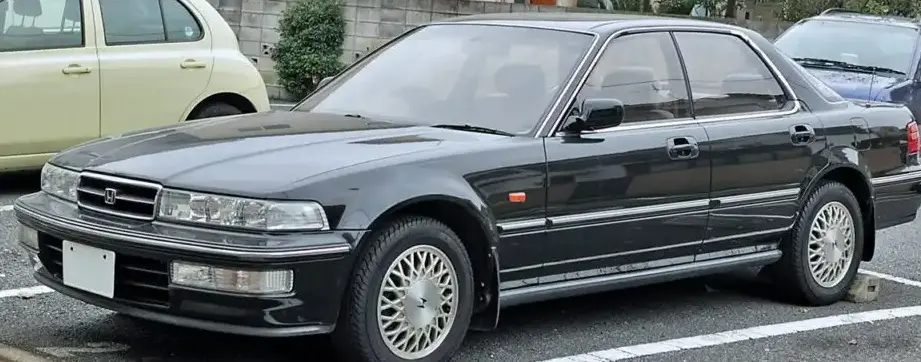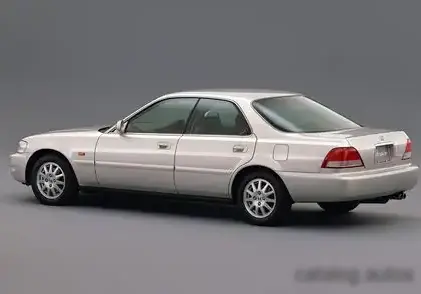
The Honda Inspire II, specifically the 2.5 i 20V S variant with an automatic transmission, was produced between February 1995 and September 1998. This model, designated chassis codes UA1, UA2, and UA3, represented Honda’s offering in the Japanese executive car segment, positioned as a more upscale alternative to the Accord. The Inspire II aimed to provide a comfortable and refined driving experience, blending performance with practicality. This particular 2.5-liter, 190 horsepower configuration occupied a mid-to-high range position within the Inspire II lineup, offering a balance between performance and fuel efficiency compared to lower-displacement models.
Technical Specifications
| Brand | Honda |
| Model | Inspire |
| Generation | Inspire II (UA1/UA2/UA3) |
| Type (Engine) | 2.5 i 20V S (190 Hp) Automatic |
| Start of production | February, 1995 |
| End of production | September, 1998 |
| Powertrain Architecture | Internal Combustion engine |
| Body type | Sedan |
| Seats | 5 |
| Doors | 4 |
| Fuel consumption (combined) | 9.8 l/100 km (24 US mpg, 28.8 UK mpg, 10.2 km/l) |
| Fuel Type | Petrol (Gasoline) |
| Weight-to-power ratio | 7.3 kg/Hp, 136.7 Hp/tonne |
| Weight-to-torque ratio | 5.9 kg/Nm, 170.5 Nm/tonne |
| Power | 190 Hp @ 6500 rpm |
| Power per litre | 77.5 Hp/l |
| Torque | 237 Nm @ 3800 rpm (174.8 lb.-ft. @ 3800 rpm) |
| Engine layout | Front, Longitudinal |
| Engine Model/Code | G25A |
| Engine displacement | 2451 cm3 (149.57 cu. in.) |
| Number of cylinders | 5 |
| Engine configuration | Inline |
| Cylinder Bore | 85 mm (3.35 in.) |
| Piston Stroke | 86.4 mm (3.4 in.) |
| Compression ratio | 10:1 |
| Number of valves per cylinder | 4 |
| Fuel injection system | Multi-port manifold injection |
| Engine aspiration | Naturally aspirated engine |
| Valvetrain | SOHC |
| Engine oil capacity | 5.2 l (5.49 US qt | 4.58 UK qt) |
| Kerb Weight | 1390 kg (3064.43 lbs.) |
| Fuel tank capacity | 65 l (17.17 US gal | 14.3 UK gal) |
| Length | 4840 mm (190.55 in.) |
| Width | 1785 mm (70.28 in.) |
| Height | 1405 mm (55.31 in.) |
| Wheelbase | 2840 mm (111.81 in.) |
| Front track | 1520 mm (59.84 in.) |
| Rear (Back) track | 1510 mm (59.45 in.) |
| Ride height (ground clearance) | 160 mm (6.3 in.) |
| Minimum turning circle (turning diameter) | 11 m (36.09 ft.) |
| Drivetrain Architecture | The Internal combustion engine (ICE) drives the front wheels of the vehicle. |
| Drive wheel | Front wheel drive |
| Number of gears and type of gearbox | 4 gears, automatic transmission |
| Front suspension | Double wishbone |
| Rear suspension | Double wishbone |
| Front brakes | Ventilated discs |
| Rear brakes | Disc |
| Assisting systems | ABS (Anti-lock braking system) |
| Steering type | Steering rack and pinion |
| Power steering | Hydraulic Steering |
| Tires size | 205/60 R15 |
| Wheel rims size | 6J x 15 |
Powertrain & Engine Architecture
The heart of the Inspire II 2.5 i 20V S is the G25A engine, a 2.5-liter inline five-cylinder powerplant. This engine utilized a single overhead camshaft (SOHC) valvetrain, operating 20 valves in total. The G25A featured multi-port fuel injection, delivering fuel directly to each cylinder for optimized combustion. The engine’s design prioritized smooth power delivery and refinement, characteristics valued in the executive car segment. The automatic transmission paired with this engine was a conventional four-speed unit, chosen for its ease of use and comfort. While not offering the quickest acceleration, it provided seamless gear changes and a relaxed driving experience.
Driving Characteristics
The 190 horsepower and 174.8 lb-ft of torque produced by the G25A engine, when coupled with the four-speed automatic transmission, resulted in a comfortable and capable driving experience. Acceleration was adequate for highway merging and overtaking, but not particularly sporty. The automatic transmission’s gear ratios were tuned for fuel efficiency and smooth cruising rather than aggressive performance. Compared to the manual transmission versions of the Inspire II, the automatic offered less driver engagement but greater convenience. Against lower-powered Inspire models (like the 2.0L variants), the 2.5 i 20V S provided a noticeable improvement in performance, particularly when fully loaded or tackling inclines.
Equipment & Trim Levels
The 2.5 i 20V S trim level of the Inspire II was well-equipped for its time. Standard features typically included power windows, power locks, air conditioning, a high-quality audio system, and comfortable cloth upholstery. Higher-end options, such as leather seats, a sunroof, and upgraded audio systems, were available. The interior design focused on providing a spacious and refined cabin, with a wood-grain finish on the dashboard and door panels. The overall aesthetic aimed for a sense of understated luxury.
Chassis & Braking
The Inspire II utilized a double wishbone suspension system both front and rear, providing a comfortable ride and good handling characteristics. The front brakes were ventilated discs, offering strong stopping power, while the rear brakes were solid discs. Anti-lock braking system (ABS) was standard, enhancing safety and control during emergency braking situations. The steering was a rack-and-pinion system with hydraulic power assistance, providing precise and responsive steering feel. The vehicle rode on 205/60 R15 tires, balancing ride comfort with handling performance.
Market Reception & Comparison
The Honda Inspire II 2.5 i 20V S was generally well-received by automotive critics in Japan. It was praised for its comfortable ride, refined interior, and smooth engine. However, some critics noted that the automatic transmission could feel somewhat sluggish compared to manual options. Fuel economy was considered reasonable for a vehicle of its size and performance. Compared to other executive cars in the Japanese market, such as the Toyota Crown and Nissan Cefiro, the Inspire II offered a compelling blend of features, performance, and reliability. The 2.5-liter engine provided a noticeable performance advantage over the base 2.0-liter models, making it a popular choice for buyers seeking a more engaging driving experience.
Legacy
The Honda Inspire II, and particularly the 2.5 i 20V S variant, has developed a reputation for reliability and durability. The G25A engine is known to be a robust and long-lasting powerplant, provided it receives regular maintenance. In the used car market, these vehicles are often sought after by enthusiasts who appreciate their comfortable ride, refined interior, and classic Japanese styling. While parts availability may be becoming more challenging as the vehicle ages, the Inspire II remains a viable option for those seeking a well-built and reliable executive car from the 1990s. The combination of a smooth inline-five engine and a comfortable automatic transmission continues to appeal to drivers who prioritize a relaxed and refined driving experience.