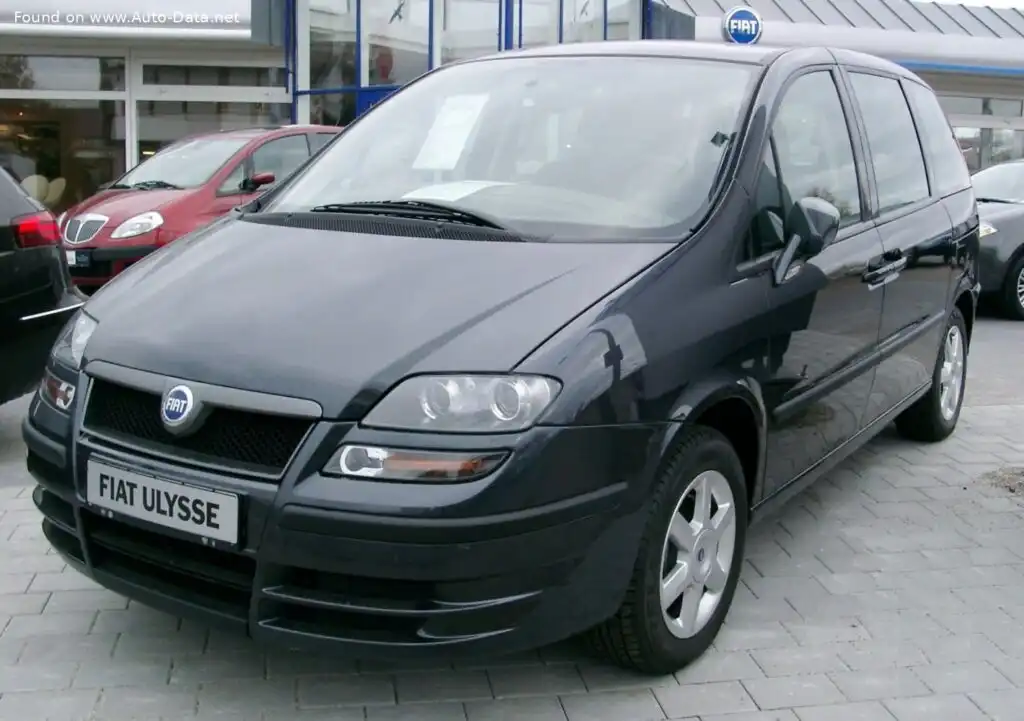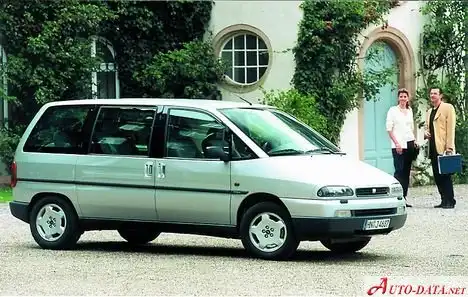
The Fiat Ulysse I, specifically the 22/220 variant powered by the 1.9 TD (90 hp) engine, was a significant offering in the European minivan and MPV segment from 1995 to 2002. This model represented Fiat’s entry into a rapidly growing market segment, competing with vehicles like the Renault Espace, Peugeot 806, and Citroën Evasion (which, notably, shared a common platform). The Ulysse was a collaborative effort, stemming from a joint venture between Fiat, Peugeot, and Citroën, resulting in mechanically similar vehicles sold under different badges. The 1.9 TD variant occupied a middle ground in the Ulysse lineup, offering a balance between fuel economy, practicality, and affordability, aimed at families and those requiring versatile passenger and cargo space.
Technical Specifications
| Brand | Fiat |
| Model | Ulysse |
| Generation | Ulysse I (22/220) |
| Type (Engine) | 1.9 TD (90 Hp) |
| Start of production | 1995 |
| End of production | 2002 |
| Powertrain Architecture | Internal Combustion engine |
| Body type | Minivan, MPV |
| Seats | 5 |
| Doors | 4 |
| Fuel consumption (combined) | 7.9 l/100 km (29.8 US mpg, 35.8 UK mpg, 12.7 km/l) |
| Fuel Type | Diesel |
| Acceleration 0 – 100 km/h | 15.5 sec |
| Acceleration 0 – 62 mph | 15.5 sec |
| Acceleration 0 – 60 mph | 14.7 sec |
| Maximum speed | 160 km/h (99.42 mph) |
| Weight-to-power ratio | 17.4 kg/Hp, 57.5 Hp/tonne |
| Weight-to-torque ratio | 8 kg/Nm, 125.2 Nm/tonne |
| Power | 90 Hp @ 4000 rpm |
| Power per litre | 47.2 Hp/l |
| Torque | 196 Nm @ 2200 rpm (144.56 lb.-ft. @ 2200 rpm) |
| Engine layout | Front, Transverse |
| Engine Model/Code | DHX XUD9TF |
| Engine displacement | 1905 cm3 (116.25 cu. in.) |
| Number of cylinders | 4 |
| Engine configuration | Inline |
| Cylinder Bore | 83 mm (3.27 in.) |
| Piston Stroke | 88 mm (3.46 in.) |
| Compression ratio | 19.2:1 |
| Number of valves per cylinder | 2 |
| Fuel injection system | Precombustion chamber injection |
| Engine aspiration | Turbocharger |
| Valvetrain | OHC |
| Engine oil capacity | 5 l (5.28 US qt | 4.4 UK qt) |
| Coolant | 9 l (9.51 US qt | 7.92 UK qt) |
| Kerb Weight | 1565 kg (3450.23 lbs.) |
| Max. weight | 2360 kg (5202.91 lbs.) |
| Max load | 795 kg (1752.67 lbs.) |
| Trunk (boot) space – minimum | 340 l (12.01 cu. ft.) |
| Trunk (boot) space – maximum | 3300 l (116.54 cu. ft.) |
| Fuel tank capacity | 80 l (21.13 US gal | 17.6 UK gal) |
| Length | 4454 mm (175.35 in.) |
| Width | 1834 mm (72.2 in.) |
| Height | 1714 mm (67.48 in.) |
| Wheelbase | 2824 mm (111.18 in.) |
| Front track | 1534 mm (60.39 in.) |
| Rear (Back) track | 1540 mm (60.63 in.) |
| Drivetrain Architecture | The Internal combustion engine (ICE) drives the front wheels of the vehicle. |
| Drive wheel | Front wheel drive |
| Number of gears and type of gearbox | 5 gears, manual transmission |
| Front suspension | Double wishbone |
| Rear suspension | Coil spring |
| Front brakes | Ventilated discs |
| Rear brakes | Drum |
| Assisting systems | ABS (Anti-lock braking system) |
| Steering type | Steering rack and pinion |
| Power steering | Hydraulic Steering |
| Tires size | 195/65 R15 |
Powertrain & Engine Architecture
The heart of the Ulysse 1.9 TD was the DHX XUD9TF engine, a 1.9-liter inline-four cylinder diesel. This engine was a product of Peugeot’s XUD engine family, known for its robustness and relatively simple design. The ‘TF’ designation indicated a turbocharged version. Unlike modern common-rail diesels, the XUD9TF utilized a precombustion chamber injection system. This system involved injecting fuel into a small pre-chamber within the cylinder head, where it partially combusted, then ignited the main charge in the cylinder. This design helped to improve combustion efficiency and reduce noise compared to earlier direct-injection diesels. The engine produced 90 horsepower at 4000 rpm and 196 Nm (144.56 lb-ft) of torque at 2200 rpm. The engine was transversely mounted in the front of the vehicle. The Ulysse 1.9 TD was typically paired with a five-speed manual transmission, although a four-speed automatic transmission was also available, albeit less common. The automatic transmission, while offering convenience, impacted acceleration and fuel economy.
Driving Characteristics
The 1.9 TD engine in the Ulysse provided adequate, but not exhilarating, performance. Acceleration was leisurely, taking around 15.5 seconds to reach 62 mph. The focus was on providing sufficient power for comfortable cruising and hauling passengers or cargo. The turbocharger helped to mitigate some of the inherent torque deficit of a naturally aspirated diesel, providing a noticeable boost in power at higher engine speeds. The five-speed manual transmission allowed drivers to keep the engine in its optimal power band, while the automatic version, with its fewer gears, resulted in a more relaxed but less responsive driving experience. The Ulysse’s suspension, featuring a double wishbone setup at the front and coil springs at the rear, prioritized ride comfort over sporty handling. The vehicle felt stable and predictable, but body roll was noticeable during cornering.
Equipment & Trim Levels
The Ulysse 1.9 TD typically came with a reasonable level of standard equipment, reflecting its position as a family-oriented vehicle. This included power steering, central locking, electric front windows, and an adjustable steering column. Higher trim levels, often denoted by specific package names, added features such as air conditioning, alloy wheels, a sunroof, and upgraded interior upholstery. The interior was generally functional and durable, with seating for up to five passengers. The rear seats could be folded or removed to create a larger cargo area. Optional extras included a rear wiper, a CD player, and metallic paint.
Chassis & Braking
The Ulysse I utilized a front-wheel-drive layout. The front suspension employed a double wishbone configuration, while the rear suspension used a simpler coil spring setup. Braking duties were handled by ventilated discs at the front and drum brakes at the rear. Anti-lock Braking System (ABS) was standard equipment, enhancing safety by preventing wheel lockup during hard braking. The steering system was a rack and pinion type with hydraulic power assistance, providing relatively light and precise steering feel.
Market Reception & Comparison
The Fiat Ulysse 1.9 TD was generally well-received in the European market as a practical and affordable MPV. Critics praised its spacious interior, comfortable ride, and fuel efficiency. However, the 1.9 TD engine was often criticized for its lack of outright power, particularly when compared to higher-specification engines offered in competing models, such as the Peugeot 806’s 2.0-liter gasoline engine or the Citroën Evasion’s V6 options. The automatic transmission version was often seen as a compromise, sacrificing performance for convenience. Compared to the more powerful diesel variants (like the 2.0 HDI found in later Ulysse models), the 1.9 TD offered lower running costs but a less refined driving experience.
Legacy
The Fiat Ulysse I, and specifically the 1.9 TD variant, has proven to be a relatively durable and reliable vehicle. The XUD9TF engine, while not particularly sophisticated, is known for its longevity and relatively simple maintenance requirements. Today, these vehicles are increasingly rare, but well-maintained examples are sought after by enthusiasts and those looking for a classic, affordable MPV. Common issues include wear and tear on suspension components, corrosion (particularly in colder climates), and potential problems with the precombustion chamber injection system as the engines age. Despite these potential issues, the Ulysse 1.9 TD remains a testament to the practicality and versatility of the early European minivan era.